Imagine the comforting sizzle of golden butter mingling with the briny, delicate aroma of fresh squid, while the sharp zest of lemon cuts through the richness with a bright, invigorating punch. This Lemon Garlic Squid Linguine with Parmesan and Fresh Parsley isn’t just a meal; it’s an experience—one that brings the elegance of a coastal Italian bistro right into your kitchen in just 30 minutes.
Whether you are a lifelong seafood lover or a home cook looking to expand your repertoire, this dish offers a harmonious balance of flavors that will make you savor every bite. You don’t need to be a professional chef to achieve perfection here. With straightforward techniques, fresh ingredients, and a few insider tips on how to keep your squid tender, you’ll be serving a masterpiece worthy of any restaurant table.
Quick Answer: This Lemon Garlic Squid Linguine is a fast, gourmet seafood pasta that balances rich Parmesan and butter with bright citrus and fresh parsley. The secret to success is searing the squid quickly over medium-high heat for no more than 3 minutes per side to ensure a tender, melt-in-your-mouth texture.
Why You’ll Love Making Lemon Garlic Squid Linguine at Home
There is a common misconception that working with seafood—especially squid—is a task reserved for high-end restaurant chefs. Many home cooks fear the dreaded “rubbery” texture that often plagues poorly prepared calamari. However, this Lemon Garlic Squid Linguine is designed to shatter those fears. By following a few simple principles of heat management and ingredient pairing, you can create a dish that is light, sophisticated, and deeply satisfying.
One of the primary reasons this recipe will become a staple in your kitchen is its incredible efficiency. In the time it takes to boil a pot of water and cook your pasta, the entire sauce and protein components are finished. It is a 30-minute gourmet miracle that works just as well for a hectic Tuesday night as it does for an intimate Saturday night dinner with friends. The flavor profile is a masterclass in balance: the richness of the butter and Parmesan cheese provides a velvety mouthfeel, which is immediately lifted by the sharp acidity of fresh lemon and the herbaceous brightness of flat-leaf parsley.
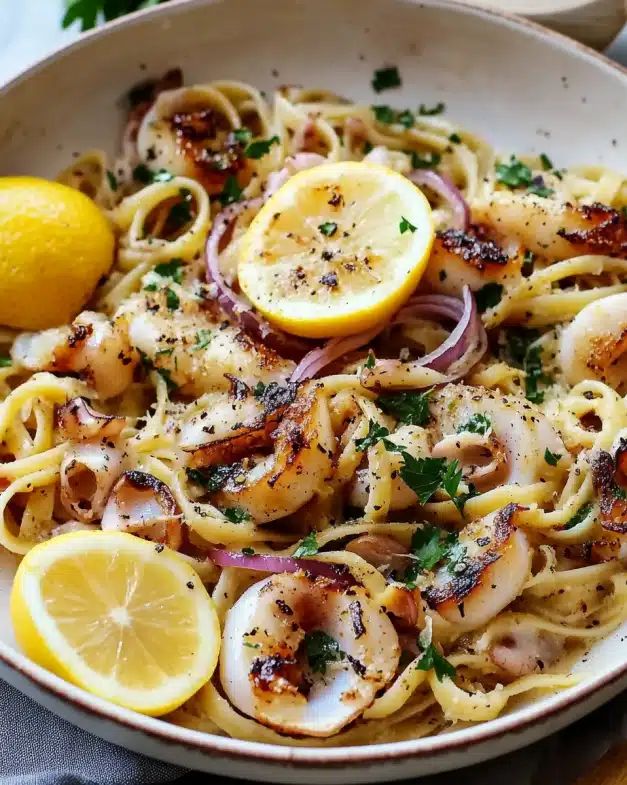
A Culinary Balance of Light and Indulgent
Unlike heavy cream-based pasta dishes that can leave you feeling weighed down, this linguine relies on an emulsion of chicken stock, lemon juice, and starchy pasta water. This creates a sauce that coats every strand of linguine without the excessive calories of a traditional Alfredo. It is a Mediterranean-inspired approach that celebrates the natural salinity of the sea while utilizing pantry staples like garlic and onions to ground the flavors.
- Quick, Yet Impressive: Transition from prep to plate in approximately 30 minutes.
- Texture Mastery: Learn the “quick-sear” method to ensure your squid remains tender and buttery.
- Versatile Pairing: This dish pairs beautifully with a crisp Pinot Grigio or a chilled Sauvignon Blanc.
- Crowd-Pleasing Elegance: The visual appeal of charred lemons and purple-tinged squid rings makes for a stunning presentation.
Fresh Ingredients You Need for Lemon Garlic Squid Linguine
The success of any seafood dish is predicated on the quality of its components. Because this recipe uses a minimal number of ingredients, each one has a significant role to play. Shopping for fresh, high-quality squid and real Parmesan (not the powdered variety in a green can) will make a world of difference in the final result.
| Ingredient | Quantity | Notes |
|---|---|---|
| Whole Squid | 1/2 pound (approx. 6) | Ensure they are cleaned and smell like the sea. |
| Butter | 5 tablespoons | Unsalted is preferred to control seasoning. |
| Linguine Pasta | 10 oz | Traditional dried or fresh egg linguine both work. |
| Fresh Lemons | 2 Large | One for charring slices, one for juice and zest. |
| Chicken Stock | 1 cup | Low-sodium is best for flavor control. |
| Parmesan Cheese | 1/4 cup | Must be freshly grated for proper melting. |
| Fresh Parsley | 1/2 cup | Flat-leaf (Italian) parsley for the best flavor. |
| Red Onion | 1/4 cup | Thinly sliced to provide a mild, sweet crunch. |
How to Choose and Prepare Your Ingredients
When selecting your squid, look for flesh that is translucent and firm. If you are buying whole squid, the tentacles are a prized part of the dish—don’t discard them! They provide a wonderful textural contrast to the rings. If you must use frozen squid, the most important step is to thaw it completely in the refrigerator and pat it bone-dry with paper towels. Excess moisture is the enemy of a good sear; if the squid is wet, it will steam in the pan rather than blister, leading to that rubbery texture we want to avoid.
For the lemons, choose fruits that feel heavy for their size, as this indicates a high juice content. Since we are charring the slices and using the juice, organic lemons are a great choice to avoid any wax or pesticides on the skin. Finally, never underestimate the power of fresh parsley. It isn’t just a garnish; it acts as a secondary vegetable in this dish, providing a “green” counterpoint to the savory garlic and onion.
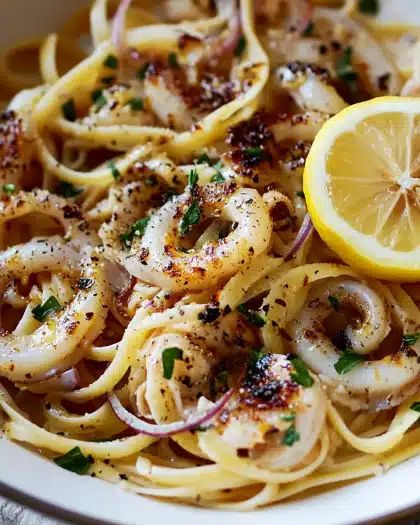
Your Step-by-Step Guide to Perfect Lemon Garlic Squid Linguine
Cooking this dish is all about the sequence of events. Because the squid cooks so quickly, you want to have all your other ingredients prepped and ready (a “mise en place”) before you turn on the stove.
1. Searing the Squid: The 3-Minute Rule
The biggest secret to tender squid is high heat and short duration. Melt 3 tablespoons of butter in a large skillet over medium-high heat. Once the butter is shimmering but not browning, add your seasoned squid. You should hear an immediate sizzle. Resist the urge to move the squid around constantly; let it sit for about 3 minutes to develop a slight char or “blister.” Flip and repeat for another 2-3 minutes. Remove it from the pan immediately—it will finish warming through later in the sauce.
2. Charring the Lemon: Unlocking Smoky Citrus
After removing the squid, don’t wash the pan! Those browned bits (the “fond”) are flavor gold. Add the remaining 2 tablespoons of butter and place your lemon slices directly into the skillet. Charring the lemon caramelizes the natural sugars, reducing the harshness of the acidity and adding a sophisticated smoky note to the dish. This step takes about 2 minutes per side. Once they look deeply golden and slightly blackened at the edges, set them aside for the final garnish.
3. Crafting the Pan Sauce and Emulsion
Pour the chicken stock into the hot skillet, using a wooden spoon to scrape up all the delicious bits left behind by the squid and lemons. Add the lemon juice and half of your parsley. Let this mixture simmer and reduce by about one-third. This concentrates the flavors, ensuring the sauce is powerful enough to coat the linguine without becoming watery.
4. The Importance of Al Dente Pasta
While your sauce simmers, boil your linguine in heavily salted water (it should taste like the sea). Cook it for 1-2 minutes less than the package instructions suggest. This is because the pasta will finish cooking inside the skillet, absorbing the lemon-garlic sauce into the heart of the noodle. Crucial Tip: Before you drain the pasta, scoop out a cup of the cloudy pasta water. This liquid contains starch that acts as a natural thickener for your sauce.
5. The Final Assembly: Bringing It All Together
Toss the drained linguine into the skillet. Add the Parmesan cheese, the sliced squid, the red onion, and the remaining parsley. Toss vigorously with tongs. If the pasta looks too dry, add your reserved pasta water one splash at a time. The cheese and starch will combine to create a silky, glossy emulsion that clings to the pasta. Serve immediately with the charred lemon slices on top.
Expert Tips to Elevate Your Seafood Pasta
Even a simple recipe can be improved with a few professional “cheffy” touches. If you want to take this dish from a standard weeknight meal to a signature dinner party recipe, keep these tips in mind:
- The “Cold Butter” Finish: For an extra-glossy sauce, whisk in a single tablespoon of cold butter right at the end, after you’ve turned off the heat.
- Zest Before You Juice: Always zest your lemon before cutting it. The oils in the zest provide a floral aroma that juice alone cannot replicate.
- Control the Heat: If you enjoy a bit of spice, add a teaspoon of red chili flakes into the butter right before you add the chicken stock. The fat in the butter will carry the heat throughout the entire dish.
- Don’t Over-Salt: Between the salted pasta water, the chicken stock, and the Parmesan cheese, there is already a lot of sodium. Always taste before adding more salt at the final stage.
Pro Insight: If you find the flavor of red onion too sharp, soak the slices in a bowl of ice water for 10 minutes before adding them to the pasta. This removes the “bite” while keeping the crunch.
Nutrition Snapshot: A Balanced Seafood Choice
Squid is an excellent source of lean protein and contains high levels of Vitamin B12, Selenium, and Zinc. When paired with the antioxidants in fresh parsley and the Vitamin C in lemon, this linguine becomes a relatively healthy way to indulge in a pasta craving.
| Nutrient | Amount Per Serving | % Daily Value* |
|---|---|---|
| Calories | 475 kcal | 24% |
| Protein | 28g | 56% |
| Total Fat | 18g | 23% |
| Vitamin C | 35mg | 40% |
*Percent Daily Values are based on a 2,000 calorie diet. Your values may be higher or lower depending on your calorie needs.
You May Also Like
If you enjoyed this recipe, explore more delicious options on our site: Gourmet Seafood Pasta, Quick 30-Minute Dinners, Authentic Italian Inspired Meals, and Zesty Lemon Garlic Dishes.
Authority Reference: Learn more about the culinary uses and varieties of Squid as Food on Wikipedia.

Frequently Asked Questions
Can I use frozen squid instead of fresh for this recipe?
Absolutely. While fresh is always preferred for the best texture, frozen squid is a convenient alternative. To ensure it doesn’t become rubbery, thaw it slowly in the refrigerator overnight and pat it completely dry with paper towels before searing to prevent steaming.
How do I prevent the squid from becoming tough or rubbery?
The secret is high heat and short cooking time. Searing the squid for no more than 3 minutes per side ensures it stays tender. If you cook it too long, the proteins tighten up and become chewy. Remember, it will continue to warm through once added back to the hot pasta and sauce.
What can I use as a substitute for chicken stock?
If you prefer to avoid chicken stock, vegetable stock or bottled clam juice are excellent substitutes. Clam juice, in particular, enhances the natural briny flavors of the seafood, while vegetable stock keeps the sauce light and aromatic.
Final Thoughts
Mastering the Lemon Garlic Squid Linguine is a rewarding way to bring restaurant-quality elegance into your home kitchen. By focusing on the balance of bright citrus, savory Parmesan, and perfectly seared squid, you create a dish that is as visually stunning as it is delicious. It’s a testament to how a few high-quality ingredients can be transformed into a gourmet experience in under half an hour.
Whether you’re hosting a dinner party or simply treating yourself to a special weeknight meal, this recipe is sure to become a favorite. Don’t forget to garnish with those charred lemons—they provide the smoky, acidic punch that truly sets this dish apart. Enjoy your culinary journey to the Mediterranean!