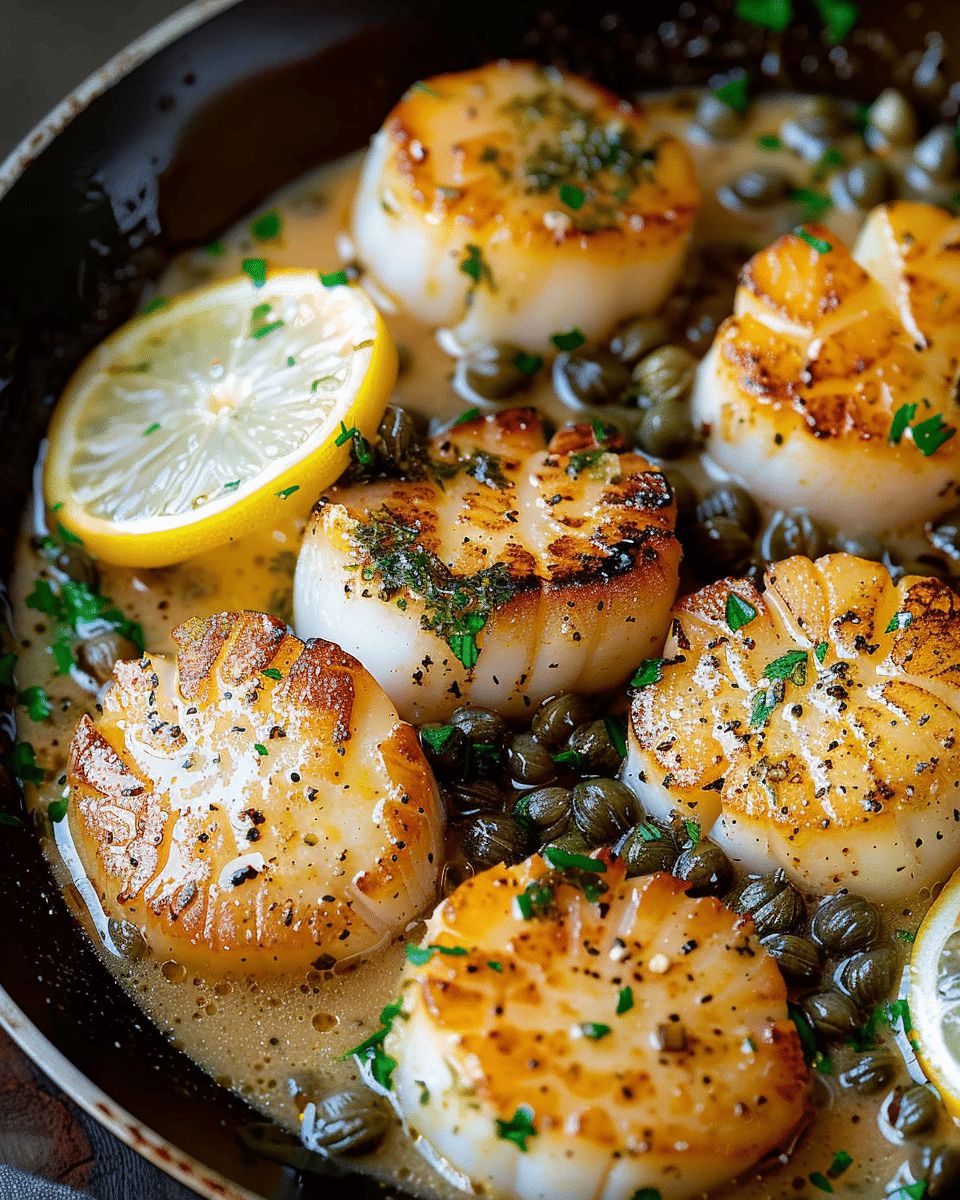
There’s something truly magical about the first bite of a perfectly cooked scallop. When done right, it is tender, slightly sweet, and kissed with a signature golden-brown sear that melts effortlessly on your tongue. You don’t have to wait for a fancy restaurant reservation or spend hours in a high-pressure kitchen to enjoy this culinary delight. With the right technique, a few pantry staples, and a little attention to detail, you can create Pan Seared Scallops with Lemon Caper Sauce that will impress everyone at your table—including yourself.
Cooking seafood can feel intimidating, often sparking a fear of rubbery textures or scallops sticking to the pan. However, the secret lies in the preparation: brining, thorough drying, and high-heat searing. This guide walks you through the essential steps to achieve that elusive restaurant-quality crust while keeping the interior juicy. Paired with a bright, tangy sauce of citrus and capers, this dish strikes the ultimate balance between sophisticated elegance and home-cooked simplicity.
Quick Answer: To achieve restaurant-quality scallops, brine them for 10 minutes to retain moisture, pat them completely dry to ensure a crust, and sear in a hot pan for 3 minutes without moving them. Finish with a bright reduction of white wine, lemon juice, and capers for a sophisticated flavor profile.
Why This Pan Seared Scallops Recipe is a Game Changer
Before we dive into the “how-to,” let’s talk about the “why.” Cooking scallops at home often feels like a high-stakes gamble. They are expensive, delicate, and notorious for being either perfectly succulent or tragically rubbery. However, once you master the foundational principles of heat management and moisture control, you unlock a world of gourmet dining that costs a fraction of restaurant prices.
This recipe isn’t just about cooking seafood; it’s about achieving flavor harmony. The natural sweetness of the scallops is balanced by the briny pop of capers and the sharp, bright acidity of fresh lemon. It’s a dish that feels incredibly light yet deeply satisfying, making it ideal for everything from a healthy weeknight dinner to a sophisticated holiday centerpiece.
The Benefits of Cooking Scallops at Home
- Speed: Unlike a slow-roasted roast or a complex stew, scallops cook in under five minutes.
- Nutrition: Scallops are a lean source of high-quality protein, rich in Vitamin B12 and magnesium.
- Impressive Results: The visual appeal of a perfectly seared, golden-brown scallop is second to none.

Essential Ingredients for Success
A world-class dish starts with world-class ingredients. For this recipe, the quality of your scallops is the most important factor. Always look for “dry-packed” scallops. Many grocery stores sell “wet-packed” scallops, which are treated with sodium tripolyphosphate. This chemical causes the scallops to absorb water, making them weigh more (so you pay more) and preventing them from ever achieving that crispy, golden sear you crave.
Scallops and Brining Components
The brine is a “secret weapon” step. It seasons the meat from the inside out and helps the proteins on the surface tighten up, which aids in the searing process.
| Ingredient | Quantity | Purpose |
|---|---|---|
| Large Sea Scallops | 1 lb (14-16 ct) | Main protein; must be 1.5 inches wide |
| Kosher Salt | ⅓ cup | For the initial brine solution |
| Hot Water | 1 cup | To dissolve the salt completely |
| Ice Water | 4 cups | To rapidly cool the brine before adding scallops |
The Lemon Caper Sauce and Aromatics
The sauce is a classic French-style reduction that uses the pan’s fond (the browned bits left after searing) to build a deep, complex flavor profile.
| Ingredient | Quantity | Pro-Tip |
|---|---|---|
| Olive Oil | 3 tbsp | Use an oil with a high smoke point |
| Unsalted Butter | 1 tbsp | Used for basting at the very end |
| Minced Garlic | 1 tbsp | Freshly minced is always superior to jarred |
| White Wine | ½ cup | Dry varieties like Sauvignon Blanc work best |
| Unsalted Chicken Broth | 1 cup | Adds body to the sauce without excess salt |
| Capers (Rinsed) | 2 tbsp | Rinsing removes the harsh metallic brine taste |
| Dijon Mustard | 1 tbsp | Acts as an emulsifier for a silky texture |
| Fresh Herbs | Dill & Chives | Adds a final layer of aromatic freshness |
The Step-by-Step Masterclass
Success in the kitchen is often a matter of mise en place—having everything in its place before the heat is turned on. Because scallops cook so quickly, you won’t have time to chop garlic or zest a lemon once the pan is hot.
Step 1: The Brining and Drying Phase
Brining for just 10 minutes makes a world of difference. It ensures that even if you overcook the scallops by thirty seconds, they remain moist. After brining, rinsing is crucial to remove excess surface salt. However, the most critical step is the dryness. Use several layers of paper towels to pat them dry until the surface feels tacky, not slippery.
Step 2: Mastering the Sear
Choose a heavy-bottomed pan, preferably stainless steel or cast iron. Avoid non-stick if possible, as it doesn’t allow for the same level of crust formation. Heat the oil until it is shimmering and just starting to show a faint wisp of smoke. This indicates the pan is ready to create an instant crust, which prevents the scallop from sticking.
- Place: Lay the scallops in the pan in a clockwise pattern so you remember which one went in first.
- Wait: Do not touch them. Moving them will tear the delicate flesh and stop the Maillard reaction (browning).
- Baste: Once flipped, add the butter. Tilt the pan and spoon the foaming butter over the scallops to cook the tops and add flavor.

Step 3: Crafting the Lemon Caper Sauce
Once the scallops are removed, the pan will be filled with flavor. Reduce the heat so you don’t burn the garlic. The goal is to “deglaze” the pan with the wine or broth, scraping up every bit of that golden fond. The addition of Dijon mustard at the end is a chef’s trick; it thickens the sauce slightly and gives it a professional, velvet-like finish.
Chef’s Insight: Always whisk in the mustard after turning off the heat. High heat can cause the mustard to break or lose its bright, piquant flavor.
Tips for Choosing and Storing Scallops
Buying seafood can be overwhelming. Follow these simple guidelines to ensure you are getting the freshest product available:
How to Identify Fresh Scallops
- Appearance: They should range from ivory to a slightly pinkish or orange hue (which often indicates a female scallop and is considered a delicacy).
- Smell: Fresh scallops should smell like the ocean—clean and salty. If they smell “fishy” or like ammonia, they are past their prime.
- Texture: They should be firm to the touch. If they feel mushy or slimy, avoid them.
Handling Frozen Scallops
If you cannot find fresh dry-packed scallops, frozen is a viable option. However, you must thaw them correctly. The best method is to leave them in the refrigerator overnight. If you are in a rush, place them in a sealed plastic bag and submerge them in cold water for 30 minutes. Never thaw scallops in the microwave or with warm water, as this will begin the cooking process prematurely.
Suggested Pairings for an Elegant Meal
A restaurant-quality main dish deserves equally thoughtful sides. Since the lemon caper sauce is quite vibrant, you want sides that can either soak up the sauce or provide a neutral, earthy balance.
Perfect Side Dishes
- Creamy Risotto: The starchiness of a Parmesan risotto is the perfect foil for the acidic sauce.
- Blanched Asparagus: A quick toss in olive oil and sea salt keeps the meal light and crisp.
- Angel Hair Pasta: Toss the pasta directly into the pan with the extra sauce for an instant “Scallop Scampi” feel.
Wine Pairing Guide
| Wine Type | Why it Works |
|---|---|
| Sauvignon Blanc | The high acidity matches the lemon and cuts through the butter. |
| Chardonnay (Unoaked) | Offers a creamy mouthfeel that complements the texture of the scallop. |
| Champagne/Prosecco | The bubbles act as a palate cleanser between rich, buttery bites. |

Nutritional Breakdown and FAQ
Scallops are often called the “candy of the sea,” but they are remarkably healthy. They are high in lean protein and contain very little saturated fat. This makes them a fantastic choice for those following Mediterranean or low-carb diets.
| Metric | Value (Per Serving) |
|---|---|
| Calories | 310 kcal |
| Protein | 23g |
| Net Carbs | 6g |
| Total Fat | 15g |
Frequently Asked Questions
Can I use a non-stick pan?
You can, but you likely won’t get that deep mahogany crust. If you do use non-stick, ensure the heat isn’t so high that it damages the coating.
What if my scallops are sticking?
Sticking usually means the scallop isn’t ready to be flipped. When the crust is fully formed, the scallop will naturally “release” from the pan. If it resists, give it another 30 seconds.
Is the white wine mandatory?
Not at all. You can substitute the wine with extra chicken broth or even a splash of clam juice for a deeper seafood flavor.

You May Also Like
Explore more: Seafood Recipes, Quick Weeknight Dinners, Mediterranean Diet Inspiration, and Gourmet Sauces.
For more detailed information on the biological and culinary characteristics of sea scallops, visit Wikipedia.
Frequently Asked Questions
Can I use frozen scallops for this recipe?
Yes, you can use frozen scallops, but they must be completely thawed in the refrigerator overnight. Once thawed, it is critical to pat them extra dry with paper towels to ensure they sear rather than steam in the pan.
What is the difference between “Wet” and “Dry” scallops?
Dry scallops are natural and untreated, making them superior for searing. Wet scallops are treated with a phosphate solution that causes them to retain water; this makes them difficult to brown and can result in a soapy aftertaste.
How do I prevent the scallops from sticking to the pan?
The key is to ensure the oil is shimmering and hot before adding the scallops. Once they are in the pan, do not move them. They will naturally release from the surface once a proper golden-brown crust has formed.
Final Thoughts
Mastering Pan Seared Scallops with Lemon Caper Sauce is a milestone for any home cook. It proves that elegance doesn’t require hours of labor—only the right technique and high-quality ingredients. The combination of the buttery, caramelized crust and the bright, briny acidity of the sauce creates a dining experience that rivals the finest seafood houses.
Whether you are celebrating a special anniversary or simply want to elevate a Tuesday night, this recipe offers a foolproof path to success. Don’t be afraid of the heat; embrace the sear, and enjoy the restaurant-quality results right from your own kitchen.