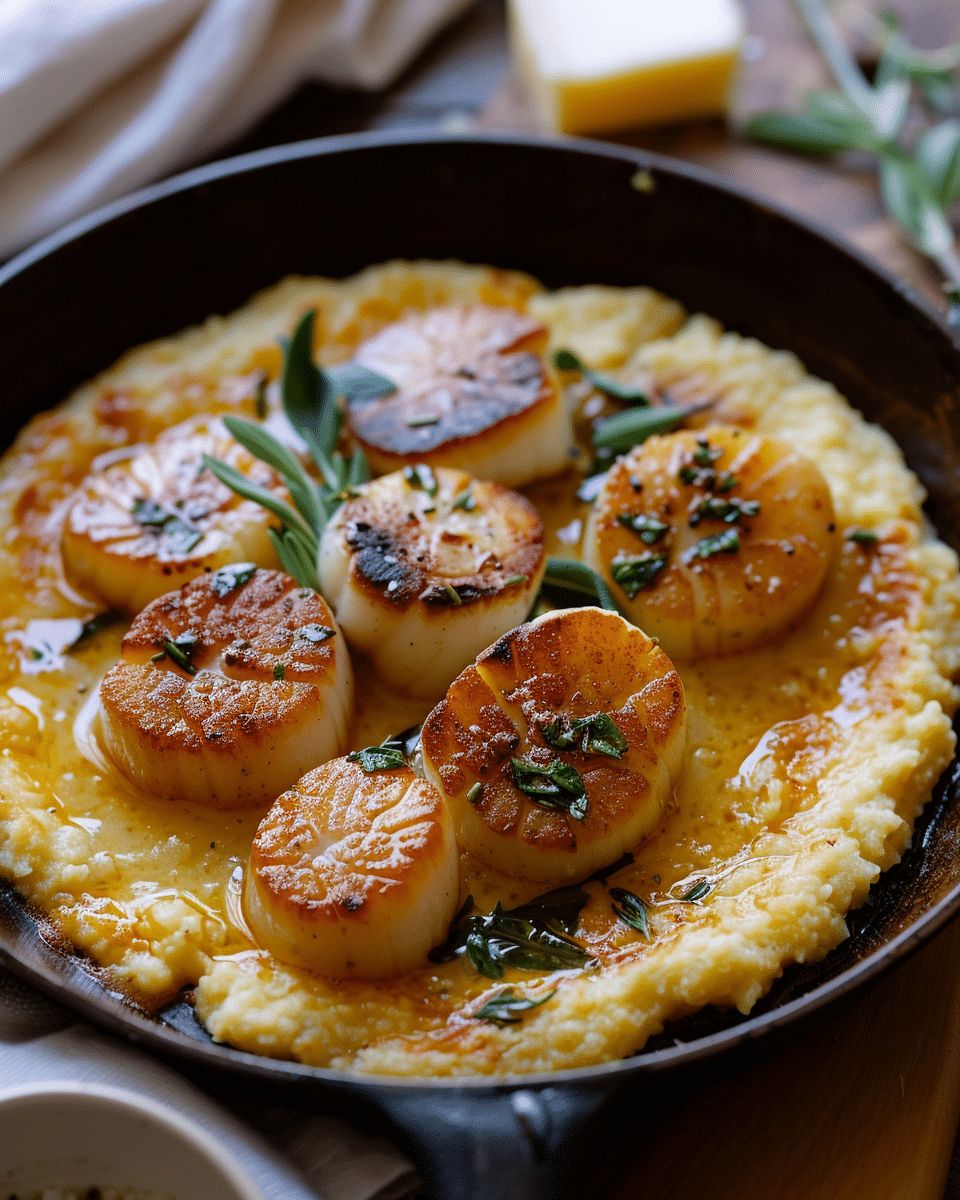
Bringing the elegance of a five-star bistro into your own kitchen has never been more achievable. Perfectly Seared Scallops with Creamy Polenta and Herb Butter is a masterclass in flavor balance, pairing the natural, oceanic sweetness of sea scallops with the earthy, velvet-smooth texture of slow-cooked polenta. Finished with a nutty, aromatic herb brown butter, this dish is designed to impress even the most discerning palates.
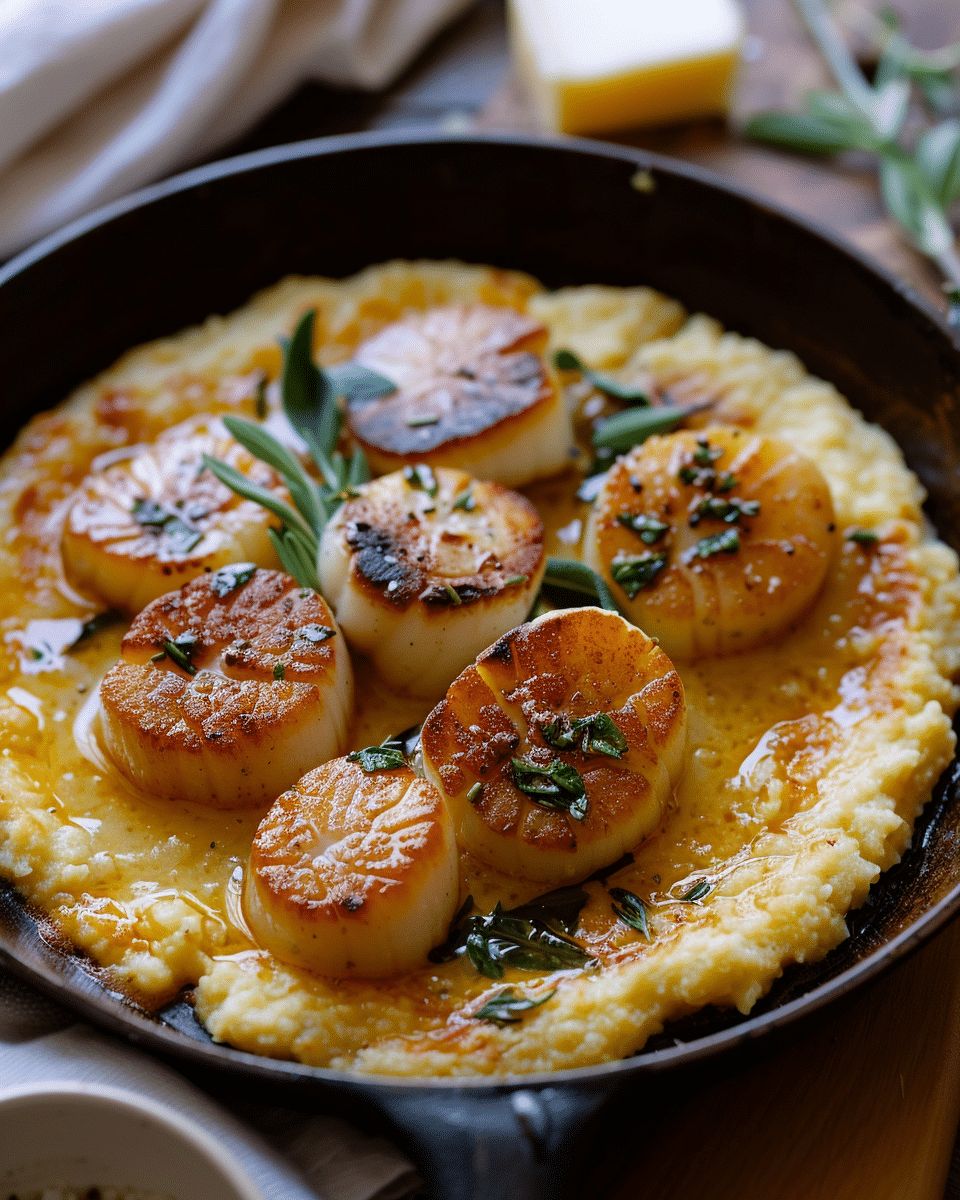
While high-end seafood can often feel intimidating to home cooks, the secret to this gourmet meal lies in a few simple, repeatable techniques. By mastering the high-heat sear and allowing the polenta the time it needs to reach its full, creamy potential, you transform basic ingredients into a culinary masterpiece. Whether you are planning a romantic date night or a sophisticated weekend dinner, this recipe from cookwithfeast.com offers a foolproof path to professional results.
Quick Answer: The key to this dish is contrast. Achieve a golden-brown crust by ensuring scallops are bone-dry before searing in a ripping hot pan. Serve them immediately over butter-enriched polenta and top with a zesty herb brown butter sauce for a balanced, luxurious bite.
1. The Anatomy of Gourmet Ingredients
Creating a restaurant-quality meal at home begins with understanding your raw materials. While the ingredient list for Perfectly Seared Scallops with Creamy Polenta is relatively short, each component plays a vital role in the final flavor profile. To achieve excellence, you must prioritize quality over convenience.
Choosing Your Scallops: Wet vs. Dry
The single most important decision you will make is selecting your sea scallops. In the culinary world, there is a massive distinction between “wet” and “dry” scallops. Dry-packed scallops are natural and untreated, whereas “wet” scallops are treated with sodium tripolyphosphate (STP), which causes them to absorb excess water. When you try to sear a wet scallop, that water leaches out into the pan, effectively steaming the meat rather than crusting it.
Expert Tip: Always look for “dry scallops” at your fishmonger. They should have a creamy, slightly off-white or ivory color. If they are stark white and sitting in a pool of milky liquid, they have been chemically treated.
The Perfect Polenta: Cornmeal Varieties
Polenta is more than just boiled cornmeal; it is a canvas for the rich flavors of the dish. For this recipe, we use traditional dried polenta rather than the instant variety. The longer cooking process allows the starches to fully gelatinize, resulting in a velvet-like texture that cannot be replicated by 5-minute alternatives.
| Ingredient | Specific Requirement | Purpose in Dish |
|---|---|---|
| Sea Scallops | Large (U-10 or U-12 size) | The meaty, sweet centerpiece. |
| Dried Polenta | Coarse or Medium ground | Provides a creamy, comforting base. |
| Unsalted Butter | High-fat European style | Emulsifies the sauce and enriches polenta. |
| Italian Herbs | Fresh Oregano, Parsley, Thyme | Adds aromatic depth and brightness. |
2. Mastering the Creamy Polenta Base
The foundation of this dish is the polenta. While many recipes rush this step, the key to true Italian-style polenta is patience and hydration. Using a 5:1 water-to-polenta ratio ensures that the grains have enough liquid to soften completely over a long simmer.
Step-by-Step Polenta Guide
- The Initial Whisk: In a heavy-bottomed pot, bring 5 cups of water to a rolling boil. Slowly rain the polenta into the water while whisking vigorously. This “rain” technique prevents clumps from forming.
- The Long Simmer: Once the mixture thickens slightly, drop the heat to the lowest setting. The polenta should “blurp” like lava rather than boil.
- Consistency Check: Over the course of 45-50 minutes, stir the polenta every 10 minutes. It is ready when the texture is perfectly smooth on the tongue, with no gritty or sandy feel.
- The Finishing Touch: Stir in the butter and salt. If the polenta becomes too thick before the scallops are ready, simply whisk in a splash of warm water or milk to loosen it back to a pourable consistency.
3. The Art of the Perfect Scallop Sear
Achieving that iconic mahogany crust on a scallop is a rite of passage for home cooks. It requires a combination of extreme heat and moisture control. If there is even a drop of water on the surface of the scallop, the temperature of the pan will drop, and you will lose the chance for a crisp sear.
Temperature Control and Pan Choice
A stainless steel or cast-iron skillet is your best friend here. Avoid non-stick pans, as they generally cannot handle the high heat required for a proper sear. You want the oil to be just at the smoking point before the scallops ever touch the metal.
- Drying: Pat the scallops dry with paper towels. Let them sit on a fresh paper towel for 5 minutes, then pat them dry again right before seasoning.
- Seasoning: Only salt the scallops immediately before they go into the pan. Salt draws out moisture; if you salt them too early, they will get wet again.
- Placement: Place the scallops in a clockwise pattern in the pan so you know which one to flip first. Do not crowd the pan; leave at least an inch of space between each scallop.
- The Flip: Sear for 3 minutes without touching them. Use a thin fish spatula to check the bottom. If it’s golden brown, flip and cook for another 1-2 minutes.
4. Crafting the Herb-Infused Brown Butter
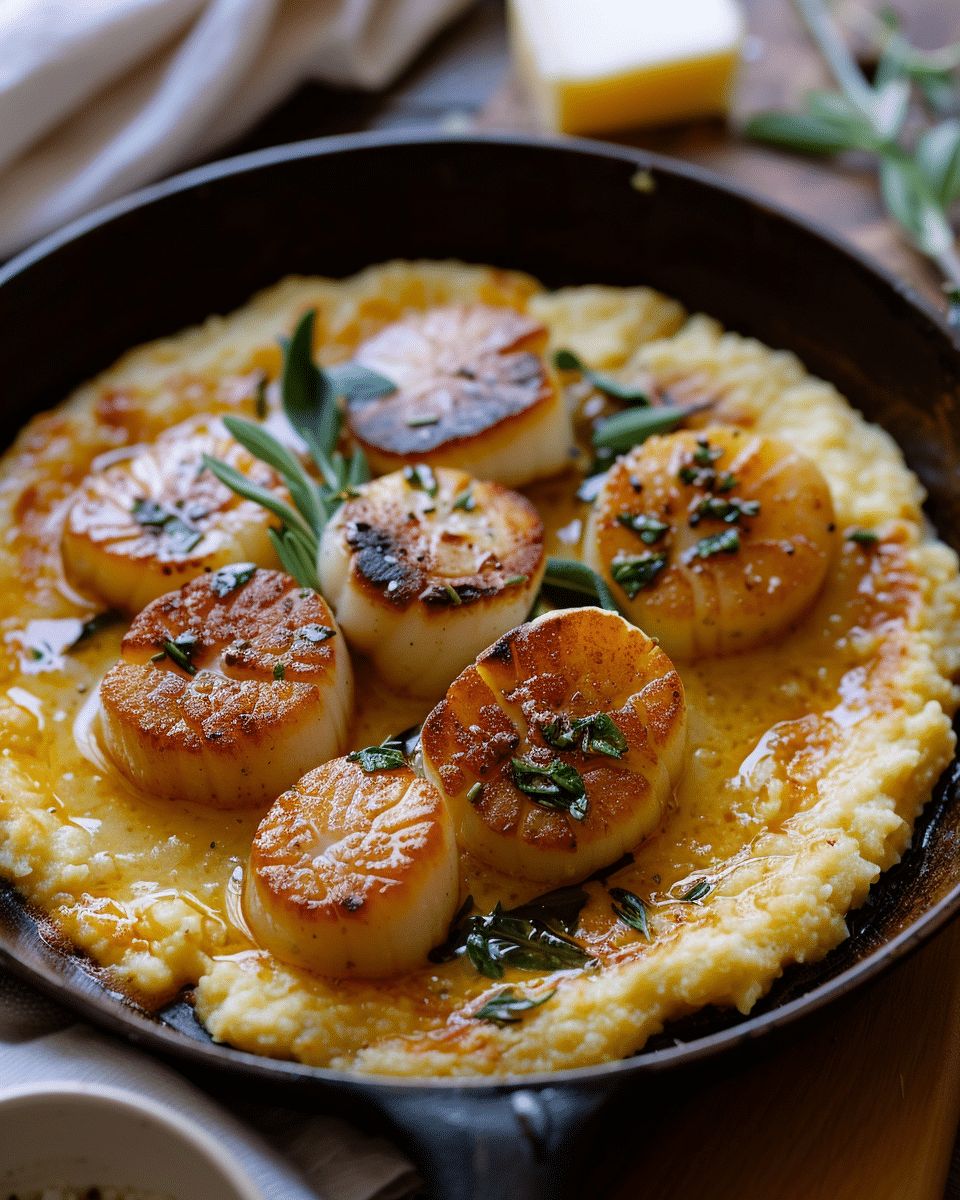
The Herb Butter Sauce (Beurre Noisette) acts as the bridge between the sweet scallops and the earthy polenta. By browning the butter, you are essentially toasting the milk solids, which creates a deep, nutty flavor that complements the sweetness of the seafood.
The Infusion Process
Once you remove the scallops from the pan, do not wash it! Those brown bits stuck to the bottom (called fond) are concentrated flavor. Add your remaining butter and fresh herbs to the hot pan. As the butter melts and begins to foam, the herbs will crisp up and release their essential oils.
- Watch the Color: The butter will move from yellow to gold, and finally to a toasted brown. As soon as it smells like toasted hazelnuts, remove it from the heat.
- Acid Balance: Stir in the lemon juice. The acidity cuts through the richness of the butter and polenta, providing a necessary “lift” to the dish.
5. Plating and Presentation
We eat with our eyes first, and a dish this luxurious deserves a beautiful presentation. To “plate like a pro,” follow these simple visual rules:
Visual Layering
Start with a wide, shallow bowl or a large flat plate. Spoon a generous amount of polenta into the center and use the back of the spoon to create a slight well. This well will catch the herb butter and prevent it from running off the sides.
- Scallop Placement: Arrange 4 scallops in the center, slightly overlapping or in a neat circle.
- The Drizzle: Use a spoon to drizzle the brown butter over the scallops, ensuring some of the crisped herb bits land on top of the seafood.
- Garnish: A final dusting of fresh parsley or a micro-plane of lemon zest adds a pop of green and a fresh scent that hits the diner as soon as the plate is set down.
6. Nutritional Profile and Dietary Adaptations
While this dish is undeniably indulgent, scallops themselves are a fantastic source of lean protein and essential minerals. They are particularly high in Vitamin B12 and Selenium.
| Nutrient | Value per Serving | Health Benefit |
|---|---|---|
| Protein | 24g | Muscle repair and satiety. |
| Total Fat | 18g | Energy and flavor delivery. |
| Vitamin B12 | 80% DV | Supports brain and nervous system. |
| Magnesium | 15% DV | Supports heart health and muscle function. |
Dietary Variations
- Gluten-Free: Polenta is naturally gluten-free, making this a safe and delicious option for Celiac-friendly diets.
- Dairy-Free: Substitute the butter with a high-quality vegan butter or extra virgin olive oil for the polenta. For the sauce, use oil infused with garlic and herbs.
- Low Carb: Replace the polenta with a cauliflower purée or “cauliflower grits” to significantly reduce the carbohydrate count.
7. Expert Storage and Reheating Tips
Seafood is notoriously difficult to reheat, but with the right method, you can enjoy leftovers without the scallops turning into rubber balls.
Critical Insight: Never use the microwave for scallops. The intense, uneven heat will tighten the proteins instantly, destroying the tender texture you worked so hard to achieve.
- Storage: Store the polenta and scallops in separate airtight containers. The polenta will firm up significantly in the fridge.
- Reheating Polenta: Place polenta in a small saucepan with a tablespoon of water or milk. Whisk over medium heat until it returns to its creamy state.
- Reheating Scallops: Heat a skillet with a tiny bit of butter over low heat. Place the scallops in the pan for only 60-90 seconds per side—just enough to take the chill off.
1. The Anatomy of Gourmet Ingredients
Creating a restaurant-quality meal at home begins with understanding your raw materials. While the ingredient list for Perfectly Seared Scallops with Creamy Polenta is relatively short, each component plays a vital role in the final flavor profile. To achieve excellence, you must prioritize quality over convenience.
Choosing Your Scallops: Wet vs. Dry
The single most important decision you will make is selecting your sea scallops. In the culinary world, there is a massive distinction between “wet” and “dry” scallops. Dry-packed scallops are natural and untreated, whereas “wet” scallops are treated with sodium tripolyphosphate (STP), which causes them to absorb excess water. When you try to sear a wet scallop, that water leaches out into the pan, effectively steaming the meat rather than crusting it.
Expert Tip: Always look for “dry scallops” at your fishmonger. They should have a creamy, slightly off-white or ivory color. If they are stark white and sitting in a pool of milky liquid, they have been chemically treated.
The Perfect Polenta: Cornmeal Varieties
Polenta is more than just boiled cornmeal; it is a canvas for the rich flavors of the dish. For this recipe, we use traditional dried polenta rather than the instant variety. The longer cooking process allows the starches to fully gelatinize, resulting in a velvet-like texture that cannot be replicated by 5-minute alternatives.
| Ingredient | Specific Requirement | Purpose in Dish |
|---|---|---|
| Sea Scallops | Large (U-10 or U-12 size) | The meaty, sweet centerpiece. |
| Dried Polenta | Coarse or Medium ground | Provides a creamy, comforting base. |
| Unsalted Butter | High-fat European style | Emulsifies the sauce and enriches polenta. |
| Italian Herbs | Fresh Oregano, Parsley, Thyme | Adds aromatic depth and brightness. |
2. Mastering the Creamy Polenta Base
The foundation of this dish is the polenta. While many recipes rush this step, the key to true Italian-style polenta is patience and hydration. Using a 5:1 water-to-polenta ratio ensures that the grains have enough liquid to soften completely over a long simmer.
Step-by-Step Polenta Guide
- The Initial Whisk: In a heavy-bottomed pot, bring 5 cups of water to a rolling boil. Slowly rain the polenta into the water while whisking vigorously. This “rain” technique prevents clumps from forming.
- The Long Simmer: Once the mixture thickens slightly, drop the heat to the lowest setting. The polenta should “blurp” like lava rather than boil.
- Consistency Check: Over the course of 45-50 minutes, stir the polenta every 10 minutes. It is ready when the texture is perfectly smooth on the tongue, with no gritty or sandy feel.
- The Finishing Touch: Stir in the butter and salt. If the polenta becomes too thick before the scallops are ready, simply whisk in a splash of warm water or milk to loosen it back to a pourable consistency.
3. The Art of the Perfect Scallop Sear
Achieving that iconic mahogany crust on a scallop is a rite of passage for home cooks. It requires a combination of extreme heat and moisture control. If there is even a drop of water on the surface of the scallop, the temperature of the pan will drop, and you will lose the chance for a crisp sear.
Temperature Control and Pan Choice
A stainless steel or cast-iron skillet is your best friend here. Avoid non-stick pans, as they generally cannot handle the high heat required for a proper sear. You want the oil to be just at the smoking point before the scallops ever touch the metal.
- Drying: Pat the scallops dry with paper towels. Let them sit on a fresh paper towel for 5 minutes, then pat them dry again right before seasoning.
- Seasoning: Only salt the scallops immediately before they go into the pan. Salt draws out moisture; if you salt them too early, they will get wet again.
- Placement: Place the scallops in a clockwise pattern in the pan so you know which one to flip first. Do not crowd the pan; leave at least an inch of space between each scallop.
- The Flip: Sear for 3 minutes without touching them. Use a thin fish spatula to check the bottom. If it’s golden brown, flip and cook for another 1-2 minutes.
4. Crafting the Herb-Infused Brown Butter
The Herb Butter Sauce (Beurre Noisette) acts as the bridge between the sweet scallops and the earthy polenta. By browning the butter, you are essentially toasting the milk solids, which creates a deep, nutty flavor that complements the sweetness of the seafood.
The Infusion Process
Once you remove the scallops from the pan, do not wash it! Those brown bits stuck to the bottom (called fond) are concentrated flavor. Add your remaining butter and fresh herbs to the hot pan. As the butter melts and begins to foam, the herbs will crisp up and release their essential oils.
- Watch the Color: The butter will move from yellow to gold, and finally to a toasted brown. As soon as it smells like toasted hazelnuts, remove it from the heat.
- Acid Balance: Stir in the lemon juice. The acidity cuts through the richness of the butter and polenta, providing a necessary “lift” to the dish.
5. Plating and Presentation
We eat with our eyes first, and a dish this luxurious deserves a beautiful presentation. To “plate like a pro,” follow these simple visual rules:
Visual Layering
Start with a wide, shallow bowl or a large flat plate. Spoon a generous amount of polenta into the center and use the back of the spoon to create a slight well. This well will catch the herb butter and prevent it from running off the sides.
- Scallop Placement: Arrange 4 scallops in the center, slightly overlapping or in a neat circle.
- The Drizzle: Use a spoon to drizzle the brown butter over the scallops, ensuring some of the crisped herb bits land on top of the seafood.
- Garnish: A final dusting of fresh parsley or a micro-plane of lemon zest adds a pop of green and a fresh scent that hits the diner as soon as the plate is set down.
6. Nutritional Profile and Dietary Adaptations
While this dish is undeniably indulgent, scallops themselves are a fantastic source of lean protein and essential minerals. They are particularly high in Vitamin B12 and Selenium.
| Nutrient | Value per Serving | Health Benefit |
|---|---|---|
| Protein | 24g | Muscle repair and satiety. |
| Total Fat | 18g | Energy and flavor delivery. |
| Vitamin B12 | 80% DV | Supports brain and nervous system. |
| Magnesium | 15% DV | Supports heart health and muscle function. |
Dietary Variations
- Gluten-Free: Polenta is naturally gluten-free, making this a safe and delicious option for Celiac-friendly diets.
- Dairy-Free: Substitute the butter with a high-quality vegan butter or extra virgin olive oil for the polenta. For the sauce, use oil infused with garlic and herbs.
- Low Carb: Replace the polenta with a cauliflower purée or “cauliflower grits” to significantly reduce the carbohydrate count.
7. Expert Storage and Reheating Tips
Seafood is notoriously difficult to reheat, but with the right method, you can enjoy leftovers without the scallops turning into rubber balls.
Critical Insight: Never use the microwave for scallops. The intense, uneven heat will tighten the proteins instantly, destroying the tender texture you worked so hard to achieve.
- Storage: Store the polenta and scallops in separate airtight containers. The polenta will firm up significantly in the fridge.
- Reheating Polenta: Place polenta in a small saucepan with a tablespoon of water or milk. Whisk over medium heat until it returns to its creamy state.
- Reheating Scallops: Heat a skillet with a tiny bit of butter over low heat. Place the scallops in the pan for only 60-90 seconds per side—just enough to take the chill off.