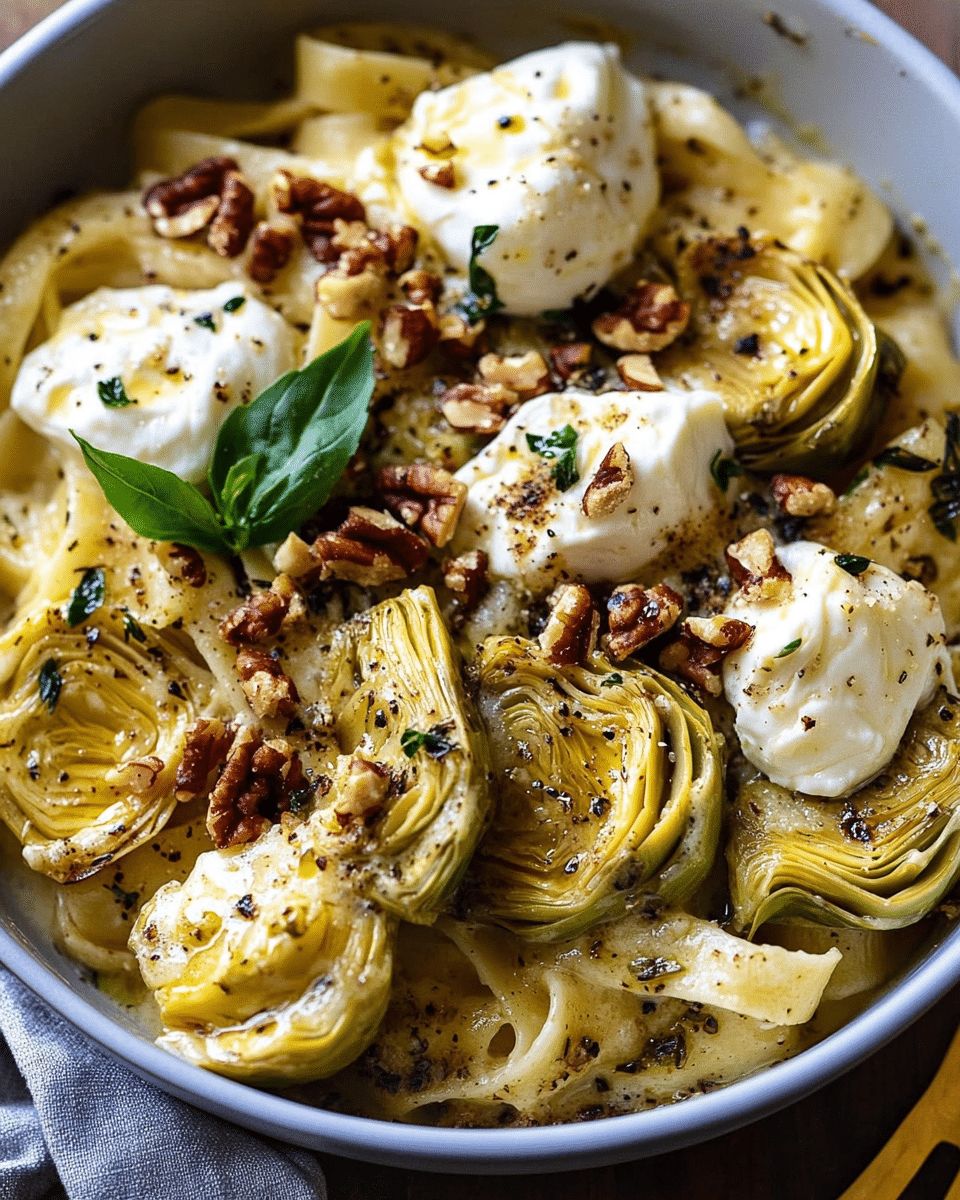
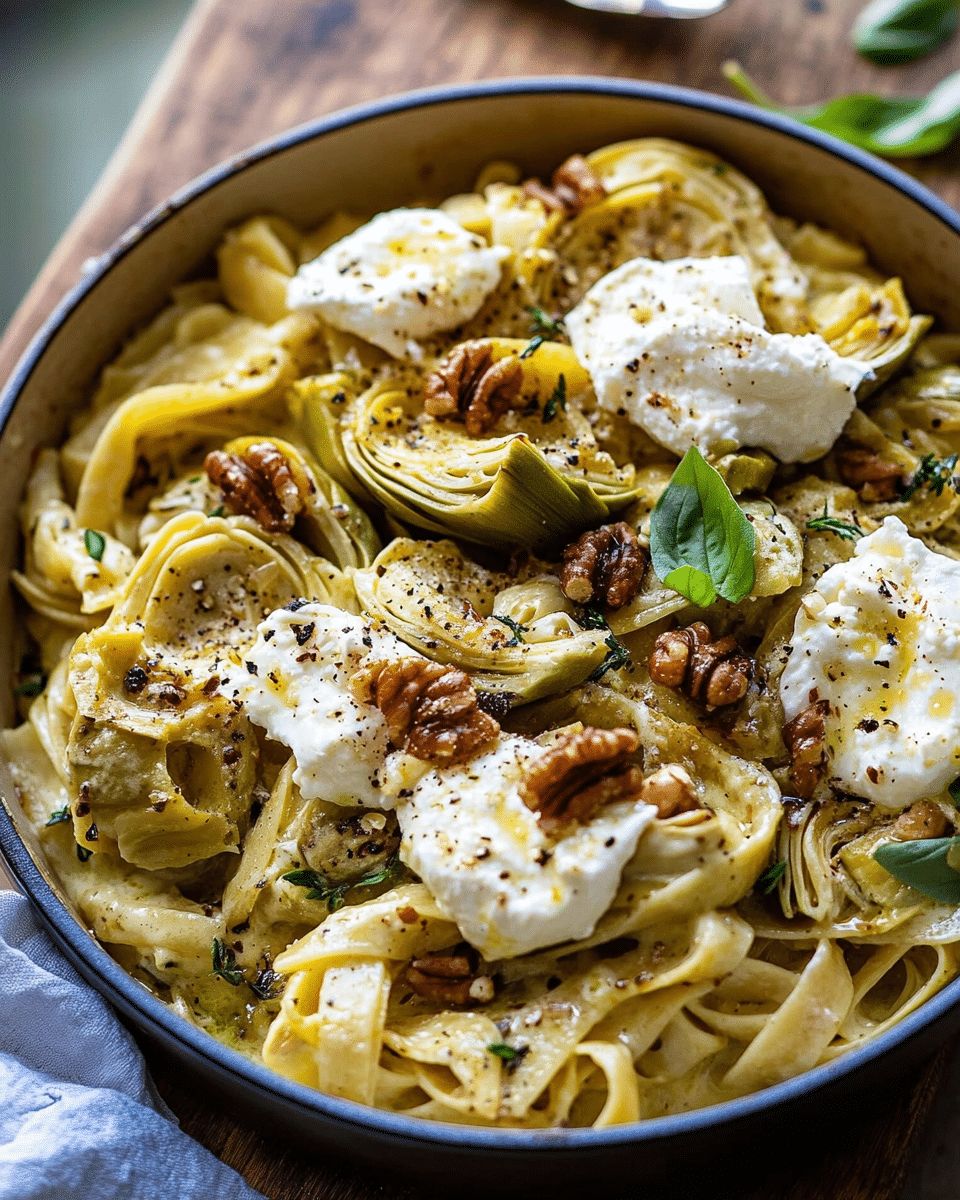
There is something truly transformative about a dish that takes simple, pantry-staple ingredients and elevates them into a restaurant-quality masterpiece. This Roasted Artichoke and Burrata Pasta is exactly that—a harmonious journey of textures and flavors. Imagine earthy, golden-brown roasted artichokes paired with the decadent, buttery creaminess of fresh burrata cheese, all tossed with al dente pasta and finished with the satisfying crunch of toasted walnuts.
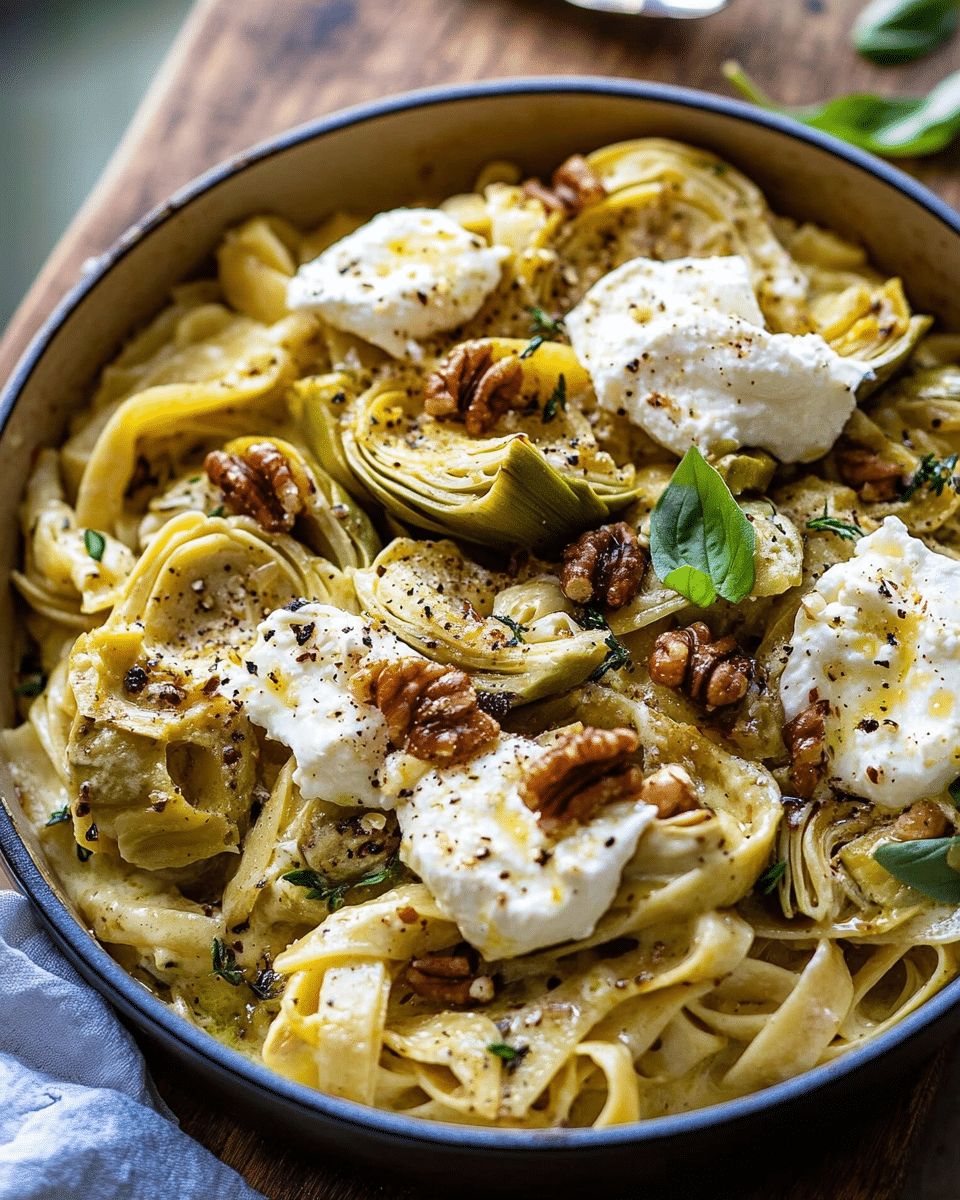
Whether you are looking to impress guests at a weekend dinner party or simply want to treat yourself to a sophisticated weeknight meal, this recipe delivers maximum impact with minimal effort. By roasting the artichokes to bring out their natural sweetness and using starchy pasta water to create a silky, emulsified sauce, you create a gourmet experience right in your own kitchen. It’s more than just a meal; it’s a celebration of Mediterranean-inspired comfort food.
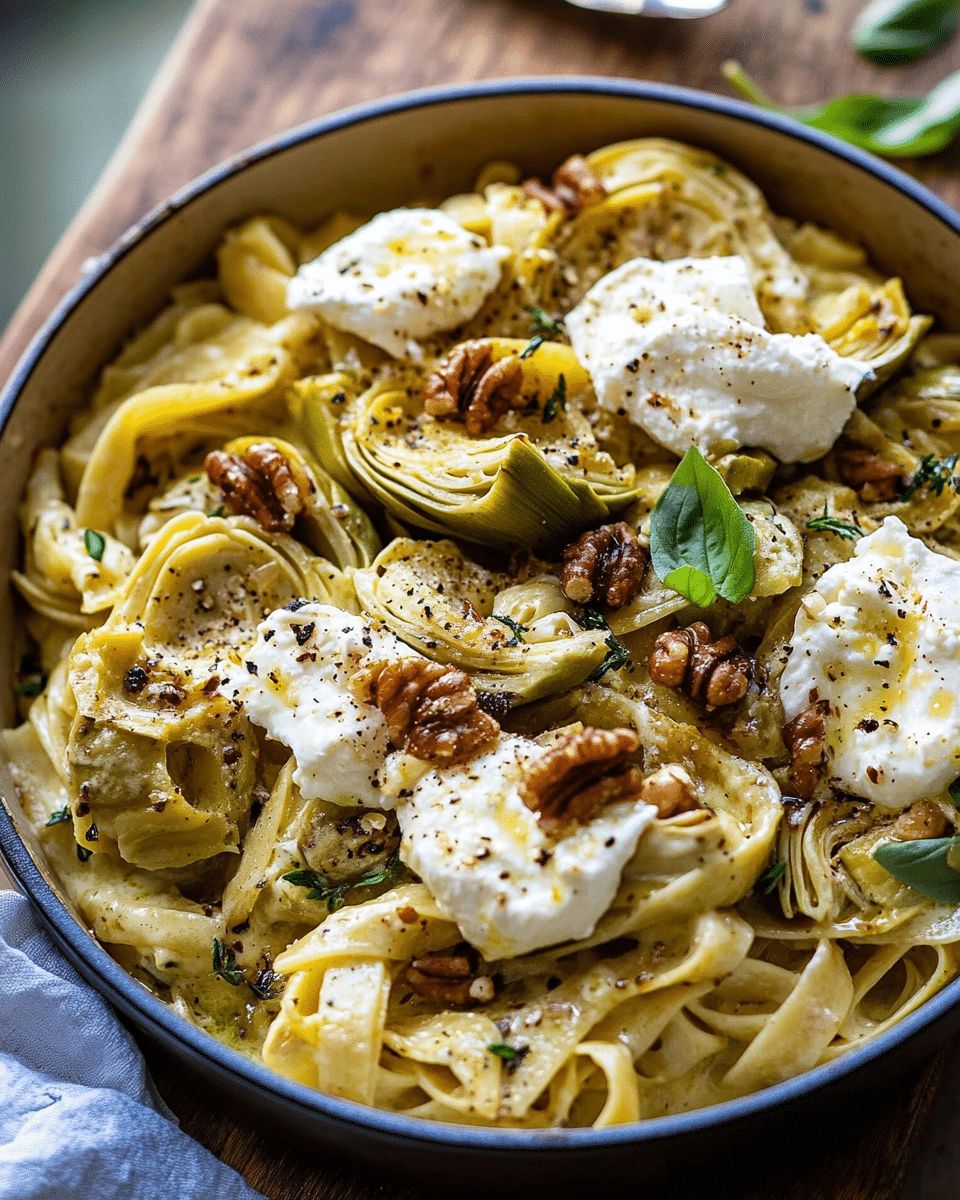
Quick Answer: Roasted Artichoke and Burrata Pasta is a vegetarian-friendly gourmet dish featuring marinated artichokes roasted until crispy, tossed with long-cut pasta, browned butter walnuts, and topped with torn burrata cheese. The key to its success lies in the contrast between the warm, savory pasta and the cold, creamy center of the burrata.
Essential Ingredients for Your Artichoke and Burrata Masterpiece
The beauty of this Roasted Artichoke and Burrata Pasta lies in the quality of its components. Because the recipe is relatively simple, each ingredient has a significant impact on the final profile. Using marinated artichokes instead of canned or frozen varieties is a strategic choice—the marinade often contains herbs and oils that jumpstart the flavor development during the roasting process.
What You Will Need
Gather the following items before you begin. Having your mise en place ready will make the 30-minute cooking window feel seamless and stress-free.
- Long-cut Pasta: 1 lb (Linguine, Spaghetti, or Fettuccine).
- Marinated Artichokes: 2 jars (12 oz each), drained well.
- Burrata Cheese: 8 oz, torn into creamy segments.
- Olive Oil: 1/3 cup, plus extra for the final drizzle.
- Garlic: 3 cloves, smashed to release their essential oils.
- Salted Butter: 3 tbsp for browning.
- Walnuts: 3 tbsp, roughly chopped for texture.
- Fresh Herbs: 1 cup fresh basil and 1 tbsp fresh thyme.
- Aromatics: Zest of 1 lemon and 1/2 tsp crushed red pepper flakes.
- Seasoning: Salt and black pepper to taste.
- Parmesan: 1/4 cup, finely grated.
Ingredient Quick Reference Table
| Ingredient Type | Role in Dish | Pro Tip |
|---|---|---|
| Marinated Artichokes | Savory Base | Roast until edges are dark golden. |
| Burrata | Creamy Element | Serve at room temperature. |
| Walnuts | Crunchy Garnish | Toast in butter for a nutty aroma. |
| Pasta Water | Sauce Binder | Never skip reserving this liquid gold! |
Step-by-Step Cooking Instructions
Creating a gourmet pasta dish is as much about technique as it is about ingredients. By following these steps, you ensure that the textures remain distinct—the pasta stays al dente, the artichokes stay crispy, and the burrata remains luxuriously soft.
1. Mastering the Roast
Preheat your oven to 400°F (200°C). In a large baking dish, combine your drained artichokes, smashed garlic, lemon zest, thyme, and red pepper flakes. Drizzle the 1/3 cup of olive oil over the top and toss thoroughly. Roast for 15-20 minutes. This high-heat roasting caramelizes the artichoke hearts, providing a smoky depth that balances the cool creaminess of the cheese added later.
2. The Perfect Pasta Texture
While the oven does the heavy lifting, bring a large pot of heavily salted water to a boil. Add your pasta and cook until it is 1-2 minutes shy of the package instructions. This is the al dente stage. Before you drain the pasta, reserve at least 1 cup of the starchy cooking water. This water contains starch that helps the oil and butter emulsify into a real sauce rather than just sitting at the bottom of the bowl.
3. The Brown Butter Walnut Garnish
In the same pot you used for the pasta (now drained and dry), melt the 3 tbsp of salted butter over high heat. Watch it closely; as soon as it begins to foam and turn a nutty brown color, toss in the chopped walnuts. Toast them for 3-5 minutes. Remove the walnuts and set them aside. This beurre noisette (brown butter) adds a complex, toasted flavor that defines the “gourmet” feel of the dish.
4. Assembly and Emulsification
Return the pasta to the pot with the residual butter. Add the fresh basil, parmesan, and the roasted artichokes (including every drop of the oil from the baking dish). Gradually splash in your reserved pasta water while tossing vigorously with tongs. You will see a glossy, thin sauce begin to coat every strand of pasta. This is the magic moment where the dish comes together.
Chef’s Tips for Success
Even the simplest recipes can be improved with a few professional secrets. Here is how to ensure your Roasted Artichoke and Burrata Pasta turns out perfectly every single time:
- Don’t Overcrowd the Pan: When roasting the artichokes, ensure they are in a single layer. If they are piled up, they will steam instead of crisping up.
- Temperature Control: Burrata is best enjoyed when it isn’t ice-cold from the fridge. Take it out 20 minutes before serving so the center is “runny” and ready to melt into the warm pasta.
- Freshness Matters: If you can’t find fresh basil, use a high-quality jarred pesto as a base, but reduce the amount of added olive oil to compensate.
- The Garlic Secret: Smashing the garlic rather than mincing it allows it to flavor the oil during roasting without burning and becoming bitter.
Expert Insight: If your sauce feels too “oily,” add a squeeze of fresh lemon juice right at the end. The acidity cuts through the fats of the butter, oil, and burrata, brightening the entire flavor profile.
Substitution and Variation Guide
We understand that sometimes the grocery store is out of burrata, or you might want to tweak the recipe for dietary needs. This dish is incredibly forgiving and adaptable.
Cheese Substitutions
If you can’t find burrata, don’t worry. You can achieve a similar effect with these alternatives:
- Whole Milk Ricotta: Dollop fresh ricotta over the pasta. It won’t “melt” the same way, but it provides a beautiful creamy contrast.
- Fresh Mozzarella (Bocconcini): Use the softest mozzarella you can find and tear it manually.
- Goat Cheese: For a tangier, more aggressive flavor profile that pairs beautifully with artichokes.
Protein Additions
While this is a satisfying vegetarian meal, you can easily add protein if desired:
- Grilled Chicken: Sliced thinly and tossed in at the end.
- Shrimp: Sautéed in the garlic and lemon oil before adding the pasta.
- Crispy Prosciutto: Bake slices of prosciutto until crisp and crumble them over the top for a salty, meaty crunch.
Nutritional Breakdown
Understanding what goes into your body is just as important as the taste. This pasta is a balanced meal, providing healthy fats from olive oil and walnuts, fiber from the artichokes, and protein from the cheese and pasta.
| Nutrient | Value per Serving | Benefit |
|---|---|---|
| Calories | 620 kcal | Energy for the day. |
| Fiber | 7g | Supports digestive health. |
| Protein | 18g | Muscle repair and satiety. |
| Vitamin C | 15% DV | Immune support from lemon and artichokes. |
By following these detailed steps and utilizing these professional tips, your Roasted Artichoke and Burrata Pasta will move from a simple recipe to a recurring favorite in your culinary repertoire. The combination of crispy, roasted vegetables and the “lava-like” creaminess of the burrata is a pairing that never fails to satisfy.
You May Also Like
Explore more delicious recipes and kitchen tips: Mediterranean Pasta Recipes, Vegetarian Dinner Ideas, 30-Minute Meals, and Pasta Cooking Tips.
Learn more about the history and cultivation of this unique vegetable: Artichoke – Wikipedia
Frequently Asked Questions
Can I use frozen artichokes instead of marinated ones?
Yes, you can use frozen artichokes if marinated ones aren’t available. However, be sure to thaw them completely and pat them very dry before roasting. You will also need to increase the amount of seasoning and olive oil in the baking dish, as frozen artichokes lack the infused flavors found in jarred marinated versions.
What is the best way to store and reheat leftovers?
Store any leftover Roasted Artichoke and Burrata Pasta in an airtight container in the refrigerator for up to 3 days. When reheating, add a small splash of water or olive oil to the pan to loosen the sauce. Note that the burrata will fully melt into the sauce upon reheating, changing the texture from creamy dollops to a more uniform cheesy coating.
How do I prevent my burrata from making the pasta watery?
To avoid a watery dish, ensure your burrata is well-drained if it comes in a container of liquid. Additionally, make sure your pasta is properly tossed with the starchy pasta water and oil to create an emulsion before adding the cheese. This creates a “barrier” that allows the creamy center of the burrata to sit beautifully on top of the strands.
Final Thoughts
The Roasted Artichoke and Burrata Pasta is more than just a quick weeknight dinner; it is a testament to how high-quality ingredients can turn a simple meal into a gourmet event. The interplay between the smoky, caramelized artichokes and the cold, velvet-like burrata creates a sensory experience that is hard to match with traditional pasta recipes.
Whether you are a seasoned home cook or a beginner, this recipe offers a foolproof way to bring a taste of the Mediterranean to your table. We hope this dish becomes a new staple in your home, providing comfort and elegance in every single bite. Happy cooking!