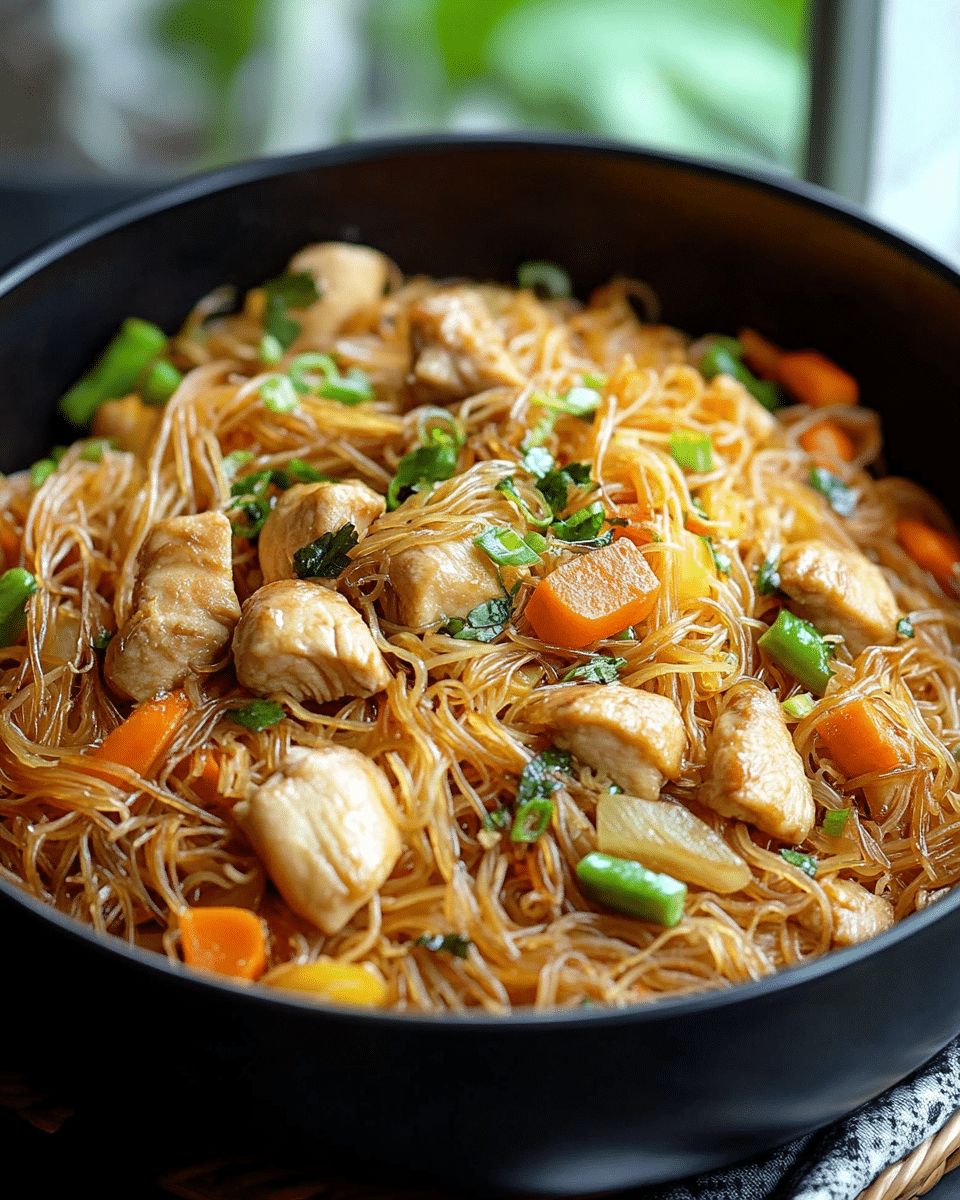
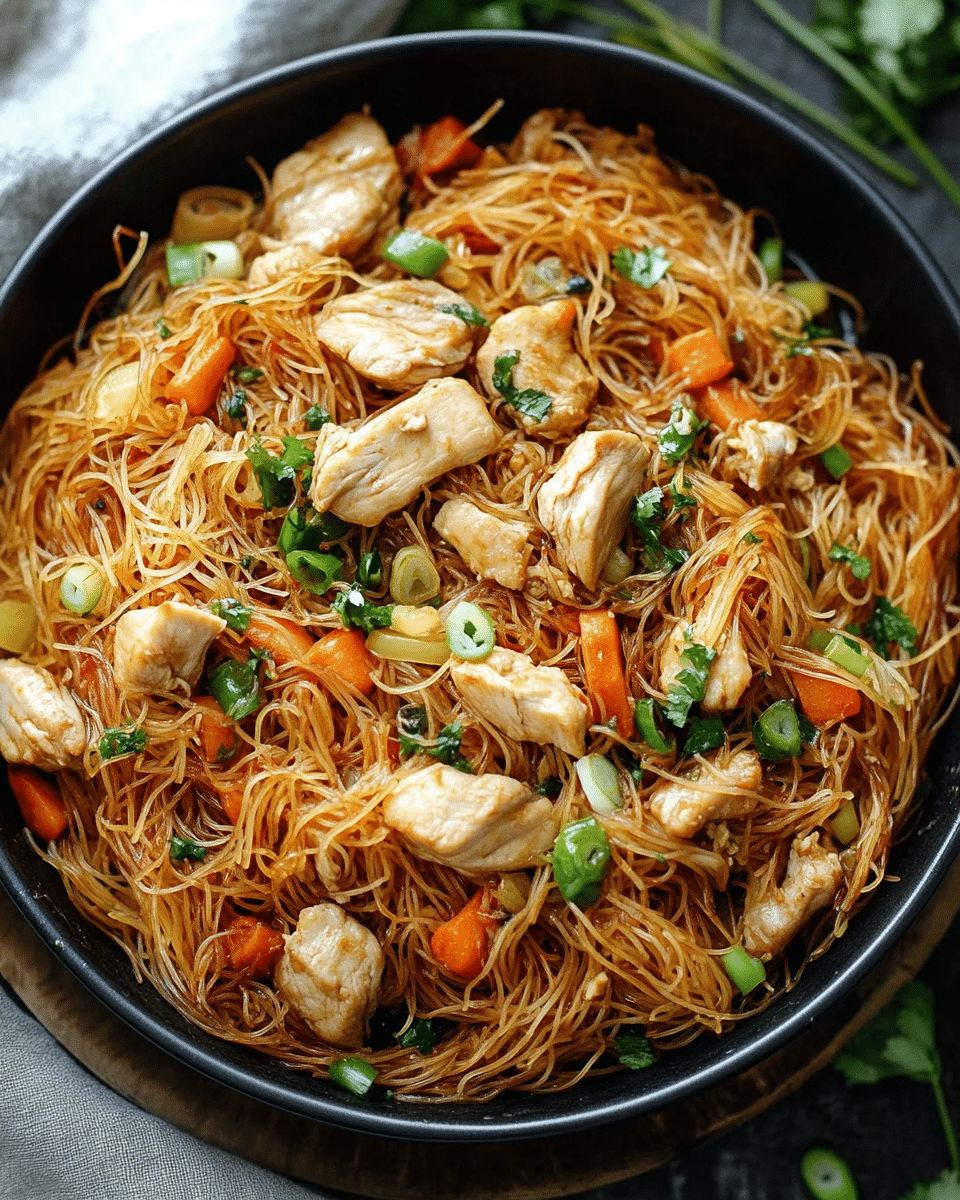
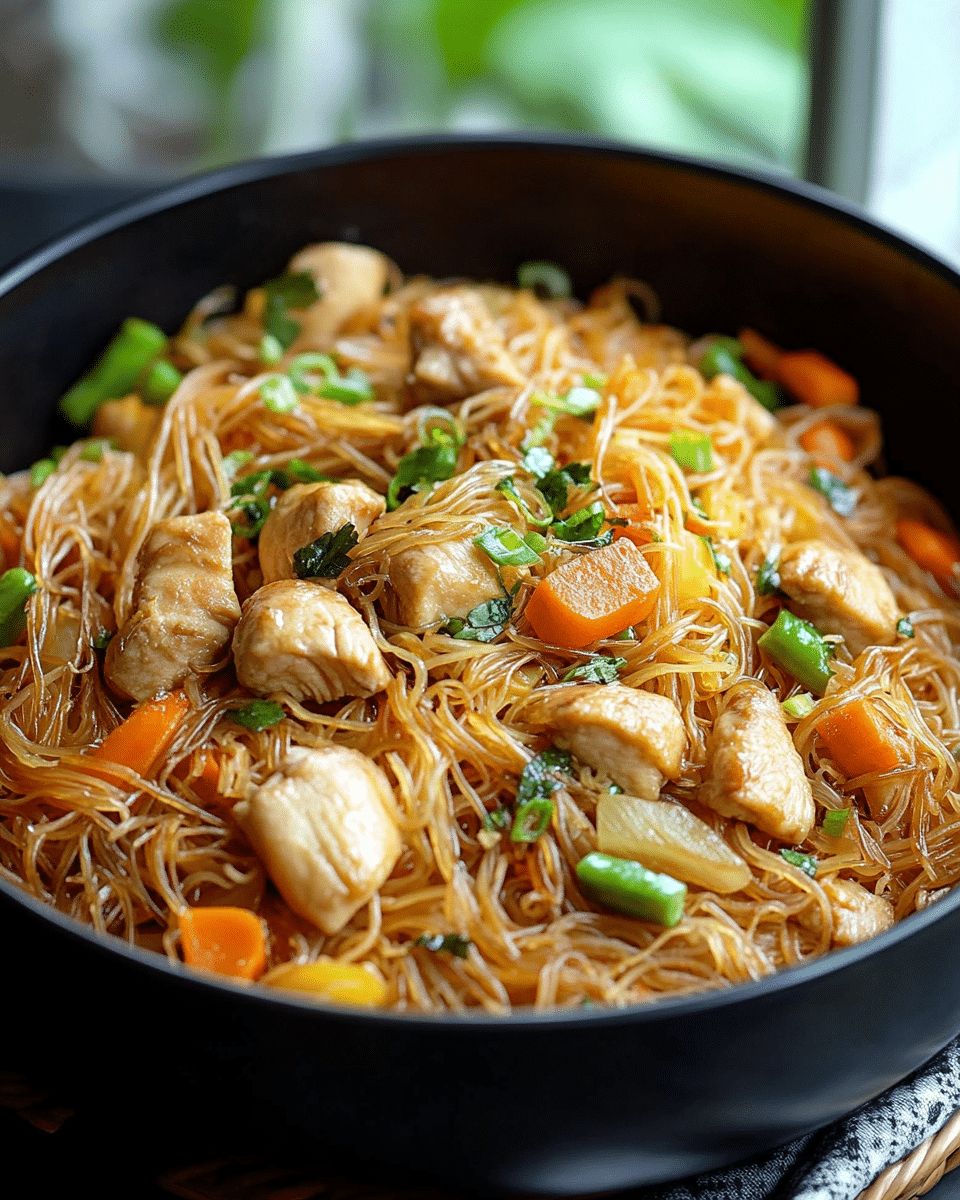
Imagine walking into a vibrant Filipino kitchen where the air is thick with the savory aroma of sizzling garlic and the bright citrus scent of fresh calamansi. This is the sensory experience that defines Authentic Filipino Bihon Pancit. Often considered the ultimate Filipino comfort food, this dish is a masterful stir-fry of thin rice vermicelli noodles, succulent chicken, and a colorful array of crisp vegetables. For generations, Pancit has been the centerpiece of “handaan” (celebrations), symbolizing long life and health. Whether you are honoring a traditional family birthday or simply looking to elevate your weeknight dinner rotation, this recipe offers a perfect balance of textures and flavors that will transport your taste buds straight to the heart of the Philippines.
At CookWithFeast, we believe that the beauty of Authentic Filipino Bihon Pancit lies in its versatility and nutritional density. The thin bihon noodles act like a sponge, soaking up a rich, umami-packed sauce made from soy sauce and oyster sauce, while the quick-seared vegetables maintain their crunch and vitamin content. It is a high-protein, fiber-rich meal that doesn’t feel heavy, making it an ideal choice for health-conscious foodies. In just 30 minutes, you can recreate a restaurant-quality dish that is deeply rooted in heritage. Follow our guide to learn the professional secrets of preventing soggy noodles and achieving that perfect savory-sweet balance that makes this dish truly unforgettable.
🖨️ Recipe Card
| Prep Time: | 15 Minutes |
| Cook Time: | 15 Minutes |
| Total Time: | 30 Minutes |
| Servings: | 4 Servings |
| Calories: | 320 kcal |
Ingredients for Success
To achieve the most authentic flavor, ensure your vegetables are chopped uniformly for even cooking.
- ✔️ 8 oz Bihon noodles (rice vermicelli)
- ✔️ 1 lb Boneless, skinless chicken breast, bite-sized pieces
- ✔️ 1 tbsp Peanut or vegetable oil
- ✔️ 2 cloves Garlic, minced
- ✔️ 1 small Onion, finely chopped
- ✔️ 1 ½ cups Mixed vegetables (carrots, cabbage, green beans, scallions)
- ✔️ 2 cups Low-sodium chicken or vegetable stock
- ✔️ 2 tbsp Dark soy sauce
- ✔️ 2 tbsp Regular soy sauce
- ✔️ 1 tbsp Oyster sauce
- ✔️ 1 tsp Granulated sugar
- ✔️ Salt and black pepper, to taste
- ✔️ Fresh lemon wedges, for serving
👩🍳 The Execution: How to Cook Authentic Bihon Pancit
Mastering this Filipino classic requires a specific sequence to ensure the noodles are perfectly seasoned and the vegetables remain vibrant. Follow these detailed steps for a restaurant-quality result.
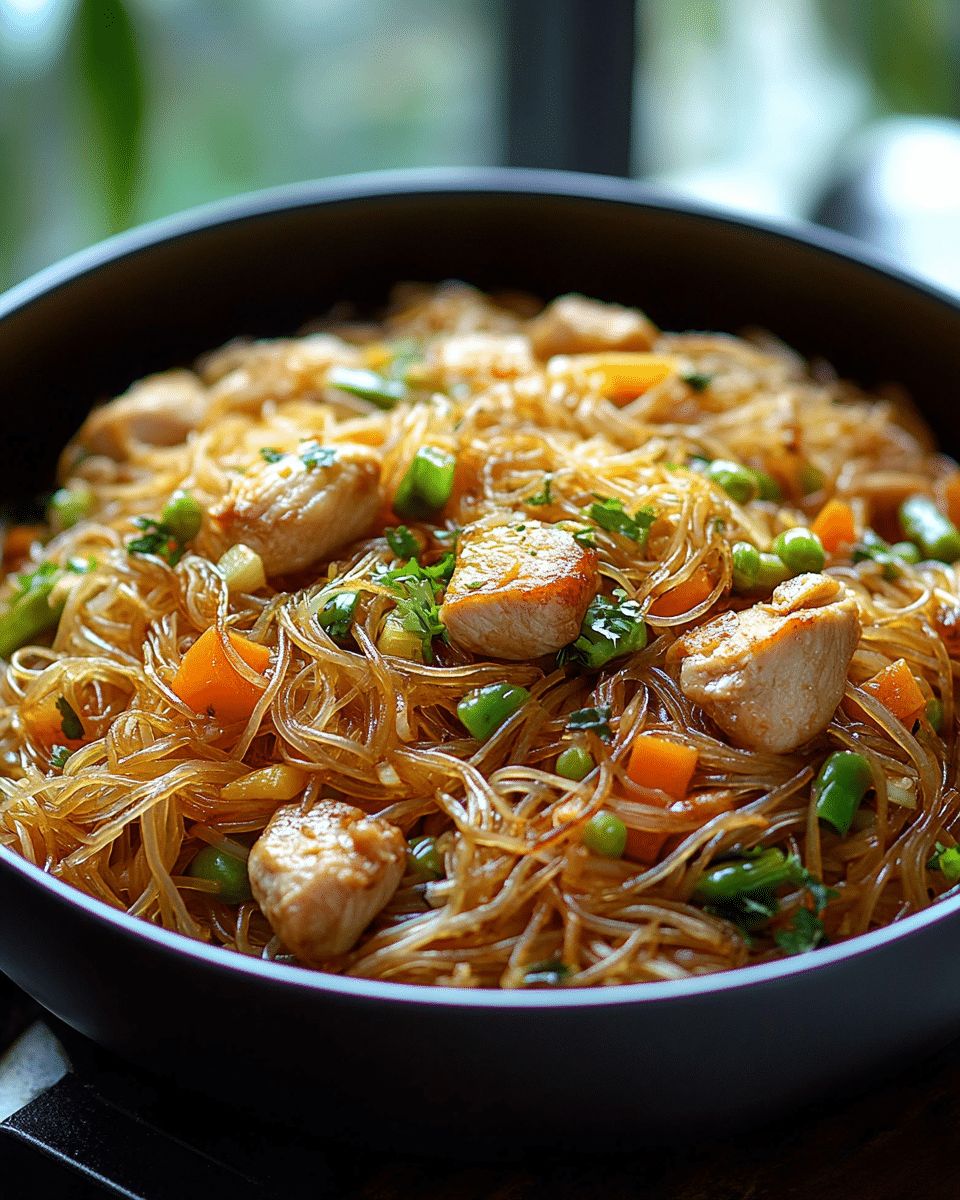
- Sear the chicken breast pieces in a wok or large, heavy-bottomed pan over medium-high heat. Add a tablespoon of peanut or vegetable oil and cook the chicken until it is golden brown and fully opaque.
Why this matters: By cooking the chicken first and then removing it from the pan, you ensure that the meat stays juicy and tender. If left in the pan while sautéing the rest of the ingredients, the lean chicken breast would likely overcook and become rubbery. Searing also leaves behind flavorful browned bits (fond) that will eventually season the noodles.
- Sauté the minced garlic and finely chopped onions in the same pan. Cook them for approximately 2 minutes, stirring constantly to prevent the garlic from burning while it releases its aromatic oils.
Why this matters: This process, known as “guisado” in Filipino cuisine, forms the flavor backbone of the dish. Sautéing the aromatics until they are soft and translucent creates a sweet, savory foundation that infuses the oil and the subsequent sauce with a deep, home-cooked fragrance.
- Return the cooked chicken to the pan and incorporate the mixed vegetables. Season the mixture with a pinch of salt and pepper and stir-fry for about 3–4 minutes until the vegetables are crisp-tender.
Why this matters: We want the vegetables to retain their structural integrity and bright colors. By stir-frying them briefly with the aromatics and chicken, they absorb the existing flavors in the pan without losing their characteristic crunch, which provides a vital textural contrast to the soft noodles.
- Pour in the chicken or vegetable stock, both types of soy sauce, the oyster sauce, and the sugar. Bring the liquid to a rolling boil, stirring gently to dissolve the sugar and integrate the savory sauces.
Why this matters: The bihon noodles are essentially sponges. For them to taste delicious, the liquid they absorb must be highly seasoned and boiling hot. The dark soy sauce provides the signature deep color, while the oyster sauce and sugar create a complex umami profile that is quintessential to authentic pancit.
- Add the dry bihon noodles directly into the boiling sauce. Stir gently but continuously to ensure every strand is submerged and coated. Simmer for 3–4 minutes until the noodles have absorbed most of the liquid and reached a soft, pliable texture.
Why this matters: Rice vermicelli is delicate. Cooking them directly in the sauce allows the starch in the noodles to slightly thicken the remaining liquid, creating a glossy finish. If the noodles look too dry or stiff, adding a splash more stock ensures they hydrate completely without becoming mushy.
- Finish the dish by giving it a final toss to distribute the chicken and vegetables evenly throughout the noodles. Serve the pancit immediately on a large platter with fresh lemon wedges or calamansi on the side.
Why this matters: The final toss ensures that no one gets a plate of just noodles. Serving with citrus is crucial because the acidity of the lemon cuts through the saltiness of the soy sauce and the richness of the oil, “waking up” the flavors and providing a bright, fresh finish that defines Filipino comfort food.
💡 Chef’s Tips: Professional Secrets for Success
To take your Authentic Filipino Bihon Pancit from good to “Lola-approved,” keep these professional pointers in mind:
The Quick Soak: If you find your noodles are still too stiff when adding them to the pan, briefly soak the dry bihon in warm water for 1–2 minutes before cooking. This jumpstarts the hydration process without making them mushy.
Uniformity is Key: Chop your carrots and green beans into thin, matchstick-sized pieces (julienne). This ensures they cook at the same rate as the thin noodles and creates a beautiful, professional presentation.
Don’t Forget the Citrus: Authentic pancit is rarely served without calamansi or lemon. The acidity brightens the saltiness of the soy sauce and “wakes up” all the savory flavors in the dish.
The “Wok Hei” Effect: If your stove allows, use high heat during the vegetable stir-fry stage. A slight char on the cabbage adds a smoky depth of flavor that defines great stir-fry noodles.
Liquid Control: Always keep a little extra chicken stock on hand. Different brands of rice noodles absorb liquid at different rates; if the pan looks dry but the noodles are still firm, add stock 1/4 cup at a time.
🌡️ Storage & Reheating Guidelines
In the Refrigerator
Store any leftover pancit in an airtight container for up to 3 days. This dish is excellent for meal prep as the flavors continue to meld overnight.
In the Freezer
While you can freeze pancit for up to 1 month, be aware that rice noodles may become slightly more brittle upon thawing. If freezing, undercook the vegetables slightly so they don’t turn into mush when reheated.
How to Reheat
Avoid the microwave if possible, as it can dry out the noodles. For the best texture, reheat in a skillet over medium-low heat with a splash of water or stock to loosen the noodles and restore their silkiness.
❓ Frequently Asked Questions
Can I make this dish vegetarian or vegan?
Absolutely! Simply swap the chicken for fried tofu or tempeh and use vegetable stock instead of chicken broth. For a vegan version, ensure you use a mushroom-based “vegetarian stir-fry sauce” instead of traditional oyster sauce.
What are Bihon noodles made of?
Bihon noodles are thin rice noodles or cornstarch-based vermicelli. They are naturally gluten-free (though always check the packaging for cross-contamination if you have a strict allergy) and are prized for their ability to absorb savory broths.
Can I add other proteins like shrimp or pork?
Yes! In the Philippines, it is very common to see “Pancit Special,” which includes a mix of chicken, sliced pork belly, and shrimp. Just cook the shrimp last to ensure they don’t become rubbery.
Conclusion
Mastering Authentic Filipino Bihon Pancit is a rewarding way to bring a piece of the Philippines into your home. Whether it’s a quiet dinner or a large celebration, these noodles are a testament to the warmth and hospitality of Filipino culture. The balance of savory soy, crunchy vegetables, and zesty citrus makes every bite a celebration.
We hope this recipe becomes a favorite in your household. If you’re looking to complete your Filipino feast, consider pairing this with some crispy lumpia for the ultimate dining experience. Happy cooking!