There is something undeniably comforting about a hearty, flavorful one-pot meal. When that meal combines tender chicken, juicy shrimp, savory andouille sausage, and aromatic rice simmered in a blend of bold spices, you have a dish that is guaranteed to satisfy your taste buds and warm your soul. Welcome to the world of Chicken and Shrimp Jambalaya, a vibrant, Creole-inspired classic perfect for any occasion.
Whether you are a seasoned cook or just getting your feet wet in the kitchen, this recipe delivers impressive depth of flavor without requiring hours of effort. By browning the proteins and sautéing the “holy trinity” of vegetables (onion, bell pepper, and celery), you create a rich foundation that makes every bite of rice a savory explosion. It is an ideal meal for family dinners, festive gatherings, or even meal prepping for the week ahead.
Quick Answer: Chicken and Shrimp Jambalaya is a traditional Louisiana rice dish that combines chicken, shrimp, and smoked sausage with vegetables and bold Creole seasonings. It is cooked in a single pot, allowing the rice to absorb the rich juices and spices for a complete, high-protein meal.
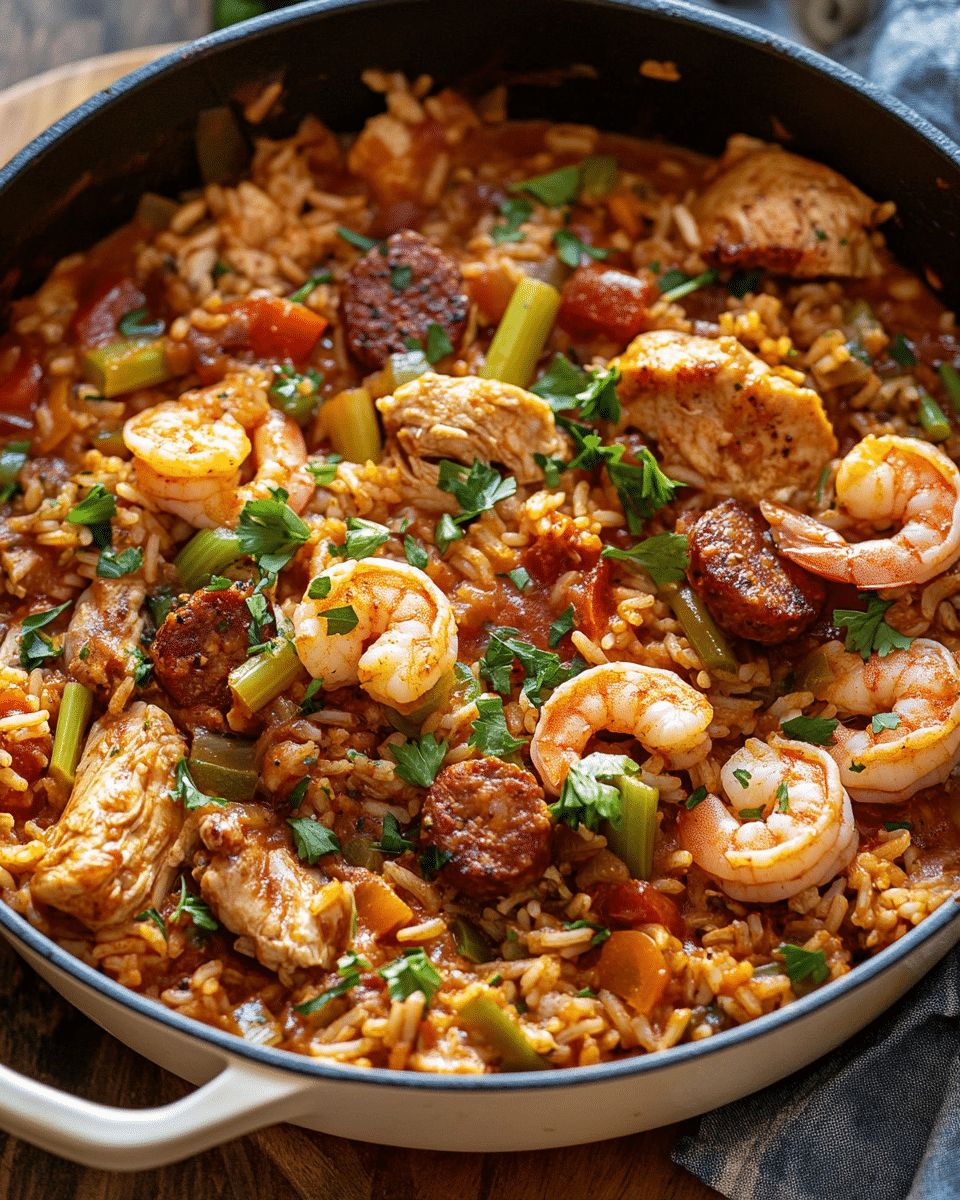
What Is Chicken and Shrimp Jambalaya?
Originating from the melting pot of Louisiana, this Creole and Cajun favorite is a rice-based masterpiece. Unlike its cousin, Gumbo, which is served as a stew over separate rice, Jambalaya is cooked with the rice directly in the pot. This allows every grain to soak up the smoky flavors of the sausage and the savory essence of the chicken stock.
In this version, we utilize both chicken and shrimp to provide a delightful variety of textures. The addition of tomato sauce identifies this as a “red” or Creole-style Jambalaya, offering a slightly sweeter, more complex acidic note compared to the brown Cajun versions found in rural Louisiana.
Essential Ingredients for Success
Before you turn on the stove, ensure you have gathered these key components. Quality Creole seasoning and fresh aromatics are the secrets to an authentic taste.
Table: Recipe Ingredients
| Ingredients | Amount |
|---|---|
| Olive Oil | 3 tablespoons |
| Boneless, Skinless Chicken Thighs | 1 pound, bite-sized pieces |
| Creole or Cajun Seasoning | 1 tablespoon + 2 teaspoons |
| Andouille Sausage | 12 ounces, sliced |
| White Onion | 1 medium, diced |
| Green Bell Pepper | 1 large, diced |
| Celery | 2 ribs, diced |
| Garlic | 6 cloves, minced |
| Long-Grain White Rice | 1 ½ cups |
| Chicken Stock | 2 ¼ cups |
| Large Shrimp | ½ pound |
Step-by-Step Guide to Crafting the Perfect Jambalaya
Bringing a Chicken and Shrimp Jambalaya to life is an exercise in building layers of flavor. While the ingredient list may look long, the process is logical and rewarding. By following these steps, you ensure that every component—from the snap of the shrimp to the fluffiness of the rice—is executed to perfection.
1. Preparing Your Proteins
Success starts with preparation. To get a beautiful sear on your meat, you must eliminate moisture. Use paper towels to pat the chicken thighs completely dry before seasoning. This prevents the meat from steaming and allows for the Maillard reaction, which creates those delicious browned bits known as “fond.”
- Pat 1 lb of chicken thighs dry.
- Season generously with 1 tablespoon of Creole seasoning.
- Slice the andouille sausage into uniform rounds for even cooking.
2. Searing for Maximum Flavor
Heat 3 tablespoons of olive oil in a heavy-duty Dutch oven. This type of pot is essential for Jambalaya because it distributes heat evenly and prevents the rice from scorching. Brown the chicken first, followed by the sausage. Do not worry about cooking the chicken through at this stage; we are only looking for a deep, golden-brown crust.
Once browned, remove the meats and set them aside. You will notice a dark coating on the bottom of your pot—this is culinary gold. We will deglaze this in the next step to incorporate that concentrated flavor back into the rice.
Mastering the “Holy Trinity” and the Rice Base
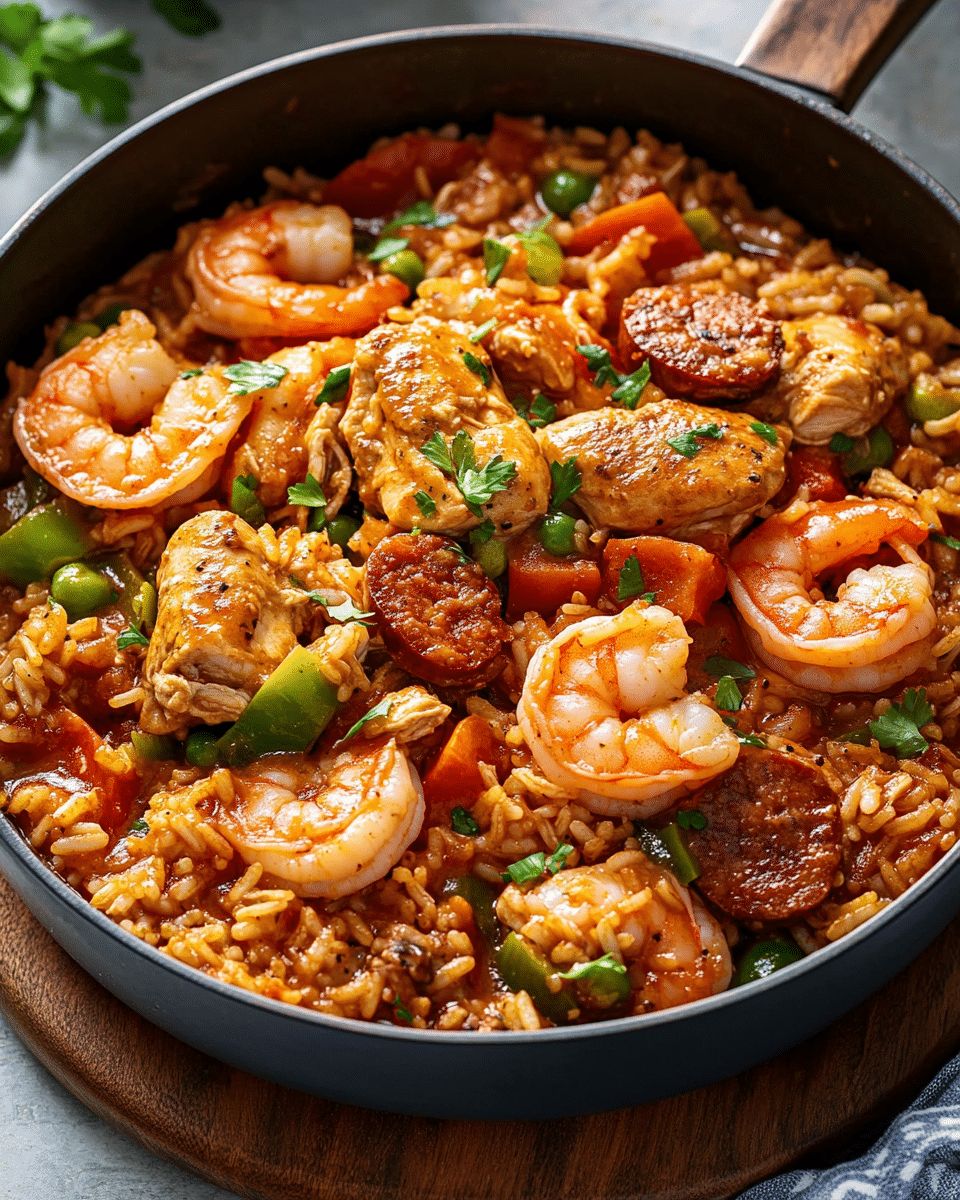
In Louisiana cooking, the “Holy Trinity” consists of onions, green bell peppers, and celery. This vegetable base provides the aromatic foundation for almost every classic Creole dish. Sautéing them slowly allows their natural sugars to caramelize and blend with the rendered fats from the sausage.
The Aromatics Process
- Add the diced onions, peppers, and celery to the pot with a pinch of salt.
- Sauté for 12–15 minutes until softened. If the pot looks too dry, add a splash of water to help lift the browned bits from the bottom.
- Stir in the minced garlic and dried oregano, cooking for just 2 minutes until fragrant.
Toasting the Rice
Before adding any liquid, stir your long-grain white rice into the vegetable mixture. Coating the rice grains in the oil and aromatics helps them maintain their structure during the long simmer, preventing the dish from becoming mushy. This technique is similar to making a risotto or pilaf and is a hallmark of a high-quality Jambalaya.
| Cooking Phase | Key Ingredient | Primary Goal |
|---|---|---|
| The Sear | Chicken & Sausage | Create flavor through browning (fond). |
| The Trinity | Onion, Pepper, Celery | Build a sweet and savory aromatic base. |
| The Toast | Long-Grain Rice | Infuse grains with oil and prevent mushiness. |
| The Simmer | Chicken Stock & Tomato | Hydrate rice and meld all ingredients. |
The Simmer: Where Magic Happens
Once the rice is toasted, it is time to introduce the liquids. Pour in the tomato sauce and low-sodium chicken stock. Return the browned chicken and sausage to the pot, along with the bay leaves. Bring the mixture to a vigorous boil, give it one final stir to ensure nothing is sticking, then reduce the heat to the lowest setting.
Cover the pot tightly. Resisting the urge to peek is crucial—the steam trapped inside is what cooks the rice perfectly. Let it simmer undisturbed for about 25 minutes. About halfway through, you can give it a very quick stir to ensure the bottom isn’t scorching, but move fast to keep the heat inside.
Perfectly Cooked Shrimp
While the rice is simmering, handle the shrimp separately. Because shrimp cook in minutes, adding them to the pot too early results in a rubbery texture. Sauté them in a separate pan with Creole seasoning and olive oil for just 1 minute per side. They should be “just barely” done when you remove them from the heat. They will finish cooking from the residual heat of the rice once combined.
Pro Tips for Professional Results
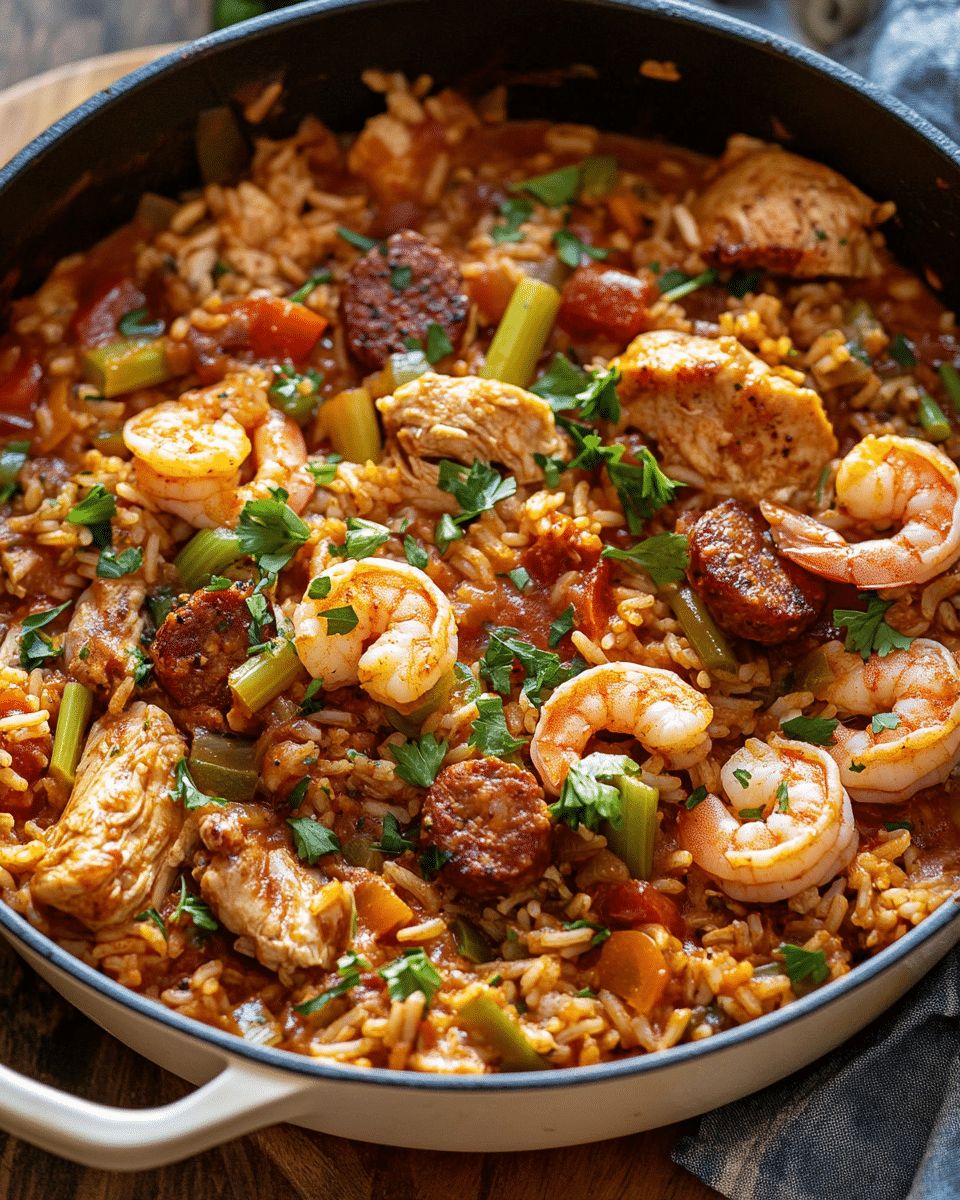
To elevate your Chicken and Shrimp Jambalaya from a simple home meal to a world-class dish, consider these expert styling and flavor tips:
- The Resting Period: Once the rice is tender, turn off the heat and stir in your sautéed shrimp. Cover the pot again and let it sit for 5–10 minutes. This “carries over” the heat and allows the moisture to redistribute, resulting in a fluffier texture.
- Texture Control: If you find the rice is still too firm after 25 minutes, add a 1/4 cup of warm stock and cover for another 5 minutes. Never use cold water, as it drops the temperature of the pot instantly.
- Fresh Garnishes: Never skip the green onions and parsley. The brightness of fresh herbs cuts through the smoky, heavy flavors of the meat and rice, providing a necessary balance.
Chef’s Insight: For an even deeper flavor, use a homemade shrimp stock instead of chicken stock. You can make this easily by boiling the shrimp shells with a bit of onion and water for 20 minutes before straining.
Nutritional Breakdown and Serving Sizes
Jambalaya is famously filling, making it an excellent choice for feeding a crowd or meal prepping. Below is the approximate nutritional data per serving, based on a 6-serving yield.
| Nutrient | Amount Per Serving | Daily Value (%) |
|---|---|---|
| Calories | 485 kcal | 24% |
| Protein | 38g | 76% |
| Total Fat | 18g | 23% |
| Carbohydrates | 46g | 17% |
| Sodium | 890mg | 39% |
This dish is high in protein and provides a sustained energy release thanks to the complex carbohydrates in the rice and vegetables. To keep the sodium in check, always opt for “low-sodium” chicken stock and adjust your salt intake based on the saltiness of your chosen Creole seasoning brand.
You May Also Like
Explore more flavorful recipes and cooking guides: Creole Cooking, One-Pot Meals, Shrimp Recipes, and Cajun Seasoning Tips.
Learn more about the history of this dish: Wikipedia – Jambalaya
Frequently Asked Questions
Can I make Chicken and Shrimp Jambalaya ahead of time?
Yes, Jambalaya is an excellent dish for meal prepping as the flavors continue to meld and deepen over time. You can store leftovers in an airtight container in the refrigerator for up to 3 days. When reheating, add a splash of chicken stock to ensure the rice remains moist and fluffy.
What is the difference between Creole and Cajun Jambalaya?
The primary difference is the use of tomatoes. Creole Jambalaya (often called “red jambalaya”) includes tomatoes or tomato sauce, giving it a vibrant red hue and a slightly acidic sweetness. Cajun Jambalaya (or “brown jambalaya”) does not use tomatoes; the color and flavor come from browning the meat and vegetables deeply in the pot.
How do I prevent the rice from becoming mushy?
To avoid mushy rice, ensure you are using long-grain white rice rather than short-grain or sticky varieties. Additionally, toasting the rice in the oil for a few minutes before adding the liquid creates a protective coating around the grains. Finally, avoid over-stirring the pot while it simmers, as this releases excess starch.
Final Thoughts
Mastering this Chicken and Shrimp Jambalaya allows you to bring a piece of Louisiana heritage right into your kitchen. It is a testament to how simple ingredients like rice, vegetables, and protein can be transformed into a world-class meal through the careful layering of spices and browning techniques. Whether you are hosting a festive Mardi Gras celebration or simply seeking a comforting weeknight dinner, this recipe never fails to impress.
The beauty of this dish lies in its versatility. Once you have the base technique down, feel free to experiment with different levels of spice or alternative proteins like smoked turkey or crawfish. Now, grab your Dutch oven and enjoy the rich, smoky aroma of a true Creole classic. Your journey into bold, Southern flavors starts here!