Elevate your holiday table with a centerpiece that is as visually stunning as it is delicious. This Cranberry Balsamic Ribeye Roast is the ultimate expression of festive luxury, combining the rich, marbled tenderness of premium beef with a sophisticated sweet-tart glaze. Whether you are hosting a formal Christmas dinner or an intimate winter gathering, this recipe promises to be the highlight of the evening.
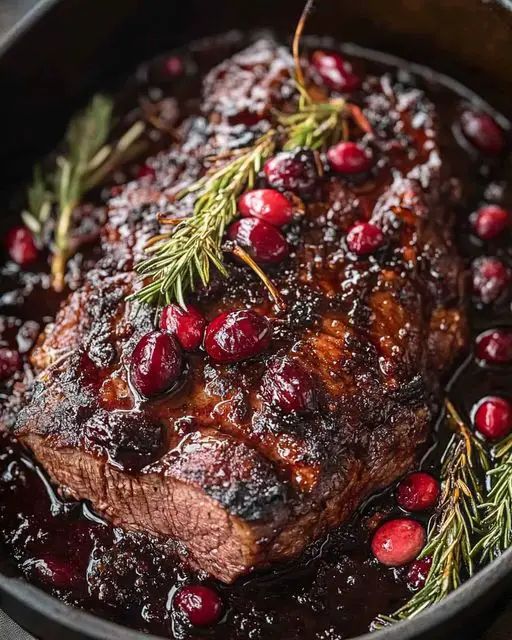
The magic lies in the balance of flavors: the deep acidity of balsamic vinegar, the seasonal brightness of fresh cranberries, and the aromatic warmth of fresh thyme. By marinating the roast overnight and finishing it with a vibrant pan sauce, you ensure every slice is succulent and infused with gourmet flair. It’s an approachable yet impressive dish that transforms a standard ribeye into an extraordinary culinary experience.
Quick Answer: The Cranberry Balsamic Ribeye Roast is a festive main course featuring a 3-5 lb ribeye marinated in balsamic vinegar, cranberry sauce, and garlic. Seared for a perfect crust and roasted at 350°F until it reaches an internal temperature of 140°F (medium-rare), it is served with a signature reduction of fresh cranberries and pan drippings.
Essential Ingredients for Your Holiday Roast
To create a truly world-class ribeye roast, the quality of your ingredients is paramount. Each component of this recipe is selected to build layers of flavor, starting with the beef and ending with the bright, acidic notes of the cranberry reduction.
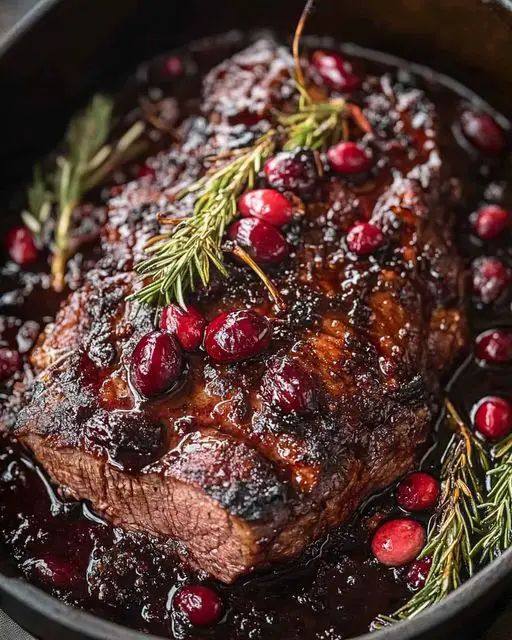
The Star: Selecting Your Ribeye
The ribeye roast, often referred to as “Prime Rib” when the bone is left in, is prized for its heavy marbling. This intramuscular fat melts during the roasting process, basting the meat from the inside and ensuring a buttery texture. Look for a roast with a thick “cap” (the spinalis dorsi) as this is the most flavorful part of the animal.
The Marinade and Glaze Components
- 3 to 5 Pounds Ribeye Roast: The center-cut is ideal for even cooking.
- ½ Cup Balsamic Vinegar: Provides the acidic backbone that tenderizes the fibers.
- ¼ Cup Cranberry Sauce: Adds body and a fruity sweetness to the glaze.
- 2 Cups Fresh Cranberries: These burst during roasting to create a rustic, chunky pan sauce.
- 2 Tablespoons Brown Sugar: Essential for the caramelization (Maillard reaction) during the searing and roasting phases.
- Aromatics: 2 minced garlic cloves, 1 teaspoon red pepper flakes for subtle heat, and 6 sprigs of fresh thyme.
Nutritional Profile per Serving
| Nutrient | Amount per 6oz Serving |
|---|---|
| Calories | 485 kcal |
| Protein | 38g |
| Total Fat | 32g |
| Carbohydrates | 12g |
| Iron | 22% DV |
Step-by-Step Culinary Directions
Following a precise technique is the difference between a “good” roast and a “legendary” one. This method focuses on deep flavor penetration and a high-contrast crust.
1. Mastering the Marinade
Combine your balsamic vinegar, garlic, cranberry sauce, brown sugar, pepper flakes, and olive oil in a large resealable bag. Pro Tip: Use a fork or a small knife to pierce the roast 10–15 times. This allows the balsamic acidity to travel deeper than the surface level, seasoning the meat all the way to the center.
2. The Importance of the Overnight Soak
While you can marinate for 4 hours, an overnight marination (12–24 hours) is highly recommended. The salt and acid work together to break down tough connective tissues, while the sugars in the cranberry and balsamic infuse the outer layers of the beef.
3. Achieving the Perfect Sear
Before the roast hits the oven, it needs a stovetop sear. This is not about cooking the meat through; it is about creating a golden-brown crust.
- Remove the roast from the bag and pat it completely dry. Moisture is the enemy of a good sear.
- Heat vegetable oil in a heavy cast-iron skillet until it just begins to smoke.
- Sear each side for 2–3 minutes. Do not forget the ends!
4. The Roasting Process
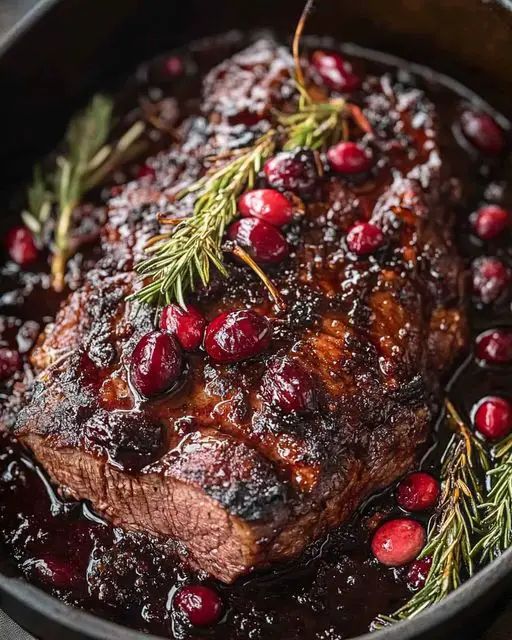
Preheat your oven to 350°F (175°C). After searing, pour the remaining marinade and ½ cup of beef broth into the skillet. Surround the roast with the 2 cups of fresh cranberries and the thyme sprigs. This environment creates a “braise-roast” hybrid where the bottom of the meat stays moist in the liquid while the top remains crispy.
Internal Temperature Guide
Never rely on a timer alone. The size of the roast, the accuracy of your oven, and the starting temperature of the meat all affect cooking time. Use a digital meat thermometer for the best results.
| Desired Doneness | Pull Temp (Remove from Oven) | Final Temp (After Resting) |
|---|---|---|
| Rare | 125°F (52°C) | 130°F – 135°F |
| Medium-Rare | 135°F (57°C) | 140°F – 145°F |
| Medium | 145°F (63°C) | 150°F – 155°F |
Chef’s Secret: Always remove the meat from the oven 5 degrees before your target temperature. “Carry-over cooking” will occur while the meat rests, raising the internal temperature significantly.
Expert Tips for Success
To ensure your Cranberry Balsamic Ribeye Roast is the talk of the town, keep these professional styling and cooking tips in mind:
Resting is Mandatory
Do not slice the meat immediately! If you cut into a hot roast, the juices will run out onto the cutting board, leaving the meat dry. Let it rest for at least 15 to 20 minutes under a loose tent of aluminum foil. This allows the muscle fibers to relax and reabsorb the moisture.
Managing the Pan Sauce
The liquid left in the skillet after roasting is liquid gold. If the sauce is too thin, transfer it to a small saucepan and simmer over medium heat until it reduces by half. If it is too thick, whisk in a tablespoon of beef broth or a splash of red wine.
Kitchen Equipment Checklist
- Cast-Iron Skillet: For superior heat retention and a better sear.
- Meat Thermometer: To avoid the tragedy of overcooked ribeye.
- Kitchen Tongs: To safely turn the heavy roast during the searing phase.
- Chef’s Knife: A sharp blade is required for clean, beautiful slices.
Variations and Substitutions
While the original recipe is balanced, you can adapt it based on what you have in your pantry or your specific dietary needs.
Meat Alternatives
If you cannot find a ribeye roast, a Top Sirloin Roast or a Tri-Tip can work as budget-friendly alternatives. Keep in mind that sirloin is leaner, so you may want to reduce the roasting time slightly to avoid drying it out.
Flavor Swaps
- Herb Variations: Swap thyme for rosemary or sage for a more “earthy” pine-like aroma.
- Sweetener: If you prefer to avoid refined sugar, use 2 tablespoons of maple syrup or honey instead of brown sugar.
- Citrus Twist: Add the zest of one orange to the marinade to complement the cranberry flavors.
Serving and Presentation
A gourmet meal deserves a gourmet presentation. Slice the roast into thick, 1-inch portions. Fan them out on a large warmed platter and spoon the chunky cranberry balsamic sauce over the center of the slices. Garnish with fresh, un-cooked thyme sprigs and a few raw cranberries for a pop of bright red color that screams holiday cheer.
Pair this rich dish with sides that can cut through the fat of the ribeye. A Garlic Mashed Cauliflower or Honey-Glazed Carrots provide the perfect textural contrast. For wine, choose a high-tannin red like a Napa Valley Cabernet to balance the succulent fat of the roast.
You May Also Like
If you enjoyed this festive centerpiece, explore more of our gourmet selections: Perfect Prime Rib, Holiday Side Dishes, Balsamic Glaze Recipes, and Savory Roast Beef Techniques.
To learn more about the different grades and quality standards of beef, visit the USDA Beef Grading Guide.
Frequently Asked Questions
Can I use dried cranberries instead of fresh?
While fresh cranberries are preferred for their bright acidity and texture, you can use dried ones if necessary. To prevent them from burning, soak them in warm beef broth or water for 15 minutes to plump them up before adding them to the roasting pan.
How do I make this roast ahead of time?
You can prepare the marinade and keep the ribeye submerged in the refrigerator for up to 24 to 48 hours. However, the searing and roasting steps should be done fresh on the day of serving to ensure the meat remains juicy and the crust stays crisp.
What if I don’t have a cast-iron skillet?
If you don’t have a cast-iron skillet, you can sear the roast in any heavy-bottomed stainless steel pan. Once seared, simply transfer the meat and all the pan liquids into a standard roasting pan or an oven-safe glass baking dish to finish in the oven.
Final Thoughts
The Cranberry Balsamic Ribeye Roast is more than just a meal; it is a holiday experience that brings a touch of fine dining to your home kitchen. The interplay between the succulent, marbled beef and the sharp, festive cranberry reduction ensures that every bite is balanced and memorable. By taking the time to marinate and properly rest your meat, you guarantee a professional-level result that will impress even the most discerning guests.
As you prepare for your next special gathering, remember that the best recipes are those shared with loved ones. We hope this roast becomes a new tradition at your dinner table. Happy cooking and enjoy the feast!