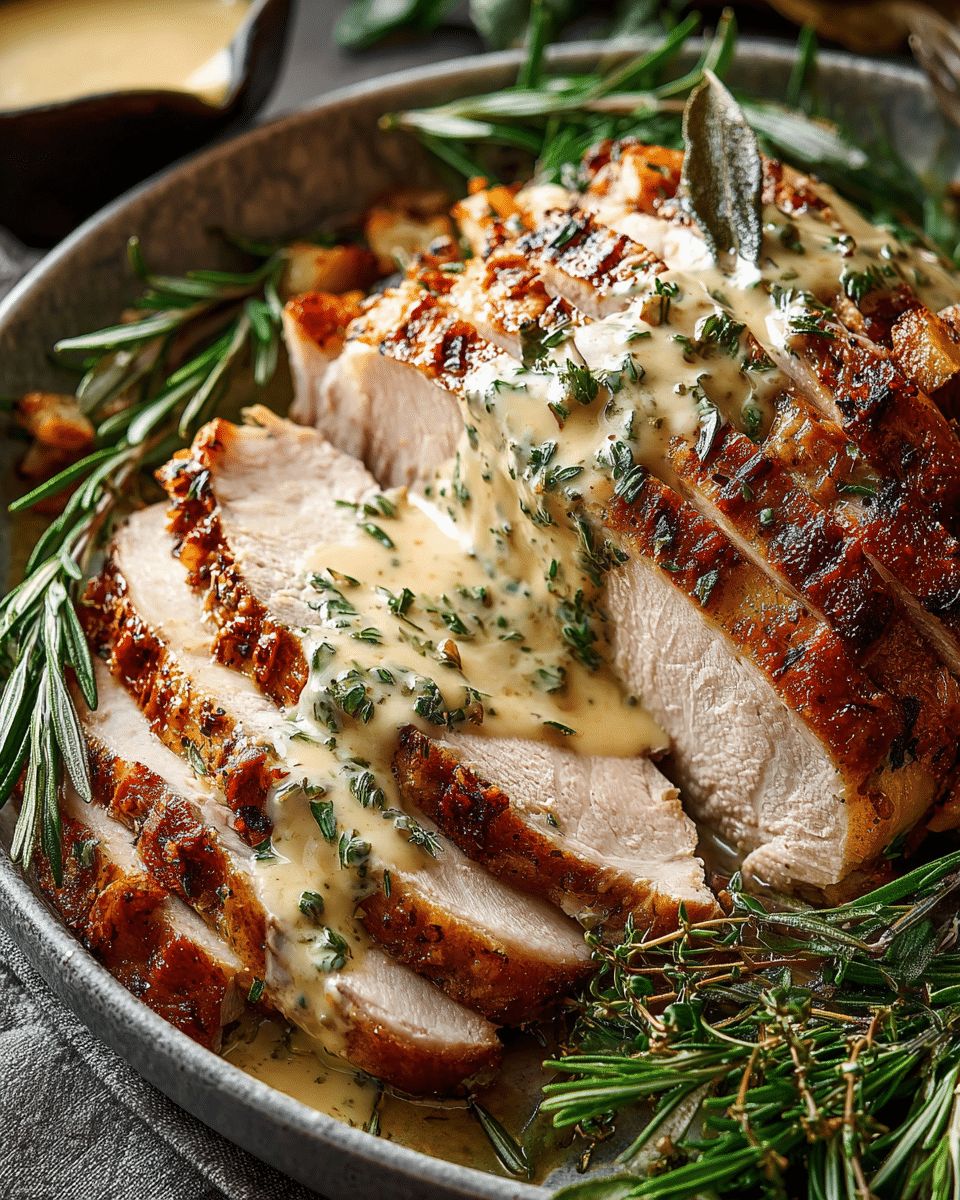
The beauty of a perfectly prepared turkey dish lies in the delicate balance of earthy aromas, rich textures, and comforting flavors. While many associate turkey only with large holiday gatherings, this Herb-Roasted Turkey with Garlic Rosemary Cream Sauce proves that a high-quality bird can be the star of any weeknight dinner or intimate celebration. By focusing on fresh aromatics and a precise cooking method, you can transform a simple cut of meat into a restaurant-caliber masterpiece.
What sets this recipe apart is the stovetop braising technique. Unlike traditional oven roasting, which can often lead to dry results, searing the turkey and then simmering it slowly allows the meat to remain incredibly succulent and tender. The process builds layers of flavor directly in the pan, utilizing the natural juices and essential oils from fresh rosemary and sage to create a foundation for a truly luxurious finish.
The crowning jewel of this dish is the garlic rosemary cream sauce. Built from the savory “fond” left in the pan after roasting, this velvety sauce ties the entire meal together. It adds a sophisticated richness that complements the lean turkey breast, ensuring every bite is moist and packed with savory herb notes. Whether you are a seasoned home cook or a beginner, this guide will help you achieve gourmet results with ease.
Quick Answer: This recipe features a boneless turkey breast seared to golden perfection and slow-simmered with fresh rosemary and garlic. The result is juicy, tender meat served with a silky herb-infused cream sauce that is perfect for elegant dinners or elevated weeknight meals.
The Flavor Foundations of Herb-Roasted Turkey with Garlic Rosemary Cream Sauce
The success of this dish lies in its simplicity and the quality of its aromatic foundations. Unlike traditional roasted turkey, which often relies on a high-heat oven environment, this stovetop method emphasizes the slow extraction of flavors from fresh botanicals. By using fresh rosemary and sage, we tap into the essential oils that only release their full potential when gently warmed in a fat source like olive oil. This creates a fragrant base that permeates the turkey breast from the outside in.
The synergy between the thinly sliced garlic and the woody herbs provides a savory depth that complements the naturally lean profile of turkey. While dried herbs can be used in a pinch, they lack the bright, resinous notes that define this specific flavor profile. The garlic acts as a bridge, grounding the floral notes of the rosemary and the earthy, slightly peppery bite of the sage. Together, these elements form the “soul” of the dish, ensuring that every slice of meat is infused with a sophisticated herbal essence.
- Fresh Rosemary: Provides a pine-like aroma and robust savory flavor.
- Fresh Sage: Adds an earthy depth that is iconic to poultry dishes.
- Sliced Garlic: Offers a sweet, mellow pungency when sautéed correctly.
- Extra Virgin Olive Oil: Acts as the medium for heat transfer and flavor extraction.

Why Boneless Turkey Breast is the Superior Choice
Choosing a boneless turkey breast for this recipe is a strategic culinary decision. A boneless cut allows for more even contact with the pan surface, which is crucial for achieving a consistent golden-brown sear. Because the bone is removed, the meat is more flexible and can be easily flipped and manipulated within a Dutch oven or heavy skillet. This ensures that the heat penetrates the center of the meat at a predictable rate, minimizing the risk of the exterior becoming overcooked while the interior remains raw.
Furthermore, a boneless cut is significantly easier to season. You can ensure that the salt and black pepper reach every surface of the meat, leading to a better-tasting final product. When it comes time to serve, the lack of bones allows for clean, uniform slices that look stunning on a platter, especially when drizzled with a luxurious cream sauce.
Detailed Ingredient Breakdown and Preparation
Before beginning the cooking process, it is essential to have all ingredients measured and prepped. This “mise en place” approach prevents the garlic from burning and ensures the sauce-making process is seamless. The following table outlines the specific requirements for this gourmet turkey recipe:
| Ingredient Category | Specific Item | Quantity / Note |
|---|---|---|
| Main Protein | Boneless Turkey Breast | 2 lbs (well-trimmed) |
| Fats & Oils | Olive Oil | 1/4 cup |
| Aromatics | Garlic Cloves | 5 cloves (thinly sliced) |
| Herbs | Fresh Rosemary & Sage | 2 tbsp Rosemary / 1/4 cup Sage |
| Liquid Base | Chicken Broth | 1/2 cup (low sodium) |
| Cream | Heavy Cream | 1/2 cup |
Smart Prep for a Perfect Sear
The most important step in the preparation phase is drying the turkey. Moisture is the enemy of a good sear. Use paper towels to pat the entire surface of the turkey breast until it is bone-dry. This allows the Maillard reaction—the chemical reaction between amino acids and reducing sugars—to occur immediately upon contact with the hot oil. Without this step, the turkey will steam rather than sear, resulting in a grey, lackluster exterior rather than a crispy, golden crust.
Once dry, season the meat aggressively. Turkey is a dense protein that requires a generous amount of salt to enhance its natural flavor. Don’t be afraid to use coarse sea salt and freshly cracked black pepper for the best texture and bite.
Mastering the Stovetop Braising Technique
Stovetop braising is a hybrid cooking method that combines the high-heat browning of a sear with the gentle, moist-heat cooking of a simmer. This method is particularly effective for turkey breast because it prevents the meat from reaching the high, dry temperatures of an oven. By partially covering the pan, you create a micro-steaming environment that keeps the moisture trapped inside the protein fibers.
- The Initial Sear: Heat the oil until it shimmers. Place the seasoned turkey in the pan and leave it undisturbed for 4-5 minutes. Resistance when trying to flip the meat means it hasn’t formed a crust yet; wait for it to release naturally.
- Infusing the Aromatics: After searing both sides, lower the heat before adding your garlic and herbs. The goal is to “bloom” the herbs in the hot oil without scorching the garlic, which can turn bitter in seconds.
- The Slow Simmer: Return the turkey to the pot. Flipping the turkey every 10–15 minutes is vital. This redistributes the internal juices, ensuring the meat stays succulent throughout the hour-long cooking process.
- Temperature Control: Use an instant-read thermometer. Remove the turkey at exactly 160°F. The carryover heat during the resting period will bring it to the FDA-recommended 165°F without drying it out.

Creating the Luxurious Garlic Rosemary Cream Sauce
The sauce is not just an accompaniment; it is the finishing touch that elevates the entire dish. After removing the turkey, the bottom of your pan will be covered in browned bits (fond). This is concentrated flavor. By adding chicken broth to the hot pan, you “deglaze” it, lifting those savory particles into the liquid. This creates a bold, savory base that no bottled sauce can replicate.
When adding the heavy cream, ensure the heat is on medium-low. Boiling cream too vigorously can cause it to separate. You want a gentle simmer that slowly reduces the liquid until it coats the back of a spoon. This process thickens the sauce naturally, creating a velvety texture that clings beautifully to the sliced turkey.
Nutritional Comparison and Serving Suggestions
Understanding the nutritional profile of your meal helps in planning a balanced diet. Turkey is an excellent source of lean protein and essential minerals like selenium and zinc. Below is an approximate nutritional breakdown for a single serving of this dish:
| Nutrient | Amount Per Serving | % Daily Value |
|---|---|---|
| Calories | 420 kcal | 21% |
| Protein | 45g | 90% |
| Total Fat | 24g | 31% |
| Saturated Fat | 9g | 45% |
| Cholesterol | 115mg | 38% |
| Sodium | 480mg | 20% |
Side Dish Pairings for a Balanced Plate
To balance the richness of the garlic rosemary cream sauce, pair the turkey with side dishes that offer acidity or a contrasting texture. A crisp green salad with a lemon vinaigrette or roasted vegetables (like cauliflower or Brussels sprouts) works wonders. The earthy tones of the herbs in the turkey also pair exceptionally well with wild rice pilaf or a light, airy mash of cauliflower and potatoes.
For a truly elegant presentation, arrange the sliced turkey in an overlapping fan pattern on a warmed platter. Pour the sauce down the center of the slices, leaving the crispy edges of the meat visible. Garnish with a few fresh sprigs of rosemary and a sprinkle of pomegranate seeds or dried cranberries for a pop of color and sweetness.
Storage, Leftovers, and Expert Tips
If you find yourself with leftovers, this Herb-Roasted Turkey stores remarkably well. The key is to keep the meat and the sauce in separate airtight containers. This prevents the turkey from becoming soggy and allows you to control the reheating process for each component.
- Refrigeration: Store for up to 3 days. Ensure the turkey has cooled completely before sealing to prevent condensation.
- Reheating the Meat: The best way to reheat turkey without drying it out is in a skillet over low heat with a few tablespoons of broth. Cover with a lid to steam the meat gently.
- Reheating the Sauce: Heat the cream sauce separately in a small saucepan. If it has thickened too much in the fridge, whisk in a teaspoon of water or milk to restore its silky consistency.
Pro Tip: Use the leftover sliced turkey for gourmet sandwiches the next day. Layer the meat with a bit of the cold cream sauce, some baby arugula, and a slice of provolone cheese on a toasted baguette for a memorable lunch.
You May Also Like
If you enjoyed this comfort food staple, you may also find these recipes helpful for your next meal: Cajun Shrimp Pasta, Cheesy Chicken Casserole, Savory Meatloaf, and Roasted Herb Vegetables.
Source: For more information on safe internal temperatures and poultry handling, visit the USDA official website.
Frequently Asked Questions
How do I prevent the turkey breast from drying out?
The secret to juicy herb-roasted turkey is the combination of an initial high-heat sear followed by a slow stovetop braise. Always use a meat thermometer to ensure the internal temperature reaches 160°F before removing it from the heat. The residual heat during the resting period will bring it to the perfect 165°F without evaporating the essential juices.
Can I use dried herbs instead of fresh rosemary and sage?
While fresh herbs provide a more vibrant, resinous aroma, you can substitute with dried herbs if necessary. Use one-third of the amount specified for fresh herbs, as dried versions are more concentrated. However, for the most authentic Garlic Rosemary Cream Sauce, fresh sprigs are highly recommended to achieve that signature gourmet flavor.
What is the best way to store and reheat the cream sauce?
Store your sauce in a separate airtight container in the refrigerator for up to three days. To maintain its silky texture when reheating, warm it gently over low heat on the stovetop and whisk in a small splash of chicken broth or heavy cream if it has thickened too much during cooling.
Final Thoughts
Mastering this Herb-Roasted Turkey with Garlic Rosemary Cream Sauce brings a touch of gourmet elegance to your kitchen without the stress of a full day spent roasting. The balance of savory garlic, earthy herbs, and a velvety finish makes it a versatile dish suitable for both a cozy family dinner and an impressive weekend gathering.
By focusing on high-quality fresh ingredients and precise cooking techniques, you can ensure that your turkey is always the highlight of the plate. We invite you to explore more American comfort food recipes here at Cook With Feast and share your culinary successes with our community!