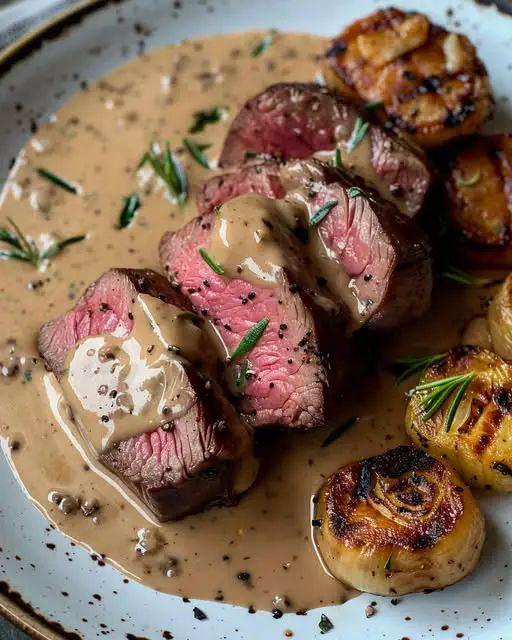
Filet mignon is widely regarded as the pinnacle of luxury in the world of beef, prized for its butter-soft texture and refined, lean profile. While often reserved for high-end steakhouses, achieving that perfect, crusty sear and tender center is surprisingly attainable in your own kitchen. When you pair this premium cut with a rich, creamy peppercorn sauce, you create a culinary masterpiece that balances the mildness of the meat with the bold, spicy kick of cracked peppercorns.
In this comprehensive guide, we will dive into the professional techniques that make a world of difference: from selecting the best marbling to the art of butter basting with garlic and herbs. Whether you are planning a romantic date night or a sophisticated dinner party, mastering this dish will instantly elevate your cooking repertoire to executive chef status at cookwithfeast.com.
Quick Answer: To achieve a restaurant-quality filet mignon, sear the steak on high heat in a cast-iron skillet for a golden crust, butter baste with aromatics, and allow the meat to rest for 7 minutes. The signature sauce is crafted by deglazing the pan with shallots, beef stock, and heavy cream for a velvety finish.
Essential Ingredients for a Gourmet Experience
Creating a masterpiece like Filet Mignon with Creamy Peppercorn Sauce requires a symphony of high-quality ingredients. Because the steak itself has a mild, delicate flavor profile, every supporting component—from the choice of fat to the type of peppercorns—must be selected with care to ensure a balanced, restaurant-quality result.
The Steak and Searing Components
- 4 Filet Mignon Steaks: Ideally 6 ounces each and at least 1.5 to 2 inches thick.
- 1 Tablespoon Avocado Oil: Chosen for its high smoke point to achieve a perfect sear without burning.
- 2 Tablespoons Unsalted Butter: For the finishing baste.
- 2 Cloves Garlic: Smashed to release oils during the basting phase.
- Kosher Salt and Freshly Cracked Black Pepper: To create the initial crust.
The Signature Creamy Peppercorn Sauce
- 3 Tablespoons Unsalted Butter: The fat base for the aromatics.
- 1 Large Shallot: Finely diced for a subtle, sweet onion-garlic profile.
- 2 Teaspoons Crushed Black Peppercorns: These should be coarsely cracked, not finely ground, for texture and heat.
- 2 Cloves Garlic: Minced finely.
- 3 Tablespoons All-Purpose Flour: To create a light roux for thickening.
- 1 Teaspoon Dijon Mustard: For a tangy kick and emulsification.
- 1 Tablespoon Worcestershire Sauce: To add depth and umami.
- 3 Cups Low-Sodium Beef Stock: The body of the sauce.
- 1/2 Cup Heavy Cream: For that signature velvety finish.
Choosing the Best Cut: What Makes Filet Mignon Special?
The filet mignon is carved from the psoas major, a muscle that does very little work, resulting in the most tender cut of beef available. While it lacks the heavy fat cap of a Ribeye, its lean nature makes it the perfect vehicle for rich, emulsified sauces. When shopping, use the following comparison table to understand why the Filet is the premier choice for this specific recipe.
| Feature | Filet Mignon | Ribeye | Sirloin |
|---|---|---|---|
| Tenderness | Extreme (Buttery) | Moderate | Low to Moderate |
| Flavor Profile | Mild & Delicate | Rich & Beefy | Robust |
| Fat Content | Very Lean | High Marbling | Lean |
| Best Cooking Method | Pan-Sear / Butter Baste | Grilling / Broiling | Pan-Sear / Stir-fry |
Expert Tip: Look for “Prime” grade beef if possible. While the filet is lean, Prime cuts will have fine white flecks of intramuscular fat (marbling) that melt during cooking to provide extra juiciness.
Preparing Your Steaks for the Perfect Sear
Achieving a steakhouse-level crust starts long before the meat touches the pan. If you throw a cold, wet steak into a skillet, it will steam rather than sear, leaving you with a gray, unappealing exterior. Follow these critical preparation steps to ensure success.
1. Temperature Tempering
Remove your steaks from the refrigerator 30 to 45 minutes before you plan to cook. This allows the internal temperature to rise, ensuring that the center reaches your desired doneness at the same time the exterior develops its crust. Cooking a cold steak often results in a burnt outside and a raw, cold center.
2. The “Dry Surface” Rule
Moisture is the enemy of the Maillard reaction—the chemical process that creates the brown, flavorful crust. Use paper towels to pat the steaks dry on all sides, including the edges. The drier the meat, the faster it sears.
3. Generous Seasoning
Season the steaks immediately before they go into the pan. If you salt them too early and let them sit, the salt will draw moisture to the surface. Use Kosher salt for better coverage and freshly cracked pepper for a more vibrant aroma.
Mastering the Sear and the Baste
The secret to a truly elegant filet is the combination of a high-heat sear and a low-heat butter baste. This two-stage process ensures a complex flavor profile and a perfect edge-to-edge medium-rare finish.
High-Heat Searing
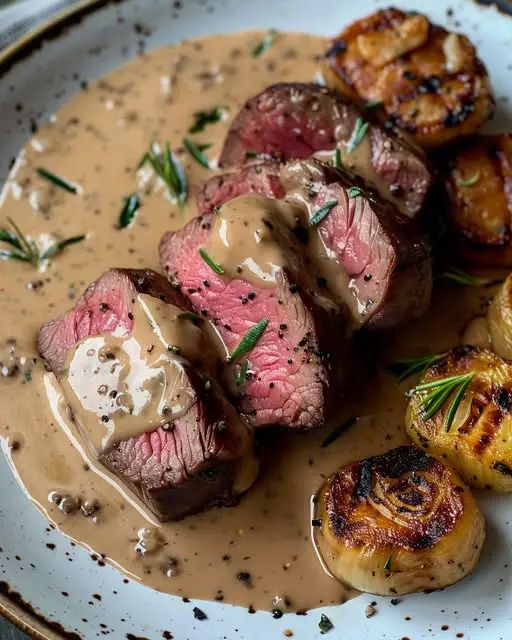
Heat a cast-iron skillet over high heat until it is wisps of smoke begin to rise. Add the avocado oil, which can withstand the heat without breaking down. Place the steaks in the pan—you should hear a violent sizzle immediately. Do not move them for at least 2 to 3 minutes. This patience allows the proteins to bond and form a deep golden-brown crust. Once a crust has formed, flip the steaks and repeat the process on the other side.
The Aromatics and Butter Baste
Once the steaks are seared, reduce the heat to medium. Add the unsalted butter and smashed garlic cloves to the pan. As the butter melts and begins to foam, tilt the skillet slightly so the butter pools at the bottom. Use a large spoon to continuously pour the hot, garlic-infused butter over the steaks. This technique, known as arroser, adds a nutty richness and ensures the steaks remain incredibly moist.
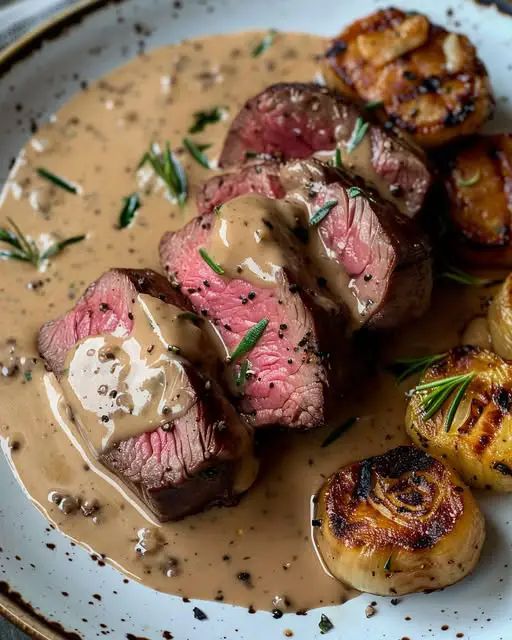
Chef’s Insight: Use a meat thermometer to ensure precision. Remove the steaks from the pan when they reach 130°F (54°C) for a perfect medium-rare. They will continue to rise in temperature as they rest.
The Art of the Resting Period
One of the most common mistakes home cooks make is slicing into a steak immediately after it leaves the heat. When meat cooks, the muscle fibers contract and push juices toward the center. If you cut it immediately, those juices will run out onto the plate, leaving the meat dry.
Place your seared filets on a warm plate or cutting board and tent them loosely with foil. Let them rest for at least 7 to 10 minutes. During this time, the muscle fibers relax, allowing the juices to redistribute throughout the entire cut. The result is a steak that is uniformly juicy from the first bite to the last.
Creating the Luxurious Creamy Peppercorn Sauce
While the steaks are resting, it is time to build the sauce in a separate skillet (or the same one, if you’ve drained the excess fat). This sauce is an adaptation of the classic Sauce au Poivre, designed to be silky, peppery, and deeply savory.
- Sauté the Aromatics: Melt butter and add the finely diced shallots. Cook until translucent and fragrant. Add the minced garlic and the crushed peppercorns, toasting them for 30 seconds to release their essential oils.
- Build the Roux: Sprinkle the flour over the shallots and whisk constantly. Cook for about one minute to remove the “raw” flour taste; this will ensure your sauce is thick and stable.
- Deglaze and Simmer: Slowly whisk in the beef stock, Dijon mustard, and Worcestershire sauce. Scrape the bottom of the pan to incorporate any browned bits (fond). Bring to a gentle boil, then reduce to a simmer until the volume has reduced by about a third.
- The Creamy Finish: Stir in the heavy cream. Let the sauce simmer for another 5 minutes until it is thick enough to coat the back of a spoon. Season with a final pinch of salt if needed.
Nutritional Breakdown and Serving Suggestions
This dish is a high-protein, low-carbohydrate powerhouse, making it an excellent choice for those following a Keto or Paleo-friendly lifestyle. Below is the estimated nutritional data per serving (one 6oz steak with 1/4 cup of sauce).
| Metric | Value per Serving |
|---|---|
| Calories | 450 kcal |
| Protein | 42g |
| Total Fat | 28g |
| Saturated Fat | 14g |
| Net Carbohydrates | 4g |
| Iron | 25% DV |
To round out this elegant meal, consider pairing the filet with sides that can soak up the extra peppercorn sauce. Garlic Mashed Potatoes provide a creamy base, while Roasted Asparagus or Honey-Glazed Carrots add a necessary crunch and brightness to the plate. For a classic steakhouse vibe, a simple wedge salad with blue cheese dressing offers a cold, crisp contrast to the warm, rich beef.
You May Also Like
If you enjoyed this recipe, explore more of our gourmet kitchen guides: Mastering the Pan-Seared Steak, Best Side Dishes for Steak, How to Make a Classic Red Wine Reduction, and Elegant Dinner Party Main Courses.
For more information on beef cuts and grading standards, visit the USDA Food and Nutrition Authority.
Frequently Asked Questions
How do I know when my filet mignon is perfectly cooked?
The most reliable method is using an instant-read meat thermometer. For a perfect medium-rare, remove the steak from the heat when it reaches 130°F (54°C). The temperature will rise to about 135°F as it rests. Avoid cutting into the meat to check for color, as this allows essential juices to escape.
Can I substitute the heavy cream in the peppercorn sauce?
While heavy cream provides the most luxurious and stable texture, you can use half-and-half for a lighter version. However, be careful not to boil the sauce too vigorously, as half-and-half is more prone to curdling. For a dairy-free alternative, full-fat coconut milk can be used, though it will slightly alter the flavor profile.
What is the best way to crush peppercorns without a grinder?
To achieve the ideal coarse texture for a peppercorn sauce, place whole peppercorns in a heavy-duty plastic bag and crush them with the bottom of a heavy skillet or a meat mallet. You want large fragments rather than a fine powder to ensure the sauce has the signature “bite” and texture found in high-end steakhouses.
Final Thoughts
Mastering the Elegant Filet Mignon with Creamy Peppercorn Sauce is a milestone for any home cook. By focusing on the quality of the sear and the patience of the resting period, you transform a simple piece of protein into a world-class dining experience. The contrast between the tender, buttery beef and the bold, velvety sauce is a timeless combination that never fails to impress.
We invite you to bring this steakhouse classic to your own table tonight. Remember that cooking is as much about the process as the result—so take your time with the basting, enjoy the aromas of the shallots and peppercorns, and savor every bite. For more culinary inspiration, visit us again at cookwithfeast.com.