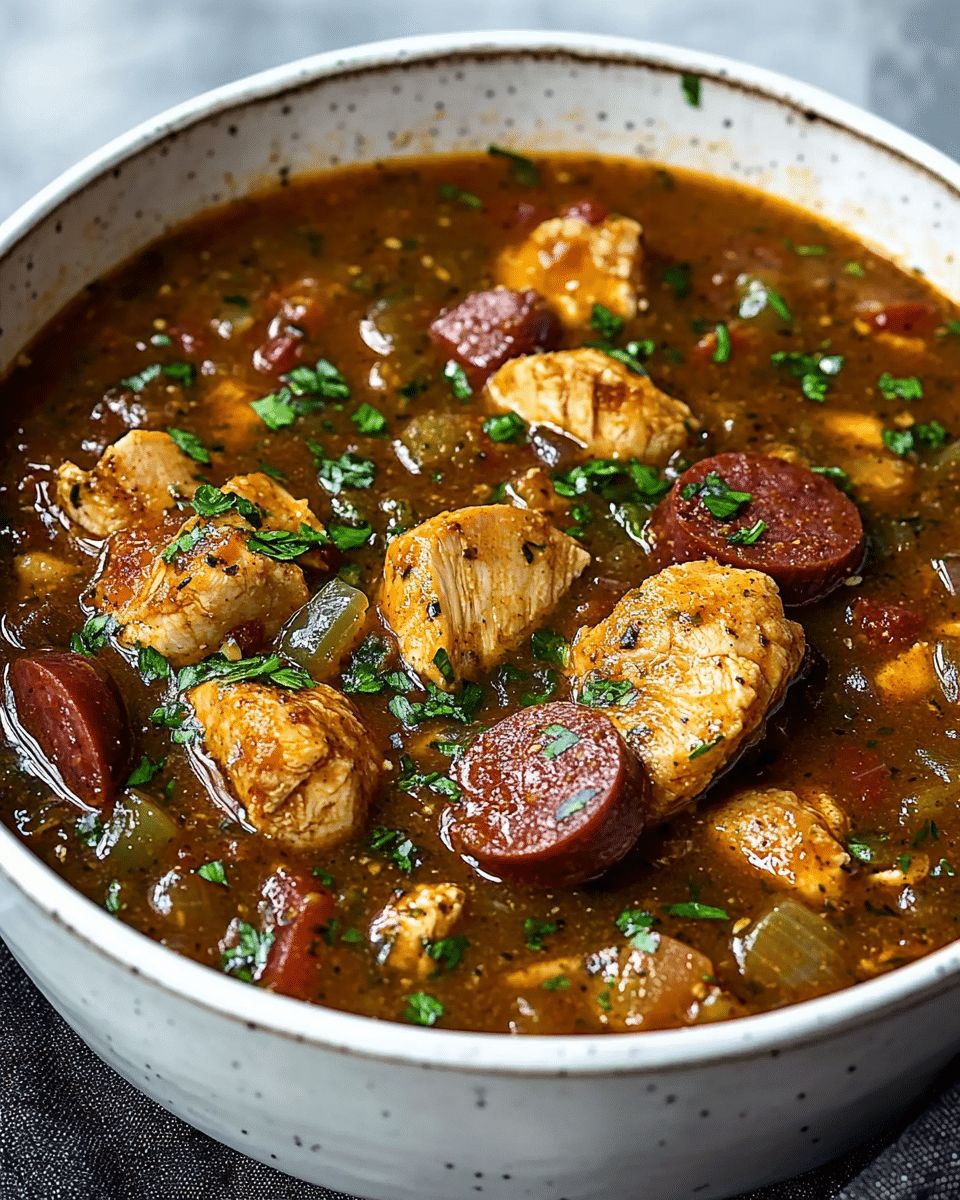
Few dishes in the American culinary canon carry as much history and heart as a bubbling pot of Cajun Chicken and Andouille Gumbo. This isn’t just a stew; it’s a sensory journey to the bayous of Louisiana, where the smoky scent of seared sausage and the deep, nutty aroma of a slow-cooked roux fill the air. Gumbo is a celebration of cultural fusion—blending French, Spanish, and African influences into a single, soul-satisfying bowl that has become the gold standard of Southern comfort food.
At https://cookwithfeast.com, we believe that the secret to an unforgettable gumbo lies in patience and the “Holy Trinity” of aromatics. By taking the time to develop a rich, chocolate-colored roux and layering the bold flavors of spicy Andouille sausage with tender, juicy chicken thighs, you create a dish that is both complex and deeply nourishing. Whether you’re feeding a crowd during Mardi Gras or seeking a warm hug in a bowl on a chilly evening, this authentic recipe is your ticket to a true Louisiana feast right in your own kitchen.
Quick Answer: Authentic Cajun Chicken and Andouille Gumbo is a thick, savory Louisiana stew built on a foundation of a dark chocolate-colored roux and the “Holy Trinity” (onion, celery, and bell pepper). It features smoky Andouille sausage, browned chicken thighs, and okra, seasoned with bold Cajun spices and simmered to perfection. It is traditionally served over a bed of warm white rice for a complete, soul-satisfying meal.
The Secret of the Roux: The Dark Heart of Cajun Gumbo
When you set out to make an authentic Cajun Chicken and Andouille Gumbo, you aren’t just making a soup—baking a roux is a spiritual experience. In Louisiana, the roux is the foundation upon which everything else is built. While French cuisine often stops at a light “blonde” roux for bechamel, Cajun tradition demands that we push the boundaries of flour and fat until they reach the color of dark chocolate or an old penny.
Making a dark roux requires a zen-like focus. You must whisk or stir continuously for 20 to 30 minutes. If you walk away, even for a moment, the flour can burn, creating black specks that will make the entire pot bitter. This process, often jokingly referred to as “Cajun Napalm” because of its high heat and sticky consistency, develops a deep, nutty, and smoky flavor that cannot be replicated by any store-bought thickening agent.
Chef’s Tip: If you are a beginner, keep your heat on medium-low. It takes longer, but it reduces the risk of burning. The darker the roux, the less it thickens, but the more flavor it provides.
Building the Flavor Profile: The Holy Trinity and Proteins
In Cajun country, we don’t use the standard French mirepoix (onion, carrots, and celery). Instead, we rely on the “Holy Trinity” of aromatics: onions, green bell peppers, and celery. This trio provides the savory backbone that balances the richness of the dark roux and the heat of the Cajun spices.
Selecting Your Meat: Thighs vs. Breasts
For this Cajun Chicken and Andouille Gumbo recipe, choosing the right cut of chicken is paramount. While many home cooks reach for chicken breasts, a world-class gumbo demands chicken thighs. Thighs contain more fat and connective tissue, allowing them to stay tender and juicy throughout the hour-long simmer, whereas breasts tend to become stringy and dry.
| Protein Type | Best Cut | Flavor Profile | Texture in Gumbo |
|---|---|---|---|
| Chicken | Boneless Thighs | Rich, savory | Tender and succulent |
| Sausage | Andouille | Smoky, spicy | Firm with a snap |
| Alternative | Smoked Kielbasa | Garlicky, mild | Soft and juicy |
The Importance of Authentic Andouille
Andouille sausage is a double-smoked pork sausage that is heavily seasoned with garlic, pepper, and onions. It is the engine that drives the smokiness of the dish. If you cannot find authentic Andouille at your local butcher, a high-quality smoked kielbasa is a functional substitute, though you may want to add an extra pinch of cayenne pepper to compensate for the missing heat.
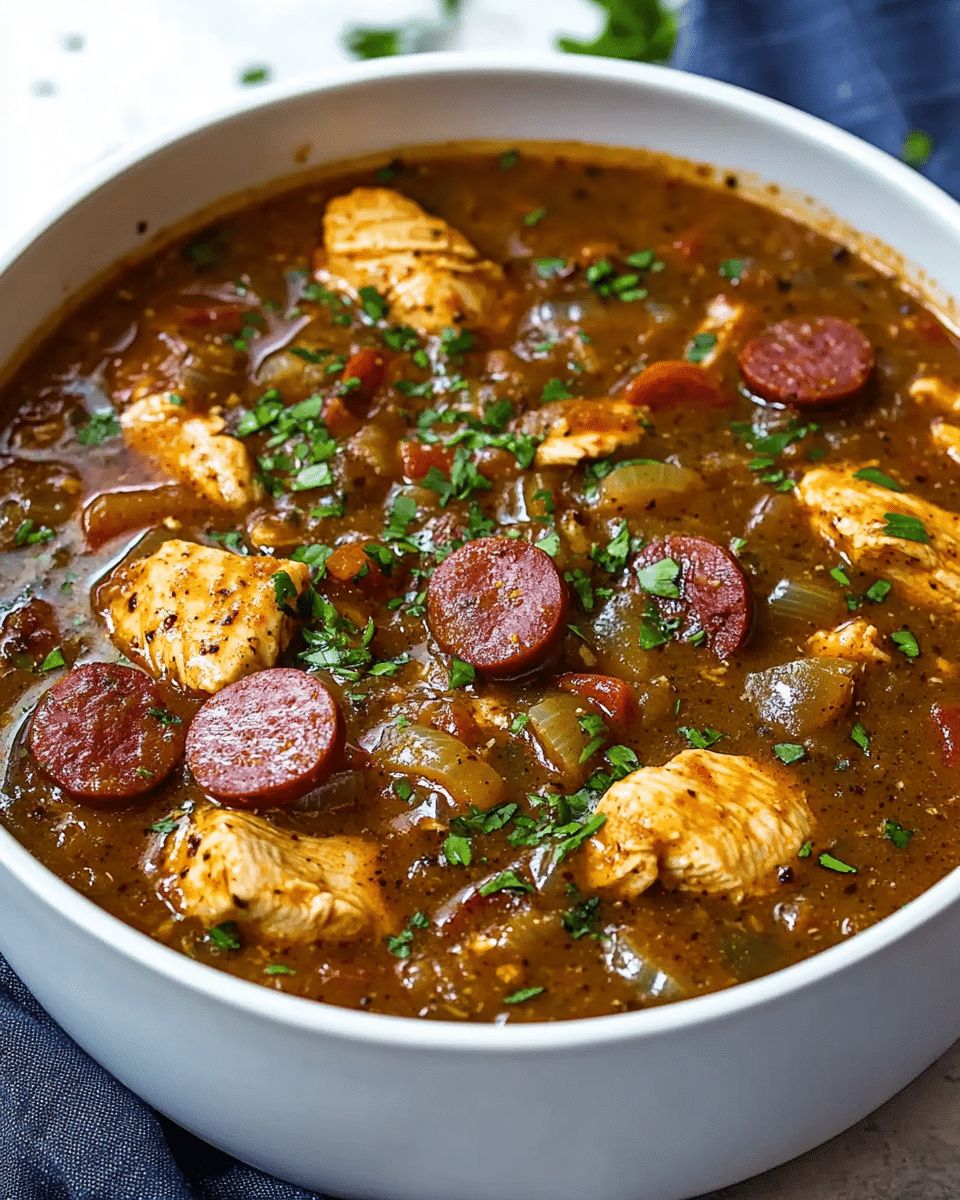
Step-by-Step Masterclass: Creating the Soul-Satisfying Feast
Follow these detailed steps to ensure your gumbo has the depth and complexity of a dish served in the heart of Lafayette or New Orleans. This soul-satisfying feast is all about layering flavors properly.
Step 1: The Sear and the Fond
Heat a teaspoon of olive oil in a heavy-bottomed Dutch oven. Season your chopped chicken thighs with salt and pepper. Brown them alongside the sliced Andouille rounds. We aren’t looking to cook them all the way through yet; we want to create a “fond”—the caramelized bits stuck to the bottom of the pot. Remove the meat and set it aside, but keep those juices in the pot!
Step 2: The Marathon Roux
Add your 1/2 cup of peanut or vegetable oil to the pot. Slowly whisk in the 1/2 cup of all-purpose flour. Now, stay put. Stir in a figure-eight motion, scraping the corners of the pot. Watch the color transition from peanut butter to copper, and finally to a deep chocolate. The aroma should be intensely nutty and toasty.
Step 3: “Waking Up” the Aromatics
Once the roux is dark enough, add your chopped onions, bell peppers, and celery. The moisture from the vegetables will instantly steam, which stops the roux from cooking further. This is known as “tempering” the roux. Sauté until the vegetables are soft and aromatic, then stir in the garlic for about 30 seconds.
Step 4: The Deglaze and Simmer
Slowly pour in your chicken stock while whisking. Be sure to scrape the bottom of the pot to incorporate the chicken and sausage fond into the liquid. Add your browned meat back in, followed by the okra, Cajun seasoning, and bay leaves. Bring it to a boil, then immediately reduce to a low simmer.
The Role of Okra and Filé Powder
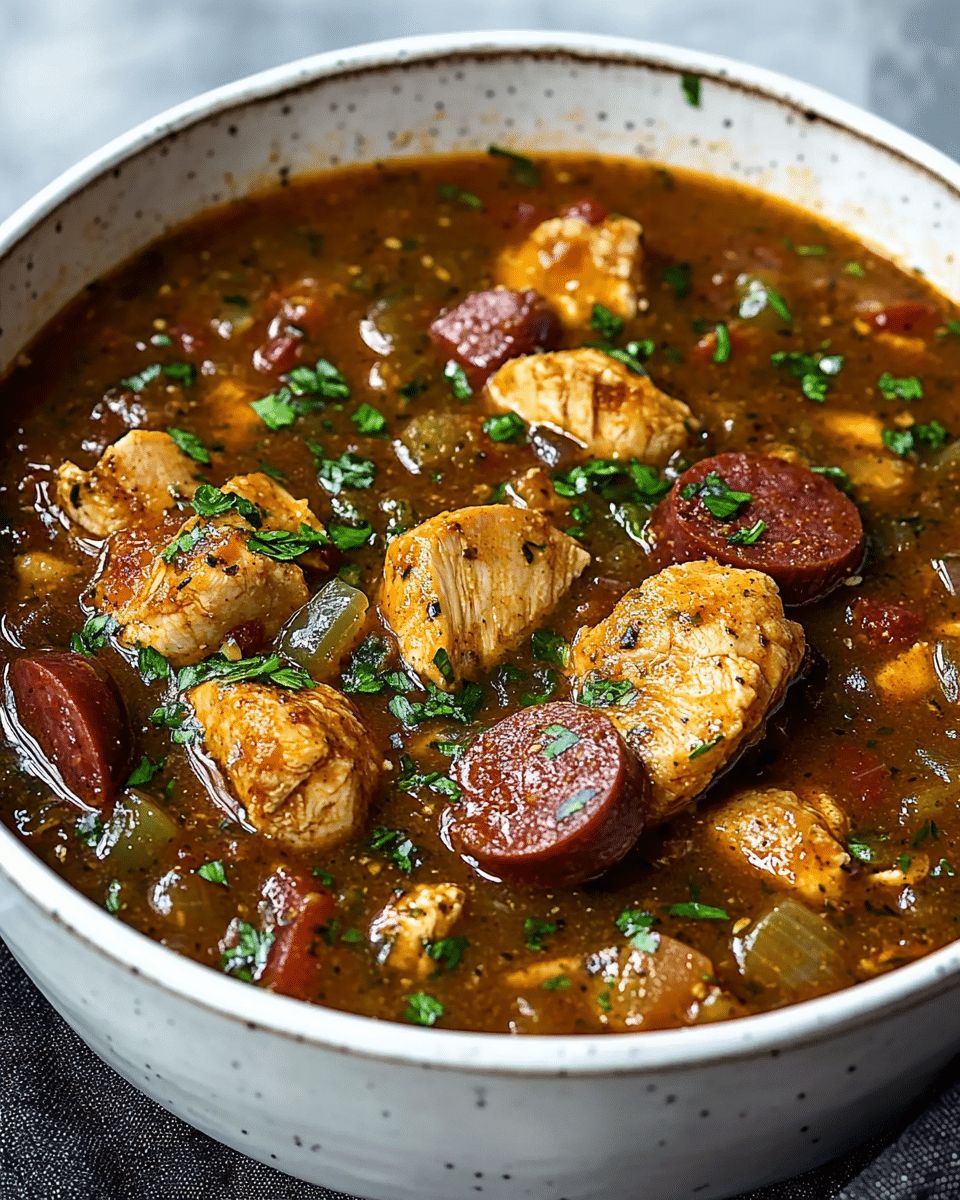
Texture is just as important as taste in a Flavorful Gumbo Feast. Historically, gumbo was thickened using either okra or filé powder (ground sassafras leaves), though many modern recipes use both along with a roux. Okra contains a natural mucilage that thickens the broth as it simmers. If you are worried about “sliminess,” searing the okra slightly before adding it can help mitigate that effect.
Gumbo Thickening Comparison
- Dark Roux: Provides deep color and smoky flavor; has the least thickening power.
- Okra: Adds an earthy flavor and provides a silky, medium thickness.
- Filé Powder: Added at the very end (off the heat) to provide a unique, root-beer-like aroma and final thickening.
Warning: Never boil your gumbo after adding filé powder! It can turn the consistency stringy and unappealing. Always stir it in just before serving or offer it at the table.
Pro Tips for Storage and Serving
One of the greatest secrets of Cajun cooking is that gumbo always tastes better the next day. As the dish cools and sits in the refrigerator, the spices penetrate the chicken and the smoke from the Andouille permeates every drop of the broth. If you are making this for a party, consider cooking it 24 hours in advance.
Serving Suggestions
- The Base: Always serve over a scoop of fluffy, steamed long-grain white rice.
- The Garnish: A generous sprinkle of fresh parsley and chopped green onions adds a necessary brightness to the heavy, dark stew.
- The Side: A piece of crusty French bread or a slice of buttery cornbread is perfect for soaking up every last bit of the broth.
Recipe Specifications and Nutritional Overview
For those tracking their kitchen time or dietary intake, here is a quick reference guide for this Cajun Chicken and Andouille Gumbo.
| Metric | Value |
|---|---|
| Prep Time | 20 Minutes |
| Cook Time | 1 Hour 30 Minutes |
| Total Time | 1 Hour 50 Minutes |
| Servings | 6 – 8 Bowls |
| Calories | ~450 kcal per serving |
Cooking this gumbo is an act of love. It takes time, attention, and a little bit of heat, but the result is a soul-satisfying meal that brings the vibrant culture of Louisiana straight to your dining room. At Cook with Feast, we pride ourselves on these time-honored techniques that turn simple ingredients into a legendary feast.
You May Also Like
Explore more: Southern Comfort Food, Cajun Spice Blends, One-Pot Feasts, and Perfect Rice Pairings.
Source: Learn more about the rich history of this iconic Louisiana dish on Wikipedia.
Frequently Asked Questions
Can I use chicken breast instead of chicken thighs?
While you can technically use chicken breast, chicken thighs are highly recommended for gumbo. Thighs contain more fat and connective tissue, which allows them to remain tender and succulent during the hour-long simmering process. Chicken breast tends to become dry and stringy when cooked for extended periods.
What can I substitute for Andouille sausage?
If you cannot find authentic Andouille sausage, a high-quality smoked kielbasa or any garlicky smoked pork sausage is your best alternative. Since Andouille has a distinct spicy kick, you may want to add an extra half-teaspoon of cayenne pepper or extra Cajun seasoning to the pot to maintain the traditional heat level.
Is gumbo really better the next day?
Yes! Like many stews and soups, gumbo is a “next-day dish.” As it sits in the refrigerator, the complex spices and the smoky flavor from the sausage have more time to penetrate the proteins and meld with the dark roux. If you are planning a dinner party, making the gumbo 24 hours in advance is a pro move.
Final Thoughts
Mastering this Cajun Chicken and Andouille Gumbo is a rite of passage for any serious home cook. It is a dish that requires patience—especially when whisking that dark roux—but the reward is a soul-satisfying feast that no store-bought version can ever match. The combination of smoky meats, the “Holy Trinity” of aromatics, and that rich, nutty broth creates a culinary experience that is truly unforgettable.
At Cook with Feast, we are passionate about bringing these timeless American traditions to your kitchen. We hope this recipe inspires you to slow down, enjoy the process, and share a steaming bowl of Louisiana comfort with the people you love. Don’t forget to serve it with plenty of rice and perhaps a piece of buttery cornbread on the side!