
There is something timelessly elegant about a classic Greek salad. Often referred to as Horiatiki in its homeland, this dish is a vibrant celebration of the Mediterranean harvest. It’s a refreshing, flavorful masterpiece that’s perfect for any occasion—whether you’re looking for a light high-protein lunch, a zibrant side for your summer BBQ, or a healthy snack that doesn’t compromise on taste.
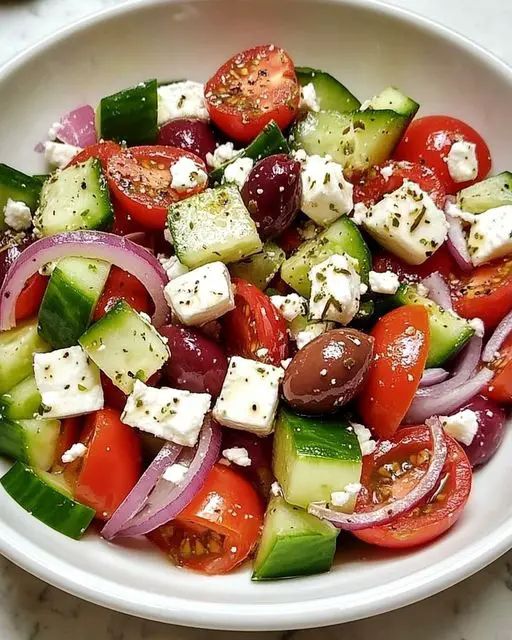
This Greek Salad with Feta, Olives, and Homemade Vinaigrette strikes the perfect balance between crunch and creaminess. By combining cooling cucumbers and juicy grape tomatoes with the briny punch of Kalamata olives and tangy feta cheese, you create a symphony of textures. The real secret, however, lies in the zesty homemade dressing—a simple yet transformative blend of lemon, garlic, and oregano that puts store-bought alternatives to shame.
Quick Answer: This authentic Greek Salad is a 10-minute, no-cook meal featuring fresh cucumbers, tomatoes, peppers, and red onions. Tossed with premium Kalamata olives and feta cheese in a handcrafted lemon-oregano vinaigrette, it delivers a healthy, gluten-free burst of Mediterranean flavor in every bite.
Mastering the Classic Greek Salad Experience
Creating a truly authentic Greek Salad—known in Greece as Horiatiki—is an exercise in simplicity and quality. Unlike many Western adaptations, a traditional Greek salad does not contain lettuce. Instead, it relies on the robust textures of sun-ripened vegetables and the creamy richness of high-quality feta. This recipe is designed to bring the sun-drenched flavors of the Mediterranean directly to your kitchen at cookwithfeast.com.
The Philosophy of Freshness
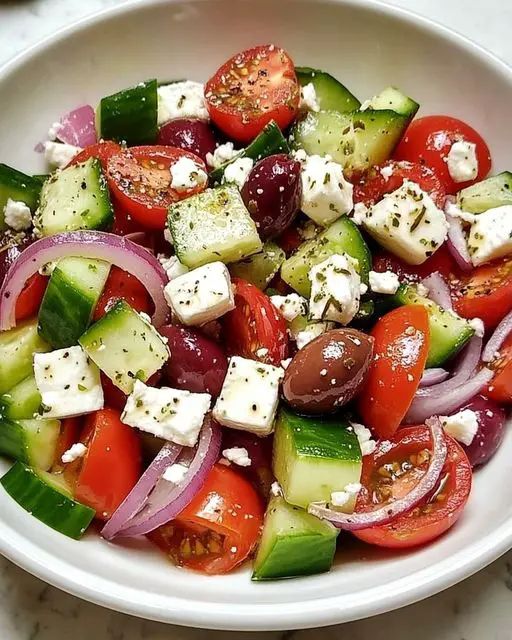
Because this dish is served raw, the quality of every single ingredient is magnified. When you are at the market, look for heavy, firm cucumbers and tomatoes that have a fragrant, earthy scent at the stem. The goal is to create a bowl where every bite offers a different combination of salt, acid, and crunch.
Essential Ingredients for Your Greek Salad
To achieve that world-class flavor profile, you need to gather specific staples. Below is the breakdown of what makes this salad a nutritional powerhouse and a culinary delight.
The Salad Base
- 1 large cucumber: Preferably an English or Persian cucumber for thinner skin and fewer seeds.
- 1 pint grape tomatoes: You can also use large vine-ripened tomatoes cut into wedges.
- 1 green bell pepper: Provides a necessary slightly bitter crunch that balances the sweet tomatoes.
- 1/2 red onion: Sliced into paper-thin half-moons for a sharp, colorful bite.
- 1/2 cup Kalamata olives: These should be pitted and halved to ensure the brine distributes evenly.
- 4 ounces feta cheese: Look for blocks stored in brine rather than pre-crumbled varieties.
- Salt and pepper: To be added at the very end to prevent the vegetables from softening too quickly.
The Signature Greek Vinaigrette
Forget the bottled stuff. A real Greek dressing is an emulsified blend of healthy fats and bright acids. This dressing can also be used as a marinade for grilled chicken or fish.
- 1/4 cup fresh lemon juice: Approximately the juice of 2 lemons.
- 1 teaspoon Dijon mustard: Acts as the emulsifier to keep the oil and juice from separating.
- 2 garlic cloves: Finely minced or pressed to release their essential oils.
- 1/2 teaspoon dried oregano: The quintessential herb of Greek cuisine.
- 1/2 cup extra virgin olive oil: Use the best quality oil you have available.
Step-by-Step Preparation Guide
Efficiency is key when preparing fresh salads. Follow these steps to ensure your Greek Salad maintains its structural integrity and peak flavor.
1. Vegetable Preparation
Start by dicing your cucumber into bite-sized chunks. If using an English cucumber, you can leave the skin on for extra fiber and color. Halve your grape tomatoes and dice the green bell pepper into uniform pieces. The red onion should be sliced as thinly as possible; if you find raw onion too sharp, soak the slices in cold water for five minutes then pat dry before adding to the bowl.
2. Crafting the Vinaigrette
In a small glass bowl, combine the lemon juice, mustard, garlic, and dried herbs. While whisking vigorously, slowly drizzle in the olive oil. You will notice the mixture transform from a watery liquid into a thick, pale yellow dressing. This process of emulsification is vital for a coating that clings to the vegetables rather than pooling at the bottom of the bowl.
3. The Final Toss
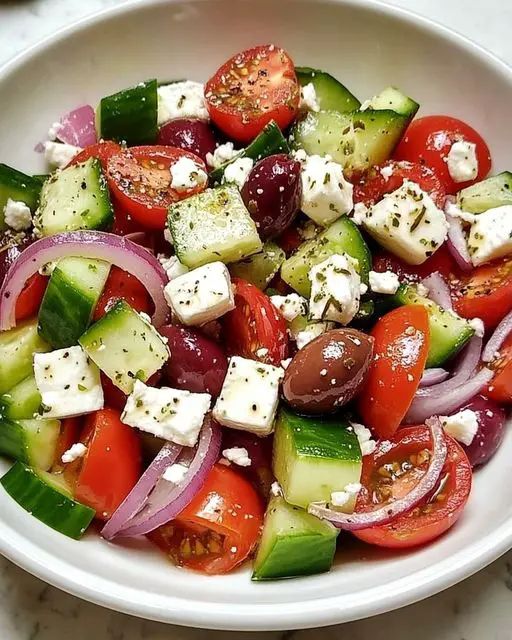
Combine all vegetables and olives in a large mixing bowl. Pour the dressing over the top and toss gently using large spoons. Only add the feta cheese at the very end. Gently fold it in so it stays in distinct chunks rather than dissolving into a messy paste. Season with a pinch of sea salt and freshly cracked black pepper just before serving.
Nutritional Comparison: Greek Salad vs. Garden Salad
Many people wonder how a Greek salad compares to a standard lettuce-based garden salad. Because it lacks leafy greens and emphasizes healthy fats and protein-rich cheese, the nutritional profile is quite different.
| Nutrient (per serving) | Classic Greek Salad | Standard Garden Salad |
|---|---|---|
| Calories | 210 kcal | 120 kcal |
| Healthy Fats | 18g | 8g |
| Protein | 5g | 2g |
| Vitamin C | 45% DV | 15% DV |
| Fiber | 4g | 2g |
Pro-Tips for World-Class Results
To take your salad from “good” to “restaurant-quality,” consider these expert adjustments used by top chefs.
Temperature Matters
While the vegetables should be cool, the olive oil and feta should ideally be closer to room temperature. This allows the fat molecules to carry the flavor of the oregano and garlic more effectively to your palate.
The “Meld” Factor
Unlike leafy salads that wilt, a Greek salad actually benefits from sitting for about 15 minutes before serving. This allows the salt to draw a tiny bit of juice out of the tomatoes, which mingles with the dressing to create a “liquid gold” at the bottom of the bowl—perfect for dipping crusty bread.
Expert Tip: If you are meal-prepping this for work, keep the dressing in a separate small container. Add it only when you are ready to eat to ensure the cucumbers stay perfectly crisp.
Variations and Dietary Swaps
While we love the traditional recipe, flexibility is important for different dietary needs and kitchen inventories.
- Dairy-Free/Vegan: Replace the feta with diced avocado tossed in a little extra lemon juice and salt to mimic the creaminess.
- Add Protein: To make this a full dinner, top the salad with Grilled Chicken Souvlaki or chilled garlic shrimp.
- Herb Variations: If you don’t like dried oregano, fresh mint or parsley can provide a different, equally refreshing Mediterranean profile.
- The “Village” Style: In some regions of Greece, the feta is served as one large slab on top of the salad rather than crumbled throughout.
Frequently Asked Questions
Can I use dried garlic instead of fresh?
While fresh garlic provides the most pungent and authentic flavor, you can use 1/4 teaspoon of garlic powder in a pinch. However, the texture of the dressing will be slightly less robust.
What is the best type of feta to buy?
Always look for Greek Feta (PDO) made from sheep’s milk or a blend of sheep and goat milk. Cow’s milk “feta-style” cheese tends to be saltier and more crumbly, whereas authentic feta is creamier and has a complex tang.
Storage and Leftovers
If you have leftovers, they will keep in an airtight container in the refrigerator for up to 24 hours. Note that the purple color of the red onions may bleed slightly into the feta, and the vegetables will release more water. This “salad water” is incredibly flavorful, so don’t toss it out—use it as a base for a quick pasta sauce the next day!
You May Also Like
If you enjoyed this fresh Mediterranean classic, explore more delicious recipes on our blog: Cajun Shrimp Pasta, Cheesy Chicken Casseroles, Homemade Meatloaf, and American Comfort Food Classics.
To learn more about the cultural heritage and traditional preparation of this dish, visit: Wikipedia – Greek Salad (Horiatiki)
Frequently Asked Questions
Is Greek Salad healthy for daily consumption?
Absolutely! This salad is a cornerstone of the Mediterranean diet, which is widely recognized for its heart-healthy benefits. It is packed with fiber from fresh vegetables, healthy monounsaturated fats from olive oil, and essential vitamins like Vitamin C and Vitamin K. Just keep an eye on the feta cheese portions if you are monitoring your sodium intake.
Can I make the dressing in a large batch?
Yes, the homemade vinaigrette keeps exceptionally well. You can double or triple the recipe and store it in a sealed mason jar in the refrigerator for up to two weeks. Because it contains olive oil, the dressing may solidify when cold; simply let it sit at room temperature for a few minutes and give it a good shake before using.
What is the difference between a Greek Salad and a Mediterranean Salad?
While the terms are often used interchangeably, a traditional Greek Salad (Horiatiki) is specific in its ingredients: it never contains lettuce and typically features large chunks of feta and Kalamata olives. A “Mediterranean Salad” is a broader term that might include greens, different types of grains like farro or couscous, or even roasted vegetables.
Final Thoughts
Bringing the authentic flavors of Greece into your home doesn’t require complex techniques or expensive equipment. With just 10 minutes and a handful of fresh ingredients, you can create a Greek Salad that is as visually stunning as it is delicious. It’s the perfect reminder that sometimes the simplest recipes are the most satisfying.
We hope this dish becomes a staple in your kitchen! If you tried this recipe at home, we would love to hear how it turned out. Don’t forget to share your creations with us on social media and subscribe to cookwithfeast.com for more SEO-optimized, easy-to-follow recipes for your everyday meals. Happy eating!


