
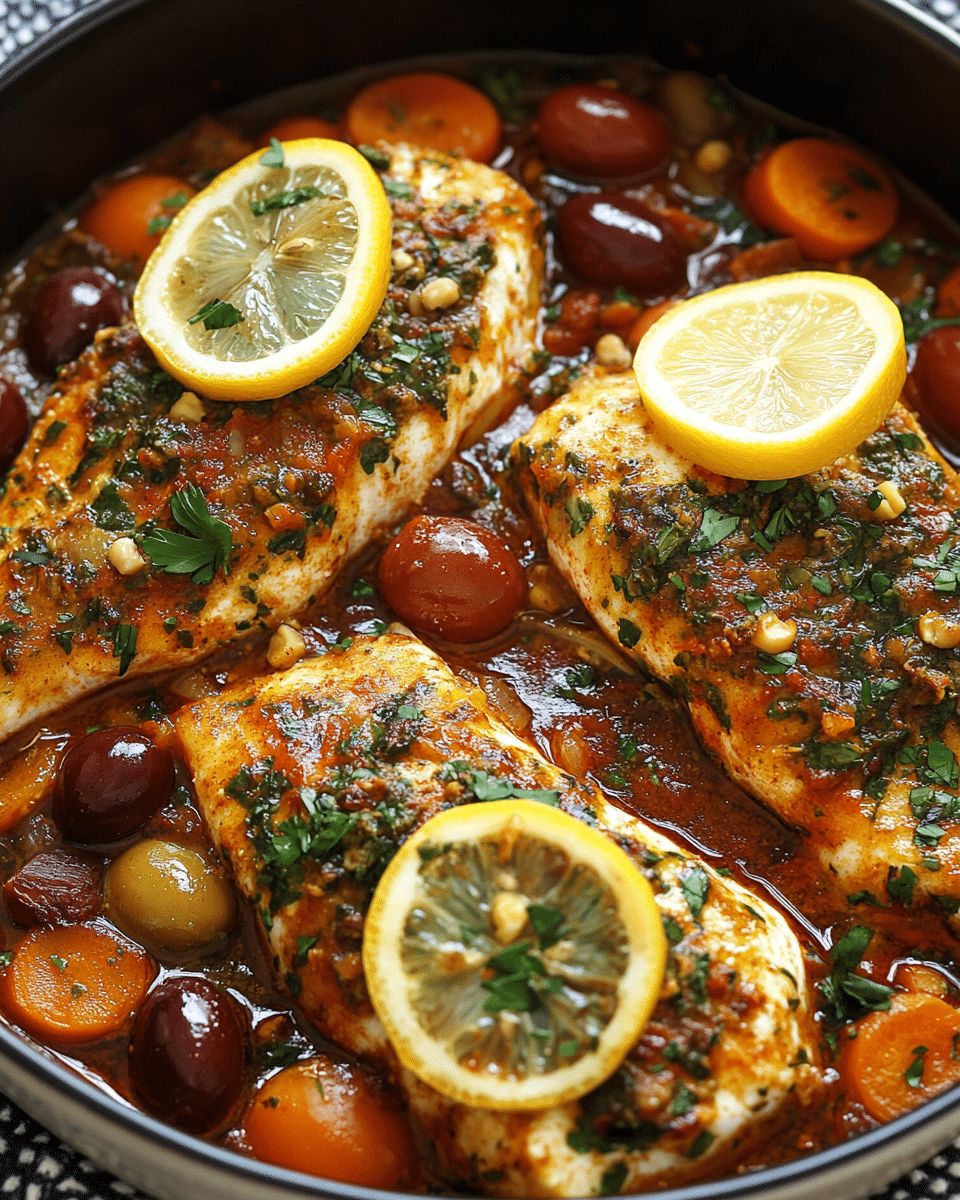
When you crave a dish that brings warmth, an exotic aroma, and heart-to-home comfort, this Moroccan classic delivers. With saffron’s golden touch, ginger’s zing, and zesty preserved lemon, every bite of this Moroccan Fish Tagine with Ginger and Saffron tells a story—one you can recreate in your own kitchen. Let’s embark on this flavorful journey together.
Picture this: You come home after a busy day. The sun’s gone down, but in your kitchen, something magic is happening. A dish simmers, its gentle aroma weaving through the house—warm paprika, citrus-bright ginger, and comforting saffron. This isn’t just dinner; it’s a moment to slow down and savor life. Whether you are hosting a festive gathering or seeking a nutritious weeknight escape, this tagine invites you to feed both your body and your spirit.
Quick Answer: A Moroccan Fish Tagine is a traditional slow-cooked Mediterranean dish characterized by layered flavors of warm spices (saffron, ginger, cumin), aromatic herbs, and acidic brightness from preserved lemons and olives. It is typically prepared by marinating white fish and layering it over a bed of softened vegetables and a rich tomato-based sauce for a tender, flaky finish.
The Magic Behind the Moroccan Fish Tagine
To understand the Moroccan Fish Tagine with Ginger and Saffron, one must first appreciate the vessel from which it takes its name. A tagine is not just a recipe; it is a specialized piece of North African earthenware with a distinctive conical lid. This design acts as a natural furnace, trapping steam and allowing it to condense and trickle back down onto the ingredients. The result? A level of tenderness and flavor concentration that standard pots simply cannot replicate.
This specific iteration, featuring the “golden duo” of ginger and saffron, represents the pinnacle of Moroccan hospitality. While meat tagines are common in the mountainous interior, the coastal regions of Morocco have perfected the art of the fish tagine. It is a dish that balances the briny freshness of the sea with the earthy, sun-drenched spices of the Maghreb. When you serve this, you aren’t just placing food on the table; you are offering a cultural warm hug that has been refined over centuries.
The Communal Spirit of the Souk
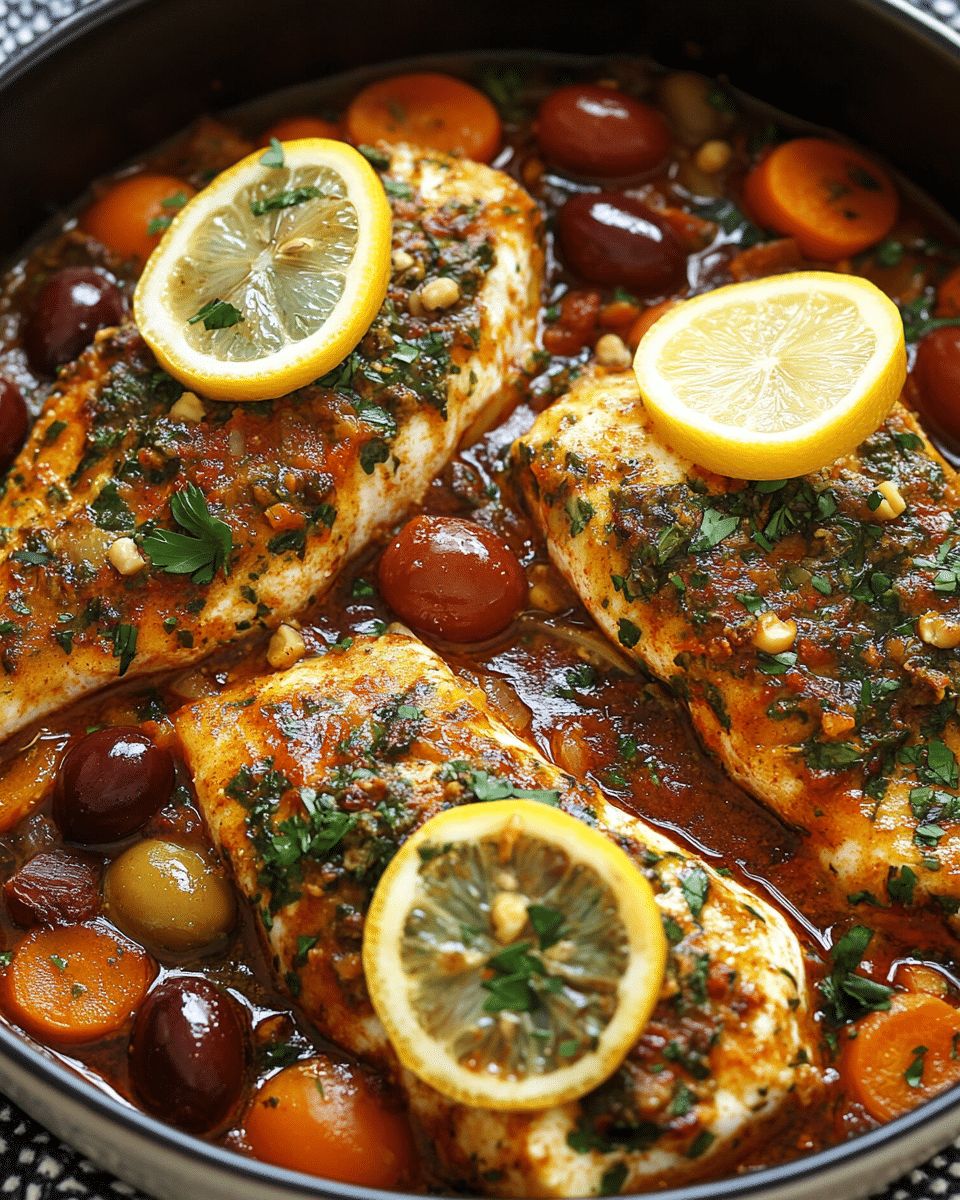
In Morocco, eating is rarely a solitary act. The tagine is traditionally placed in the center of the table, and everyone eats from the section directly in front of them using pieces of crusty bread (Khobz) as a spoon. This communal approach turns dinner into a shared narrative. By choosing to cook this dish, you are inviting your guests into a sensory experience that values connection as much as nutrition.
- Historical Roots: Tracing back to the Berbers, the tagine has survived through dynasties because of its efficiency and flavor.
- The Saffron Connection: Known as the world’s most expensive spice, saffron adds a floral, honey-like depth that symbolizes luxury and care.
- The Ginger Zing: Unlike dried ginger used in baking, the ground ginger here provides a slow-building warmth that cuts through the richness of the olive oil.
Anatomy of the Ingredients: A Flavor Blueprint
Creating a world-class tagine requires more than just following steps; it requires an understanding of how your ingredients interact. The Moroccan Fish Tagine relies on layers. Each component—from the marinade to the garnish—has a specific job to do in the final symphony of flavor.
The Chermoula (The Marinade)
In Moroccan cooking, the marinade is often referred to as Chermoula. This is the aromatic backbone of the dish. It doesn’t just sit on the surface; it penetrates the fish, ensuring that even the very center of the fillet is seasoned to perfection.
| Key Ingredient | Role in the Dish | Pro Tip |
|---|---|---|
| Fresh Parsley & Cilantro | Provides a bright, herbaceous base. | Minced by hand for better texture than a processor. |
| Saffron Threads | Adds the signature golden color and floral aroma. | Crush between your fingers before adding to release oils. |
| Ground Ginger | Provides a subtle, warming heat. | Ensure your ginger is fresh; it should smell spicy, not dusty. |
| Sweet Paprika | Adds earthiness and a deep red hue. | Use high-quality Spanish or Moroccan paprika. |
Selecting the Right Fish
Because the fish is nestled atop a bed of vegetables and steamed, you need a variety that can withstand the heat without disintegrating. You want lean, white-fleshed fish that acts as a sponge for the saffron-infused sauce.
- Tilapia: An affordable, mild option that takes on flavors beautifully.
- Cod: Provides thick, satisfying flakes.
- Sea Bass: A more luxurious choice with a buttery texture.
- Halibut: Excellent for those who prefer a firmer “steak-like” bite.
The Step-by-Step Culinary Journey
Follow these steps with intention. Cooking a tagine is a meditative process. Don’t rush the simmering of the sauce or the softening of the vegetables; these are the moments where the “soul” of the dish is formed.
Step 1: Infusing the Fish
Start by whisking together your minced herbs, olive oil, lemon juice, and spices. Coat your 6 oz boneless fillets thoroughly. Timing is critical: While one hour is the minimum, an overnight soak in the refrigerator allows the saffron and ginger to marry deeply with the protein. Always let the fish sit at room temperature for 15 minutes before it hits the oven to ensure even cooking.
Step 2: The Secret of the Tomato Base
Many amateur cooks make the mistake of using canned tomatoes. To achieve authentic Moroccan texture, you must use fresh tomatoes and “concasse” them. By boiling them briefly and then shocking them in ice water, you can slip the skins off easily. This results in a sauce that is pure, vibrant, and free of tough skins.
Step 3: Slow-Softening the Foundation
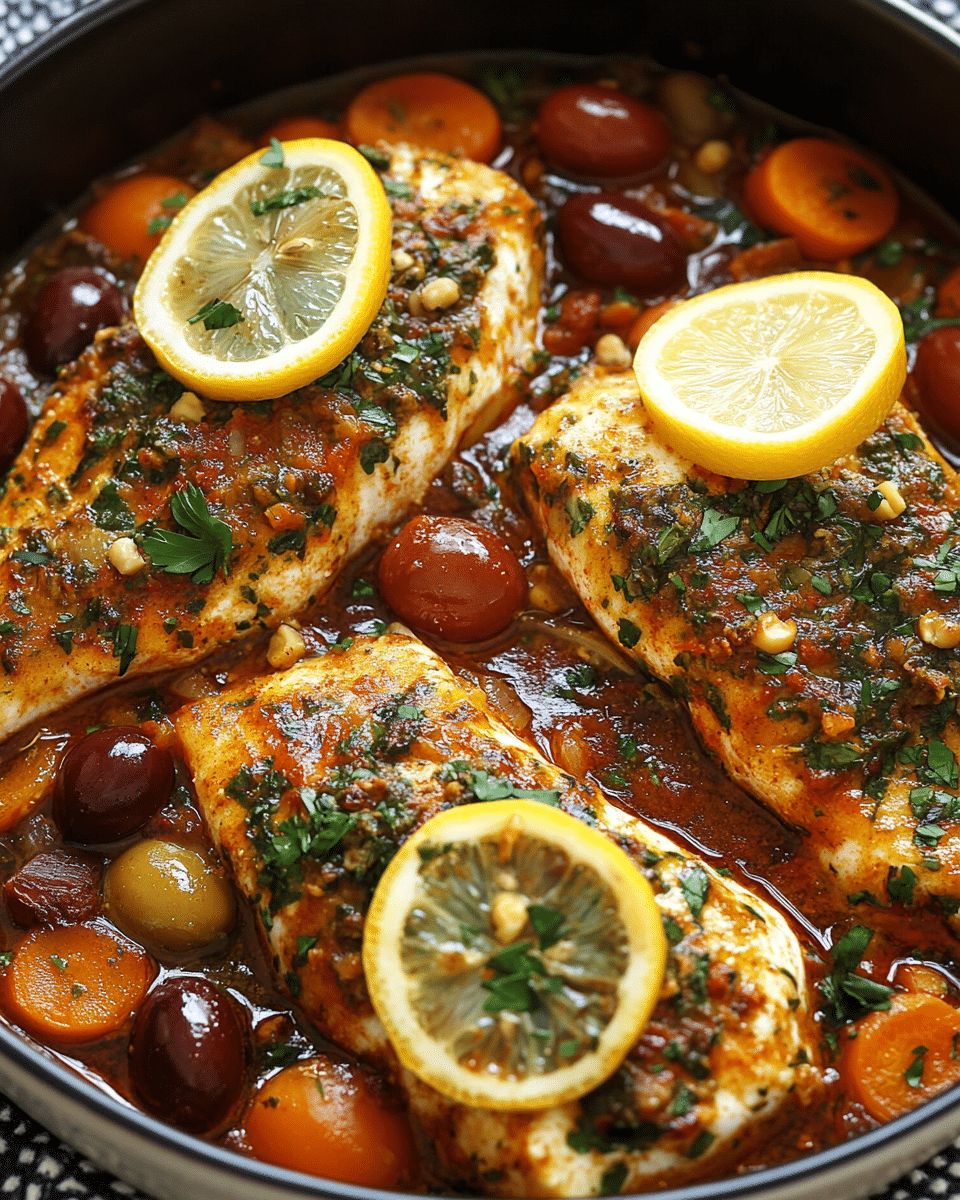
Before the fish ever enters the oven, the vegetables must be prepared. Carrots and onions take significantly longer to cook than fish. By layering them at the bottom of your Dutch oven with the tomato sauce and baking for 30 minutes, you create a flavorful “mattress” for the fish. This prevents the delicate fillets from sticking to the bottom and allows them to steam in the vegetable juices.
| Assembly Layer | Components | Expected Result |
|---|---|---|
| Bottom Layer | Sliced carrots and onions. | Natural sweetness and structural support. |
| Middle Layer | Soured tomato, garlic, and cumin sauce. | Rich, savory moisture. |
| Top Layer | Marinated fish, lemon rounds, and olives. | The tender, aromatic crowning glory. |
Pro Tips for a Flawless Moroccan Feast
Even with the best ingredients, the difference between a “good” tagine and a “world-class” one lies in the details. Use these expert insights to elevate your cooking.
- The Saffron Test: Real saffron should smell like sweet hay and should never turn the water/oil red immediately. It should release a steady, yellow-gold tint.
- Preserved Lemon Pulp: If you find the peel of preserved lemons too intense, use only the pulp. It provides a concentrated, salty-citrus punch that is essential for the authentic “tang” of the dish.
- Balancing Acidity: If your fresh tomatoes are too acidic, add a half-teaspoon of honey or sugar to the sauce. This rounds out the flavors and mimics the natural sweetness found in sun-ripened Moroccan produce.
- Temperature Control: If cooking on a stovetop, always use a heat diffuser. Earthenware tagines are prone to cracking if exposed to direct, high heat.
Chef’s Secret: For an extra layer of luxury, toast your cumin seeds in a dry pan for 30 seconds before grinding them. The aroma will be noticeably more intense than pre-ground spices.
Nutrition Snapshot: The Mediterranean Powerhouse
This dish isn’t just a treat for the palate; it is a nutritional powerhouse. By focusing on lean protein, healthy fats (olive oil), and antioxidant-rich spices, the Moroccan Fish Tagine fits perfectly into a heart-healthy lifestyle.
- Heart Health: White fish provides high-quality protein without the saturated fats found in red meat.
- Anti-Inflammatory: Ginger and saffron are both celebrated for their ability to reduce inflammation in the body.
- Digestive Aid: Cumin and ginger work together to soothe the digestive system, making this a “soul-warming” meal that feels light on the stomach.
| Nutrient | Source | Benefit |
|---|---|---|
| Omega-3 Fatty Acids | Fish Fillets | Supports brain and cardiovascular health. |
| Vitamin A | Carrots & Tomatoes | Essential for vision and immune function. |
| Monounsaturated Fats | Extra Virgin Olive Oil | The foundation of the healthy Mediterranean diet. |
As you pull your tagine from the oven, the first thing that will hit you is the steam of saffron and ginger. The fish should be opaque and flake easily at the touch of a fork. Scatter your fresh herbs over the top, bring the whole pot to the table, and enjoy the fruits of your labor. This is more than dinner—it is a celebration of flavor, tradition, and the simple joy of a home-cooked meal.
You May Also Like
Explore more: Mediterranean Recipes, Healthy Seafood Dinners, Moroccan Spices, Easy One-Pot Meals.
Source: Learn more about the history and variations of the Tajine on Wikipedia.
Frequently Asked Questions
What is the best type of fish to use for a Moroccan Tagine?
The ideal choice is a firm, white-fleshed fish that can withstand the steaming process without falling apart. We recommend using cod, halibut, sea bass, or tilapia. These varieties absorb the saffron and ginger marinade beautifully while maintaining a tender, flaky texture.
Can I prepare this recipe without an authentic clay tagine?
Absolutely! While a traditional clay tagine provides unique moisture circulation, you can achieve excellent results using a Dutch oven or a deep, heavy-bottomed casserole dish with a tight-fitting lid. The key is to ensure the lid remains sealed to trap the aromatic steam inside.
What can I use as a substitute for preserved lemons?
If you don’t have preserved lemons on hand, you can substitute them with the zest of one fresh lemon mixed with a half-teaspoon of sea salt. For a closer match to the fermented flavor, you can also add a small splash of lemon juice to the tomato sauce during the simmering stage.
Final Thoughts
The Moroccan Fish Tagine with Ginger and Saffron is a true testament to the beauty of slow-cooked Mediterranean cuisine. By layering fresh vegetables, aromatic spices, and lean protein, you create a dish that is as nourishing as it is flavorful. It is a perfect centerpiece for a communal dinner, bringing the exotic scents of a Moroccan souk right into your home kitchen.
Whether you are a seasoned chef or a home cook looking to expand your horizons, this recipe offers a foolproof way to master complex, layered flavors. We invite you to light some candles, prepare a side of fluffy couscous, and enjoy this soul-warming feast with your favorite people. Enjoy!

