
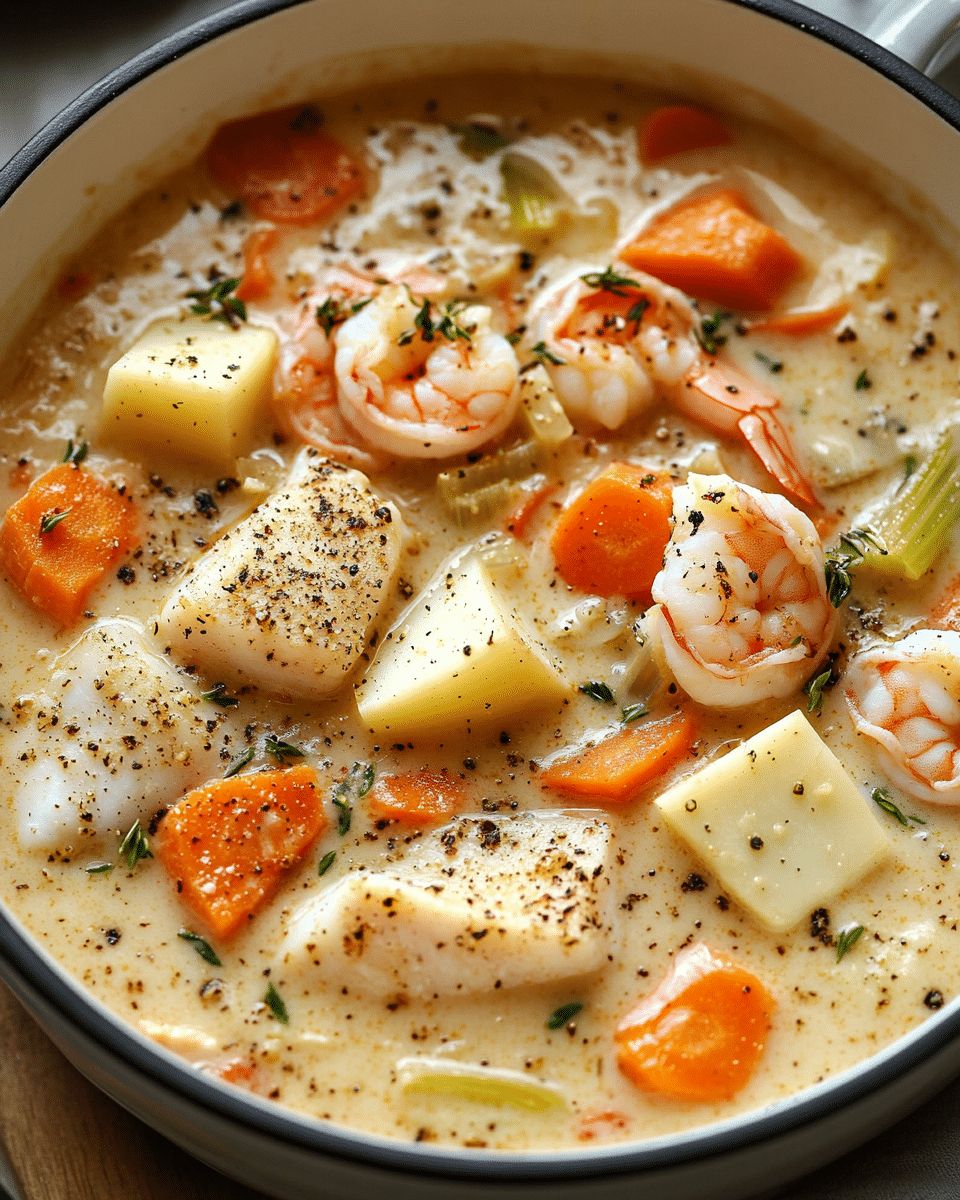
There’s something truly magical about the combination of fresh seafood and hearty vegetables in a steaming bowl of chowder. The rich, creamy broth, tender fish, and savory vegetables come together in perfect harmony, creating a meal that’s both comforting and gourmet. Whether you’re craving a cozy dinner on a chilly night or want to impress your guests with a sophisticated homemade dish, this creamy seafood chowder with fresh vegetables is guaranteed to become a household favorite.
In this guide, you’ll discover everything you need to know about crafting this flavorful masterpiece—from selecting the highest quality ingredients to the step-by-step techniques that ensure a professional finish. With its blend of tender vegetables, fresh ocean flavors, and a luxuriously smooth base, this chowder offers the perfect balance of warmth and nutrition. We will also dive into helpful tips, nutritional breakdowns, and expert answers to common questions so you can cook with absolute confidence.
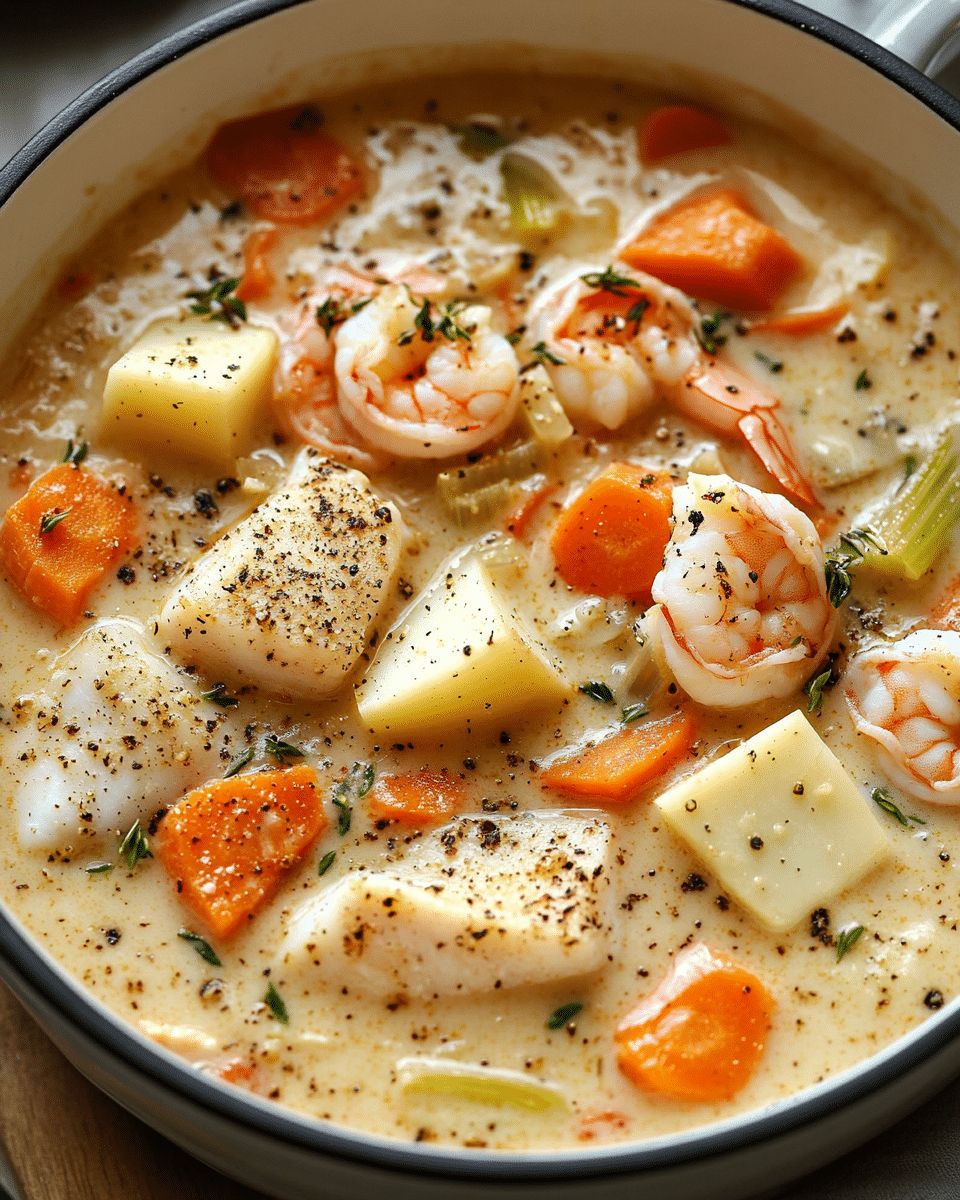
Quick Answer: This Creamy Seafood Chowder is a rich, one-pot meal featuring a base of seafood stock and half-and-half, loaded with salmon, white fish, shrimp, and fresh root vegetables. It is the ultimate comfort food that balances omega-3 fatty acids with fiber-rich carrots, celery, and potatoes.
Why This Creamy Seafood Chowder is Perfect for Every Occasion
Perfect for Cold Days
There’s no better way to thaw out than with a bowl of creamy seafood chowder. The comforting, rich texture provides an immediate sense of coziness. Whether you’re curled up by the fireplace or seeking refuge from a rainy afternoon, this dish brings people together, making it ideal for family gatherings or a special self-care treat.
Delicious, Nutritious, and Filling
This isn’t just soul food; it’s a balanced meal. By combining the omega-3s from fresh fish with the vitamins, minerals, and antioxidants found in carrots and celery, every spoonful provides nourishment. The inclusion of Russet potatoes adds a hearty starch that ensures you feel full and satisfied without needing multiple side dishes.
Simple Ingredients for Big Flavor
You don’t need an exotic pantry to create a five-star meal. The beauty of this recipe lies in its simplicity. Using everyday staples like onions, garlic, and butter alongside fresh seafood allows the natural flavors to shine. The result is a dish that tastes complex and expensive but is surprisingly easy to execute in any home kitchen.
Key Ingredients for the Best Creamy Seafood Chowder
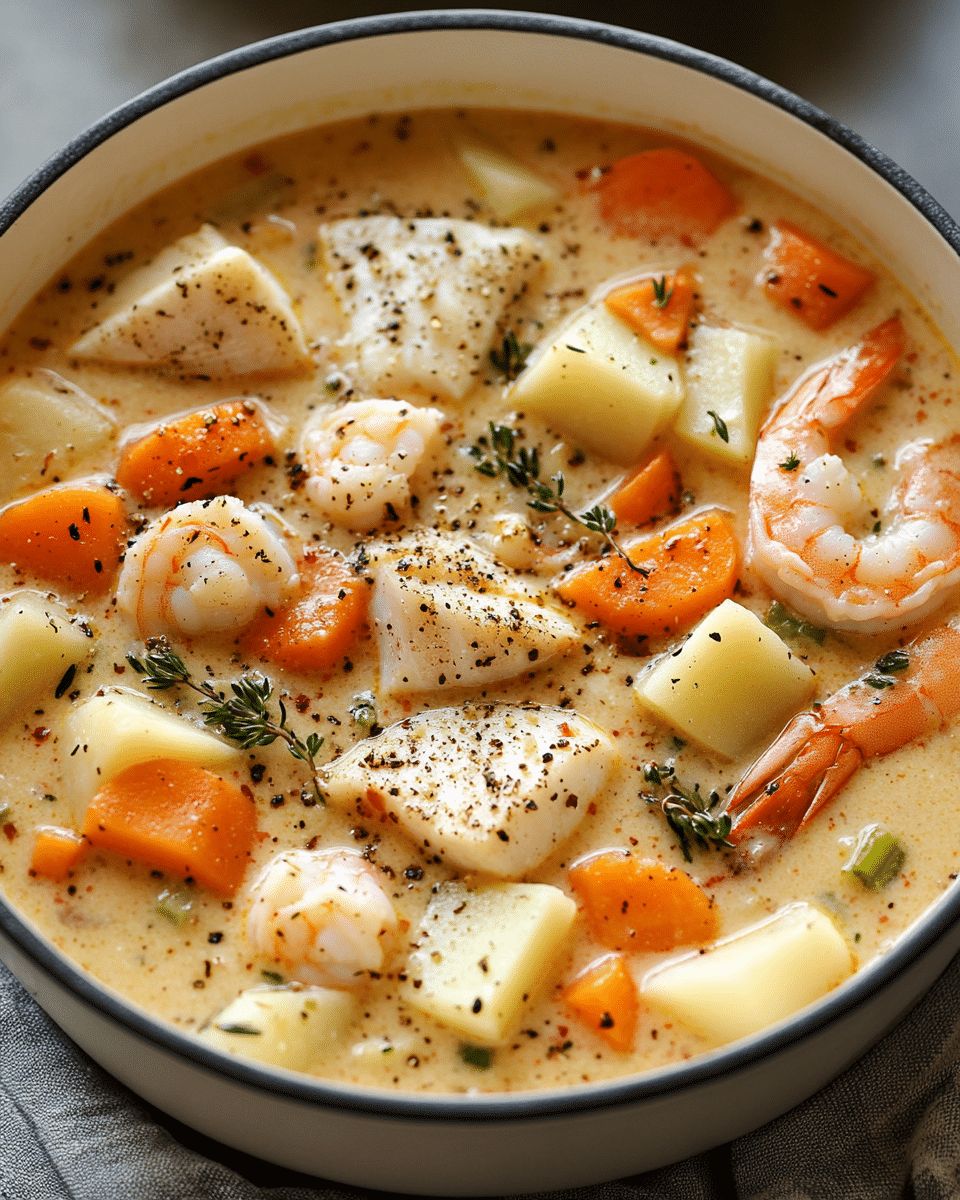
To achieve the perfect depth of flavor, it is essential to use components that complement each other. Each ingredient below plays a specific role in building the chowder’s signature profile.
| Ingredient | Amount | Notes |
|---|---|---|
| Unsalted butter | 3 tbsp | Adds essential richness and forms the base of the roux. |
| Onion | 1 cup, diced | Provides a sweet, savory foundation. |
| Carrots | 1 cup, diced | Adds natural sweetness and vibrant color. |
| Celery | ½ cup, diced | Provides an earthy, aromatic backbone. |
| Russet potatoes | 2 cups, diced | Adds heartiness and naturally thickens the broth. |
| Garlic | 3 cloves, minced | Enhances the overall depth of flavor. |
| Seafood stock | 3 cups | The “liquid gold” that carries the seafood essence. |
| Half and half | 2 cups | Creates a silky, creamy texture without being too heavy. |
| Fresh seafood | 1.5 lbs | A mix of salmon, white fish, and shrimp. |
| Dried thyme | 1 ½ tsp | Adds a subtle, floral herbal note. |
Key Ingredients Explained
Seafood Stock: The Heart of the Broth
The seafood stock is perhaps the most critical component. It provides a concentrated ocean flavor that water or chicken broth simply cannot replicate. For the best results, look for high-quality store-bought versions or simmer your own using fish bones and mirepoix.
Half and Half: The Creamy Dream
We use half and half to strike the perfect balance between indulgence and lightness. It makes the chowder luxuriously smooth without the overwhelming fat content of heavy cream. If you are looking for a dairy-free alternative, full-fat coconut milk is an excellent substitute that pairs beautifully with seafood.
Fresh Seafood: Choose Wisely
Quality is everything when it comes to the protein. A blend of salmon (for richness), white fish (like cod or halibut for texture), and shrimp (for sweetness) creates a multi-dimensional experience. Always ensure your seafood is fresh and properly cleaned before it hits the pot.
A Comprehensive Step-by-Step Guide to Cooking Your Seafood Chowder
Creating a restaurant-quality creamy seafood chowder at home requires more than just tossing ingredients into a pot; it is about layering flavors and respecting the delicate nature of the seafood. By following this detailed method, you ensure that every vegetable is tender and every piece of fish is succulent rather than rubbery.
Phase 1: Precision Preparation
Professional chefs often say that “mise en place” (everything in its place) is the secret to a stress-free kitchen. For this recipe, uniformity is key. Because we want every spoonful to contain a bit of everything, your dicing skills matter here.
- The Mirepoix: Finely dice your onions, carrots, and celery. These form the aromatic foundation of the soup.
- The Potatoes: Cut the Russet potatoes into 1/2-inch cubes. If they are too large, they won’t cook through in time; too small, and they will turn into mush.
- The Garlic: Mince the garlic fresh. Avoid the pre-minced jars, as they lack the pungent oils needed to cut through the heavy cream.
- The Seafood: Cube the salmon and white fish into 1-inch pieces. For the shrimp, removing the tails makes the eating experience much more pleasant for your guests.
Phase 2: Building the Aromatic Base
Heat a heavy-bottomed Dutch oven or stockpot over medium heat. Add the 3 tablespoons of unsalted butter. Once the butter begins to foam, add your diced onion, carrots, celery, and potatoes. This step is known as sweating the vegetables.
Cook the vegetables for 5 to 6 minutes. You aren’t looking to brown them; you want them to become translucent and soft. The butter will begin to take on a golden hue from the carrots. At the final 30 seconds of this process, stir in the minced garlic until you can smell its fragrance throughout the kitchen.
Phase 3: Creating the Thickening Roux
To achieve that signature “chowder” thickness without it becoming a heavy paste, we use the Singer method. Sprinkle the 3 tablespoons of all-purpose flour directly over the buttered vegetables. Stir constantly for 2 minutes.
This “toasts” the flour, removing the raw grain taste while ensuring it coats every piece of potato and carrot. Now, stir in your dried thyme, red pepper flakes, salt, and black pepper. The heat from the pot will wake up the dried herbs, releasing their oils into the fat base.
Phase 4: The Simmering Process
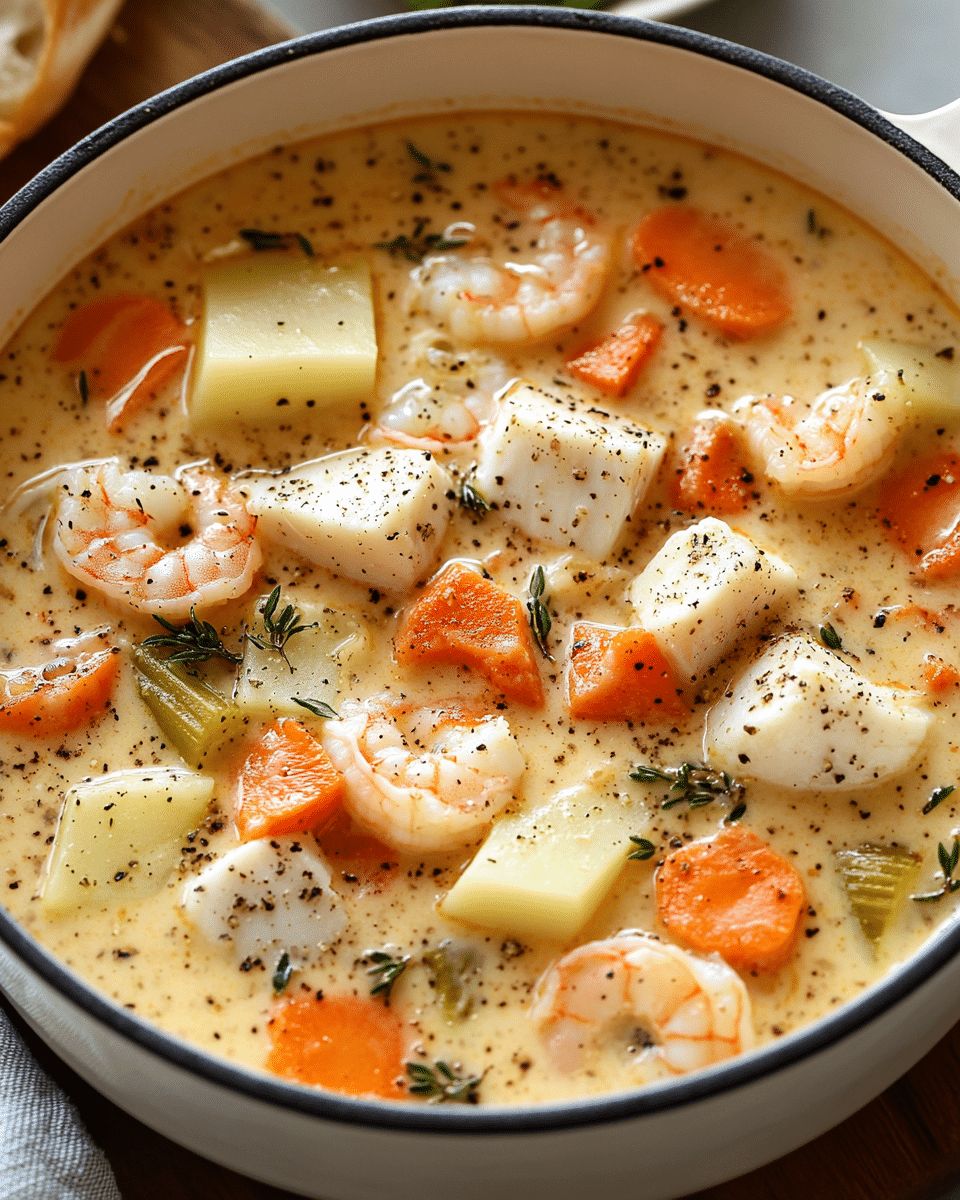
Slowly pour in the 3 cups of seafood stock while whisking or stirring briskly to prevent flour clumps. Follow this immediately with the 2 cups of half-and-half. Turn the heat up to medium-high just until the first bubble breaks the surface, then immediately drop the heat back down to a gentle simmer.
Pro Tip: Never let a cream-based soup reach a rolling boil. Excessive heat can cause the dairy to “break” or curdle, ruining the silky texture of your chowder.
Cover the pot and let it simmer for 6 to 7 minutes. Test a potato with a fork; if it slides through easily, you are ready for the grand finale.
Phase 5: Poaching the Fresh Seafood
This is the most critical stage. Gently fold in the chunks of salmon, white fish, and chopped shrimp. Stir once, very carefully, so you don’t break the fish cubes. Cover the pot and let the residual heat and the gentle simmer poach the seafood for 3 to 5 minutes.
The fish is done when the salmon turns an opaque pink and the white fish flakes easily. The shrimp should be curled into a “C” shape and look vibrant. Turn off the heat immediately to stop the cooking process.
Nutritional Breakdown and Comparison
Understanding what goes into your body is just as important as the taste. Below is an estimate of the nutritional value per serving (based on 6 servings per pot), followed by a comparison of why homemade is superior to canned alternatives.
| Nutrient | Amount Per Serving | Daily Value (%) |
|---|---|---|
| Calories | 385 kcal | 19% |
| Total Fat | 22g | 28% |
| Protein | 28g | 56% |
| Carbohydrates | 18g | 6% |
| Vitamin A | 4500 IU | 90% |
| Omega-3 Fatty Acids | 1.2g | 75% |
Why Homemade Beats Store-Bought
While canned chowders are convenient, they often compromise on quality and health. Here is how this fresh recipe stacks up against the average commercial brand:
- Sodium Content: Commercial soups often contain over 1,000mg of sodium per serving. This recipe allows you to control the salt.
- Preservatives: This fresh version contains zero MSG or artificial thickeners like modified corn starch.
- Seafood Quality: Canned soups use “minced” seafood parts; we use fresh fillets of salmon and cod.
The Ultimate Guide to Seafood Selection
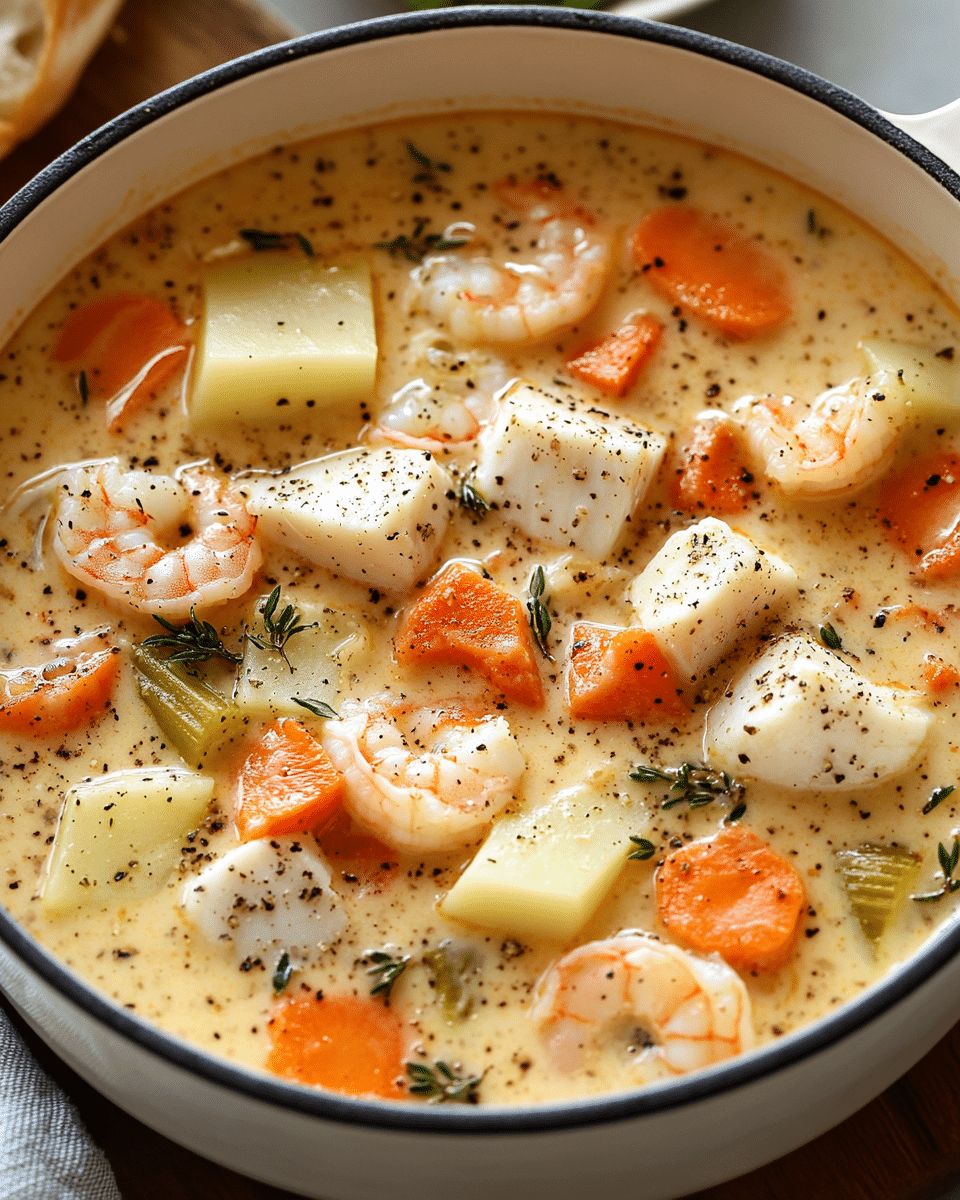
The quality of your chowder is a direct reflection of the quality of your seafood. Here is what to look for when shopping at your local fish market:
Selecting the Best White Fish
You need a “firm” white fish that won’t disintegrate the moment it touches hot liquid. Cod and Halibut are the gold standards for chowder because they hold their shape well. If you are on a budget, Tilapia or Pollock can work, but be extra gentle when stirring.
The Importance of Salmon
Salmon adds a necessary richness to the broth. The healthy fats in salmon melt slightly into the cream, giving the soup a beautiful orange-tinted oil and a deeper savory flavor. If possible, choose wild-caught salmon for a firmer texture and higher Omega-3 content.
Shrimp Sizing
For chowder, “medium” shrimp (41/50 count) are usually best. Since we chop them into smaller pieces anyway, there is no need to pay a premium for “Jumbo” or “Colossal” shrimp.
Pro Tips for Perfecting Your Chowder Texture
If you find your chowder isn’t quite the consistency you desire, use these troubleshooting tips to fix it on the fly:
- Too Thin? Take a ladle of the potatoes from the soup and mash them in a small bowl, then stir them back in. The natural starches will act as an instant thickener.
- Too Thick? Splash in a little extra seafood stock or a tablespoon of dry white wine to brighten the flavors and loosen the broth.
- Lack of Depth? Add a teaspoon of Worcestershire sauce or a squeeze of fresh lemon juice. Acid is often the “missing ingredient” that makes the flavors pop.
Serving and Pairing Suggestions
A heartwarming bowl of chowder deserves the right companions. To turn this into a full multicourse experience, consider the following pairings:
- The Bread: A warm, crusty sourdough baguette is essential for soaking up the leftover creamy broth.
- The Garnish: Don’t underestimate the power of fresh herbs. Chopped chives, parsley, or green onions provide a necessary hit of freshness to cut through the dairy.
- The Side: A light, crisp Caesar salad or steamed green beans with lemon zest provides a refreshing contrast to the rich soup.
Frequently Asked Questions (FAQs)
Can I use frozen seafood?
Yes, but with one condition: it must be thoroughly thawed and patted dry. Frozen seafood releases a lot of water as it cooks; if you put it in frozen, it will water down your beautiful creamy base and ruin the seasoning balance.
How long does leftovers stay fresh?
Because of the dairy and seafood, this chowder should be consumed within 2 to 3 days. When reheating, do so on the stovetop over low heat. Avoid the microwave if possible, as it tends to overcook the shrimp and make them rubbery.
Conclusion: The Ultimate Comfort Meal
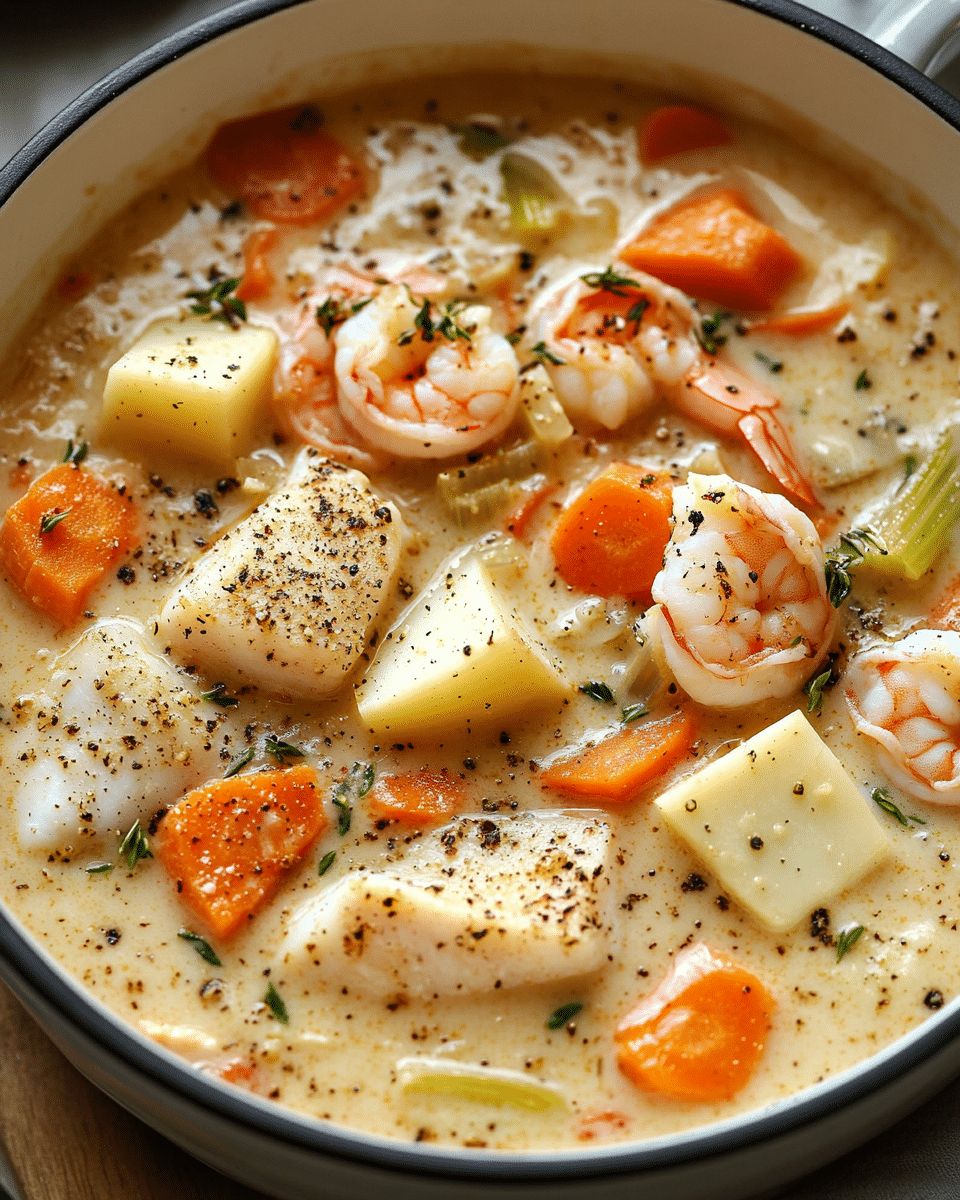
In every spoonful of this creamy seafood chowder with fresh vegetables, you taste the care and quality of fresh ingredients. It is a dish that manages to be both humble and sophisticated, making it just as appropriate for a Tuesday night at home as it is for a holiday dinner party. By mastering the roux, selecting fresh seafood, and simmering with patience, you have created a bowl of comfort that truly warms the soul. Gather your loved ones, break some bread, and enjoy the fruits of your labor!
You May Also Like
If you enjoyed this hearty seafood chowder, you might find these related guides and recipes perfect for your next kitchen adventure:
- Discover the secrets to perfect homemade garlic bread to pair with your soup.
- Learn how to prepare vibrant steamed vegetables for a healthy side.
- Check out our gourmet Filet Mignon with Lobster Cream for a special occasion.
- Explore more easy family dinner ideas that save time without sacrificing flavor.
For more information on the history and variations of this classic dish, you can visit the Wikipedia page on Chowder.
Frequently Asked Questions
How can I reheat seafood chowder without making the fish rubbery?
The best way to reheat this dish is low and slow on the stovetop. Pour the desired amount into a small pot and heat over low flame, stirring occasionally. Avoid letting the chowder reach a vigorous boil, as the intense heat will overcook the delicate seafood and potentially cause the cream base to separate.
Can I make this recipe gluten-free?
Yes, you can easily adapt this recipe. Simply replace the all-purpose flour with a 1:1 gluten-free flour blend or use a cornstarch slurry (mixed with cold water) added at the end of the simmering process. Ensure your seafood stock is also certified gluten-free, as some commercial brands contain hidden thickeners.
Is it possible to use frozen seafood instead of fresh?
While fresh seafood is always the gold standard for flavor, high-quality frozen seafood is a great alternative. Ensure that you thaw the shrimp and fish completely in the refrigerator and pat them dry with paper towels before adding them to the pot. This prevents excess moisture from thinning out your rich, creamy broth.
Final Thoughts
Mastering a creamy seafood chowder is a rewarding skill that brings the luxury of a coastal bistro right into your home. This recipe is designed to be versatile, allowing you to swap in your favorite catches or seasonal vegetables to keep it fresh every time you cook. It’s more than just a meal; it’s a bowl of pure comfort that nourishes the soul and satisfies the palate.
We hope this guide inspires you to gather your loved ones around the table for a cozy evening. Don’t forget to serve it with a thick slice of crusty bread to soak up every last drop of that delicious broth. Happy cooking!


