In the world of American comfort food, few dishes command as much respect as the slow-braised short rib. It is the ultimate expression of patience in the kitchen, transforming a tough, heavily marbled cut of beef into a fork-tender masterpiece that literally melts in your mouth. While the classic red wine braise is a staple in cozy bistros from New York to Los Angeles, there is a sophisticated twist that is currently taking home kitchens by storm: Braised Pomegranate Short Ribs. By introducing the bright, jewel-toned acidity of pomegranate, we elevate the deep, fatty richness of the beef to a level of balance that is as vibrant as it is delicious.
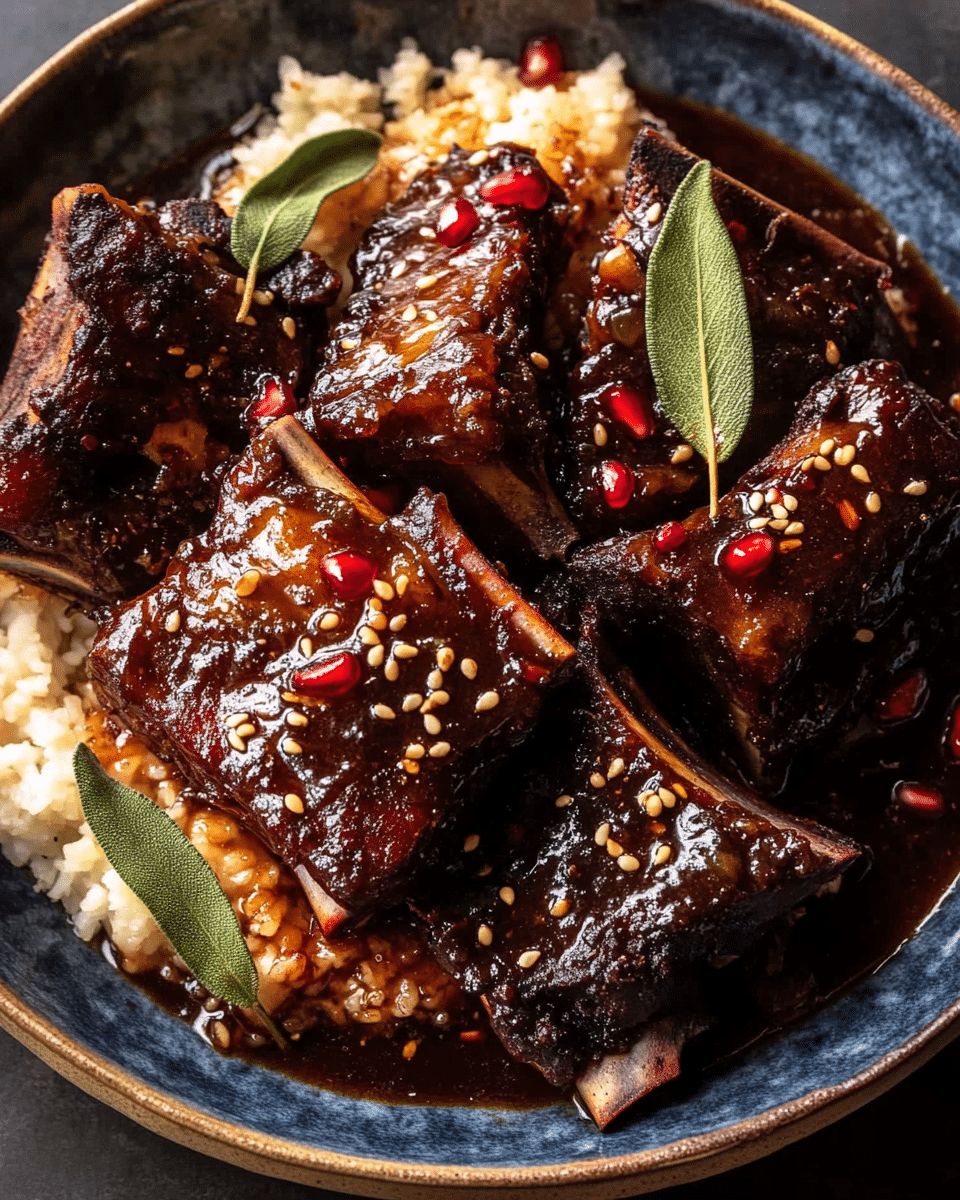
Americans have long loved the “low and slow” method because it represents the heart of hospitality—taking the time to turn a modest cut of meat into a centerpiece worthy of a celebration. This pomegranate-infused version takes that tradition and adds a modern, gourmet edge. The natural sugars in the pomegranate juice and honey caramelize beautifully during the long roasting process, creating a glossy, deep-mahogany glaze that perfectly balances the savory notes of tamari and fresh herbs. It’s a dish that feels like a luxury experience, yet remains approachable enough for any home chef at cookwithfeast.com.
Quick Answer: Braised Pomegranate Short Ribs are achieved by slow-roasting bone-in beef ribs in a flavorful braising liquid of pomegranate juice, beef broth, tamari, and honey at 325°F for about 3 hours. This low-temperature method breaks down the tough connective tissue, resulting in “fall-off-the-bone” meat with a unique tangy-sweet glaze that cuts perfectly through the richness of the beef.
The Science of Flavor: Why Pomegranate and Short Ribs Work
To truly understand the success of Braised Pomegranate Short Ribs, one must look at the culinary chemistry happening inside the Dutch oven. Short ribs are a heavily marbled, tough cut of beef that contains a high amount of connective tissue. When subjected to the “low and slow” braising method, this tissue—primarily collagen—breaks down into gelatin, which provides that signature lip-smacking richness and velvety mouthfeel.
However, richness alone can often feel one-dimensional. This is where the pomegranate juice enters the frame. Its natural acidity acts as a chemical tenderizer, further softening the muscle fibers. More importantly, the tart, astringent profile of the pomegranate provides a necessary counterpoint to the heavy fats of the beef. It “cuts” through the oiliness, refreshing the palate with every bite. When combined with the umami of tamari and the floral sweetness of honey, you create a complex glaze that hits every taste receptor on the tongue: salty, sweet, sour, and savory.
Selecting Your Ribs: English Cut vs. Flanken Cut
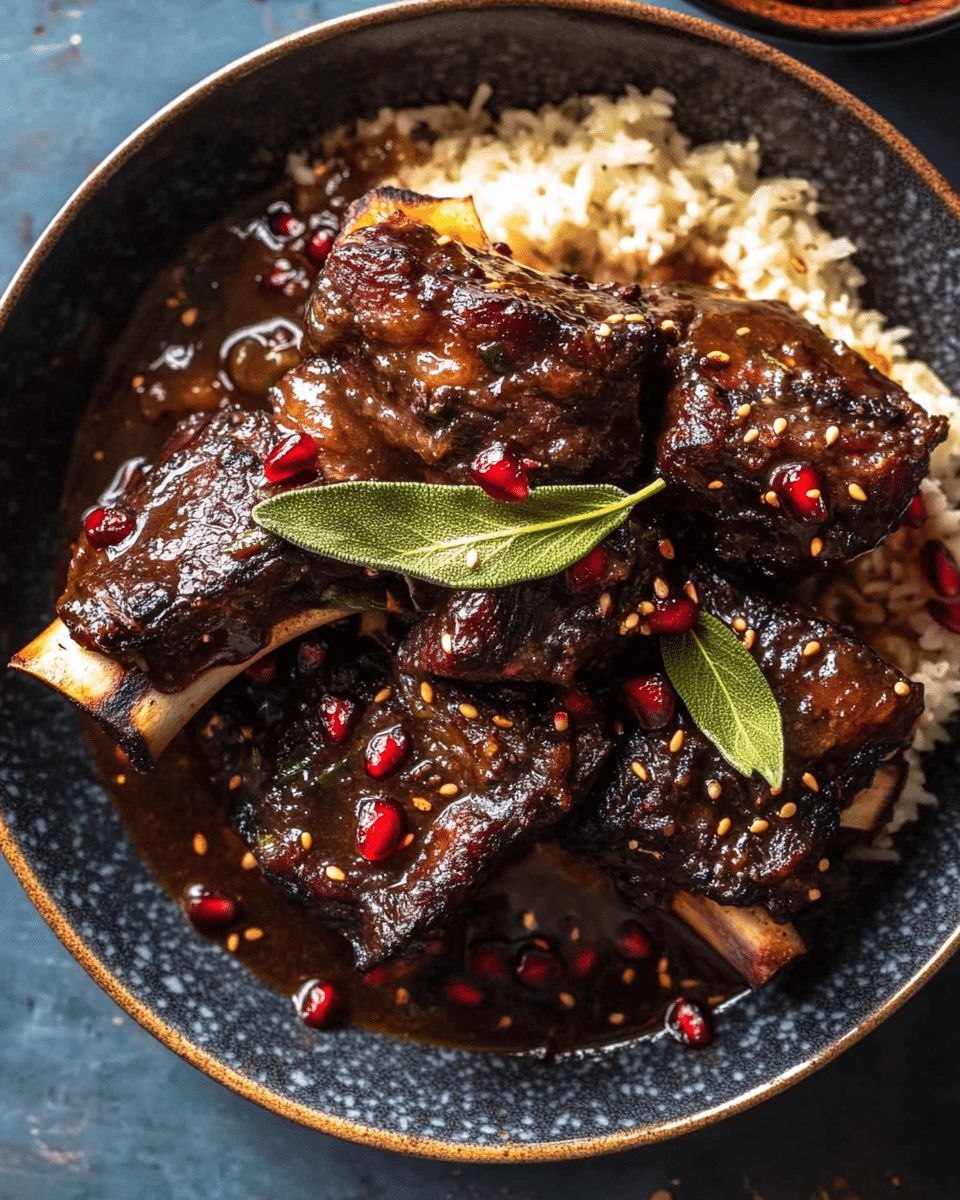
When shopping for this recipe, you will likely encounter two different styles of short ribs. For a traditional American braise, the English Cut is the gold standard. Here is a quick comparison to help you choose the best meat at your local butcher:
| Rib Style | Description | Best Cooking Method |
|---|---|---|
| English Cut | Cut into 2-3 inch rectangular chunks with a single bone. | Slow Braising (as used in this recipe). |
| Flanken Cut | Thinly sliced across the bone, showing three oval bone segments. | Quick Grilling or Korean BBQ (Galbi). |
| Boneless | Meat removed from the bone; leaner and less flavorful. | Stews or shorter braises. |
At cookwithfeast.com, we strongly recommend the bone-in English cut. The bone acts as a thermal conductor, ensuring the interior of the meat cooks evenly, while the marrow within the bone enriches the sauce with an extra layer of gourmet depth.
Mastering the Braise: A Culinary Walkthrough
Braising is a “combination cooking” method, meaning it uses both dry heat (roasting/searing) and moist heat (simmering). Mastering each phase is essential for achieving that restaurant-quality finish that makes Braised Pomegranate Short Ribs so famous.
Phase 1: The Aromatic Foundation
While many recipes suggest searing the meat first, this specific version focuses on building an aromatic nest. By layering the thinly sliced yellow onions and chopped garlic directly onto the ribs before the liquid is added, you allow the onions to soften into a jam-like consistency. As the beef renders its fat, the onions “confit” in that liquid gold, absorbing the beefy essence while releasing their own natural sugars. The addition of fresh thyme and a bay leaf provides a woody, herbal backbone that prevents the pomegranate sweetness from becoming cloying.
Phase 2: The Low and Slow Roasting
Temperature control is the most critical factor in a successful braise. We set the oven to 325°F (163°C) because it is high enough to facilitate the breakdown of collagen but low enough to prevent the muscle fibers from “seizing” and becoming dry. During these three hours, the tamari and pomegranate juice undergo a slow reduction. This is not just cooking; it is osmosis—the meat is literally exchanging its juices for the seasoned braising liquid.
Phase 3: The Maillard Reaction and Caramelization
The final 20 minutes of cooking are arguably the most important. By increasing the heat to 400°F (204°C) and removing the cover, you trigger the Maillard reaction. This is the chemical reaction between amino acids and reducing sugars that gives browned food its distinctive flavor. The honey and pomegranate sugars begin to bubble and thicken, turning into a sticky, glossy lacquer that clings to the shredded beef. Without this step, the ribs would simply be “boiled beef”—with it, they become a culinary masterpiece.
Elevating the Dish: Garnish and Texture
Professional plating isn’t just about looks; it’s about textural contrast. A dish that is entirely soft (shredded beef, mashed potatoes, sauce) can quickly become fatiguing to eat. We solve this by adding three specific garnishes that provide a “crunch” factor and a “bright” finish.
- Toasted Sesame Seeds: These provide a nutty, earthy aroma and a microscopic crunch that complements the tamari in the sauce.
- Fried Sage Leaves: Frying sage in salted butter removes its fuzzy texture and transforms it into a delicate, glass-like chip that shatters on the tongue, releasing an intense herbal oil.
- Fresh Pomegranate Arils: These are the “jewels” of the dish. Each seed provides a burst of fresh, cold juice that acts as a reset button for your palate, allowing you to enjoy the rich beef over and over again without feeling overwhelmed.
Storage, Reheating, and Make-Ahead Tips
One of the best-kept secrets about Braised Pomegranate Short Ribs is that they actually taste better the next day. Like a good chili or stew, the flavors continue to marry and deepen as they sit. If you are planning a dinner party, we highly suggest making this dish 24 hours in advance.
The “Fat Cap” Technique
If you refrigerate the ribs in their liquid overnight, the excess beef fat will rise to the top and solidify into a white “cap.” This makes degreasing the sauce incredibly easy; you can simply lift the fat off with a spoon and discard it. This results in a much cleaner, lighter sauce that highlights the pomegranate flavor rather than being masked by heavy grease.
Nutritional Snapshot
While this is an indulgent comfort meal, it is packed with essential minerals and vitamins. Here is a rough breakdown of the nutritional benefits per serving:
| Nutrient | Benefit |
|---|---|
| Iron & B12 | High levels from the beef short ribs, essential for energy and blood health. |
| Antioxidants | Pomegranate juice is rich in polyphenols that help fight inflammation. |
| Protein | Approximately 35g-45g per serving, perfect for satiety. |
| Healthy Fats | Monounsaturated fats found in beef help with nutrient absorption. |
By following these expert-level insights and maintaining the discipline of the “low and slow” method, you are guaranteed a result that is tender, flavorful, and unforgettable. Whether you serve it over creamy polenta or a simple bed of jasmine rice, these short ribs are a testament to the beauty of American fusion cooking.
You May Also Like
Explore more: Slow Cooking Masterclass, Hearty Beef Dinners, Creative Pomegranate Recipes, American Comfort Classics.
Source: Wikipedia
Frequently Asked Questions
Can I make these short ribs ahead of time?
Absolutely! In fact, braised short ribs often taste better the next day because the cooling and reheating process allows the flavors to penetrate even deeper into the meat. If you are hosting a party, we recommend making them 24 hours in advance, chilling them overnight, and reheating them gently on the stovetop.
What can I use if I cannot find pomegranate juice?
If pomegranate juice is not available at your local grocer, unsweetened cranberry juice or a bold red wine like a Cabernet Sauvignon are the best substitutes. Both provide the high acidity and deep color required to balance the rich fats of the beef short ribs.
Do I really need to fry the sage leaves?
While the dish is still delicious without them, fried sage leaves provide a critical textural contrast. The “shatter” of the crispy leaf against the tender, shredded beef creates a gourmet experience that elevates this from a simple stew to a restaurant-quality feast.
Final Thoughts
The beauty of Braised Pomegranate Short Ribs lies in the transformation. Taking a rugged, humble cut of beef and turning it into a glossy, jewel-toned masterpiece is what true American cooking is all about. This dish proves that with a little patience and the right balance of sweet and savory, you can create a meal that is both profoundly comforting and undeniably elegant.
At CookWithFeast, we believe that every meal should be an event. We hope this pomegranate-infused journey brings warmth to your kitchen and joy to your table. Don’t be afraid to experiment with the garnishes and make this signature dish your own. Happy cooking!