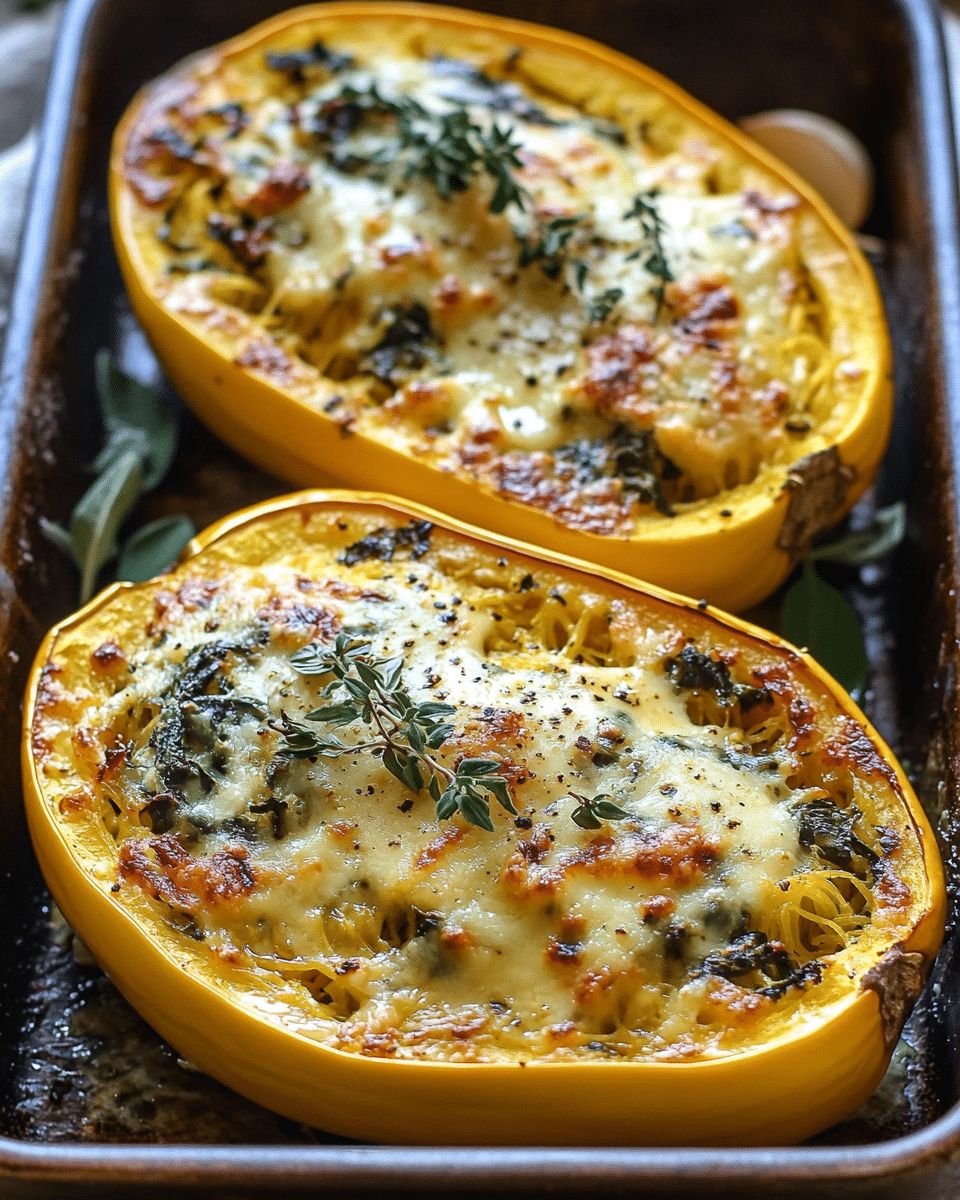
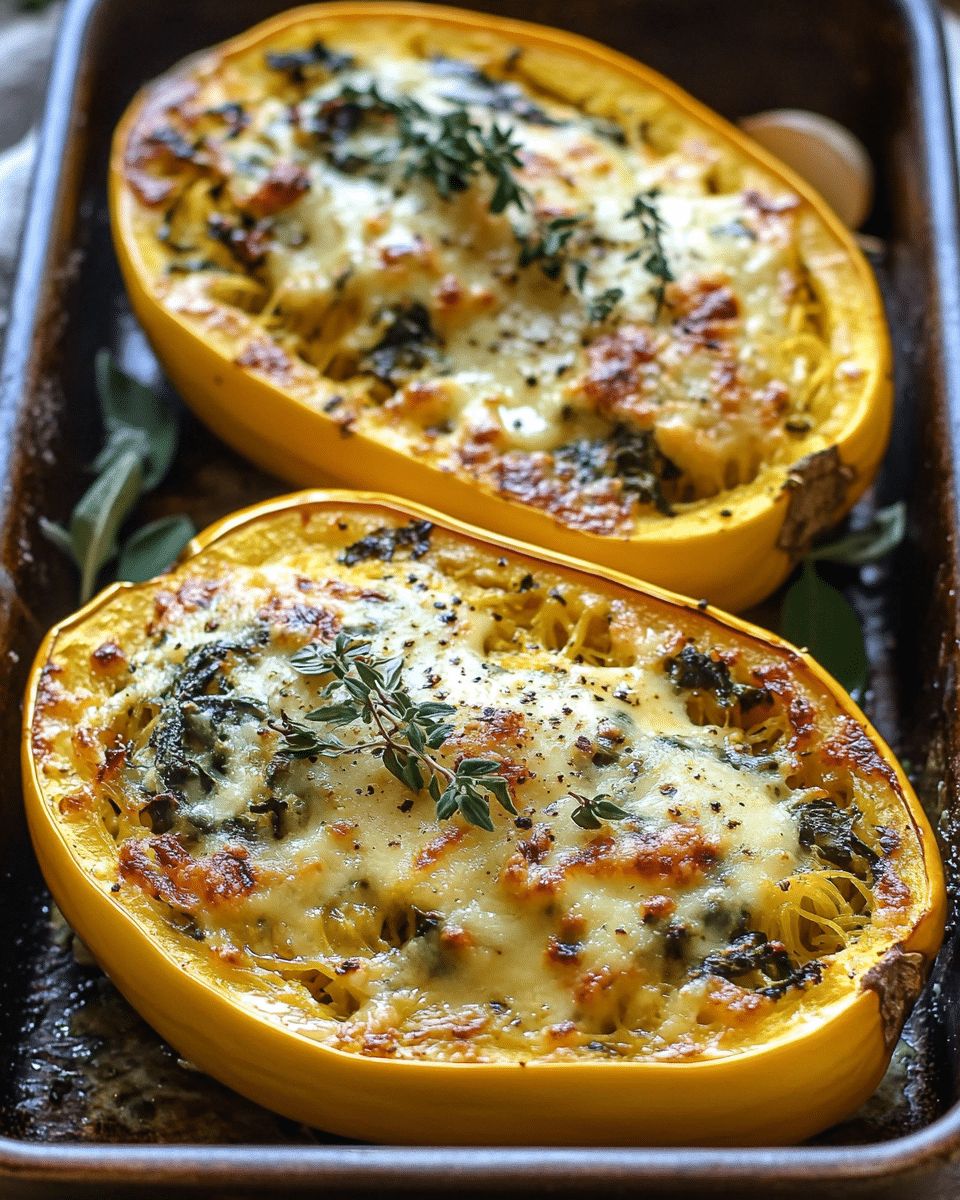
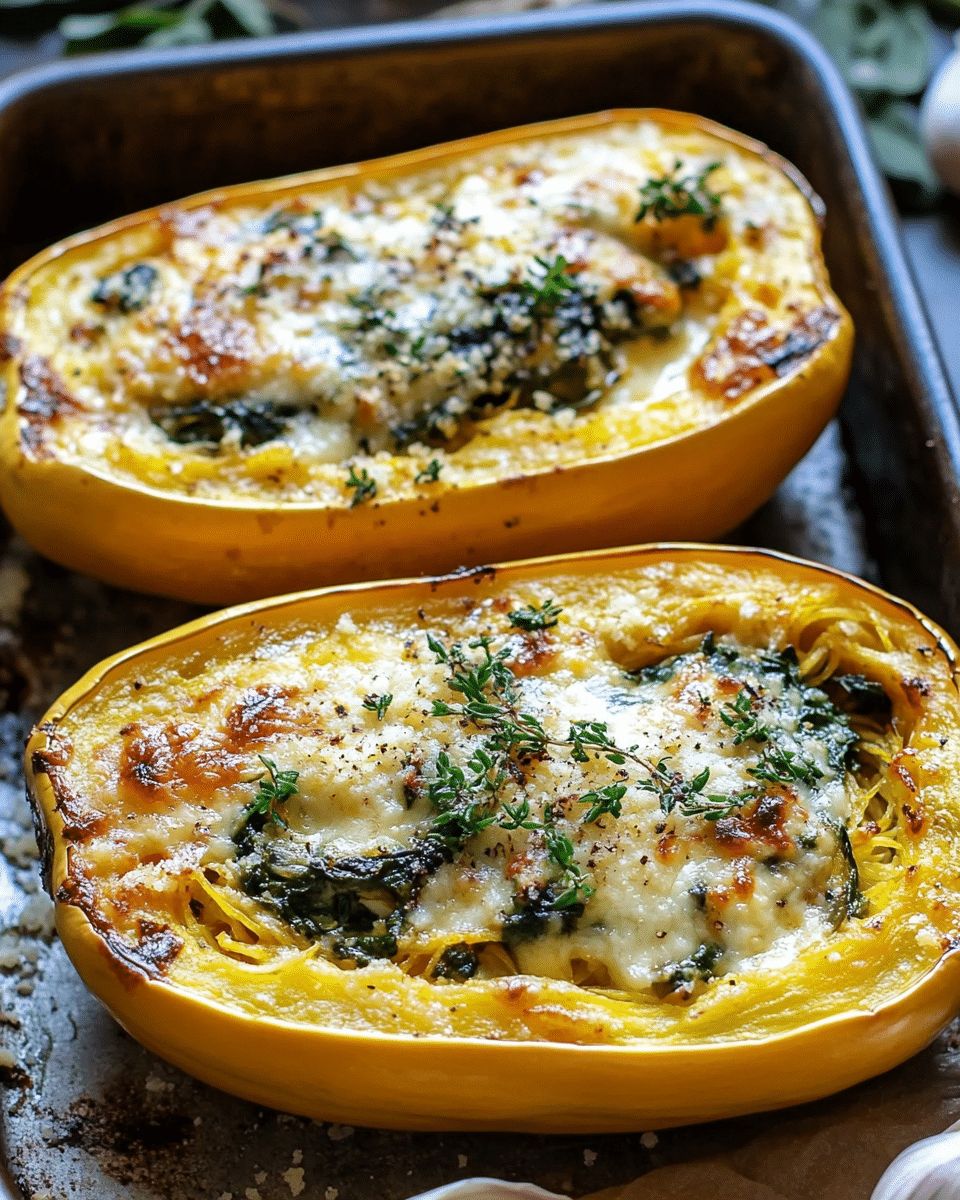
There are few things more satisfying than a meal that feels indulgent while still nourishing your body. When you sink your fork into the tender strands of spaghetti squash, smothered in a rich, cheesy spinach filling and topped with aromatic garlic sage butter, it’s impossible not to feel a sense of comfort. This Cheesy Spinach Stuffed Spaghetti Squash with Garlic Sage Butter isn’t just another dinner—it’s an experience that blends wholesome vegetables with decadent, gourmet flavors.
Whether you’re cooking for your family, entertaining guests, or simply craving something hearty and healthy, this recipe provides the perfect balance of taste, texture, and nutrition. By swapping traditional pasta for fiber-rich squash and elevating it with a trio of melted cheeses and roasted garlic, you create a show-stopping dish that fits perfectly into a low-carb or vegetarian lifestyle without sacrificing any of the “wow” factor.
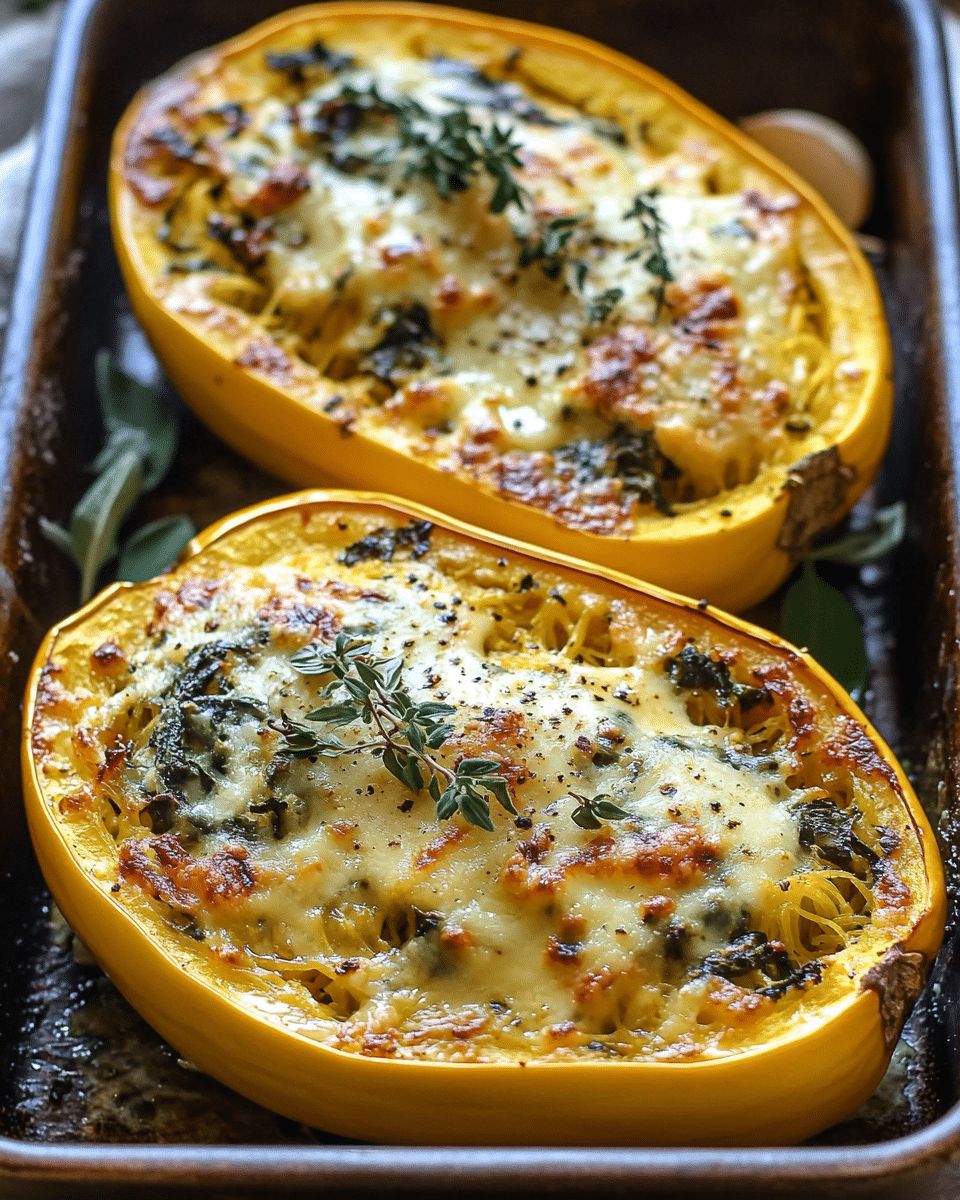
Quick Answer: This recipe transforms roasted spaghetti squash into a creamy, pasta-like meal by stuffing it with a blend of spinach, Fontina, Mozzarella, and Provolone cheeses. It is topped with a signature roasted garlic sage butter for an earthy, aromatic finish that makes it a perfect healthy comfort food.
Essential Ingredients for Your Stuffed Spaghetti Squash
Creating a gourmet-level meal at home starts with high-quality, fresh ingredients. This Cheesy Spinach Stuffed Spaghetti Squash relies on a specific blend of cheeses to achieve its signature gooey texture and aromatic herbs to provide depth. Unlike traditional pasta dishes, the squash provides a light, nutty base that allows the dairy and herbs to truly shine.
The Squash and Spinach Filling
The filling is the heart of this dish. It is designed to be thick enough to stay inside the squash while roasting but creamy enough to coat every “noodle” once you scrape it with a fork. Below are the key components for the primary filling:
- Whole milk or heavy cream (1 1/4 cups): This provides the liquid base for the cheese sauce. Heavy cream will yield a more indulgent, restaurant-style result.
- Frozen chopped spinach (6 oz): Ensure this is thawed and squeezed completely dry to avoid a watery filling.
- Fresh herbs: 2 tbsp of chopped fresh sage and 1 tbsp of fresh thyme leaves.
- Seasonings: Kosher salt and cracked black pepper to taste.
The “Power Trio” Cheese Blend
We use a combination of three specific cheeses to ensure a balance of meltability, stretch, and sharp flavor. While you can swap these out, this specific ratio is recommended for the best mouthfeel:
| Cheese Type | Quantity | Flavor Profile & Role |
|---|---|---|
| Fontina | 1 cup (shredded) | Earthly and nutty; melts exceptionally well. |
| Mozzarella | 1/2 cup (shredded) | Mild flavor; provides the classic “cheese pull” stretch. |
| Provolone | 1 cup (shredded) | Sharp and buttery; adds depth to the overall sauce. |
| Parmesan | 1/4 cup (grated) | Salty and crystalline; creates a golden crust on top. |
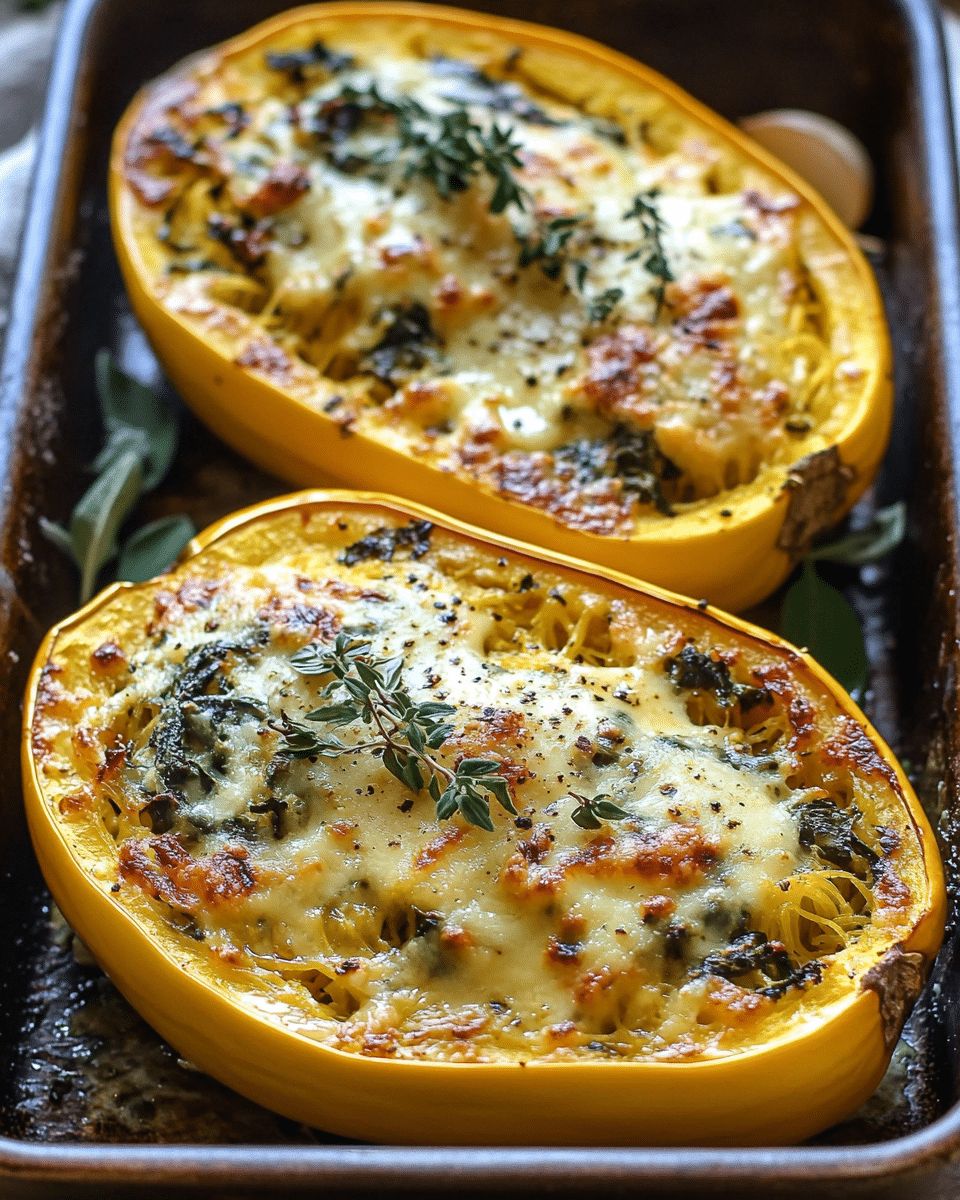
The Roasted Garlic Sage Butter
This is the secret weapon of the recipe. Instead of using raw garlic, we roast a whole head to transform the pungent cloves into sweet, spreadable gold. You will need:
- 1 head of garlic: Roasted until soft.
- Salted butter (2 tbsp): Room temperature for easy mashing.
- Fresh sage (1 tbsp): Finely chopped to infuse the butter.
- Olive oil: A light drizzle for the roasting process.
Step-by-Step Culinary Guide
Follow these detailed steps to ensure your squash is perfectly cooked—neither crunchy nor mushy—and your cheese topping is browned to perfection.
Step 1: Prep and Prime the Squash
Preheat your oven to 425°F (220°C). While the oven reaches temperature, carefully slice your spaghetti squash in half lengthwise. Spaghetti squash can be quite firm, so ensure you are using a sharp chef’s knife. Once open, use a large spoon to scoop out the seeds and the stringy pulp from the center. Lightly season the hollowed-out “boats” with salt and pepper.
Step 2: Mixing the Creamy Spinach Core
In a medium-sized mixing bowl, combine the milk (or cream), your thawed and dried spinach, the chopped fresh sage, and thyme. Stir in the shredded Fontina and Mozzarella. This mixture will look liquid at first, but don’t worry—as the squash roasts and the cheese melts, it will thicken into a luxurious sauce.
Pro Tip: If you enjoy a bit of heat, add 1/2 teaspoon of crushed red pepper flakes to the filling at this stage. It cuts through the richness of the cream and cheese beautifully.
Step 3: Stuffing and Roasting
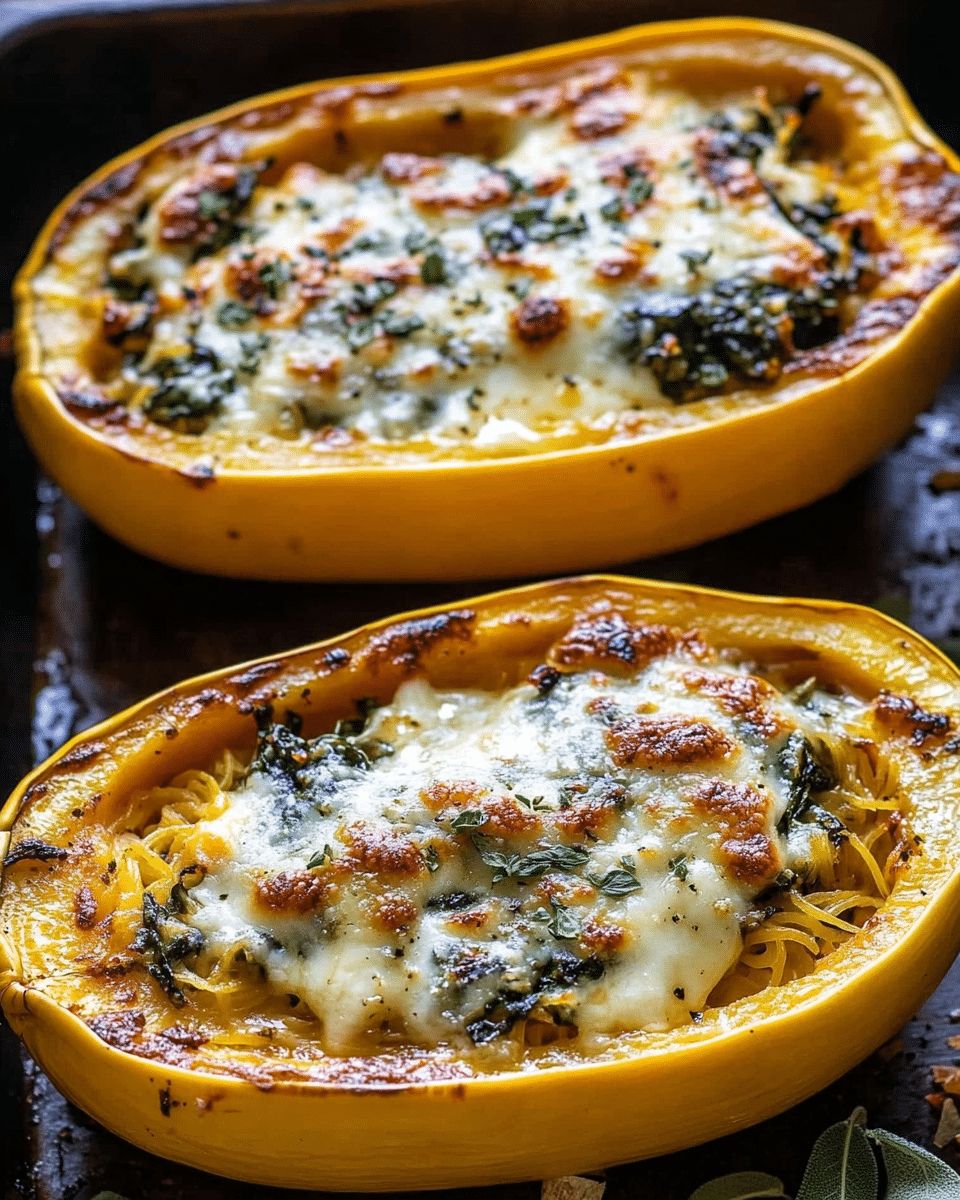
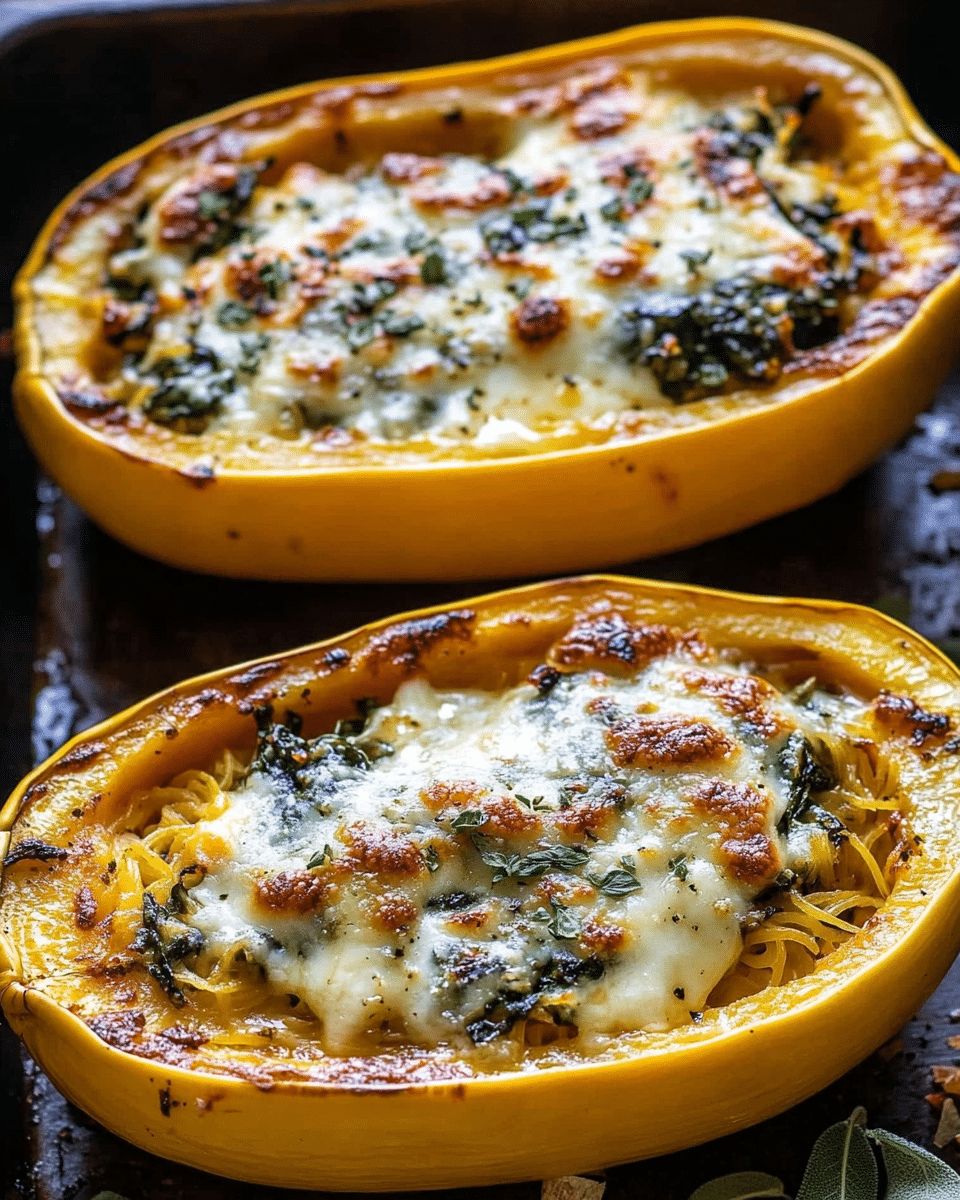
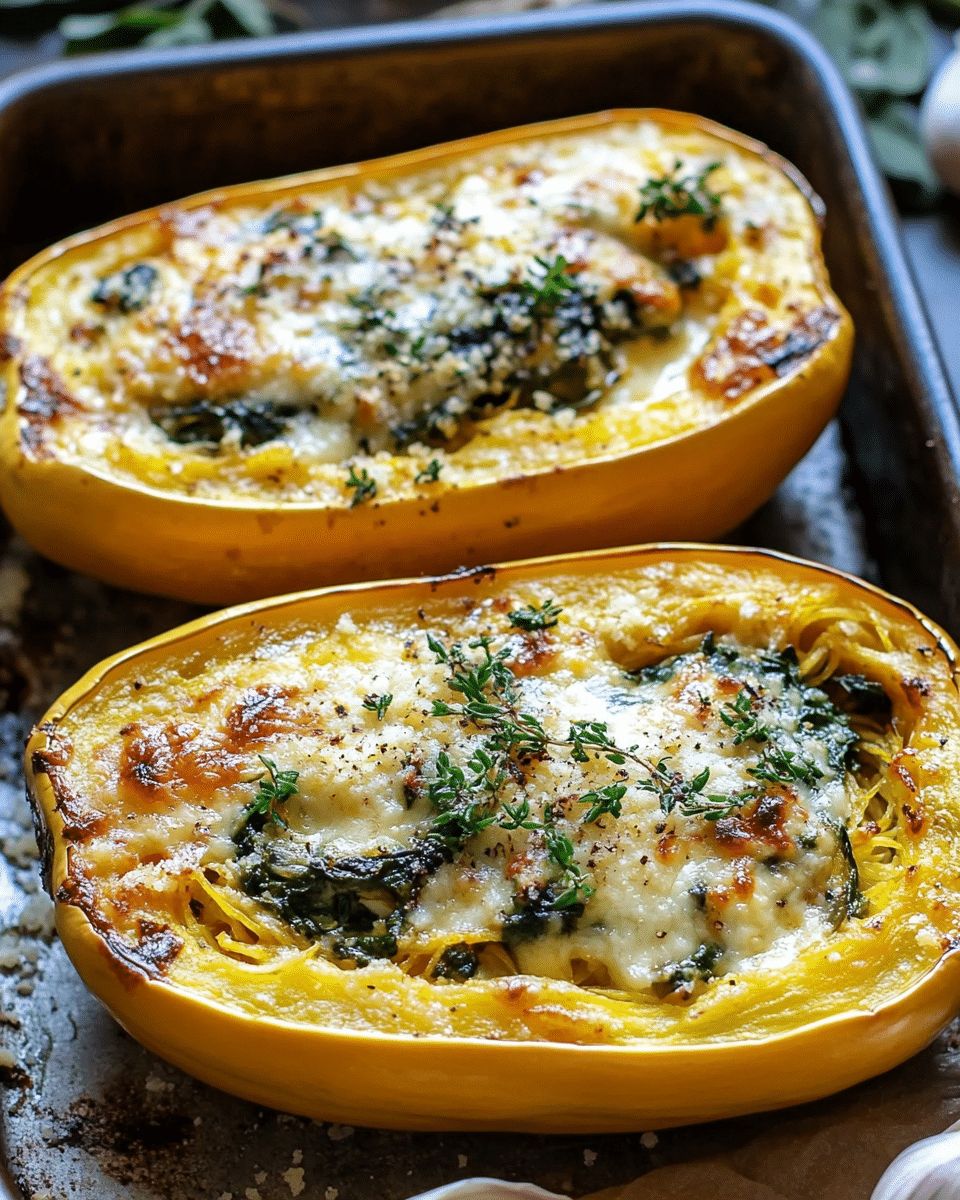
Place the squash halves in a large baking dish, cut-side up. Layer half of the Provolone at the bottom of each squash. Pour the milk and spinach mixture over the cheese, filling the cavities to the brim. Top with the remaining Provolone and the grated Parmesan. Cover the entire dish tightly with aluminum foil to trap the steam, which helps the squash tenderize.
Step 4: The Roasted Garlic Technique
Prepare the garlic by slicing off the top 1/4 inch of the head, exposing the individual cloves. Drizzle with olive oil and wrap it securely in foil. Place the garlic packet in the oven right next to your baking dish. Both will roast for 30 minutes. After this time, remove the foil from both the squash and the garlic. Continue roasting for another 15–20 minutes. This second stage allows the excess moisture to evaporate and the cheese to develop a golden-brown crust.
Customizations and Dietary Adjustments
While this recipe is naturally vegetarian and gluten-free, you may want to adjust it based on your specific nutritional goals or what you have available in your pantry.
Protein Additions
If you want to turn this into a high-protein meal, the mild flavor of spaghetti squash acts as a perfect canvas for various meats:
- Grilled Chicken: Mix in 1 cup of shredded rotisserie chicken before roasting.
- Italian Sausage: Brown some spicy Italian sausage and layer it at the bottom with the Provolone.
- Crispy Bacon: Sprinkle bacon bits over the Parmesan crust during the last 5 minutes of baking.
Keto and Low-Carb Considerations
For those strictly following a ketogenic diet, this recipe is already an excellent choice. To further optimize the macros, consider the following data:
| Adjustment | Impact on Macros | Benefit |
|---|---|---|
| Switch Milk to Heavy Cream | Increased Fat, Lower Carbs | Higher satiety and creamier texture. |
| Add Extra Spinach | Increased Fiber | Lowers “Net Carbs” per serving. |
| Increase Butter Ratio | Increased Fat | Great for hitting daily fat macros on Keto. |
Advanced Tips for Success
To ensure your Cheesy Spinach Stuffed Spaghetti Squash is a success on the first try, keep these expert styling and cooking tips in mind:
- Moisture Control: The biggest mistake is not squeezing the spinach enough. If the spinach is wet, your cheese sauce will break and look oily. Use a kitchen towel or cheesecloth to wring out every drop of water.
- The Fork Test: Every squash is different. At the 45-minute mark, poke the flesh of the squash with a fork. It should feel soft like a baked potato. If it’s still firm, give it another 10 minutes.
- Herb Freshness: Fresh sage is significantly more potent and aromatic than dried. If you must use dried, use only 1/3 of the amount called for, as dried herbs can become bitter when roasted at high heat.
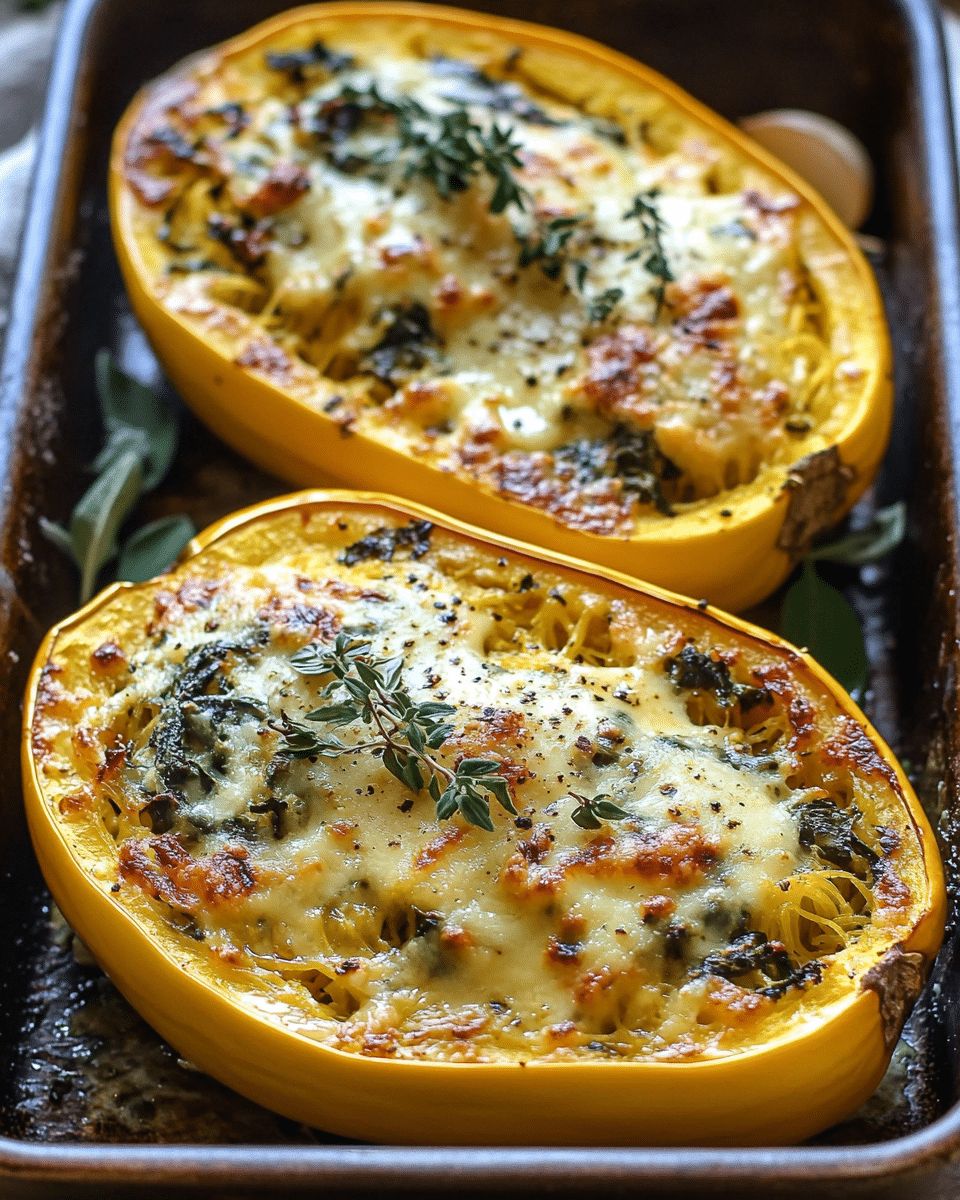
Aesthetic Tip: For a restaurant-quality presentation, save a few whole sage leaves. Fry them in a tiny bit of butter for 30 seconds until crisp, and place them on top of the melted cheese just before serving.
How to Serve and Store
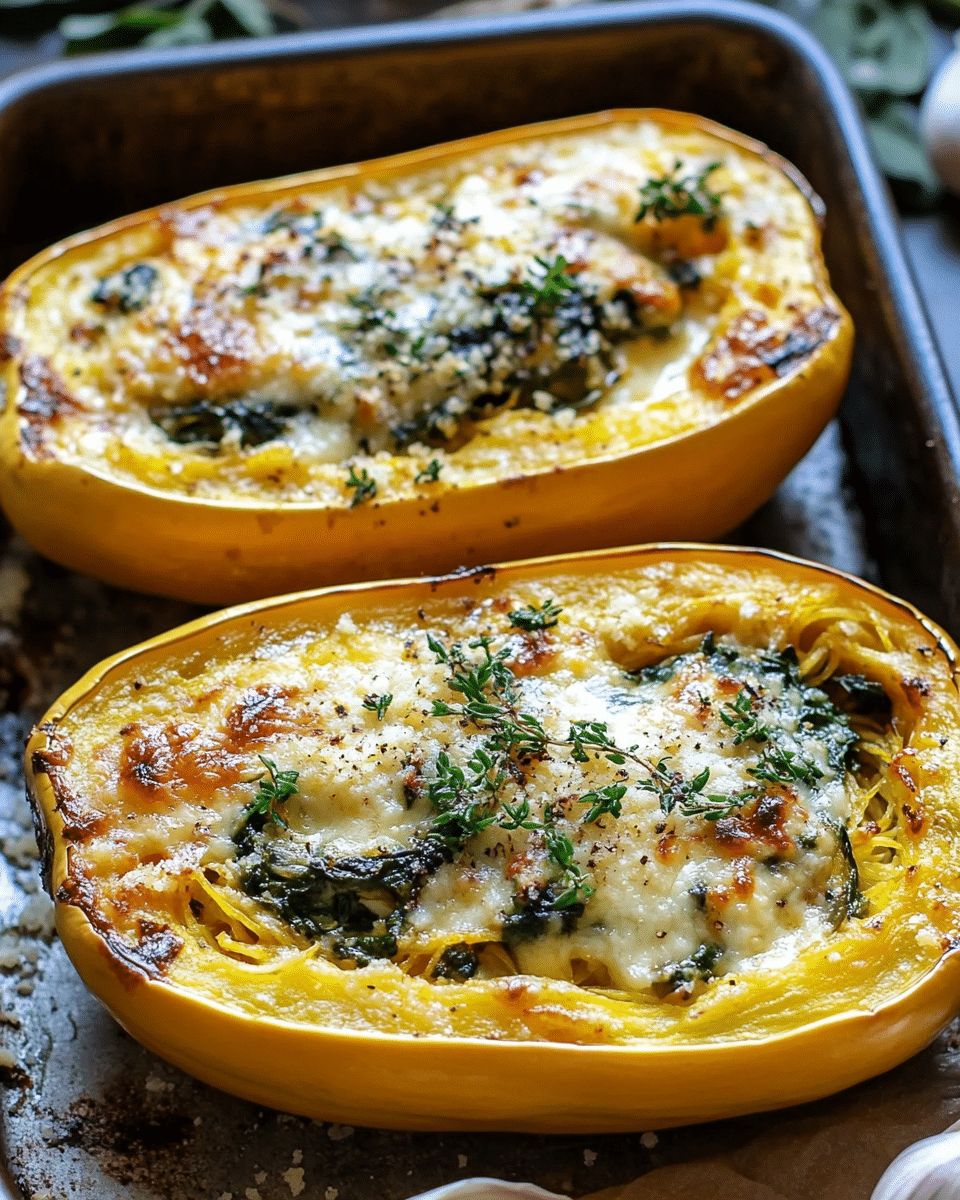
Once the squash is out of the oven, let it rest for 5 minutes. This allows the cheese to set slightly so it doesn’t run everywhere when you dive in. Squeeze your roasted garlic cloves into the softened butter, mash with the extra sage, and dollop this over the top. Use your fork to swirl the butter and the strands of squash together, creating a “pasta” dish right inside the vegetable skin.
Storage and Reheating
If you have leftovers, this dish keeps surprisingly well:
- Refrigeration: Place in an airtight container for up to 3 days.
- Reheating: For best results, reheat in the oven at 350°F or in an air fryer. This maintains the texture of the cheese. Microwave heating is faster but may make the squash slightly more watery.
- Freezing: While possible, the texture of the squash may change slightly upon thawing. If freezing, consume within 1 month.
Essential Ingredients for Your Stuffed Spaghetti Squash
Creating a gourmet-level meal at home starts with high-quality, fresh ingredients. This Cheesy Spinach Stuffed Spaghetti Squash relies on a specific blend of cheeses to achieve its signature gooey texture and aromatic herbs to provide depth. Unlike traditional pasta dishes, the squash provides a light, nutty base that allows the dairy and herbs to truly shine.
The Squash and Spinach Filling
The filling is the heart of this dish. It is designed to be thick enough to stay inside the squash while roasting but creamy enough to coat every “noodle” once you scrape it with a fork. Below are the key components for the primary filling:
- Whole milk or heavy cream (1 1/4 cups): This provides the liquid base for the cheese sauce. Heavy cream will yield a more indulgent, restaurant-style result.
- Frozen chopped spinach (6 oz): Ensure this is thawed and squeezed completely dry to avoid a watery filling.
- Fresh herbs: 2 tbsp of chopped fresh sage and 1 tbsp of fresh thyme leaves.
- Seasonings: Kosher salt and cracked black pepper to taste.
The “Power Trio” Cheese Blend
We use a combination of three specific cheeses to ensure a balance of meltability, stretch, and sharp flavor. While you can swap these out, this specific ratio is recommended for the best mouthfeel:
| Cheese Type | Quantity | Flavor Profile & Role |
|---|---|---|
| Fontina | 1 cup (shredded) | Earthly and nutty; melts exceptionally well. |
| Mozzarella | 1/2 cup (shredded) | Mild flavor; provides the classic “cheese pull” stretch. |
| Provolone | 1 cup (shredded) | Sharp and buttery; adds depth to the overall sauce. |
| Parmesan | 1/4 cup (grated) | Salty and crystalline; creates a golden crust on top. |
The Roasted Garlic Sage Butter
This is the secret weapon of the recipe. Instead of using raw garlic, we roast a whole head to transform the pungent cloves into sweet, spreadable gold. You will need:
- 1 head of garlic: Roasted until soft.
- Salted butter (2 tbsp): Room temperature for easy mashing.
- Fresh sage (1 tbsp): Finely chopped to infuse the butter.
- Olive oil: A light drizzle for the roasting process.
Step-by-Step Culinary Guide
Follow these detailed steps to ensure your squash is perfectly cooked—neither crunchy nor mushy—and your cheese topping is browned to perfection.
Step 1: Prep and Prime the Squash
Preheat your oven to 425°F (220°C). While the oven reaches temperature, carefully slice your spaghetti squash in half lengthwise. Spaghetti squash can be quite firm, so ensure you are using a sharp chef’s knife. Once open, use a large spoon to scoop out the seeds and the stringy pulp from the center. Lightly season the hollowed-out “boats” with salt and pepper.
Step 2: Mixing the Creamy Spinach Core
In a medium-sized mixing bowl, combine the milk (or cream), your thawed and dried spinach, the chopped fresh sage, and thyme. Stir in the shredded Fontina and Mozzarella. This mixture will look liquid at first, but don’t worry—as the squash roasts and the cheese melts, it will thicken into a luxurious sauce.
Pro Tip: If you enjoy a bit of heat, add 1/2 teaspoon of crushed red pepper flakes to the filling at this stage. It cuts through the richness of the cream and cheese beautifully.
Step 3: Stuffing and Roasting
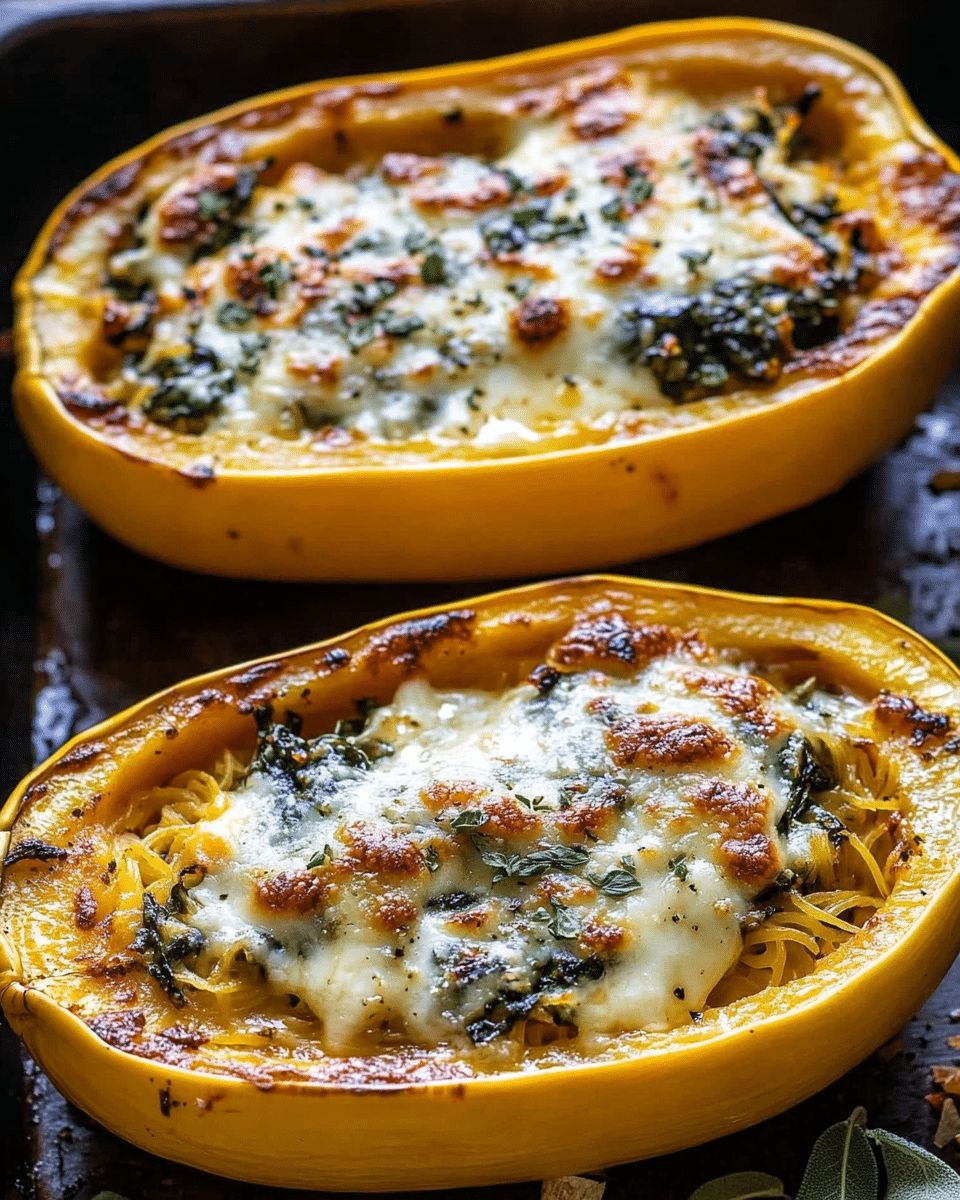
Place the squash halves in a large baking dish, cut-side up. Layer half of the Provolone at the bottom of each squash. Pour the milk and spinach mixture over the cheese, filling the cavities to the brim. Top with the remaining Provolone and the grated Parmesan. Cover the entire dish tightly with aluminum foil to trap the steam, which helps the squash tenderize.
Step 4: The Roasted Garlic Technique
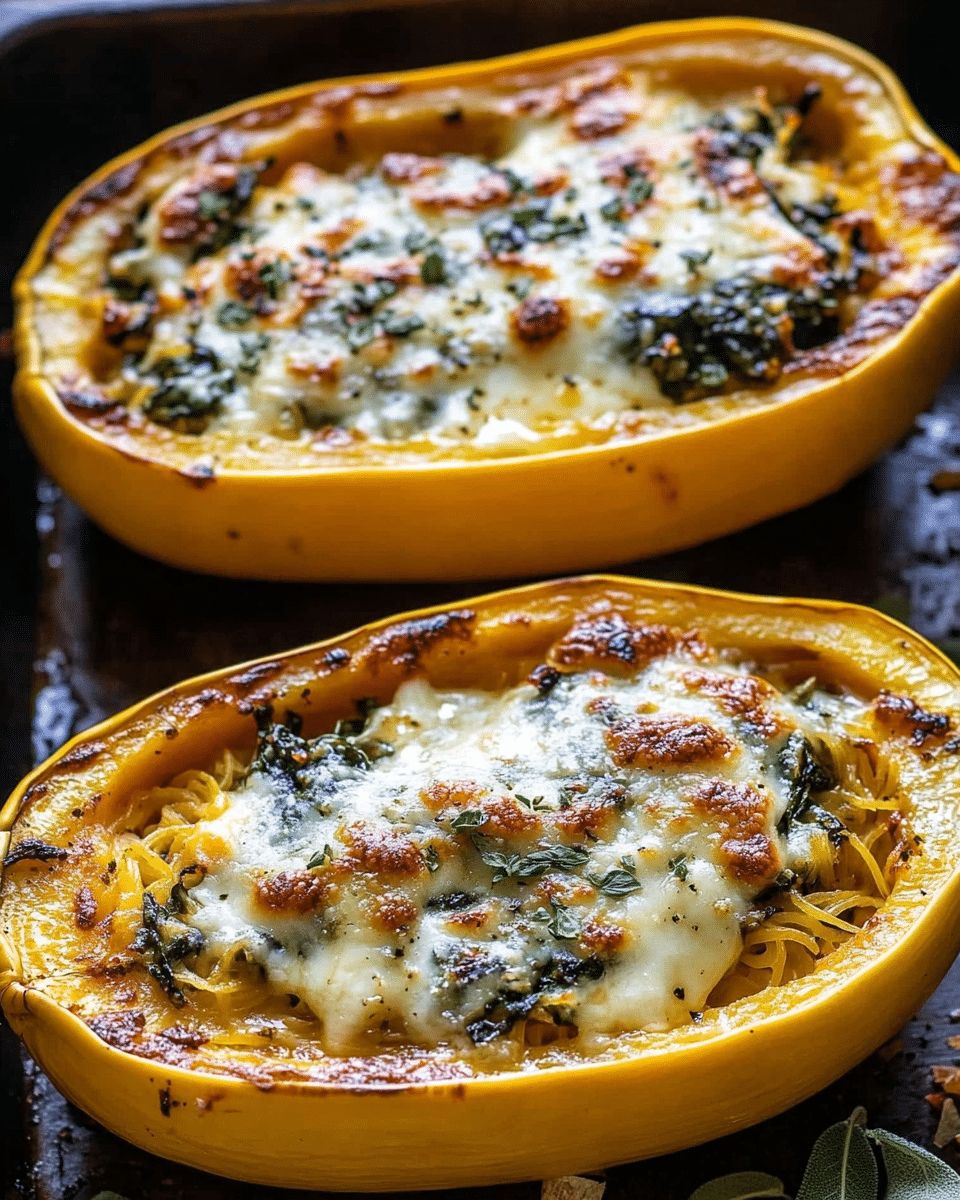
Prepare the garlic by slicing off the top 1/4 inch of the head, exposing the individual cloves. Drizzle with olive oil and wrap it securely in foil. Place the garlic packet in the oven right next to your baking dish. Both will roast for 30 minutes. After this time, remove the foil from both the squash and the garlic. Continue roasting for another 15–20 minutes. This second stage allows the excess moisture to evaporate and the cheese to develop a golden-brown crust.
Customizations and Dietary Adjustments
While this recipe is naturally vegetarian and gluten-free, you may want to adjust it based on your specific nutritional goals or what you have available in your pantry.
Protein Additions
If you want to turn this into a high-protein meal, the mild flavor of spaghetti squash acts as a perfect canvas for various meats:
- Grilled Chicken: Mix in 1 cup of shredded rotisserie chicken before roasting.
- Italian Sausage: Brown some spicy Italian sausage and layer it at the bottom with the Provolone.
- Crispy Bacon: Sprinkle bacon bits over the Parmesan crust during the last 5 minutes of baking.
Keto and Low-Carb Considerations
For those strictly following a ketogenic diet, this recipe is already an excellent choice. To further optimize the macros, consider the following data:
| Adjustment | Impact on Macros | Benefit |
|---|---|---|
| Switch Milk to Heavy Cream | Increased Fat, Lower Carbs | Higher satiety and creamier texture. |
| Add Extra Spinach | Increased Fiber | Lowers “Net Carbs” per serving. |
| Increase Butter Ratio | Increased Fat | Great for hitting daily fat macros on Keto. |
Advanced Tips for Success
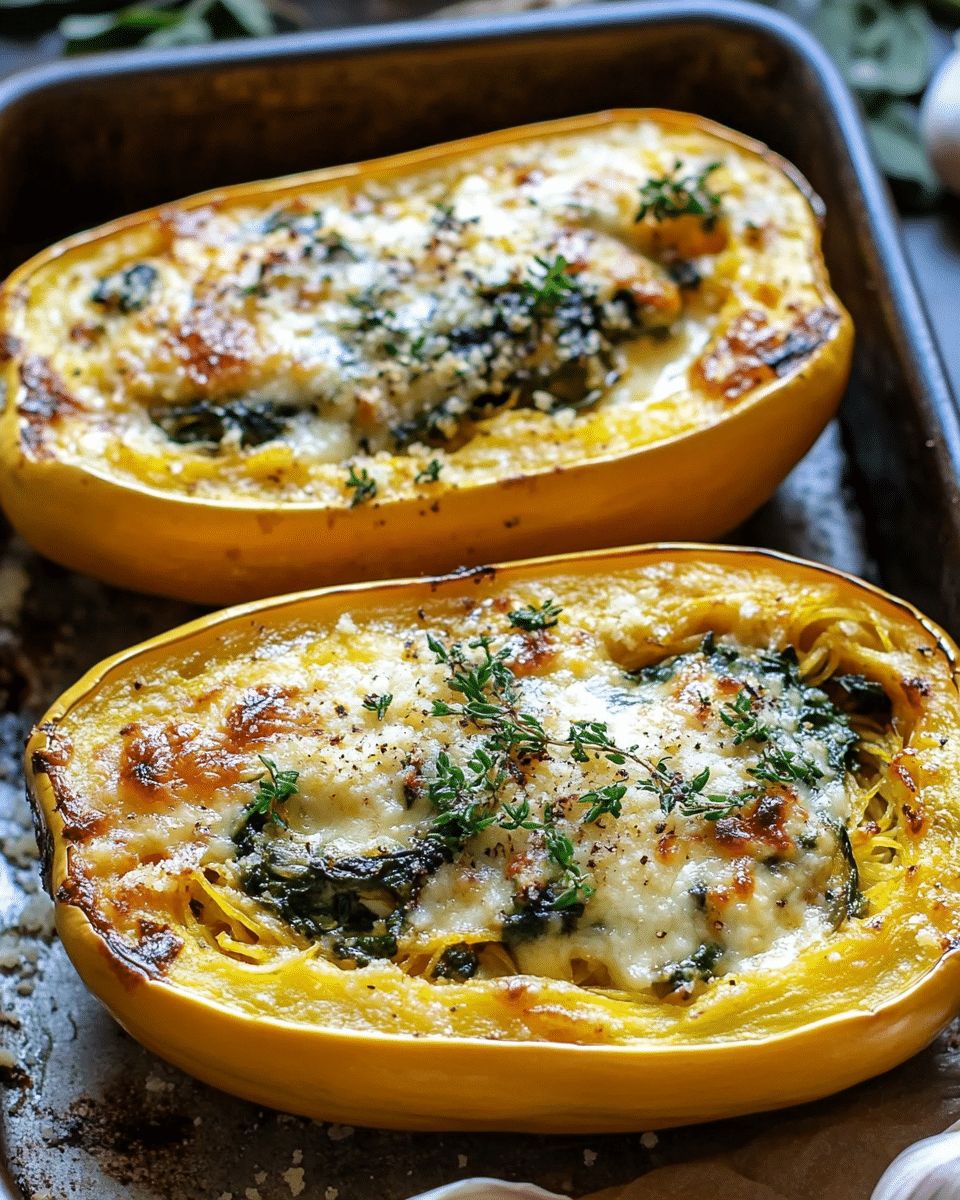
To ensure your Cheesy Spinach Stuffed Spaghetti Squash is a success on the first try, keep these expert styling and cooking tips in mind:
- Moisture Control: The biggest mistake is not squeezing the spinach enough. If the spinach is wet, your cheese sauce will break and look oily. Use a kitchen towel or cheesecloth to wring out every drop of water.
- The Fork Test: Every squash is different. At the 45-minute mark, poke the flesh of the squash with a fork. It should feel soft like a baked potato. If it’s still firm, give it another 10 minutes.
- Herb Freshness: Fresh sage is significantly more potent and aromatic than dried. If you must use dried, use only 1/3 of the amount called for, as dried herbs can become bitter when roasted at high heat.
Aesthetic Tip: For a restaurant-quality presentation, save a few whole sage leaves. Fry them in a tiny bit of butter for 30 seconds until crisp, and place them on top of the melted cheese just before serving.
How to Serve and Store
Once the squash is out of the oven, let it rest for 5 minutes. This allows the cheese to set slightly so it doesn’t run everywhere when you dive in. Squeeze your roasted garlic cloves into the softened butter, mash with the extra sage, and dollop this over the top. Use your fork to swirl the butter and the strands of squash together, creating a “pasta” dish right inside the vegetable skin.
Storage and Reheating
If you have leftovers, this dish keeps surprisingly well:
- Refrigeration: Place in an airtight container for up to 3 days.
- Reheating: For best results, reheat in the oven at 350°F or in an air fryer. This maintains the texture of the cheese. Microwave heating is faster but may make the squash slightly more watery.
- Freezing: While possible, the texture of the squash may change slightly upon thawing. If freezing, consume within 1 month.