
When the crisp air of autumn settles in and the leaves begin to turn, our cravings naturally shift toward bowls of pure comfort. There is something uniquely nostalgic about the aroma of chestnuts roasting, but transforming them into a velvety, savory starter takes that seasonal charm to a whole new level. This creamy chestnut soup with rosemary is the quintessential cold-weather dish, blending earthy sweetness with a sophisticated herbal finish.
Whether you are looking for a show-stopping appetizer for your holiday table or a simple, nourishing weeknight meal, this recipe delivers gourmet results with minimal effort. The natural starchiness of the chestnuts creates a rich, full-bodied texture without the need for heavy thickeners, while fresh rosemary adds an aromatic brightness that cuts through the richness. It is a harmonious balance of flavors that feels like a warm hug in a bowl.
Quick Answer: To make this creamy chestnut soup with rosemary, simply sauté onions and chopped chestnuts, simmer them with vegetable bouillon and fresh rosemary for 15 minutes, and blend until smooth. Finish with a splash of milk for creaminess and top with butter-sautéed whole chestnuts for a professional, crunchy garnish.
Why You’ll Love This Creamy Chestnut Soup with Rosemary
Chestnut soup is not only flavorful but also brings an essence of elegance to any meal. When you make creamy chestnut soup with rosemary, you’re choosing a dish that balances the earthy sweetness of chestnuts with the herbaceous freshness of rosemary. This combination creates a soup that’s both comforting and sophisticated—perfect for cozy dinners at home or special occasions.
There’s something nostalgic about chestnuts, especially when they’re featured in a hearty soup. They bring an unmistakable richness and warmth that elevate a simple bowl of soup into a comforting experience. Whether you’re new to cooking with chestnuts or a seasoned chef, you’ll find this recipe easy to follow and incredibly rewarding. The creamy texture combined with the slight crispness of sautéed chestnuts on top will keep you coming back for more.
But it’s not just about taste. Chestnuts are also a great source of vitamins and minerals, making this soup a nourishing and wholesome choice. It’s a balanced dish that satisfies both the palate and the body.
Key Ingredients for Creamy Chestnut Soup with Rosemary
The magic of this creamy chestnut soup lies in the ingredients. Here’s a breakdown of what you’ll need to make this delicious recipe:
Essential Ingredients
| Ingredient | Quantity | Purpose |
|---|---|---|
| Onion | 1, thinly sliced | Adds a natural sweetness and depth of flavor. |
| Chestnuts (chopped) | 1 pound | The star of the soup, offering a nutty richness. |
| Whole Chestnuts | 8 for garnish | Adds texture and a lovely finishing touch. |
| Rosemary (finely chopped) | 2 teaspoons | Imparts a fragrant, herbaceous flavor. |
| Water | 2 ½ cups | The liquid base that forms the soup. |
| Vegetable Bouillon Cube | 1 | Enhances the overall depth and savory quality. |
| Milk | 1 ½ cups | Adds creaminess and smooth texture. |
| Butter | 1 tablespoon | Used to sauté chestnuts and give them a golden touch. |
| Olive Oil | As needed | Used for sautéing onions to soften them. |
| Salt & Black Pepper | To taste | Balances the flavors and enhances the soup. |
As you gather these ingredients, keep in mind that fresh rosemary and high-quality chestnuts will truly elevate the flavor profile of your soup. If you’re using frozen chestnuts, make sure they are thawed and chopped before cooking to ensure they blend well in the soup.
The Ultimate Guide to Making Creamy Chestnut Soup with Rosemary
There is a specific kind of magic that happens when seasonal ingredients meet simple culinary techniques. This creamy chestnut soup with rosemary is the embodiment of that magic. Chestnuts, often associated with holiday roasting, possess a unique starchiness and subtle sweetness that makes them an ideal base for a velvety soup. Unlike many vegetable soups that require heavy cream or flour-based thickeners to achieve body, chestnuts naturally provide a thick, luxurious mouthfeel once blended.
Rosemary acts as the perfect aromatic bridge, cutting through the natural richness of the nuts with its piney, camphoraceous notes. This recipe is designed to be approachable for the home cook while delivering a final product that wouldn’t look out of place in a high-end bistro. By following the precise steps of sautéing, simmering, and emulsifying, you will create a dish that is deeply layered in flavor.
Pro Tip: For the most vibrant flavor, use fresh rosemary sprigs rather than dried. The essential oils in fresh rosemary are more volatile and provide a much cleaner, more floral aroma that defines the character of this soup.
Essential Ingredients and Their Roles
Every ingredient in this recipe serves a specific purpose, contributing to the balance of sweet, savory, and herbal notes. Understanding these roles helps you master the dish and make informed adjustments if needed.
| Ingredient | Primary Function | Expert Insight |
|---|---|---|
| Onion | Aromatic Base | Sautéing until translucent is key; do not brown them or they will discolor the pale soup. |
| Chestnuts | Texture & Flavor | The high starch content provides natural creaminess without needing a roux. |
| Rosemary | Aromatic Contrast | Finely chop the leaves to ensure they distribute evenly and soften during the simmer. |
| Vegetable Bouillon | Savory Depth | Provides the “umami” foundation that makes the soup taste complete. |
| Milk/Cream | Emulsification | Adds a final layer of silkiness and lightens the color for a gourmet appearance. |
Choosing Your Chestnuts
You have several options when it comes to the star ingredient. While roasting fresh chestnuts is traditional, it can be time-consuming. Here is a quick comparison of your choices:
- Vacuum-Packed (Cooked/Peeled): The most convenient option. They are usually high quality and ready to use immediately.
- Frozen Chestnuts: Excellent flavor retention. Ensure they are fully thawed and patted dry before sautéing.
- Fresh Chestnuts: Requires roasting and peeling. If using fresh, ensure you remove both the outer shell and the bitter inner skin (the pellicle).
Step-by-Step Preparation: Mastering the Technique
Creating a professional-grade soup is all about the “fond”—the browned bits at the bottom of the pan—and the simmering process. Follow these detailed steps to ensure success.
1. Building the Aromatic Foundation
Start by heating a generous drizzle of olive oil in a heavy-bottomed pot. Add your thinly sliced onions. The goal here is “sweating” rather than “frying.” You want the onions to become soft, sweet, and translucent. This usually takes about 4 to 5 minutes over medium heat. Add a pinch of salt early on to help draw out the moisture.
2. Sautéing the Chestnuts for Depth
Once the onions are soft, add the chopped chestnuts. Sautéing the chestnuts for just 2 minutes allows their natural sugars to slightly caramelize. This adds a “toasted” note to the soup that you won’t get if you simply boil them. You should notice a fragrant, nutty aroma filling your kitchen at this stage.
3. Infusing the Liquid
Add the water, finely chopped rosemary, and the vegetable bouillon cube. Bring the mixture to a gentle boil, then immediately drop the heat to low. Cover the pot and let it simmer for 15 minutes. This is where the magic happens: the chestnuts soften completely, and the rosemary infuses the liquid with its woodsy essence.
4. Achieving the Perfect Emulsion
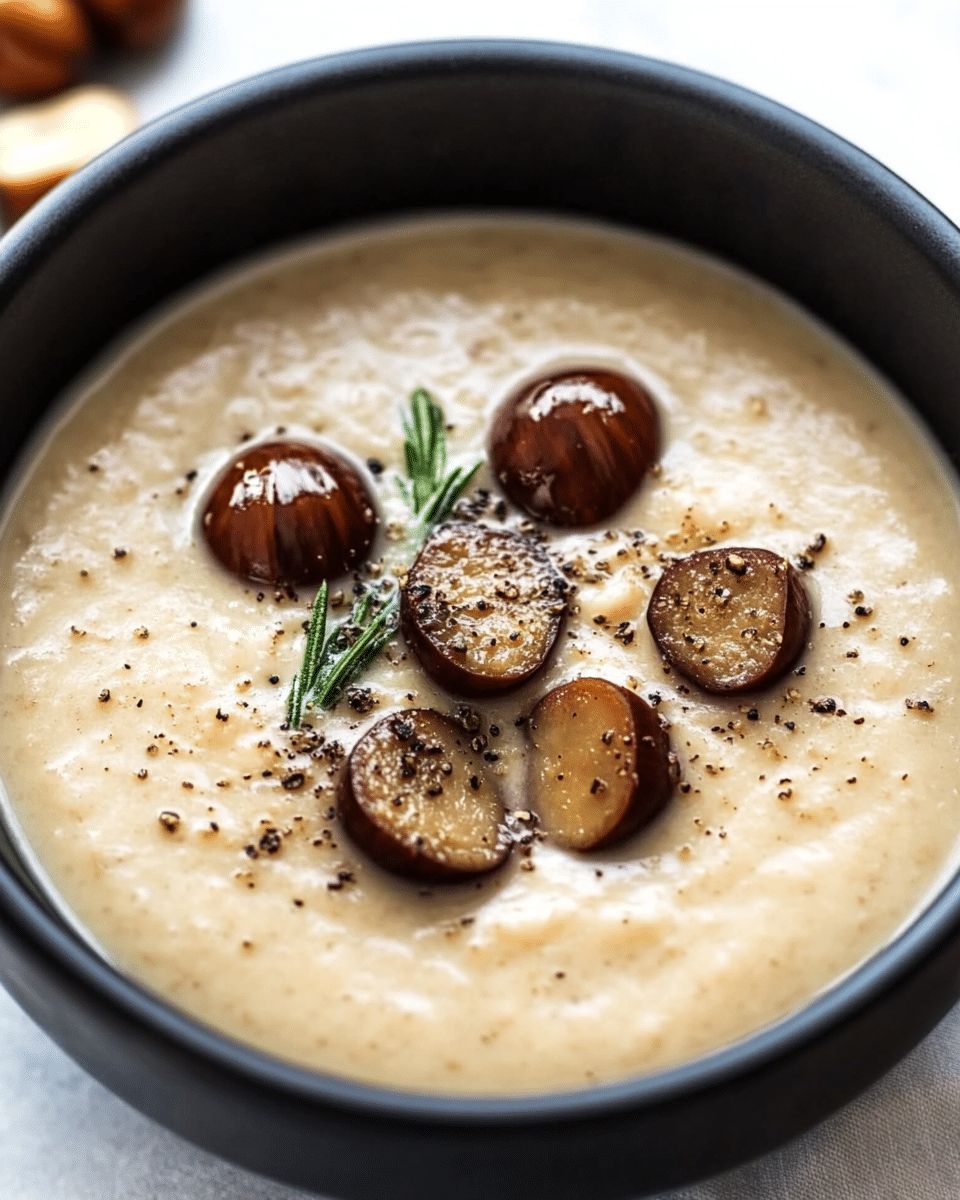
After simmering, remove the pot from the heat. If using a hand blender, submerge it fully before turning it on to avoid splashing. Puree until the liquid is completely smooth. If you prefer a rustic texture, you can stop early, but for a true creamy chestnut soup, aim for a silky, mirror-like finish.
5. The Final Finish
Return the pot to low heat and stir in the milk. This step “tempers” the soup, adding a final layer of richness. Let it heat through for 5 minutes, but do not let it reach a rolling boil, as this can sometimes cause the milk to separate or lose its fresh flavor. Season generously with salt and black pepper.
The Art of the Garnish: Whole Buttery Chestnuts
A soup this smooth needs a textural contrast to keep the palate engaged. The whole-chestnut garnish is what elevates this from a simple meal to a “World-Class” dish.
- Melt 1 tablespoon of butter in a small skillet over medium-low heat.
- Add the 8 reserved whole chestnuts and a tiny sprinkle of salt.
- Sauté for 10 minutes, rolling them around the pan frequently.
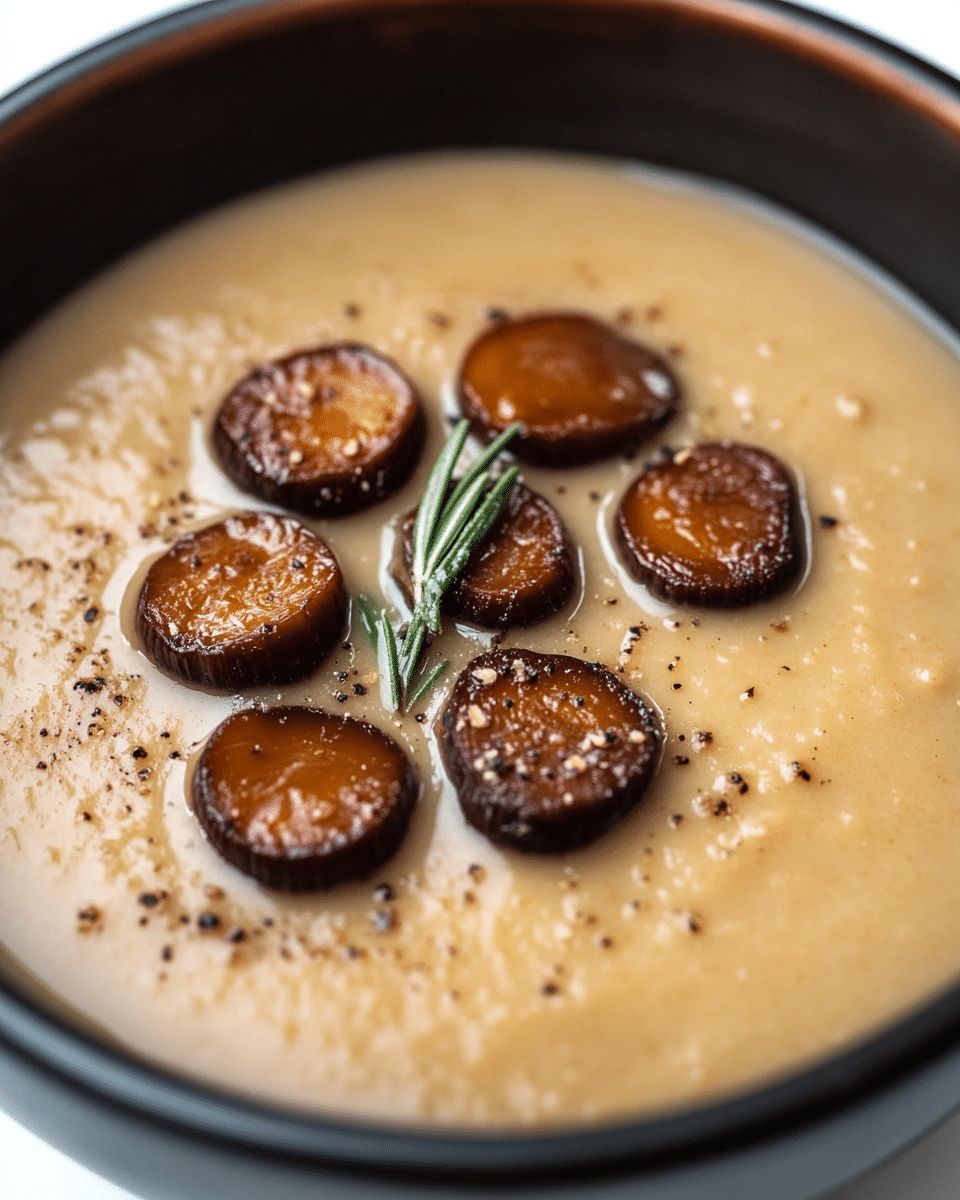
- The chestnuts should turn a deep golden brown and develop a slightly crisp exterior.
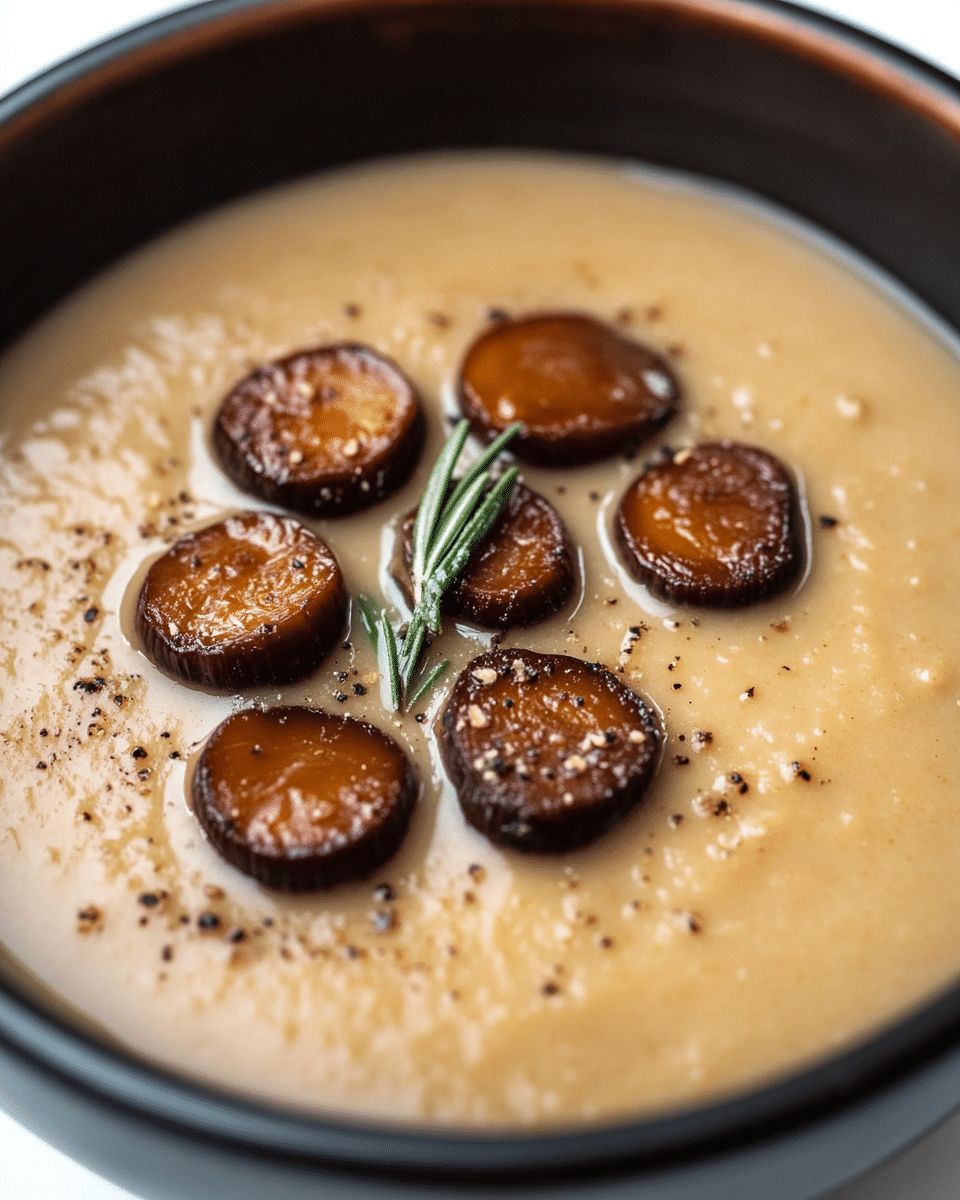
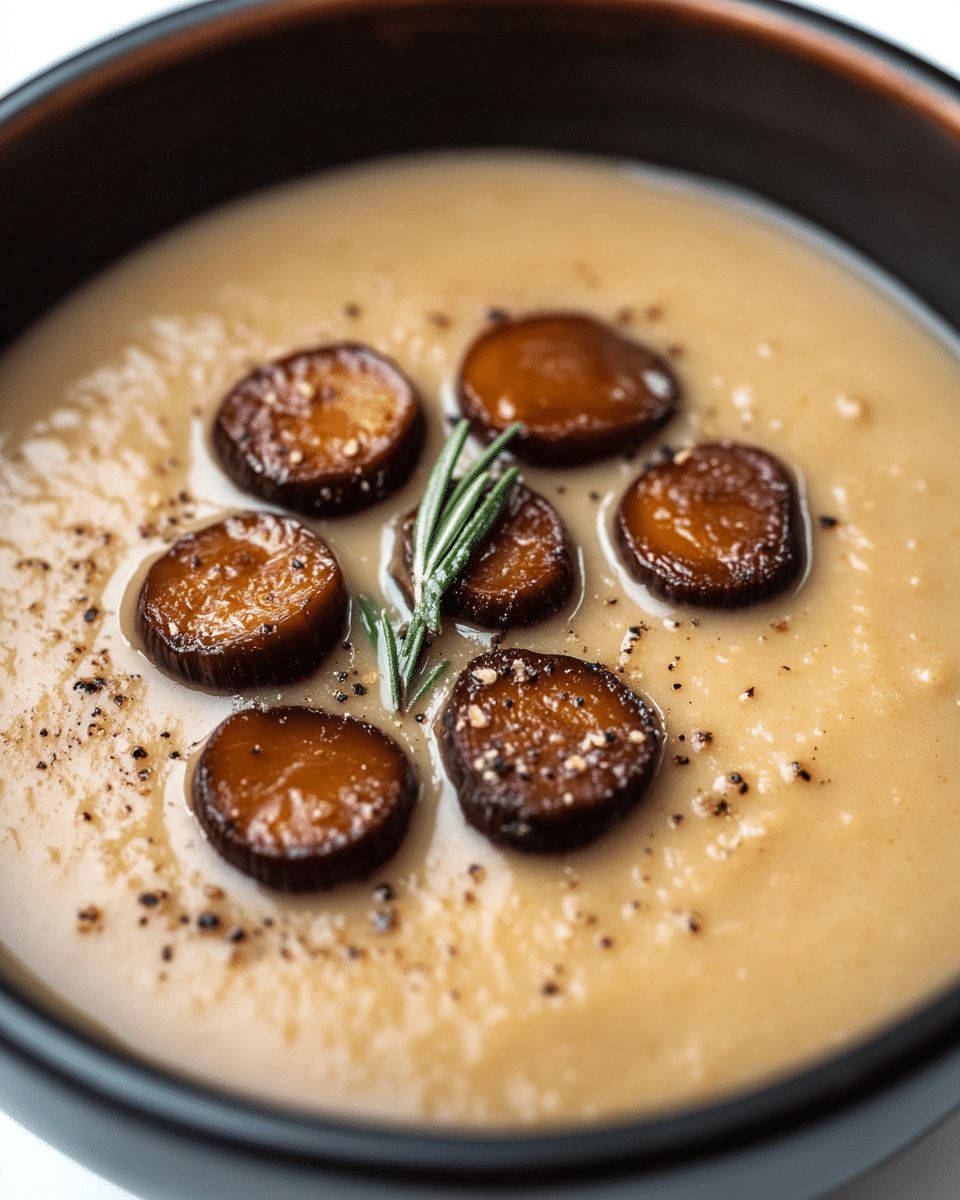
Styling Tip: Place two whole sautéed chestnuts in the center of each bowl. Drizzle a few drops of high-quality extra virgin olive oil around them and finish with a tiny sprig of fresh rosemary for a restaurant-quality presentation.
Advanced Variations for Gourmet Cooks
Once you have mastered the basic recipe, you can experiment with these variations to suit different dietary needs or flavor profiles.
The Vegan Transformation
This recipe is easily adaptable for vegan diets. Simply replace the milk with a high-quality unsweetened oat milk or cashew cream. Use a vegan butter substitute or coconut oil for the garnish. Because chestnuts are so creamy on their own, the soup remains incredibly satisfying even without dairy.
Indulgent Holiday Version
If you are serving this as a starter for a holiday dinner like Christmas or Thanksgiving, try these upgrades:
- Heavy Cream: Substitute half the milk with heavy cream for a truly decadent texture.
- White Wine: Add a 1/4 cup of dry white wine (like Sauvignon Blanc) after sautéing the chestnuts and let it reduce by half before adding the water.
- Truffle Oil: A single drop of white truffle oil added just before serving complements the earthiness of the chestnuts beautifully.
Nutritional Profile Overview
Chestnuts are unique among nuts because they are low in fat but high in complex carbohydrates and Vitamin C. Here is an approximate breakdown per serving:
| Nutrient | Amount Per Serving | % Daily Value |
|---|---|---|
| Calories | 245 kcal | 12% |
| Total Fat | 8g | 10% |
| Fiber | 5g | 20% |
| Vitamin C | 15mg | 25% |
| Potassium | 450mg | 13% |
Common Mistakes to Avoid
To ensure your creamy chestnut soup with rosemary is perfect every time, keep an eye out for these common pitfalls:
- Over-salting early: Bouillon cubes are often very salty. Wait until the very end to do your final seasoning.
- Boiling the milk: High heat can cause the proteins in milk to toughen or the soup to lose its delicate flavor. Always keep it on a gentle simmer once the dairy is added.
- Incomplete blending: If you find little “bits” in your soup, continue blending. The goal is a completely uniform, velvety consistency.
You May Also Like
If you enjoyed this warming autumn dish, explore more of our seasonal favorites: Roasted Vegetable Soup, Holiday Appetizers, Winter Comfort Food, and Homemade Croutons.
Learn more about the history and cultivation of this seasonal star: Chestnut – Wikipedia
Frequently Asked Questions
Can I use dried rosemary instead of fresh?
While fresh rosemary is highly recommended for its aromatic brightness, you can use dried rosemary in a pinch. Use about 1/3 of the amount (approx. 3/4 teaspoon), as dried herbs are more concentrated and have a more potent, woody flavor.
How do I store and reheat leftovers?
Store your creamy chestnut soup in an airtight container in the refrigerator for up to 3 days. When reheating, do so gently on the stovetop over low heat, adding a splash of milk or water if the soup has thickened too much in the fridge.
Is this chestnut soup freezer-friendly?
Yes, this soup freezes well. However, it is best to freeze the soup before adding the milk. When you are ready to serve, thaw the soup, bring it to a simmer, and stir in the fresh milk or cream to maintain the best texture and flavor.
Final Thoughts
The creamy chestnut soup with rosemary is more than just a meal; it is a celebration of seasonal flavors and cozy kitchen traditions. Its velvety texture and sophisticated profile make it the perfect centerpiece for a formal holiday starter or a quiet, soul-warming dinner by the fireplace. By balancing the natural earthiness of the chestnuts with the sharp clarity of rosemary, you create a dish that is both timeless and deeply satisfying.
Don’t be afraid to make this recipe your own by experimenting with different garnishes or dairy alternatives. Whether you stick to the classic preparation or add your own gourmet twist, this soup is guaranteed to bring a touch of warmth and elegance to your table. Grab your blender and a bag of chestnuts, and embrace the ultimate comfort of home cooking tonight.
