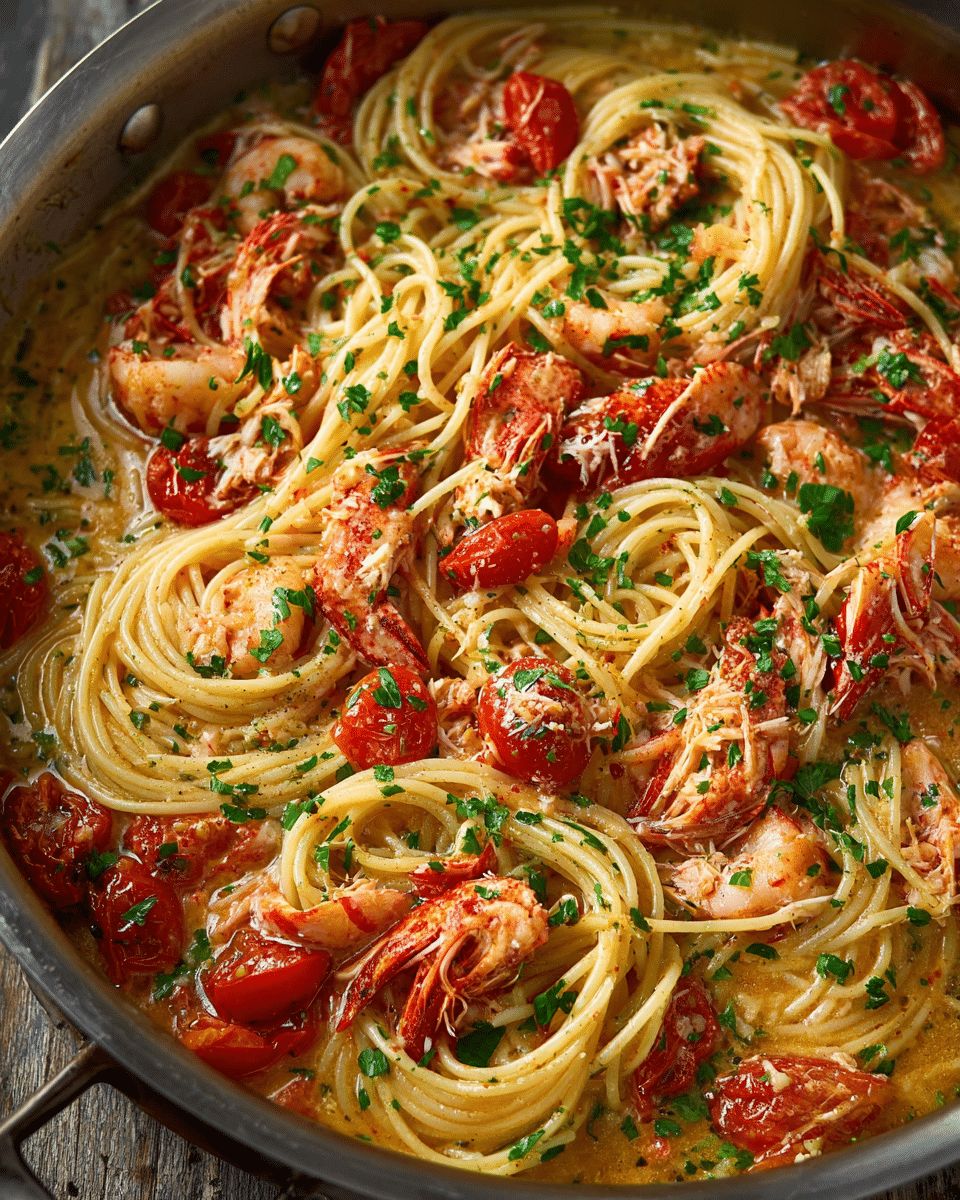
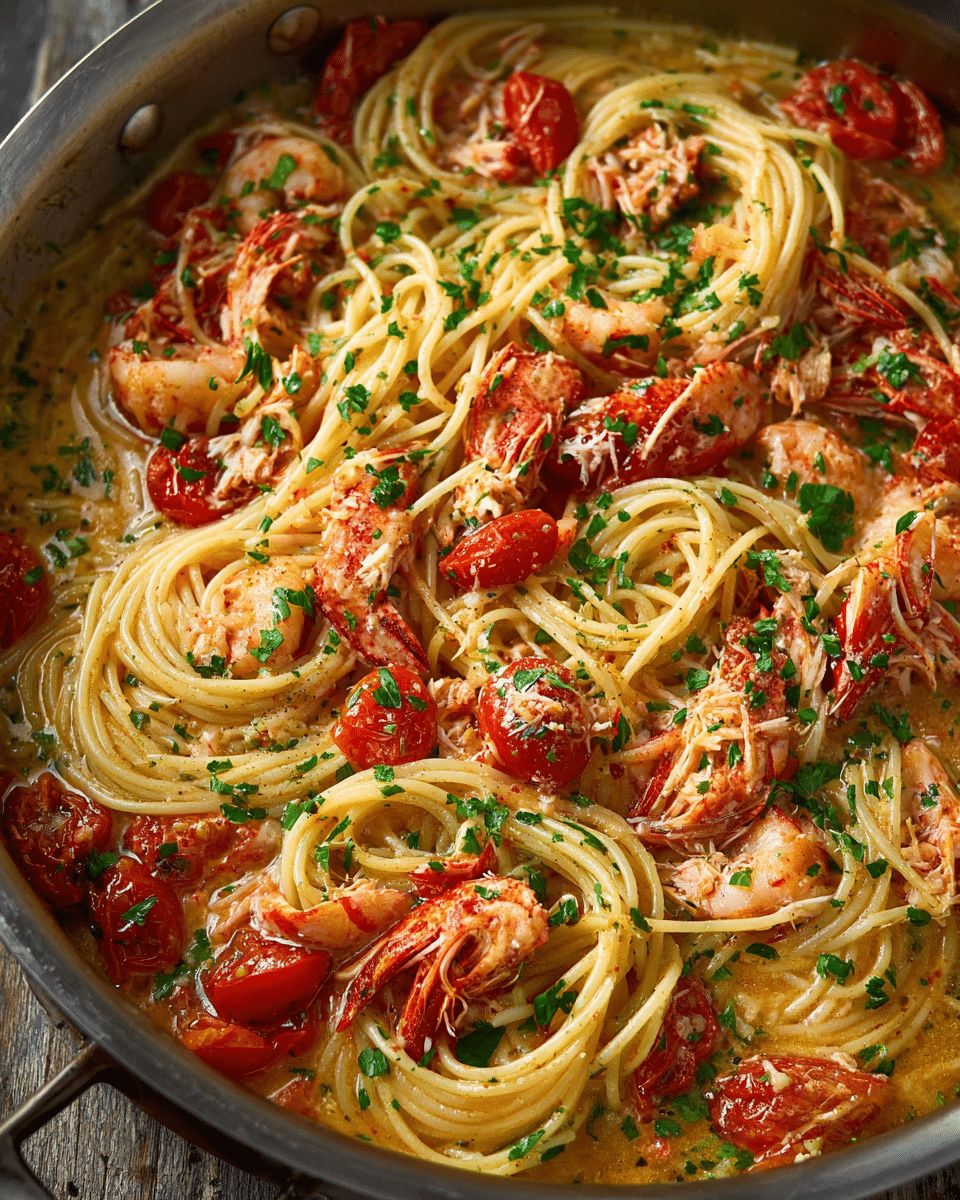
Elevate your dinner routine with Creamy Lobster and Shrimp Spaghetti with Fresh Tomatoes—a dish that brings the luxury of a high-end bistro straight to your kitchen table. While seafood pasta often carries a reputation for being intimidating, this recipe simplifies the process without sacrificing an ounce of flavor. By focusing on clean ingredients and gentle cooking, you can achieve a restaurant-quality result that feels both elegant and approachable.
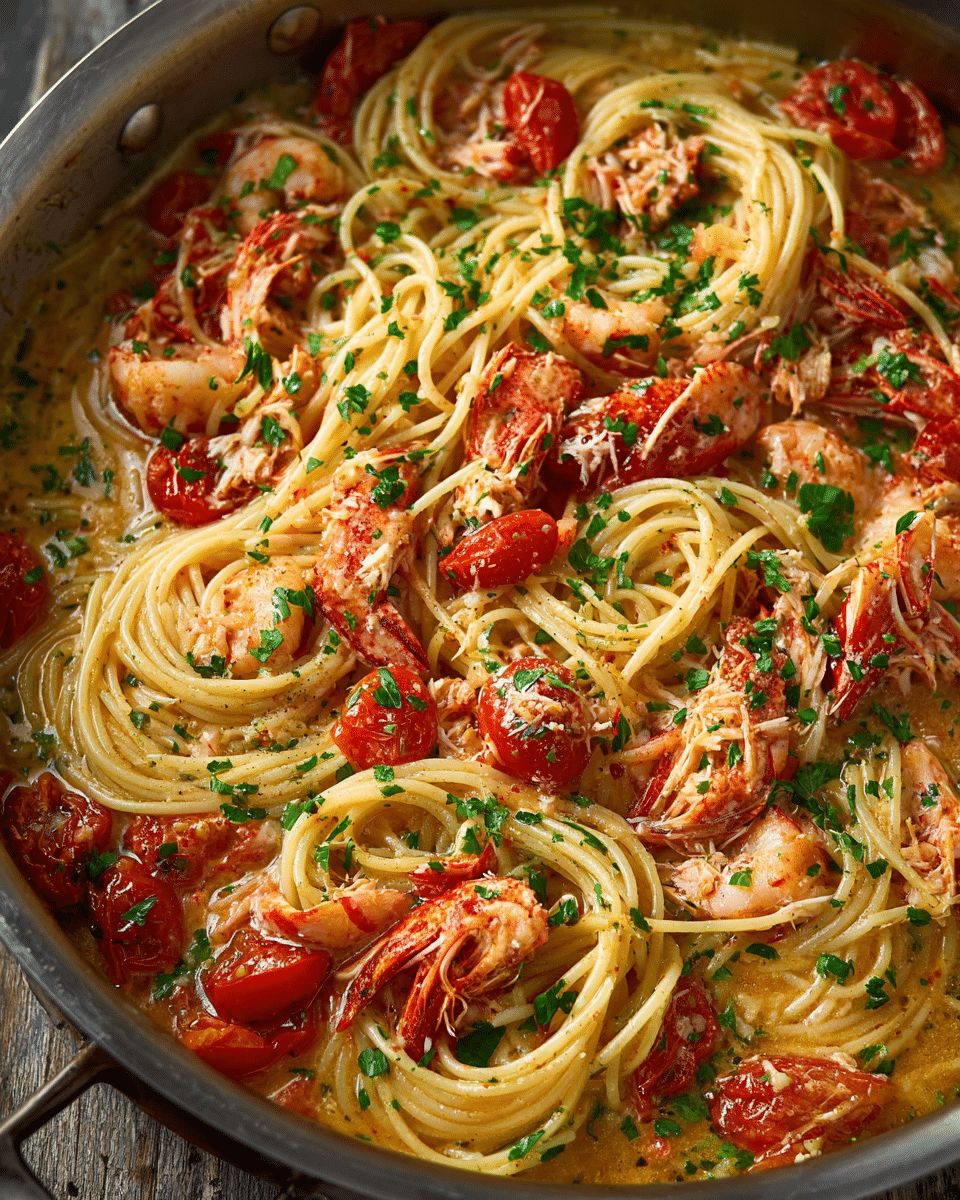
The magic of this recipe lies in its light, glossy sauce. Rather than masking the delicate flavors of the sea with heavy cream, we rely on a sophisticated emulsion of unsalted butter, olive oil, and starchy pasta water combined with the natural juices of burst cherry tomatoes. This method ensures the lobster and shrimp stay tender while the fresh tomatoes provide a bright, acidic lift that balances the richness of the seafood perfectly.
Quick Answer: This refined seafood spaghetti features succulent lobster chunks and tender shrimp tossed in a silky, cream-free sauce made from burst cherry tomatoes, butter, and garlic. It is a sophisticated 30-minute meal that highlights premium ingredients with a vibrant, zesty finish.
Why Creamy Lobster and Shrimp Spaghetti with Fresh Tomatoes Works So Well
The success of Creamy Lobster and Shrimp Spaghetti with Fresh Tomatoes lies in its ability to deliver deep, complex flavors using a few high-quality components. Unlike heavy Alfredo-style pastas that can weigh down the palate, this recipe focuses on brightness and texture. It relies on a culinary technique known as emulsification, where butter and starchy pasta water create a silky “cream” without actually using heavy cream.
Balancing Richness and Freshness
The interplay between the sweetness of the seafood and the acidity of the tomatoes is what makes this dish legendary. Butter and olive oil provide the fat necessary to carry the flavors, while the cherry tomatoes, once burst, release a natural pectin that thickens the sauce. A final splash of fresh lemon juice acts as a highlighter, making every other ingredient “pop.”
Highlighting Premium Seafood
In many pasta dishes, seafood is overcooked or lost in a thick sauce. This recipe treats lobster and shrimp with the respect they deserve. By searing the shrimp and gently warming the lobster separately, we ensure that the proteins remain succulent and tender, providing a luxurious mouthfeel in every bite.
The Ultimate Ingredient Guide for Success
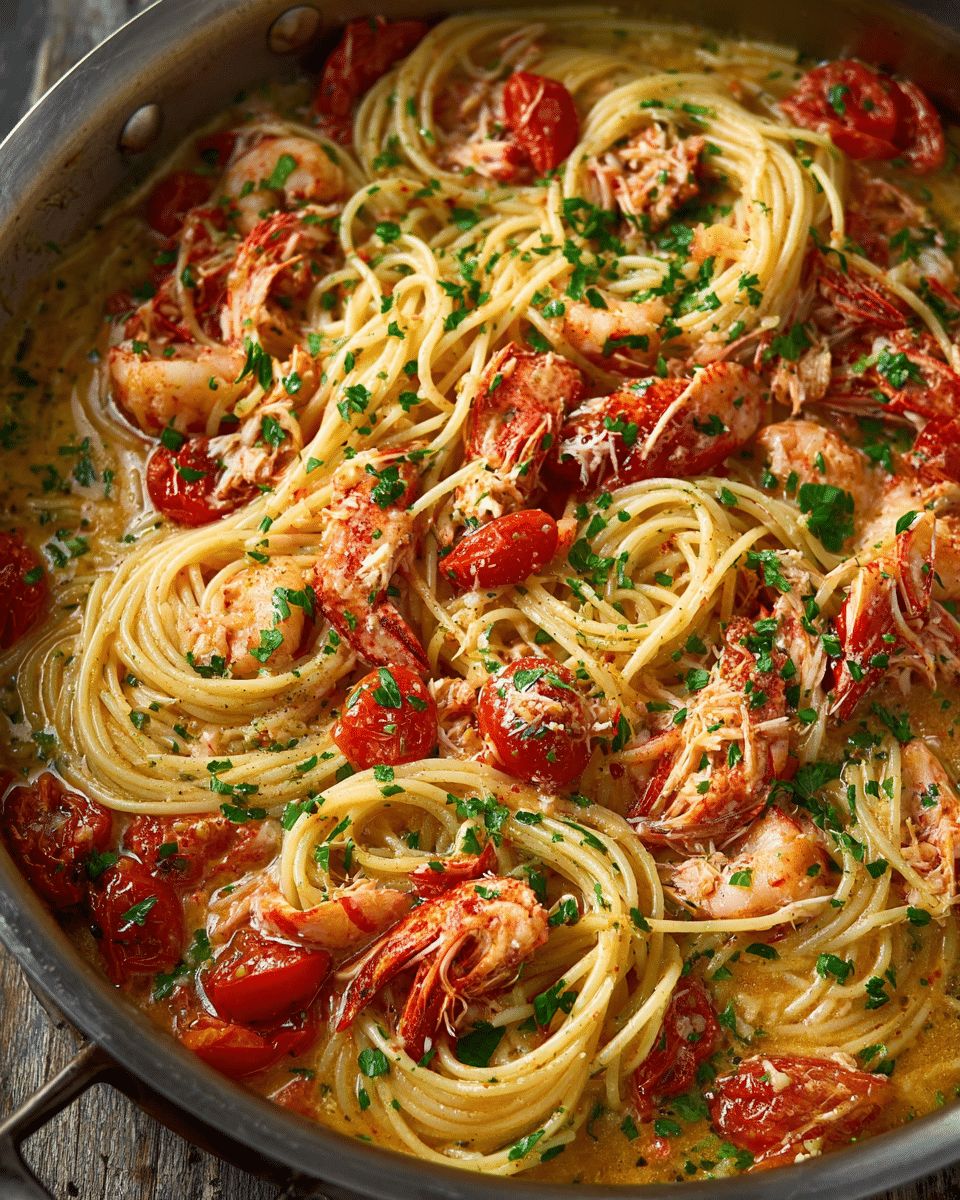
To achieve world-class results, the quality of your ingredients is paramount. Below is a breakdown of what you will need and why each choice matters for the final profile of your Creamy Lobster and Shrimp Spaghetti with Fresh Tomatoes.
Seafood Selection: Lobster and Shrimp
When selecting your seafood, look for cold-water lobster if possible, as it tends to be sweeter and firmer than warm-water varieties. For the shrimp, large or jumbo (16/20 count) are ideal because they provide a meaty contrast to the thin spaghetti strands. Ensure they are peeled and deveined to keep the eating experience seamless.
The Perfect Tomato Base
Cherry or grape tomatoes are non-negotiable here. They have a higher sugar-to-acid ratio than large tomatoes and a thinner skin that “bursts” easily under heat. This creates a rustic, chunky sauce that clings to the pasta beautifully.
| Ingredient | Quantity | Pro-Tip / Note |
|---|---|---|
| Cooked Lobster Meat | 1 lb | Cut into 1-inch chunks; keep it chunky. |
| Shrimp (Peeled/Deveined) | 8 oz | Pat dry before cooking for a better sear. |
| Cherry Tomatoes | 1 lb | Multi-colored tomatoes add visual appeal. |
| Spaghetti | 10 oz | Use bronze-cut pasta for better sauce adhesion. |
| Unsalted Butter | 7 tbsp | Allows you to control the salt levels. |
| Seafood Broth | 1/2 cup | Can substitute with dry white wine or pasta water. |
Step-by-Step Instructions: Mastering the Technique
Follow these steps carefully to ensure your Creamy Lobster and Shrimp Spaghetti with Fresh Tomatoes reaches its full potential. Timing is everything when working with delicate seafood.
- Prep the Pasta: Bring a large pot of water to a rolling boil. Salt it heavily—it should taste like the sea. Cook the spaghetti until it is 1–2 minutes under the package directions (al dente). CRITICAL: Save at least one cup of the cloudy pasta water before draining.
- Sear the Shrimp: In a large skillet, melt 2 tablespoons of butter with the olive oil over medium-high heat. Add the shrimp in a single layer. Cook for about 2 minutes per side until pink and opaque. Remove and set aside to prevent overcooking.
- Temper the Lobster: Add another tablespoon of butter. Toss in the lobster chunks just to warm them through (about 60–90 seconds). Remove them and place them with the shrimp.
- Build the Aromatics: Lower the heat to medium. Add the remaining butter, chopped shallots, and minced garlic. Sauté until the shallots are translucent and the garlic is fragrant, but not browned.
- The Tomato Burst: Add the cherry tomatoes to the skillet. Cook, stirring occasionally, until the skins begin to blister and pop, releasing their juices. Use the back of a wooden spoon to gently press on them to help the process.
- Create the Emulsion: Pour in the seafood broth (or wine). Let it simmer for 2 minutes to reduce slightly. Add half of your reserved pasta water and whisk gently to combine the fats and liquids into a glossy sauce.
- The Final Toss: Add the spaghetti to the skillet. Toss vigorously for 1–2 minutes over medium heat. The pasta will finish cooking in the sauce, absorbing the seafood and tomato flavors. If it looks dry, add more pasta water.
- Combine and Finish: Gently fold the shrimp and lobster back into the pan. Add the fresh parsley, lemon juice, salt, and black pepper. Toss one last time to coat everything.
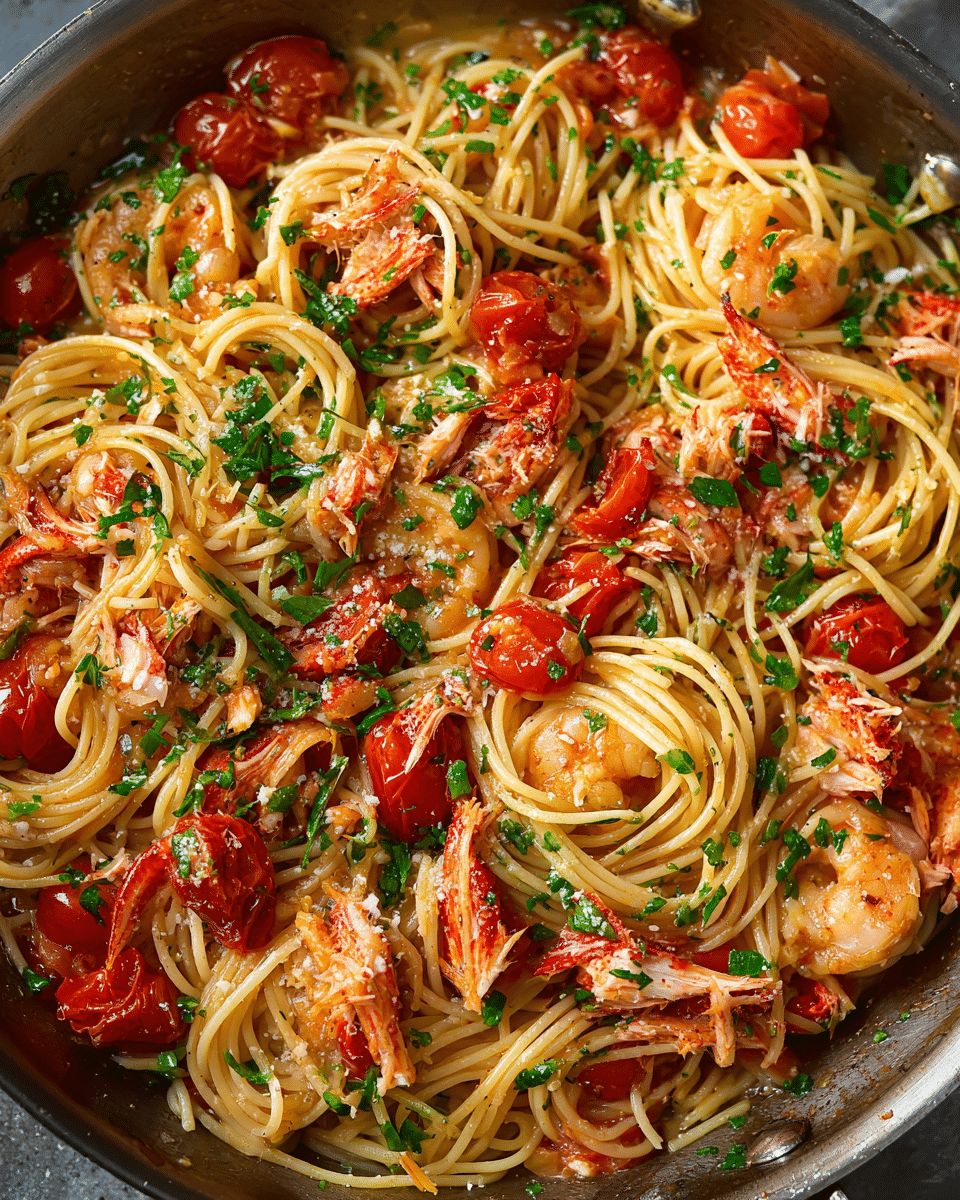
Expert Tip: Never rinse your pasta! The starch on the surface of the spaghetti is the “glue” that helps the butter and tomato juices bind together into a cohesive, creamy sauce.
Essential Tips for the Best Seafood Pasta
Managing Seafood Temperature
One common mistake is adding cold seafood to the sauce at the very end. Ensure your lobster and shrimp are at room temperature before they go into the skillet for the final toss. This prevents the sauce temperature from dropping and ensures the proteins are heated evenly without becoming rubbery.
Pasta Water: The Liquid Gold
The water used to boil your pasta is full of starch. When added to the butter and oil in the pan, it creates a stable emulsion. This is how you get that “creamy” look and feel without using a drop of heavy cream. Always save more than you think you need!
- Use Unsalted Butter: Since seafood and pasta water are naturally salty, using unsalted butter gives you total control over the seasoning.
- Fresh Herbs Only: Dried parsley will not work here. The fresh, grassy notes of flat-leaf parsley are essential to cut through the richness of the butter.
- Garlic Timing: Never add garlic to a screaming hot pan. It burns in seconds and turns bitter. Add it with the shallots over medium heat.
Pairing and Serving Suggestions
Since Creamy Lobster and Shrimp Spaghetti with Fresh Tomatoes is a rich, premium dish, your sides and drinks should be light and refreshing to provide balance.
Wine Pairings
Look for white wines with high acidity and citrus notes. A chilled Sauvignon Blanc or a Vermentino works beautifully. If you prefer something slightly more traditional, a Chardonnay (unoaked) provides a buttery backbone that complements the lobster without being too heavy.
Recommended Side Dishes
A simple arugula salad with a lemon-tahini dressing or a classic balsamic glaze provides a peppery contrast. Additionally, a side of crusty sourdough bread is a must-have to mop up the extra tomato-butter sauce at the bottom of the bowl.
Storage and Reheating Guidelines
Seafood pasta is always best served immediately. However, if you find yourself with leftovers, follow these steps to maintain as much quality as possible.
How to Store
Place the cooled pasta in an airtight glass container. It will stay fresh in the refrigerator for up to 2 days. We do not recommend freezing this dish, as the texture of the lobster and the emulsion of the sauce will break upon thawing.
The Right Way to Reheat
Avoid the microwave at all costs! It will turn your shrimp into rubber. Instead, place a skillet over low heat. Add a splash of water or broth and the pasta. Cover and heat gently, tossing occasionally, until just warmed through. This preserves the integrity of the seafood.
| Method | Quality Result | Recommended? |
|---|---|---|
| Skillet (Low Heat) | Excellent – Maintains texture | Yes |
| Microwave | Poor – Rubberiness occurs | No |
| Oven (Covered) | Fair – Can dry out quickly | Only for large batches |
You May Also Like
If you enjoyed this elegant seafood dish, explore more of our favorites: seafood pasta, gourmet lobster recipes, 30-minute dinner ideas, and classic Italian-inspired meals.
For more information on the nutritional benefits and species of seafood used in this recipe, visit Wikipedia.
Frequently Asked Questions
Can I use frozen lobster and shrimp for this recipe?
Yes, you can absolutely use frozen seafood. For the best results, thaw the lobster and shrimp completely in the refrigerator overnight. Before cooking, pat them dry with a paper towel to ensure they sear properly rather than steaming in the pan.
How do I make the sauce thicker without adding heavy cream?
The secret is emulsification. By whisking starchy pasta water into the melted butter and tomato juices over medium heat, you create a natural, silky sauce. If you want it even thicker, let the sauce simmer for an extra minute before adding the pasta, or add an extra tablespoon of chilled butter at the very end.
What can I substitute for spaghetti?
While spaghetti is traditional, other long pasta shapes like linguine or fettuccine work beautifully as they provide more surface area for the sauce to cling to. For a more rustic feel, you can also use angel hair pasta, though you will need to be very careful not to overcook it.
Final Thoughts
Creating a Creamy Lobster and Shrimp Spaghetti with Fresh Tomatoes is a rewarding experience that proves you don’t need complex techniques to achieve extraordinary results. By focusing on the timing of the seafood and the quality of the tomatoes, you can produce a meal that rivals the finest seafood bistros from the comfort of your own home.
Whether you are celebrating a special occasion or simply want to treat yourself to a luxurious weekend dinner, this recipe offers the perfect balance of richness and vibrancy. Don’t forget to serve it with a crisp glass of white wine and plenty of crusty bread to enjoy every last drop of that golden, buttery sauce.