

There’s something incredibly satisfying about a warm, aromatic bowl of Thai curry. Imagine the smell of coconut milk mingling with fresh ginger and garlic, a gentle heat from red curry paste, and tender, juicy chicken waiting to melt in your mouth. These Creamy Thai Red Curry Chicken Bowls aren’t just food—they’re an experience. With each bite, you’ll feel like you’ve been transported to a bustling Thai street market, savoring a dish that’s rich, comforting, and entirely homemade.
Whether you’re seeking a cozy dinner after a long day or planning a dish that will impress friends and family, this recipe is both approachable and indulgent. You don’t need to be a culinary expert; with the right guidance, you can recreate a restaurant-quality Thai curry right in your kitchen on any weeknight.
Quick Answer: This recipe combines tender chicken thighs, full-fat coconut milk, and Thai red curry paste to create a rich, 40-minute meal. The key to success is simmering the chicken in the sauce to infuse every bite with spice and citrus, then serving it over fragrant jasmine rice.

Why You’ll Fall in Love with These Creamy Thai Red Curry Chicken Bowls
When you make this dish, it’s more than just a meal. It’s a celebration of flavor, texture, and comfort that hits every taste bud.
- Perfect balance of flavors: Creamy coconut milk softens the spiciness of red curry, while lime juice and fish sauce add brightness and umami.
- Tender, juicy chicken: Slow-simmered in the curry sauce, every bite is infused with rich flavor.
- Fragrant jasmine rice: A soft, slightly sticky base that complements the curry perfectly.
- Quick yet impressive: In under an hour, you can create a meal that tastes like it came from a high-end Thai restaurant.
Ingredients You’ll Need for the Perfect Curry Bowl
To make your Creamy Thai Red Curry Chicken Bowls, it’s crucial to have everything ready. Organizing ingredients ensures smooth cooking and keeps the flavors balanced.
Main Components
| Ingredient | Quantity | Purpose / Notes |
|---|---|---|
| Chicken thighs | 4, trimmed | Tender protein that absorbs curry flavors |
| Jasmine rice | 2 cups | Soft, aromatic base |
| Full-fat coconut milk | 1 can (13.5 oz) | Adds creamy texture and richness |
| Hot water | ¾ cup | Helps achieve the right curry consistency |
| Thai red curry paste | 3 tbsp | The signature spice and flavor |
| Fish sauce | 2 tsp | Deepens the savory taste |
| Lime juice | ½ lime | Balances richness with acidity |
Aromatics & Finishing Touches
| Ingredient | Quantity | Role |
|---|---|---|
| Coconut oil | 1 tbsp | Base for sautéing |
| Garlic cloves | 2, minced | Provides depth of flavor |
| Fresh ginger | 1 tsp, grated | Adds warmth and aromatic freshness |
| Garnishes | To taste | Spring onions, coriander, and chili oil |
Why These Creamy Thai Red Curry Chicken Bowls Are a Game Changer
Creating an authentic Thai experience at home often feels intimidating, but these Creamy Thai Red Curry Chicken Bowls prove that gourmet cooking can be remarkably accessible. The magic lies in the intersection of high-quality aromatics and the velvety richness of full-fat coconut milk. Unlike standard stews, a Thai curry relies on the “blooming” of spices to create a multi-dimensional flavor profile that hits the back of the palate with heat and the front with citrusy brightness.
This dish is a favorite for meal preppers and busy families alike because it strikes a rare balance: it feels indulgent and “fancy” enough for a weekend dinner party, yet the active prep time is minimal. By poaching the chicken directly in the curry sauce, you ensure the meat stays incredibly moist while absorbing every drop of the ginger, garlic, and lemongrass-infused liquid.
- Saves Time: Ready in under 45 minutes, including rice preparation.
- Budget-Friendly: Uses pantry staples like rice and canned coconut milk with affordable chicken thighs.
- Highly Customizable: Easy to scale up for large groups or swap proteins for dietary needs.
Essential Ingredients for Authentic Flavor
To achieve that signature restaurant-quality taste, the quality of your ingredients matters. While you can find most of these at any local grocery store, knowing how they function in the dish will help you master the craft.
The Protein: Why Chicken Thighs?
While many reach for chicken breasts, chicken thighs are the undisputed champions of the curry world. Their higher fat content allows them to withstand the simmering process without becoming tough or rubbery. As they cook in the coconut milk, the connective tissues break down, contributing to a silkier sauce and a “melt-in-your-mouth” texture.
The Liquid Gold: Coconut Milk vs. Coconut Cream
For this recipe, we specifically recommend full-fat canned coconut milk. Avoid “light” versions or the refrigerated cartons intended for cereal; these lack the necessary fat solids to emulsify with the curry paste. The table below outlines why the choice of coconut product is vital for your sauce consistency.
| Product Type | Fat Content | Result in Curry |
|---|---|---|
| Full-Fat Canned Milk | 17-24% | Rich, velvety, and perfectly emulsified. |
| Light Canned Milk | 5-7% | Watery sauce that lacks flavor depth. |
| Coconut Cream | 25%+ | Extremely thick; may need extra thinning with water. |
Mastering the Technique: Your Step-by-Step Cooking Guide
Follow these steps carefully to build layers of flavor. Each stage serves a specific purpose, from tempering the spices to perfectly finishing the poultry.
Step 1: The Foundation – Perfect Jasmine Rice
Jasmine rice is the traditional pairing for Thai curry because of its floral aroma and slightly sticky texture, which helps it “grab” the sauce. Start by rinsing your rice in a fine-mesh sieve. This removes excess surface starch, preventing the rice from becoming a gummy mass. For an extra touch of luxury, substitute 1/4 cup of your cooking water with coconut milk and add a pinch of salt before boiling.
Step 2: Sautéing the Aromatics
Heat your coconut oil in a heavy-bottomed pot. When it shimmers, add the minced garlic and freshly grated ginger. This isn’t just about softening them; it’s about infusing the oil. Within 2–3 minutes, the mixture should be fragrant and golden. Be careful not to burn the garlic, as this can introduce a bitter note that the coconut milk cannot mask.
Step 3: Blooming the Red Curry Paste
Add the Thai red curry paste directly to the aromatics. Use your spatula to break it up and fry it in the oil for about 60 seconds. This process, known as “blooming,” toasts the dried chilies and spices within the paste, intensifying their flavor before any liquid is added.
Step 4: Creating the Silky Curry Base
Slowly whisk in the hot water and the full can of coconut milk. Add the fish sauce and lime juice now. The fish sauce provides the essential umami (savory) element, while the lime juice cuts through the fat of the coconut. Stir until the paste is fully incorporated and the liquid is a beautiful, uniform shade of sunset orange.
Step 5: The Gentle Poach
Submerge the chicken thighs. It is vital to maintain a gentle simmer. If the liquid boils too aggressively, the coconut milk can “break” or curdle, resulting in a grainy texture. Cover the pot and let the steam do the work for 18–20 minutes. This slow-cook method ensures the chicken is cooked through while remaining tender.
Step 6: Slicing and Integrating
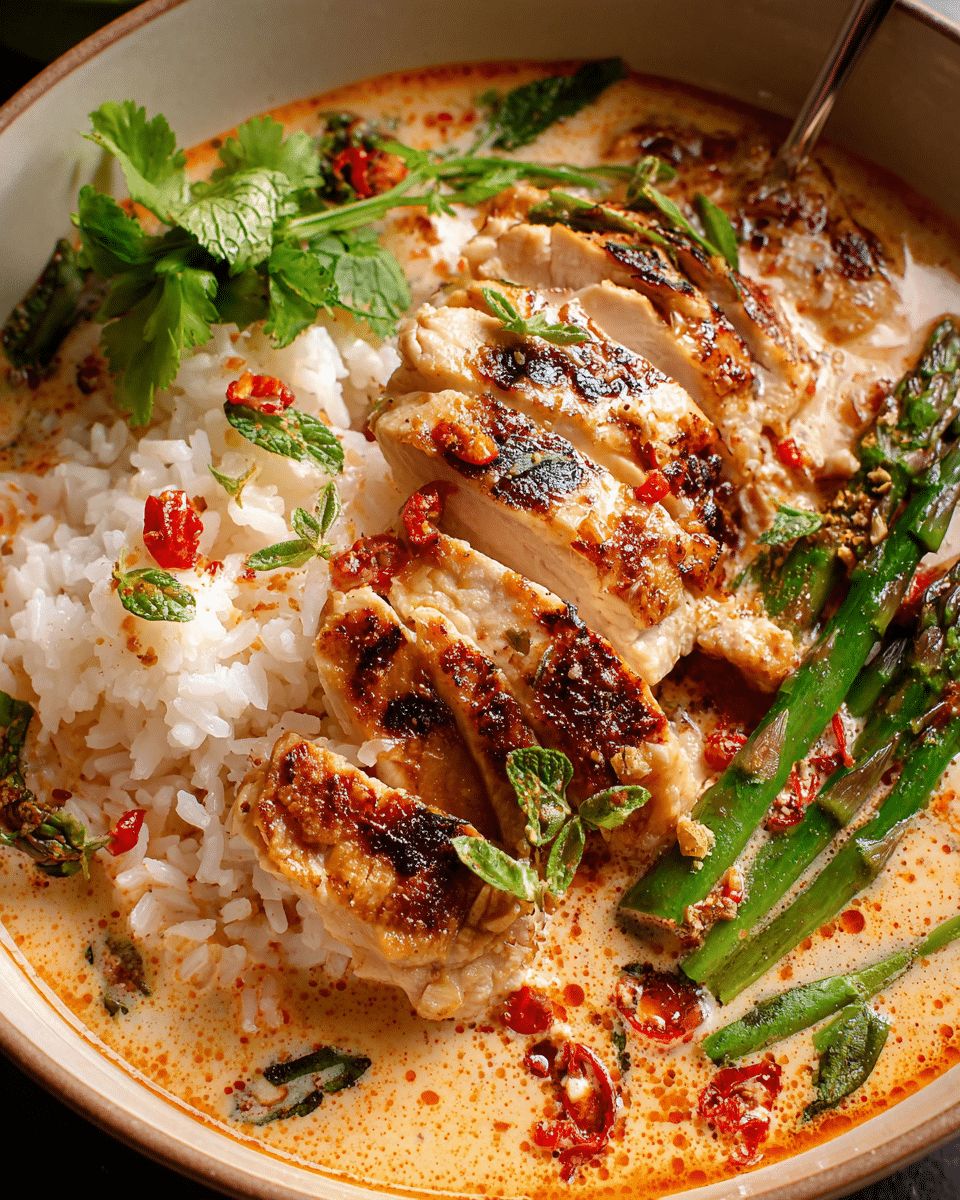
Remove the chicken to a clean cutting board. Slice into thin, bite-sized strips. You’ll notice the chicken is stained slightly orange from the spices. Return the strips to the pot for a final 2-minute simmer. This allows the sauce to coat the newly exposed surfaces of the meat.
Step 7: Assembly and The Art of Garnish
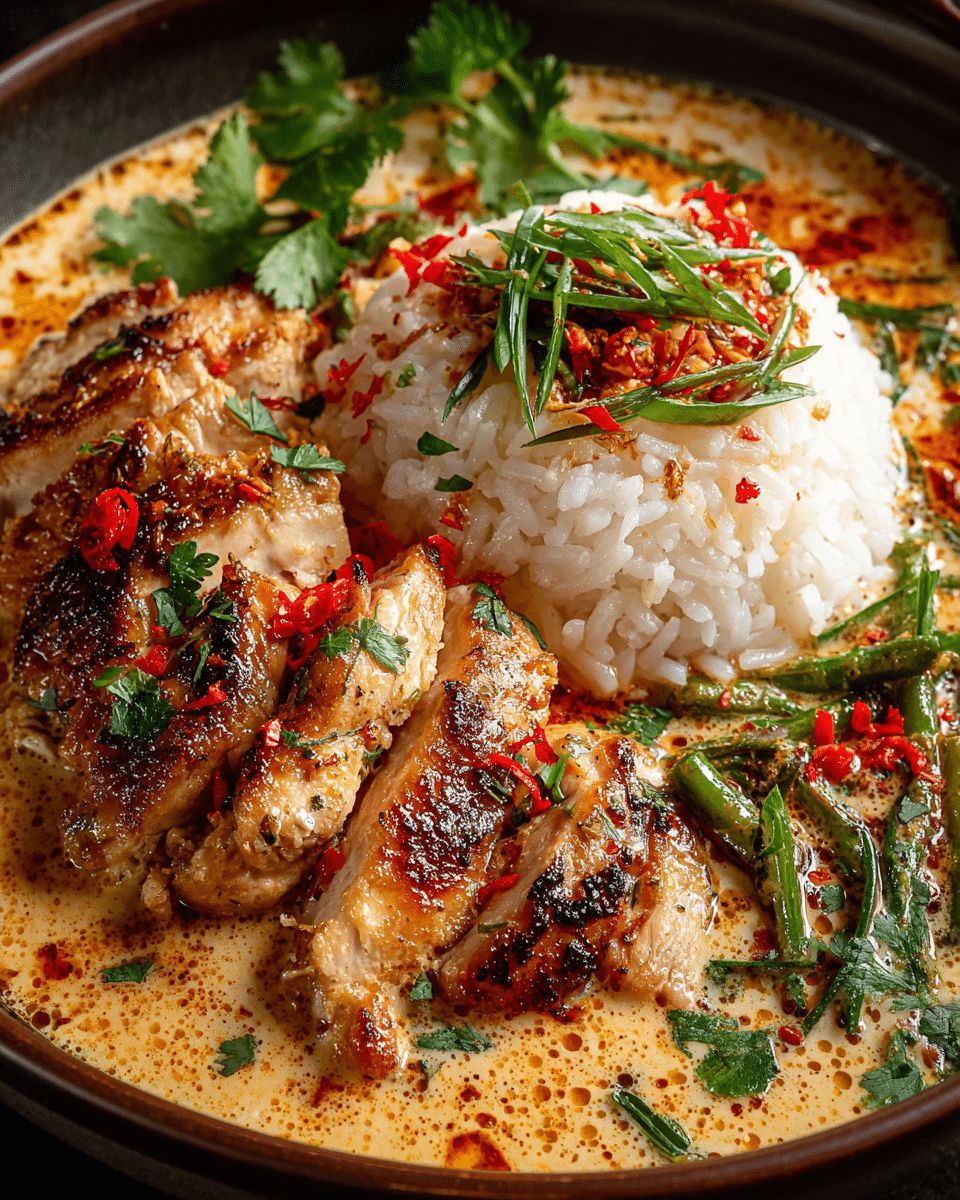
Place a generous scoop of jasmine rice in each bowl. Ladle the chicken and plenty of sauce over the top. Garnish is not just for looks; it adds essential fresh notes. Coriander (cilantro) adds earthiness, spring onions add crunch, and a drizzle of chili oil provides that final kick of heat.

Pro Tips for Restaurant-Quality Results
If you want to take your Thai Red Curry Chicken Bowls from “good” to “extraordinary,” consider these expert adjustments:
- Taste-Test the Salt: Different brands of curry paste and fish sauce have varying salt levels. Always taste the sauce before adding the chicken and adjust with a tiny pinch of brown sugar if it feels too salty.
- The “Cream” Trick: If your sauce isn’t thick enough for your liking, simmer it with the lid off for the final 5 minutes of the chicken cooking time.
- Citrus Zest: For an explosive aroma, grate a little bit of the lime zest into the pot along with the juice.
Common Substitutions and Variations
Don’t have every ingredient on hand? No problem. The beauty of Thai cooking is its flexibility.
| Instead of… | Use… | Notes |
|---|---|---|
| Chicken Thighs | Firm Tofu | Press tofu first to remove water; great for vegetarians. |
| Jasmine Rice | Cauliflower Rice | Perfect for a low-carb or keto-friendly meal. |
| Fish Sauce | Soy Sauce | Use Tamari for a gluten-free alternative. |
| Coconut Oil | Vegetable Oil | Avoid olive oil as the flavor profile doesn’t match. |
Storage, Reheating, and Meal Prep
Thai curry is one of those rare dishes that actually tastes better the next day. As the dish sits in the refrigerator, the spices continue to meld and deepen. This makes it an elite candidate for meal prepping.
Refrigeration and Freezing
Store the curry and the rice in separate airtight containers. The curry will stay fresh in the fridge for up to 3 days. If you wish to freeze it, the curry base freezes beautifully for up to 2 months. However, we recommend making a fresh batch of rice upon thawing, as frozen rice can often become crumbly or dry.
The Best Way to Reheat
Avoid the microwave if possible, as it can overcook the chicken strips. Instead, place the curry in a small saucepan over low heat. Add a tablespoon of water or a splash of coconut milk to loosen the sauce. Once it reaches a simmer, it’s ready to serve.


Frequently Asked Questions (FAQs)
Can I add vegetables to this bowl?
Absolutely! Bell peppers, bamboo shoots, and snap peas are traditional additions. Add them during the last 5–7 minutes of the chicken simmering to ensure they stay crisp-tender rather than mushy.
Is Thai red curry spicy?
It has a moderate heat. If you are sensitive to spice, start with 1.5 or 2 tablespoons of paste instead of 3. You can always add more later, but it’s hard to dial it back once mixed!
How do I make this dish vegan?
Swap the chicken for extra-firm tofu or chickpeas, and replace the fish sauce with a “vegan fish sauce” or a high-quality light soy sauce. Ensure your red curry paste brand does not contain shrimp paste (check the label!).
Conclusion – A Bowl Full of Comfort and Flavor
Every spoonful of these Creamy Thai Red Curry Chicken Bowls brings warmth, flavor, and a touch of Thai magic to your table. Whether you’re looking to escape the routine of basic chicken dinners or wanting to recreate a favorite travel memory, this recipe delivers a satisfying, aromatic result every time.
Ready to bring the taste of Thailand into your kitchen tonight? Try making these creamy Thai red curry chicken bowls and savor every mouthful. Don’t forget to share your creations with friends and family—they’ll be asking for seconds!
You May Also Like
Explore more delicious ideas on our site: Authentic Thai Recipes, Easy Chicken Thigh Dinners, Quick 30-Minute Meals, and Healthy Comfort Food.
Source: Wikipedia: Exploring the History of Thai Curry

Frequently Asked Questions
What is the difference between Thai red and green curry?
While both are delicious, Thai red curry uses dried red chilies for a bold, savory heat. Green curry uses fresh green chilies and coriander, making it slightly sweeter and more herb-forward. Red curry is often considered the more versatile “all-purpose” curry for various meats.
Can I make these curry bowls ahead of time?
Absolutely! Thai curry is famous for tasting even better the next day as the aromatics continue to infuse the sauce. Store the curry and jasmine rice in separate airtight containers in the fridge for up to 3 days. Reheat gently on the stove with a splash of coconut milk to keep it creamy.
How can I make the sauce thicker?
If you prefer a thicker consistency, simply simmer the sauce with the lid off for an extra 5 minutes before adding the chicken back in. This allows the full-fat coconut milk to reduce. Avoid using cornstarch, as it can dull the vibrant flavors of the red curry paste.
Final Thoughts
Bringing the vibrant, bold flavors of Thailand into your home doesn’t have to be a daunting task. These Creamy Thai Red Curry Chicken Bowls offer the perfect solution for anyone craving a restaurant-quality meal without the expensive price tag or long wait times. The combination of tender chicken, silky coconut milk, and fragrant rice creates a level of comfort that few other dishes can match.
Whether you are a seasoned home cook or just starting your culinary journey, this recipe is a reliable staple that promises consistent results every time. Don’t be afraid to experiment with your favorite vegetables or adjust the heat levels to make it your own. Once you taste the difference that fresh ginger and lime can make, you’ll never look at store-bought takeout the same way again!


