
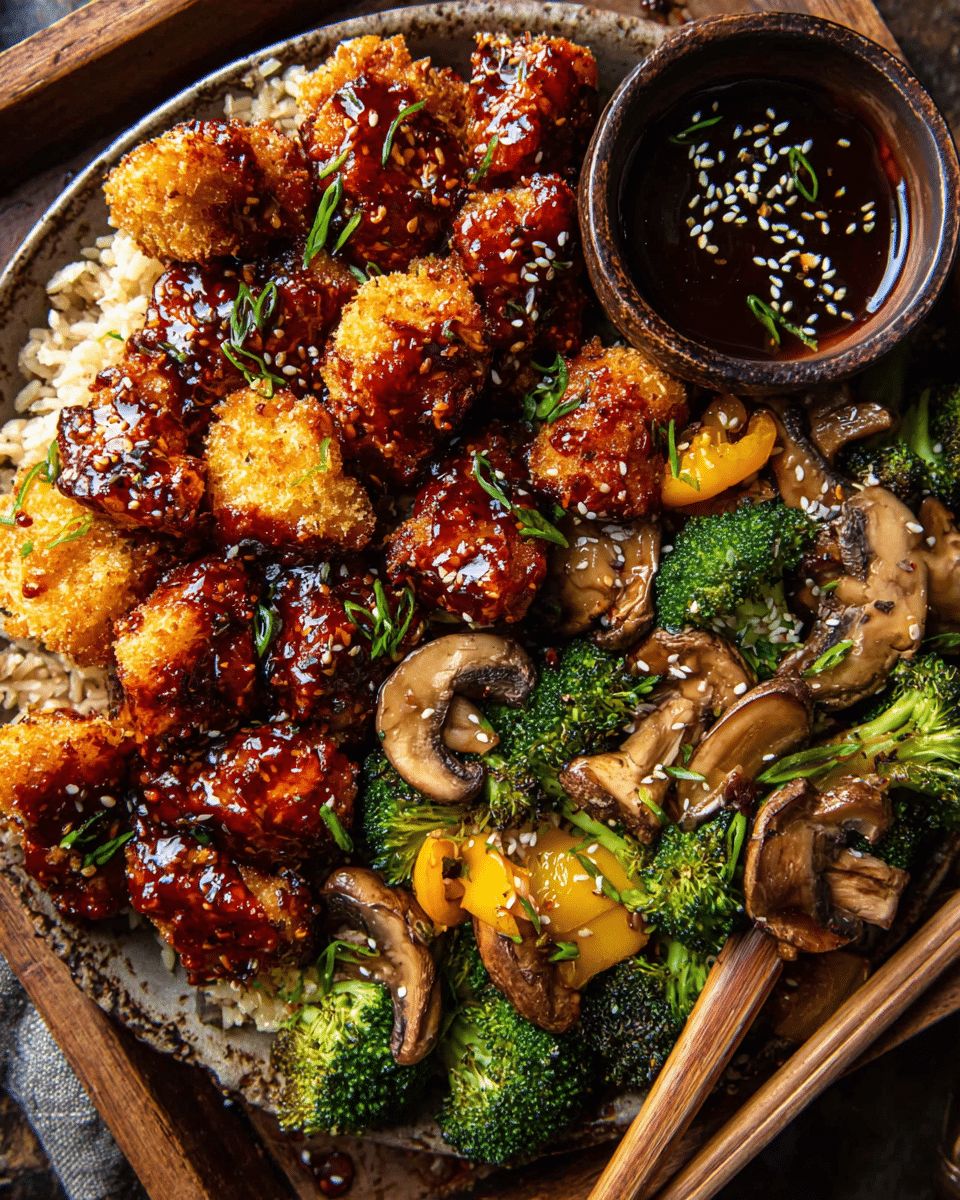
The Crispy Gochujang Chicken & Veggie Sheet Pan with Cashew Crunch brings together bold flavor, high-heat roasting, and a contrast of textures that make each bite unforgettable. This sheet pan dinner keeps prep simple while delivering deep umami from the glaze, crunch from the topping, and balanced sweetness from the roasted vegetables. It’s an ideal option when you need a fast, nourishing, and flavor-driven meal that still feels gourmet.

What sets this recipe apart is the clever use of a cornflake crust, which locks in moisture and creates a crunchy exterior without the need for deep frying. When paired with a glossy glaze, the crisp coating absorbs flavor instead of getting soggy. The vegetables roast alongside the chicken, caramelizing in the heat and creating a complete, vibrant meal on a single pan with minimal cleanup.
Quick Answer: This dish is a high-heat roasted chicken and vegetable sheet pan meal coated in a glossy, spicy-sweet gochujang glaze and topped with a flavorful cashew crunch. It combines convenience with gourmet textures for a perfect weeknight dinner.
The Secret to a Perfect Sheet Pan Gochujang Chicken
The beauty of a sheet pan meal lies in its efficiency, but the Crispy Gochujang Chicken & Veggie Sheet Pan with Cashew Crunch elevates this humble method to a gourmet standard. By combining the fermented depth of Korean chili paste with a clever “faux-fried” technique, you achieve a dish that is both health-conscious and indulgent. To master this recipe, one must understand how the individual components—the crust, the glaze, and the high-heat roasting—work in tandem to create a symphony of textures.
Traditional roasting often leads to soggy coatings if a sauce is applied too early. This recipe solves that dilemma by utilizing a two-stage baking process. First, we establish a rigid, crunchy exterior using crushed cornflakes; then, we apply a concentrated glaze that caramelizes under intense heat without compromising the structural integrity of the crust. The result is umami-rich chicken that remains remarkably crispy until the very last bite.
Pro Tip: For the most consistent results, ensure your chicken pieces are uniform in size (about 2 inches). This prevents smaller pieces from drying out while larger pieces are still reaching their safe internal temperature.
Essential Ingredients for Bold Asian Flavors
Before heading to the kitchen, it is helpful to organize your ingredients into functional groups. This recipe relies on a balance of savory, sweet, and spicy elements that are characteristic of modern Korean-inspired cuisine. Below is a detailed breakdown of what you will need for each component of the dish.
The Protein and Crispy Coating
The foundation of this meal is the chicken and its unique cornflake crust. Unlike panko or traditional breadcrumbs, cornflakes provide a sturdier crunch that holds up exceptionally well under the weight of a thick glaze.
| Ingredient | Quantity | Purpose |
|---|---|---|
| Boneless Chicken Breasts | 2 lb | Main lean protein base |
| Large Egg | 1 unit | Binding agent for the crust |
| Finely Crushed Cornflakes | 3 1/2 cups | The secret to maximum crunch |
| Grated Parmesan | 1/4 cup | Adds salty depth and browning |
| Salt & Black Pepper | 1 tsp each | Essential seasoning |

The Vibrant Vegetable Medley
The vegetables in this sheet pan meal aren’t just an afterthought; they provide the necessary fiber and vitamins to make this a complete, balanced dinner. High-heat roasting at 450°F brings out the natural sugars in the vegetables, a process known as caramelization.
- Broccoli Florets (3 cups): The “trees” catch the glaze and become tender-crisp.
- Red Bell Pepper (1 large): Adds a pop of color and a mild sweetness.
- Carrot Matchsticks (1 cup): These roast quickly and add a pleasant earthy note.
- Sliced Mushrooms (1 cup): They provide an additional layer of umami.
The Signature Gochujang Glaze
The glaze is the heart of the dish. Gochujang is a savory, sweet, and spicy fermented condiment made from chili powder, glutinous rice, fermented soybeans, and salt. It provides a complexity that cannot be replicated by simple hot sauces.
- Soy Sauce or Tamari: The primary source of salt and savory flavor.
- Honey: Balances the heat and helps the glaze thicken into a glossy coating.
- Rice Vinegar: Provides the necessary acidity to cut through the richness.
- Aromatics (Ginger & Garlic): Freshly grated for the most punchy flavor profile.
- Toasted Sesame Oil: Adds a nutty aroma that defines Asian-inspired cooking.
The Science of the Cornflake Crust
Many home cooks struggle with achieving “crispy” results in the oven. Most breadings absorb the moisture released by the chicken as it cooks, resulting in a mushy texture. By using cornflakes, we are using a cereal that has already been toasted and dehydrated. This creates a barrier that stays dry on the outside while the egg wash seals the juices inside the meat.
Why Cornflakes Over Panko?
While panko is a popular choice for oven-baked “fried” foods, cornflakes offer a different structural advantage. Because they are flatter and denser, they create more surface area contact with the heat. When combined with grated Parmesan, the cheese acts as a natural glue and flavor enhancer, melting into the nooks and crannies of the crushed cereal to create a “shatter-crisp” effect.

Step-by-Step Preparation Guide
Following a specific order of operations ensures that all components finish at the same time and with the correct textures. Prep the glaze while the chicken and vegetables are in their first roasting phase to maximize your time in the kitchen.
- Preheat and Prep: Set your oven to 450°F. This high temperature is non-negotiable for achieving a crispy exterior. Line a large rimmed baking sheet with parchment paper to prevent sticking and make cleanup easy.
- The Breading Station: Beat the egg in one bowl. In a second shallow dish, combine the crushed cornflakes, Parmesan, salt, and pepper. Use your hands to press the egg-dipped chicken firmly into the crumbs, ensuring every inch is covered.
- Arrange the Pan: Place the chicken on one side of the pan. On the other side, spread out your broccoli, peppers, carrots, and mushrooms. Drizzle everything with olive oil and a final pinch of salt.
- The Initial Roast: Bake for 15–20 minutes. This time allows the chicken to reach an internal temperature near 160°F and the vegetables to soften and brown.
- Simmer the Glaze: While the pan is in the oven, combine the glaze ingredients in a small saucepan. Simmer for 5 minutes until it reduces slightly and becomes glossy.
- The Glazing Phase: Remove the pan. Temporarily set the vegetables aside so they don’t overcook. Brush the chicken generously with the glaze (or toss in a bowl) and return only the chicken to the oven for a final 5-minute blast. This caramelizes the sugars in the honey and gochujang.
The Cashew Crunch Finishing Touch
Texture is just as important as taste in high-end culinary styling. The Cashew Crunch topping provides a raw, nutty contrast to the cooked elements of the dish. It is a mix of toasted cashews, sesame seeds, fresh green onions, and a hint of raw garlic.
Important: Never add the cashew crunch before roasting. The delicate green onions and sesame seeds will burn at 450°F. Always sprinkle this over the dish immediately before serving to maintain the “crunch” factor.
Crunch Topping Composition
- Toasted Cashews: Chopped roughly for varying sizes of bite.
- Toasted Sesame Seeds: For a subtle nuttiness and visual appeal.
- Green Onions: Provide a fresh, sharp bite to cut through the sweet glaze.
- Red Pepper Flakes: An optional addition for those who want an extra kick of heat.

Nutritional Overview and Customization
This meal is naturally high in protein and fiber, making it an excellent choice for those looking for balanced nutrition without sacrificing flavor. If you are monitoring your intake, refer to the comparison below for ways to adapt the recipe.
| Variation | Primary Benefit | Adjustment |
|---|---|---|
| Low-Carb | Lower Glycemic Index | Swap cornflakes for crushed pork rinds or almond flour. |
| Gluten-Free | Celiac Friendly | Use Tamari and GF-certified cornflakes. |
| Extra Juicy | Enhanced Flavor | Swap breasts for boneless, skinless chicken thighs. |
To serve, mound fluffy steamed rice into bowls and top with a generous portion of the glazed chicken and roasted vegetables. Finish with a heavy sprinkle of the cashew crunch and a squeeze of fresh lime juice. The acidity of the lime is the final “key” that unlocks the richness of the gochujang, creating a perfectly balanced meal.

You May Also Like
Explore more: Healthy Sheet Pan Dinners, Korean-Inspired Chicken Recipes, Quick Weeknight Meals, and Flavorful Cashew Dishes.
Learn more about the history and production of the key ingredient: Gochujang on Wikipedia.
Frequently Asked Questions
Can I use chicken thighs instead of breasts?
Absolutely! Chicken thighs are an excellent substitution because they contain more fat, which helps them stay juicy and tender during the high-heat roasting process. If you use thighs, you may need to increase the initial baking time by 3-5 minutes depending on the thickness of the pieces.
How do I store and reheat leftovers to keep them crispy?
Store your leftovers in an airtight container in the refrigerator for up to 3 days. To maintain the crispy texture of the cornflake crust, it is best to reheat the chicken in an air fryer or oven at 375°F for about 5-8 minutes. Avoid the microwave, as it will make the breading soft and soggy.
Is this Gochujang chicken dish very spicy?
This recipe is highly customizable. Gochujang has a fermented, savory heat rather than a sharp sting. By using one tablespoon of gochujang, the dish remains mild-to-medium. If you prefer a significant kick, feel free to increase the amount in the glaze or add extra crushed red pepper to the cashew crunch topping.
Final Thoughts
The Crispy Gochujang Chicken & Veggie Sheet Pan with Cashew Crunch is a testament to how simple cooking techniques can yield sophisticated, restaurant-quality results. By combining the convenience of a one-pan meal with the complex, fermented flavors of Korean cuisine, you create a dinner that is as nourishing as it is exciting to eat. The contrast between the shatter-crisp cornflake crust and the glossy, umami-rich glaze makes this a recipe you will find yourself returning to again and again.
Whether you are prepping for a busy weeknight or looking to impress guests with minimal cleanup, this dish delivers on every front. Don’t forget to finish with a generous squeeze of fresh lime juice—the bright acidity is the secret ingredient that perfectly balances the sweet and spicy notes of the glaze. Happy roasting!


