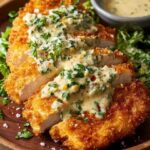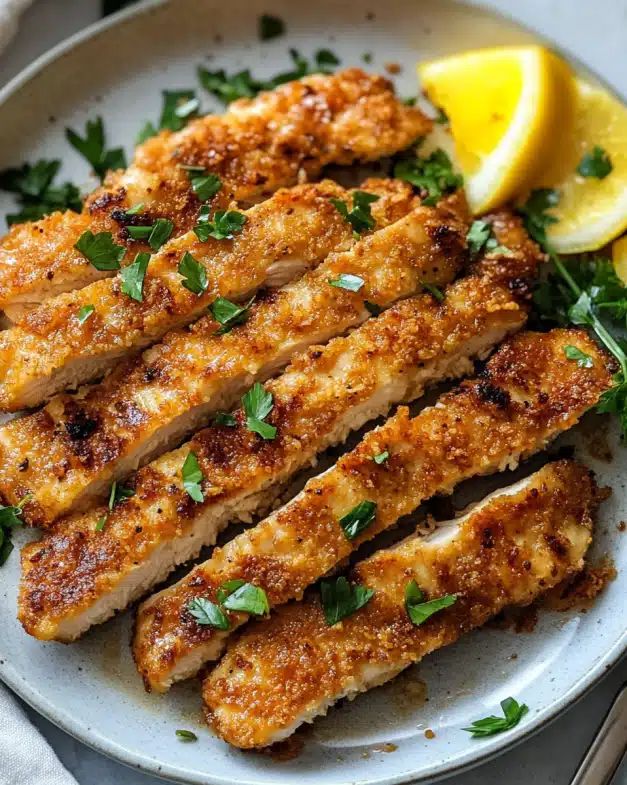
When you’re craving something crispy on the outside yet tender and juicy inside, few dishes satisfy quite like a well-made chicken schnitzel. Imagine biting into a perfectly golden, crunchy crust that gives way to succulent meat that practically melts in your mouth. Whether it reminds you of nostalgic family dinners or cozy weekend gatherings, this recipe is a timeless comfort food staple that deserves a permanent spot in your weekly meal rotation.
You don’t need fancy ingredients or professional culinary training to achieve that restaurant-quality finish at home. By using a few pantry essentials and mastering a simple dredging technique, you can transform ordinary chicken breasts into an extraordinary meal. This guide from Cook with Feast will walk you through the essential steps—from pounding the meat for even cooking to frying it to a flawless, shatteringly crisp perfection.
Quick Answer: To make the perfect Chicken Schnitzel, pound chicken breasts to an even 1/4-inch thickness, dredge in seasoned flour, dip in egg wash, and coat in Panko breadcrumbs. Pan-fry in neutral oil at 350°F for 2–3 minutes per side until golden brown and juicy.
What Is Chicken Schnitzel? A Historical and Culinary Overview
Before you heat up your skillet, it is worth understanding the heritage of this beloved dish. Chicken schnitzel is a modern, poultry-based evolution of the classic Wiener Schnitzel, a culinary icon of Austria and Germany. Traditionally, a schnitzel refers to a thin slice of meat—most commonly veal (Wiener) or pork (Schweine)—that has been tenderized, breaded, and fried until it achieves a majestic golden hue.
In recent decades, chicken has become the global favorite for this technique. Because chicken breast is lean and mild, it serves as the perfect canvas for a seasoned, crunchy crust. Unlike deep-frying, which can sometimes result in a heavy, oily product, the pan-frying method used in this recipe allows for precise temperature control. This ensures that the breading crisps up instantly, sealing the natural juices inside the meat rather than letting them escape.
Whether you are serving it at a formal Sunday dinner or as a quick weeknight meal, the appeal remains the same: the contrast between the “shatter-crisp” exterior and the succulent, tender interior. This recipe focuses on the Panko-style coating, which offers a significantly more pronounced crunch than traditional fine breadcrumbs.
Essential Ingredients for the Ultimate Crispy Schnitzel
The secret to a world-class schnitzel lies in the quality of your ingredients and the seasoning of every single layer. We don’t just season the chicken; we season the flour and the breadcrumbs to ensure flavor in every bite.
| Ingredient | Quantity | Pro SEO Tip / Substitution |
|---|---|---|
| Boneless, Skinless Chicken Breasts | 4 pieces | Slice horizontally (butterfly) for even thickness. |
| All-Purpose Flour | 1½ cups | The “glue” that helps the egg wash adhere. |
| Large Eggs | 4 units | Whisk thoroughly to avoid “stringy” egg whites. |
| Panko Breadcrumbs | 2½ cups | Gives a lighter, airier crunch than standard crumbs. |
| Vegetable Oil | 1 cup | Use high-smoke point oils like Canola or Grapeseed. |
| Dried Oregano & Paprika | 1 tsp / ½ tsp | Adds an earthy aroma and beautiful golden color. |
| Garlic Powder & Onion Powder | ½ tsp each | Provides essential savory depth (Umami). |
Detailed Ingredient Breakdown:
- The Chicken: Always start with fresh, high-quality chicken. If using frozen, ensure it is completely thawed and patted dry with paper towels to prevent the breading from becoming soggy.
- The Breadcrumbs: While traditional schnitzel uses fine crumbs, we recommend Panko. Panko flakes are larger and don’t absorb as much oil, leading to a crispier finish.
- The Fat: Never fry schnitzel in butter alone; it burns too quickly. A neutral vegetable oil is best, though you can add a tablespoon of butter at the very end for a nutty aroma.
The Preparation: Master the Art of Pounding and Dredging
The difference between a “good” schnitzel and a “perfect” one often comes down to the preparation phase. Uniform thickness is the most critical factor for success.
Step 1: Tenderizing and Shaping
If your chicken breasts are thick, they will burn on the outside before the inside is safe to eat. To fix this, follow these steps:
- Place the chicken breast on a cutting board and slice it horizontally to create two thinner cutlets.
- Place each cutlet between two sheets of parchment paper or plastic wrap.
- Using a meat mallet (flat side) or a heavy rolling pin, gently pound the meat starting from the center and moving outward.
- Aim for a consistent thickness of roughly 1/4 inch (approx. 6mm).
Step 2: Setting Up the “Standard Breading Procedure”
To keep your kitchen organized and your schnitzel perfectly coated, set up three shallow bowls in an assembly line:
- Bowl 1 (The Foundation): Flour mixed with salt, paprika, and garlic powder.
- Bowl 2 (The Binder): Beaten eggs with a splash of water or milk to loosen the proteins.
- Bowl 3 (The Crunch): Panko breadcrumbs seasoned with oregano, black pepper, and extra salt.
Step-by-Step Frying Instructions
Now that your stations are ready, it is time for the heat. Frying is a fast process, so ensure your serving plates and sides are ready before you begin.
The Dredging Process
Follow the “one hand dry, one hand wet” rule to avoid breading your own fingers!
- Coat the chicken in flour, shaking off every bit of excess. It should look dusty, not caked.
- Submerge in the egg wash until fully moistened.
- Press firmly into the Panko mixture. Ensure no bald spots remain.
The Frying Technique
Heat your oil in a large skillet over medium-high heat. You are looking for a temperature of roughly 350°F (175°C).
- The Sizzle Test: Drop a single breadcrumb into the oil. If it bubbles vigorously immediately, you are ready.
- The Fry: Lay the chicken into the oil away from you to avoid splashes. Do not overcrowd the pan; cook 1-2 pieces at a time.
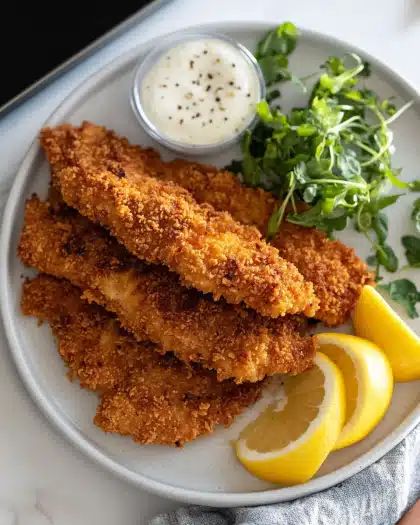
- The Color: Fry for 2–3 minutes per side. The breading should be deeply golden brown.
Expert Tips for Success (The SEO Stylist Secret)
To ensure your Crispy Pan-Fried Chicken Schnitzel stands out, keep these professional insights in mind:
Pro Tip: Never let breaded chicken sit for too long before frying. The moisture from the chicken will soak into the flour and Panko, making the crust “gummy” instead of crispy. Bread it and fry it immediately!
How to Keep Schnitzel Crispy
If you are cooking for a crowd, do not stack the finished schnitzels on a plate. The steam from the bottom pieces will soften the ones on top. Instead:
- Set a wire cooling rack over a baking sheet.
- Place the finished schnitzel on the rack.
- Keep the tray in a warm oven (around 200°F) while you finish the remaining batches.
Nutritional Breakdown and Serving Suggestions
While schnitzel is an indulgent comfort food, it provides an excellent source of lean protein. Pairing it with the right sides can create a balanced and vibrant meal.
| Nutrient | Amount Per Serving | Daily Value (%) |
|---|---|---|
| Calories | 420 kcal | 21% |
| Protein | 35g | 70% |
| Total Fat | 20g | 26% |
| Carbohydrates | 25g | 9% |
| Sodium | 650mg | 28% |
Classic Side Pairings:
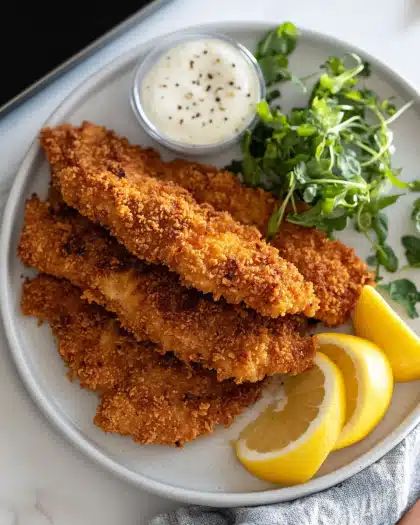
- Lemon Wedges: Essential! The acidity cuts through the richness of the fried coating.
- German Potato Salad: A vinegar-based potato salad complements the savory chicken perfectly.
- Fresh Arugula Salad: Tossed with lemon and olive oil for a light, peppery contrast.
- Lingonberry Jam: For a truly authentic Austrian experience.
You May Also Like
If you enjoyed this crispy favorite, explore more delicious recipes and kitchen guides on our site: Easy Chicken Dinners, Golden Fried Chicken Secrets, Cooking with Panko Breadcrumbs, and Quick Weeknight Meals.
For more on the culinary history of this dish, check out the entry on Schnitzel at Wikipedia.
Frequently Asked Questions
What is the best oil to use for frying chicken schnitzel?
The best choice is a neutral oil with a high smoke point, such as canola, vegetable, or sunflower oil. These oils can handle the heat required to crisp the breading without burning or adding an unwanted flavor to the meat. Avoid extra virgin olive oil, as its low smoke point can lead to a bitter, smoky taste.
Can I make this recipe in an air fryer?
Yes! To make Air Fryer Chicken Schnitzel, preheat your air fryer to 400°F (200°C). Spray both sides of the breaded cutlets generously with cooking oil spray. Cook for 8–12 minutes, flipping halfway through, until the coating is golden and the internal temperature reaches 165°F. While slightly less indulgent than pan-frying, it is a fantastic healthy alternative.
How do I prevent the breading from falling off?
The secret is the “Dredge-Dip-Coat” sequence and a little patience. First, ensure the chicken is patted dry before the flour stage. Second, shake off any excess flour so the egg can actually stick to the meat. Finally, after breading, let the cutlets sit on a plate for about 5 minutes before frying; this helps the coating “set” and bond to the chicken.
Final Thoughts
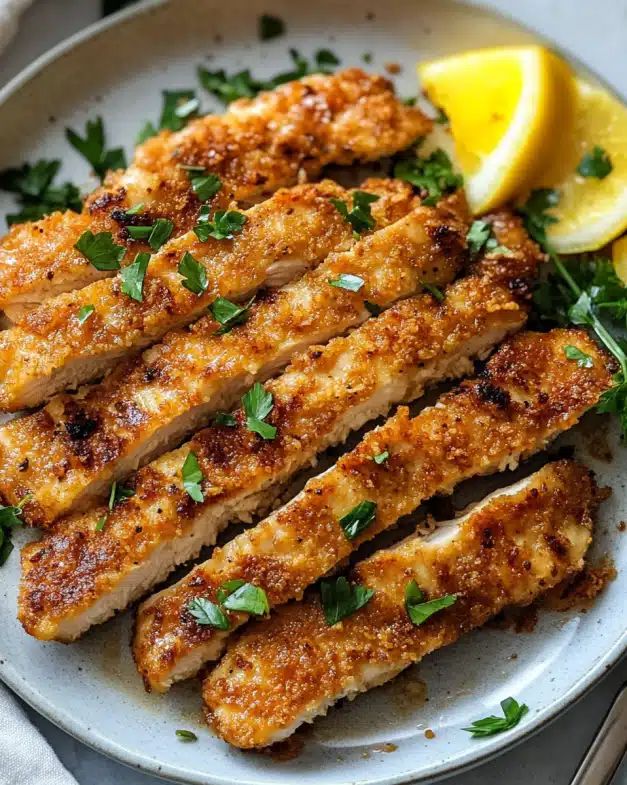
Mastering the Crispy Pan-Fried Chicken Schnitzel is a rite of passage for any home cook looking to elevate their dinner game. It is a versatile, crowd-pleasing dish that proves you don’t need expensive ingredients to create something truly gourmet. By focusing on even thickness and seasoned layers, you guarantee a result that is perfectly golden and juicy every time.
We hope this guide inspires you to get into the kitchen and start pounding some chicken! Whether you serve it with a simple squeeze of lemon or a rich mushroom gravy, this schnitzel is sure to become a new family favorite. Don’t forget to share your creations with us on social media and let us know your favorite side dishes in the comments below!