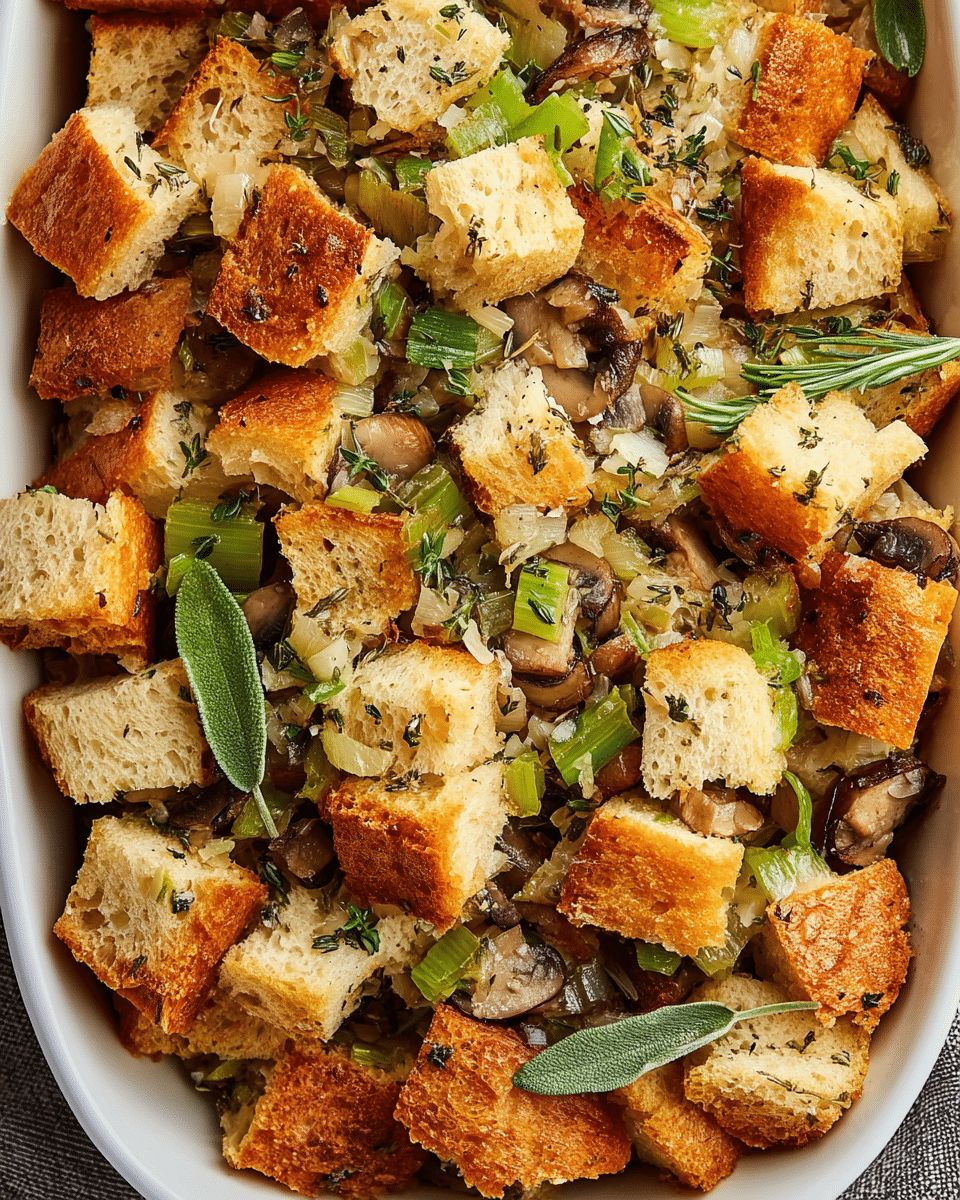
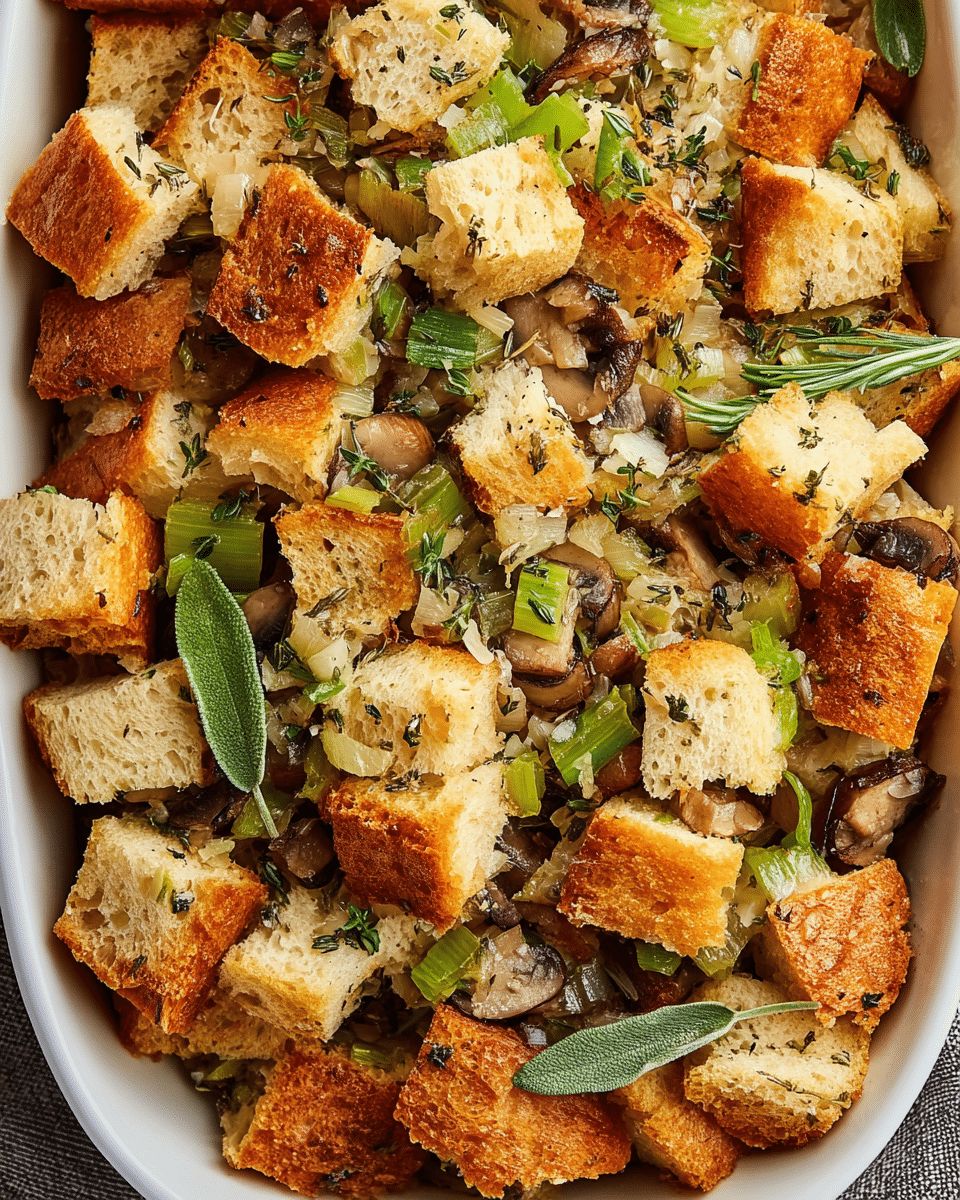
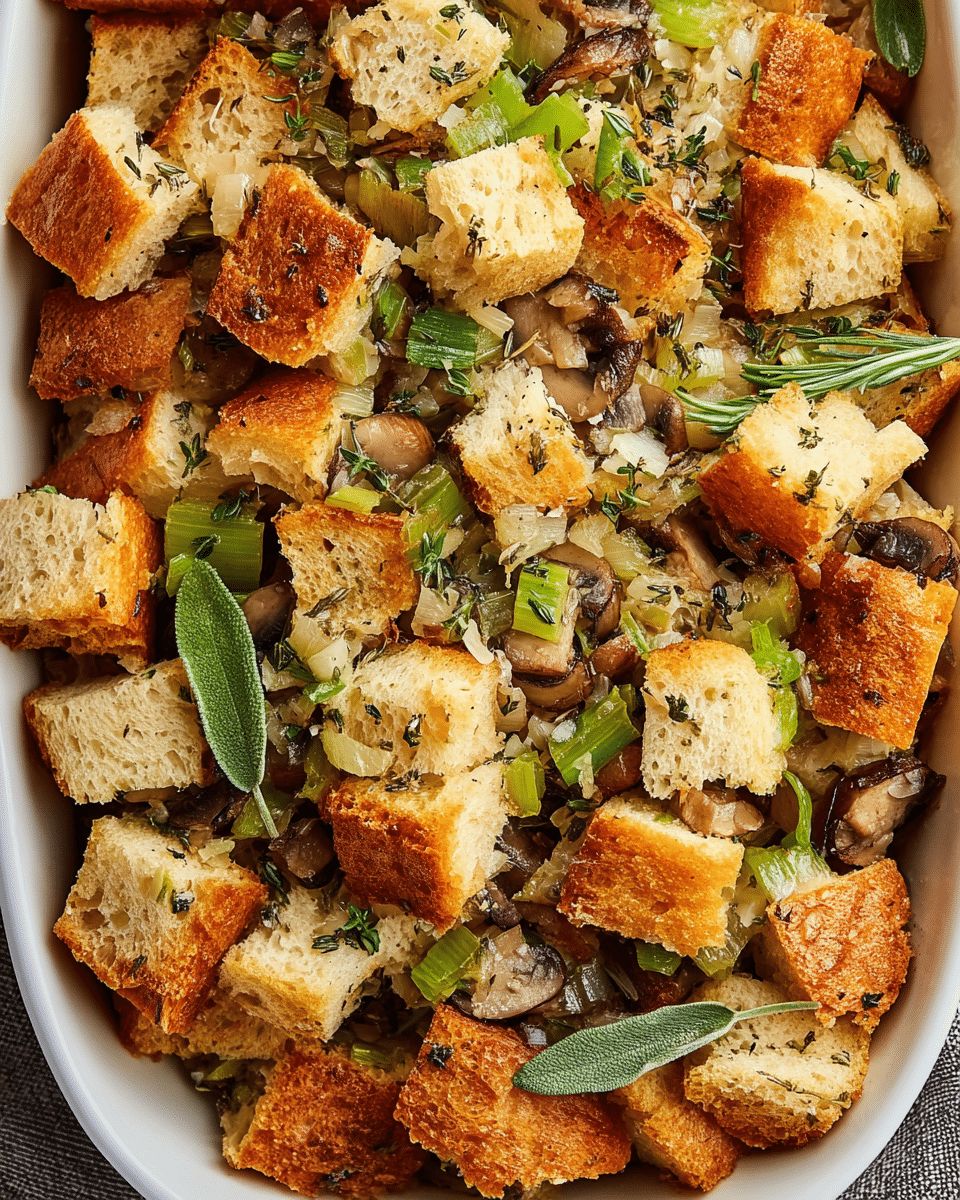
There’s something undeniably powerful about a recipe that brings you comfort before you even take the first bite. When the scent of toasted sourdough, sautéed mushrooms, and warm herbs fills your kitchen, you instantly feel grounded. That’s the magic of Herbed Mushroom Bread Stuffing—a dish that doesn’t just sit on your holiday table, but lives in your memories long after the plates are cleared.
While many associate stuffing with specific holidays, once you experience the deep satisfaction of preparing it from scratch, you’ll realize it deserves a spot on your table year-round. This version stands out because it balances earthiness, texture, and irresistible aromatics in a way that boxed stuffing simply cannot. By building flavor at every step, you create a side dish that is both nostalgic and elevated.
Quick Answer: The secret to the best Herbed Mushroom Bread Stuffing lies in using dried sourdough cubes and fresh herbs. Sourdough provides a sturdy structure that absorbs savory mushroom broth without becoming mushy, while the combination of sage, rosemary, and thyme delivers an authentic, garden-fresh aroma.
Why This Herbed Mushroom Bread Stuffing Stands Out
In the world of side dishes, texture is king. This recipe is specifically designed to avoid the common pitfalls of holiday stuffing—like being too soggy or too dry. By focusing on high-quality ingredients and specific preparation techniques, we ensure a perfectly balanced bite every time.
A Perfect Texture Every Time
One thing you likely crave in a good stuffing is the contrast between a soft, custard-like interior and a golden, slightly crisp top. We achieve this through a three-pillar approach:
- Dried sourdough cubes: These absorb broth efficiently without disintegrating.
- Vegetable-mushroom sauté: This coats the bread in a rich, savory fat.
- Dual-stage baking: Oven steaming creates tenderness, while the final uncovered bake adds the crust.
The Flavor Layers Make All the Difference
Deep, complex flavor doesn’t happen by accident. It is built through layers of caramelized onions, golden sautéed mushrooms, and a quartet of fresh herbs: sage, rosemary, thyme, and parsley. Using fresh herbs provides a brightness that dried spices simply can’t replicate.
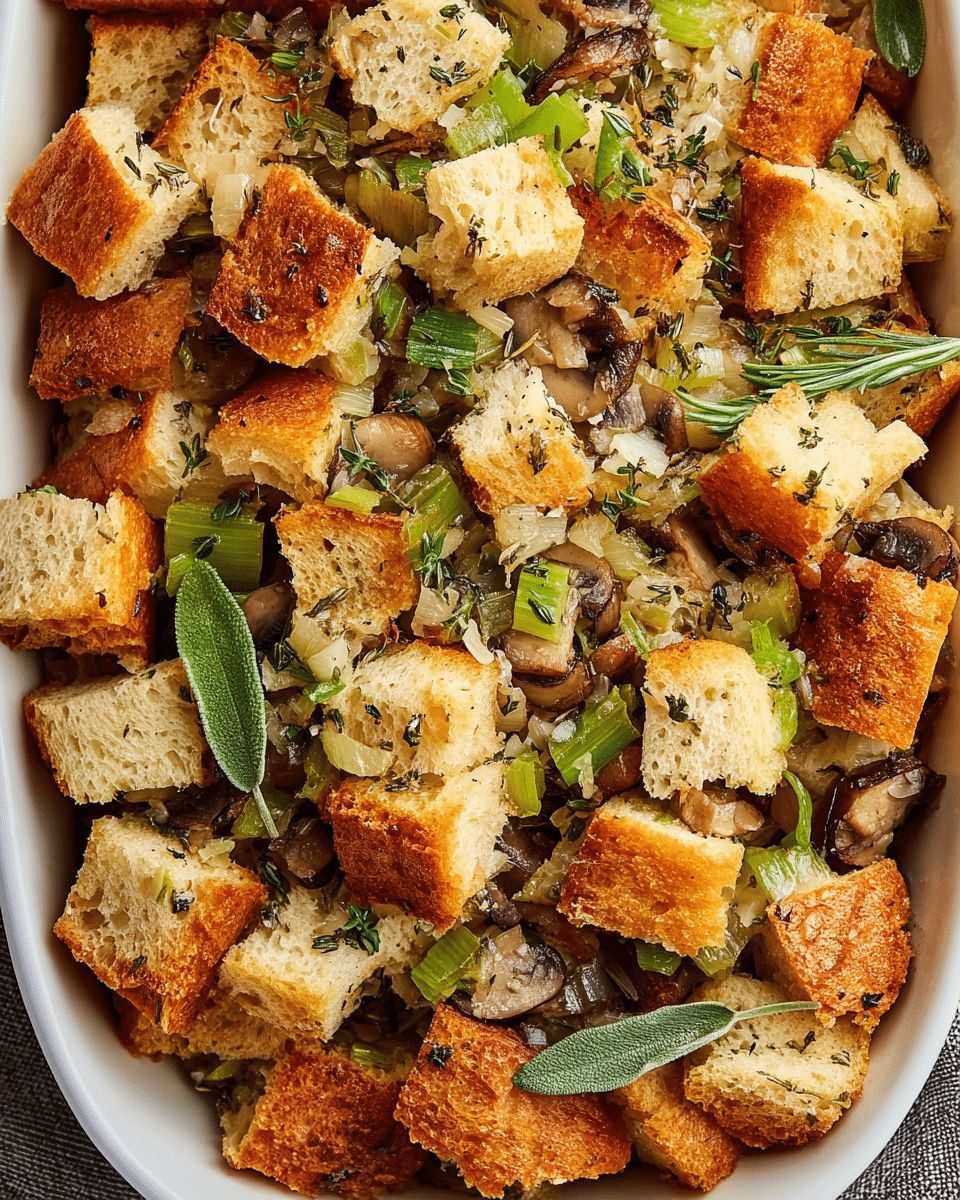
Essential Ingredients for Gourmet Herbed Mushroom Bread Stuffing
The secret to a world-class stuffing is not found in a box; it’s found in the quality of your base components. Every element in this Herbed Mushroom Bread Stuffing serves a specific purpose, from providing structural integrity to layering complex, earthy aromas. To achieve the best results, we recommend using fresh, whole ingredients that allow the natural flavors to shine through.
Below is the master ingredient list for this recipe. We have optimized these ratios to ensure a moist interior without the “mush” factor often found in holiday sides.
| Ingredient | Amount | Pro Chef Note |
|---|---|---|
| Day-old Sourdough | 1 lb (10–12 cups) | Must be completely dried for best absorption. |
| Unsalted Butter | ½ cup (1 stick) | Controls salt levels while adding richness. |
| Yellow Onion | 1 medium | Provides a sweet, caramelized base. |
| Celery Stalks | 4 large | Adds essential crunch and classic aroma. |
| Cremini Mushrooms | 8 oz | Offers a deeper, meatier flavor than white button. |
| Garlic Cloves | 3 cloves | Minced finely to distribute flavor evenly. |
| Fresh Herbs | Sage, Thyme, Rosemary | Use 1–2 tsp each, finely chopped. |
| Fresh Parsley | 3 tbsp | Add at the very end for a bright finish. |
| Large Eggs | 2 eggs | The binder that creates a “bread pudding” texture. |
| Low-Sodium Broth | 2–4 cups | Chicken or vegetable broth both work perfectly. |
Why Sourdough is the Superior Choice
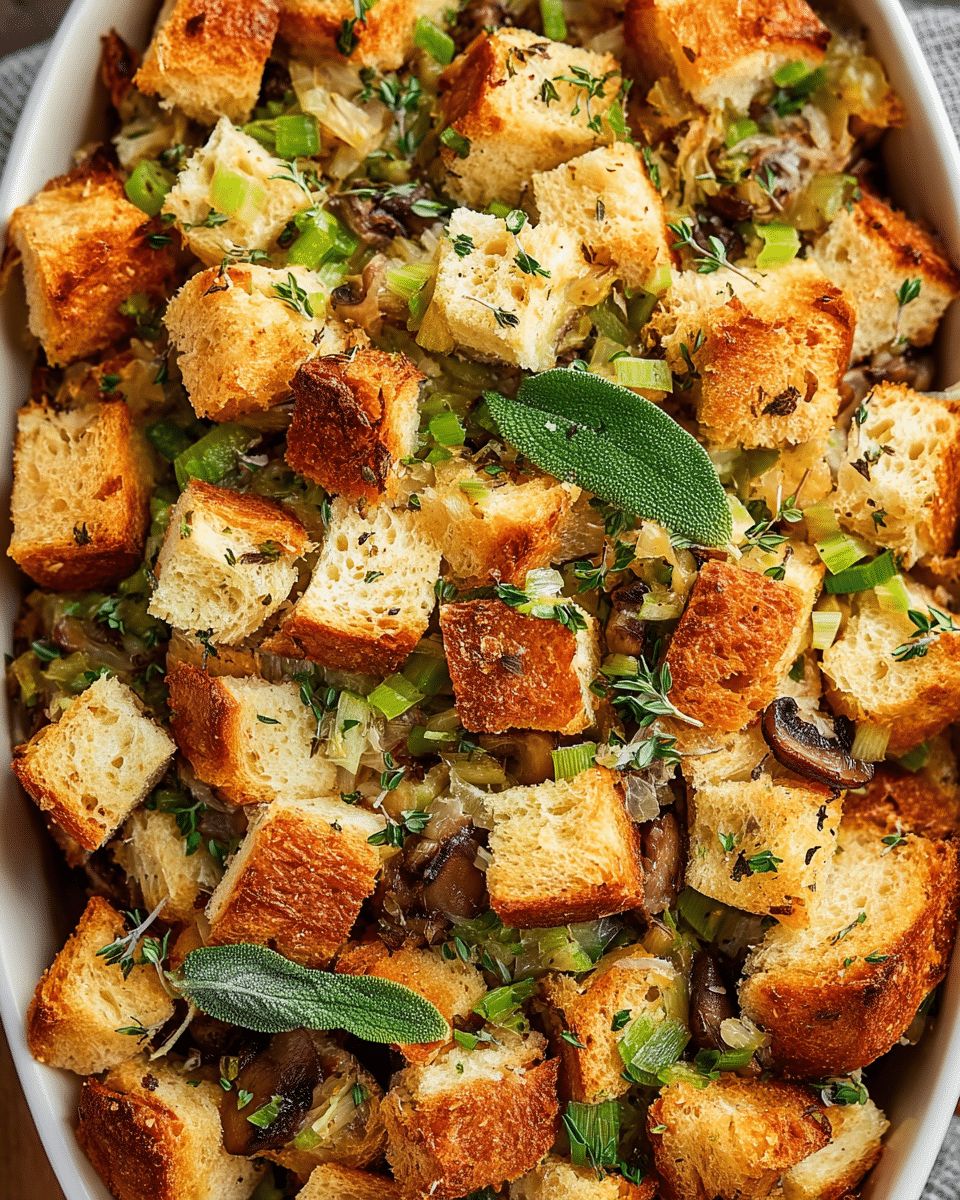
While many recipes call for white bread or brioche, sourdough is the preferred choice for professional chefs. Its fermented nature gives it a sturdy crumb that doesn’t collapse when saturated with broth. Additionally, the subtle tang of the bread cuts through the richness of the butter and savory mushrooms, providing a much-needed balance to the palate.
The Magic of Fresh Herbs vs. Dried
In a dish where herbs are the namesake, freshness matters. Fresh herbs contain essential oils that are released during the sauté process, creating an aromatic profile that dried herbs simply cannot match. However, if you are in a pinch, refer to the conversion table below:
| Herb Type | Fresh Amount | Dried Substitute |
|---|---|---|
| Sage | 1 tbsp | 1 tsp |
| Thyme | 1 tbsp | 1 tsp |
| Rosemary | 1 tbsp | 1 tsp |
Step-By-Step Preparation: Mastering the Technique
Great stuffing is a process of assembly. Each step is designed to build a layer of flavor, starting with the bread and ending with the final golden bake.
Step 1: The Drying Phase
Moisture is the enemy of texture during the prep phase. You want your sourdough cubes to be as dry as croutons before they ever touch the liquid ingredients. This ensures they act like a sponge, soaking up the herb-infused butter and broth rather than just sitting in it.
- The Air-Dry Method: Cube your bread 2–3 days in advance and leave it on a baking sheet at room temperature.
- The Oven Method: If you’re short on time, bake the cubes at 200°F (93°C) for 60–90 minutes until they are firm to the touch but not browned.
Step 2: Sautéing the Aromatics
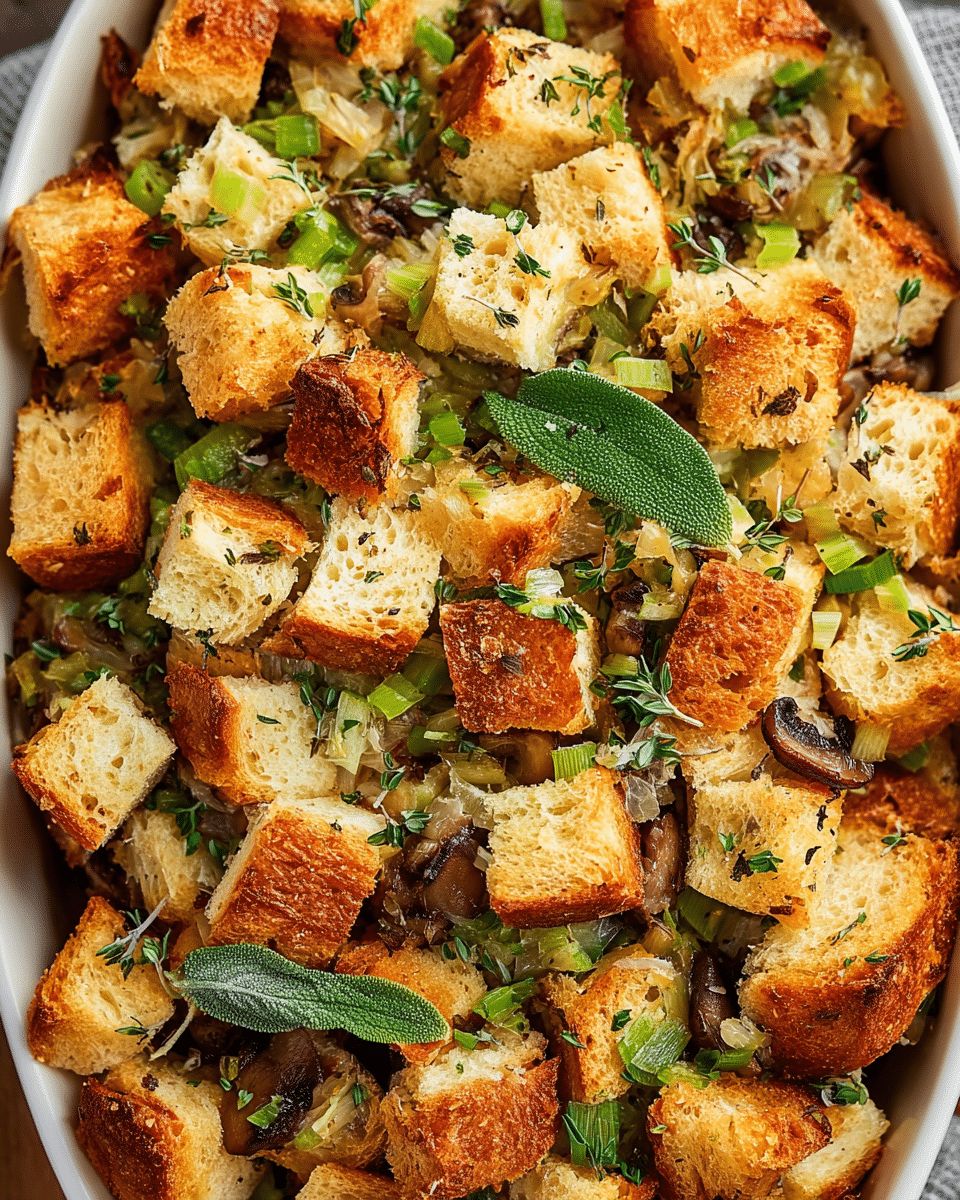
In a large skillet, melt your butter over medium heat. Start with your onions and celery, cooking them until they are translucent and soft. The goal is to remove the “raw” bite without browning them too heavily. Once the vegetables are softened, add the sliced mushrooms. Mushrooms contain a high water content, so continue cooking until that liquid evaporates and the mushrooms turn a beautiful golden brown.
Pro Tip: Don’t crowd the pan! If you add too many mushrooms at once, they will steam instead of sear. Cook them in batches if necessary to get that deep, savory Maillard reaction.
Step 3: Creating the Herb Infusion
Once the mushrooms are golden, stir in your minced garlic, sage, rosemary, and thyme. Cook for only 60 seconds—just long enough for the garlic to become fragrant. Sautéing the herbs in the butter at this stage “blooms” the flavors, ensuring they permeate every single bread cube in the next step.
Step 4: The Binding Liquid
In a separate mixing bowl, whisk your eggs and 2 cups of the broth together. The eggs act as a custard base, giving the interior of the stuffing its signature soft and tender feel. Depending on the dryness of your bread, you may need up to 2 additional cups of broth, but start with two to avoid over-saturation.
Assembly and the Two-Stage Baking Process
This is where the magic happens. Combine your dried bread cubes and the sautéed vegetable mixture in a very large bowl. Pour the egg and broth mixture over the top and toss gently with a large spatula.
The Resting Period
Do not rush the mixture into the oven! Let the stuffing sit for 10 minutes. This allows the sourdough to fully absorb the liquid. If the bread still feels hard after 10 minutes, add more broth, a half-cup at a time, until the cubes are soft but still hold their shape.
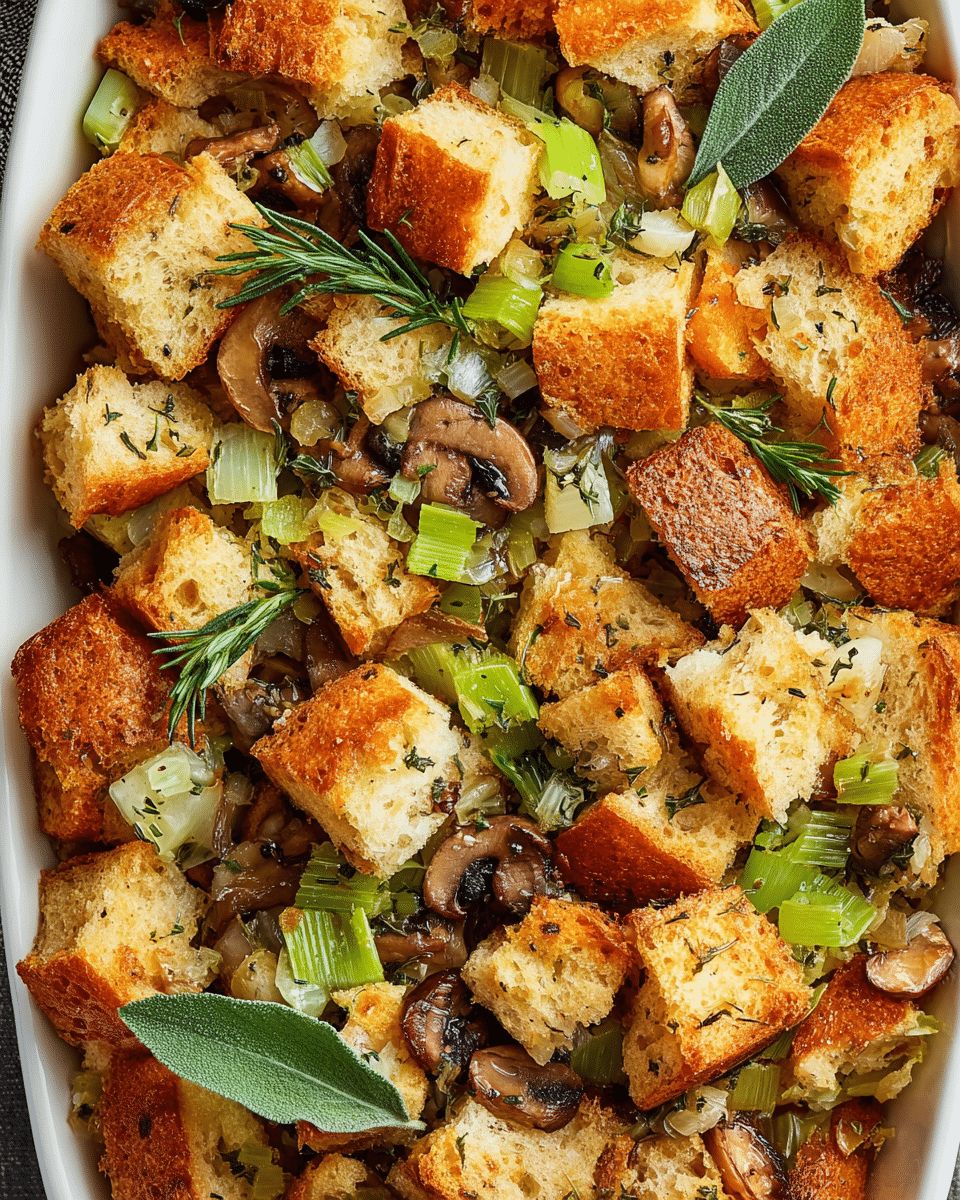
Baking for Contrast
Transfer the mixture to a greased 9×13-inch baking dish. We recommend a two-stage baking process to get the best of both worlds:
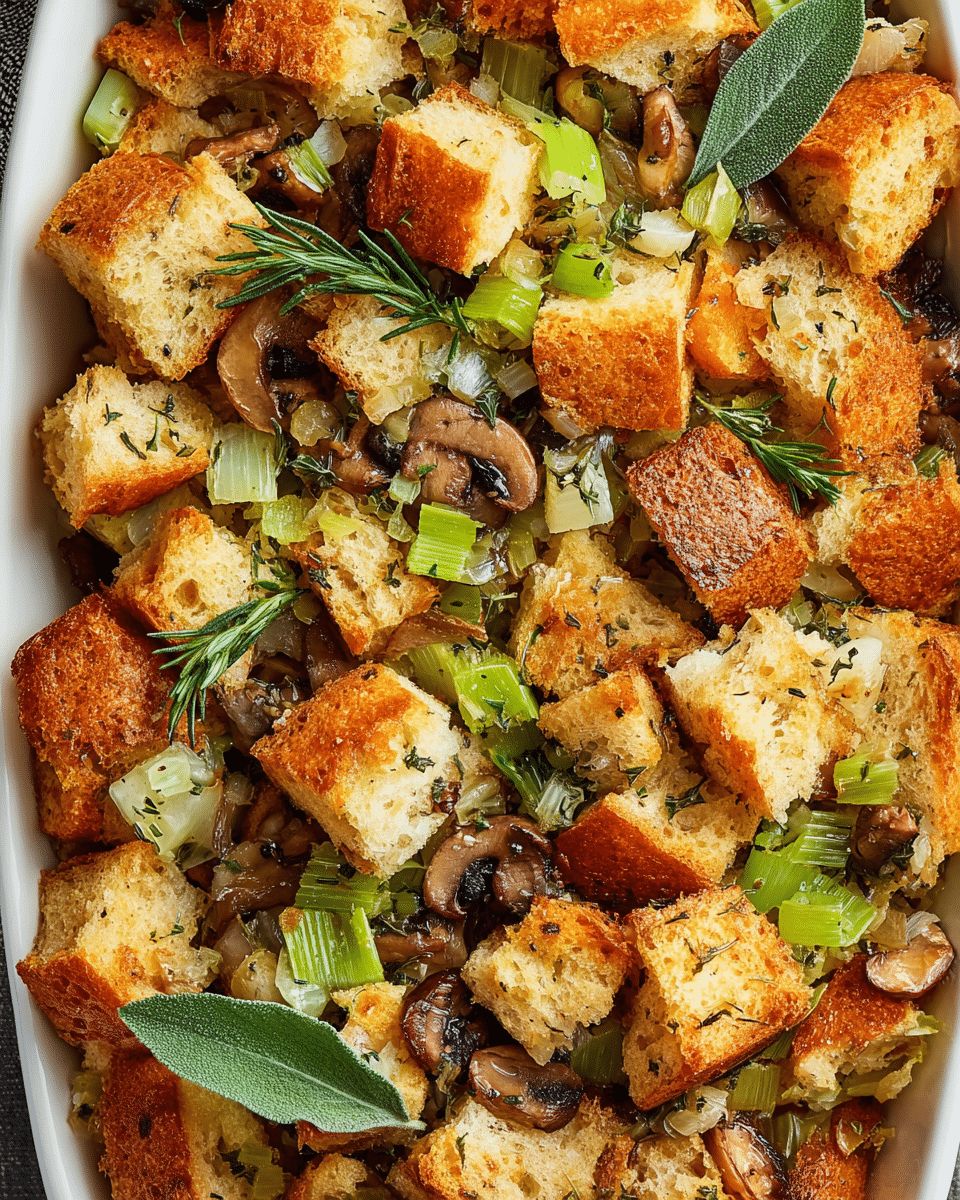
- Stage 1 (Covered): Bake at 350°F (175°C) for 20 minutes covered with foil. This steams the bread and cooks the egg binder, ensuring a moist interior.
- Stage 2 (Uncovered): Remove the foil and bake for another 15–20 minutes. This creates the iconic golden crust on top that everyone fights over at the dinner table.
Expert Customizations and Flavor Add-Ins
While this classic Herbed Mushroom Bread Stuffing is perfect on its own, it also serves as a fantastic canvas for your own culinary creativity. If you want to put a signature spin on the dish, consider these popular variations:
- The Savory Meat Add-in: Brown ½ lb of Italian sausage or spicy chorizo and mix it in with the vegetables.
- The Sweet & Salty Twist: Add ½ cup of dried cranberries and ½ cup of toasted pecans for a festive, textural contrast.
- The Garden Fresh Update: Swap half of the mushrooms for diced leeks and add a splash of dry white wine to the skillet to deglaze the pan.
Storage, Reheating, and Make-Ahead Instructions
One of the best things about stuffing is that it often tastes even better the next day as the flavors continue to meld. If you are planning for a large event, you can easily prepare this in advance.
Make-Ahead Strategy
You can assemble the entire dish (up to the point of baking), cover it tightly with plastic wrap, and store it in the refrigerator for up to 48 hours. When you are ready to serve, simply take it out of the fridge 30 minutes before baking to take the chill off, then follow the standard baking instructions.
Freezing and Reheating
Baked stuffing freezes exceptionally well. Store leftovers in an airtight container for up to 3 months. To reheat, place the stuffing in an oven-safe dish, add a splash of broth to prevent drying, and heat at 325°F until the internal temperature reaches 160°F.
Final Thoughts: A Recipe for Every Season
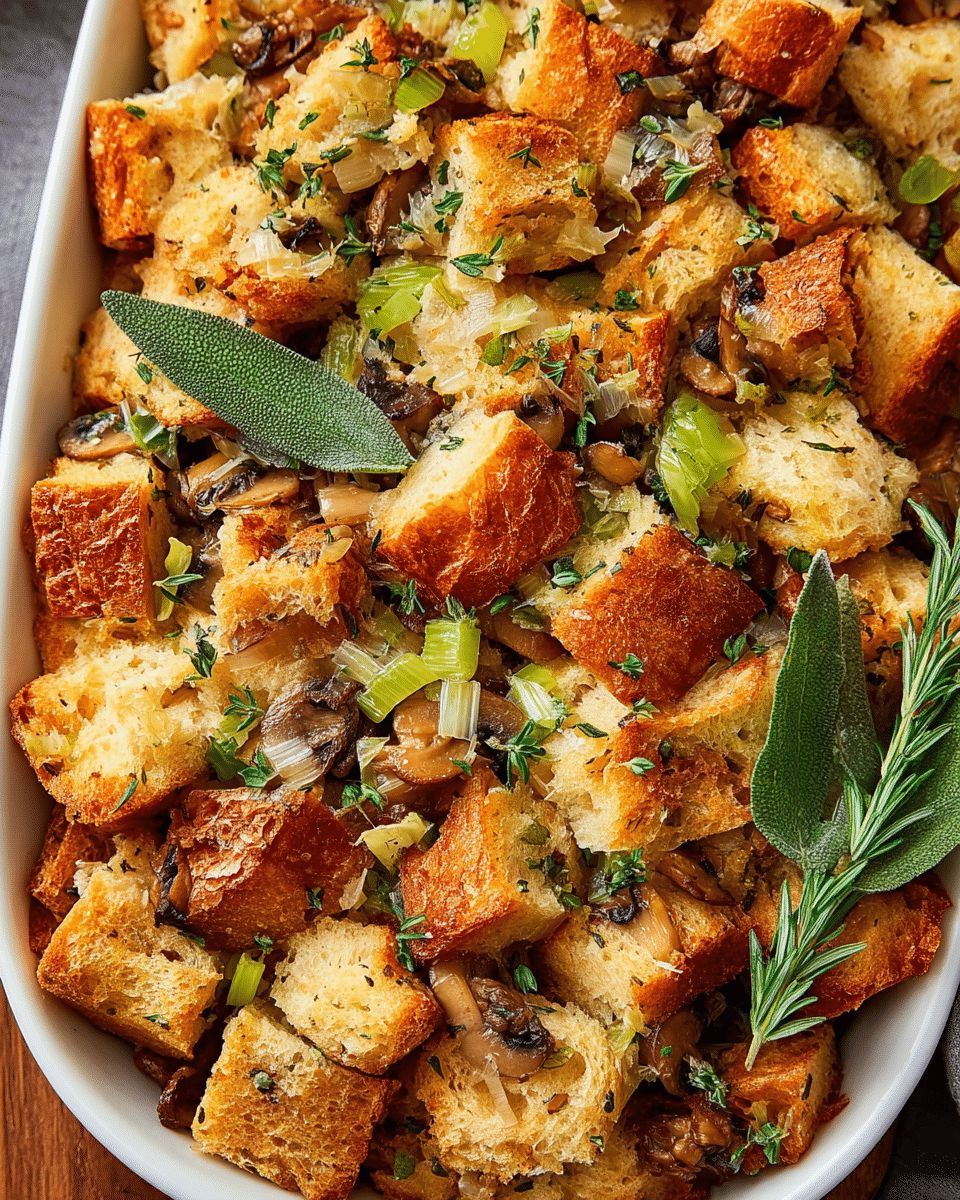
Whether it’s the centerpiece of your Thanksgiving spread or a cozy side dish for a Sunday roast, this Herbed Mushroom Bread Stuffing is guaranteed to impress. By using sourdough, fresh herbs, and the two-stage baking method, you’ve elevated a humble classic into a gourmet experience. Don’t be surprised when your guests ask for the recipe before the meal is even over!
You May Also Like
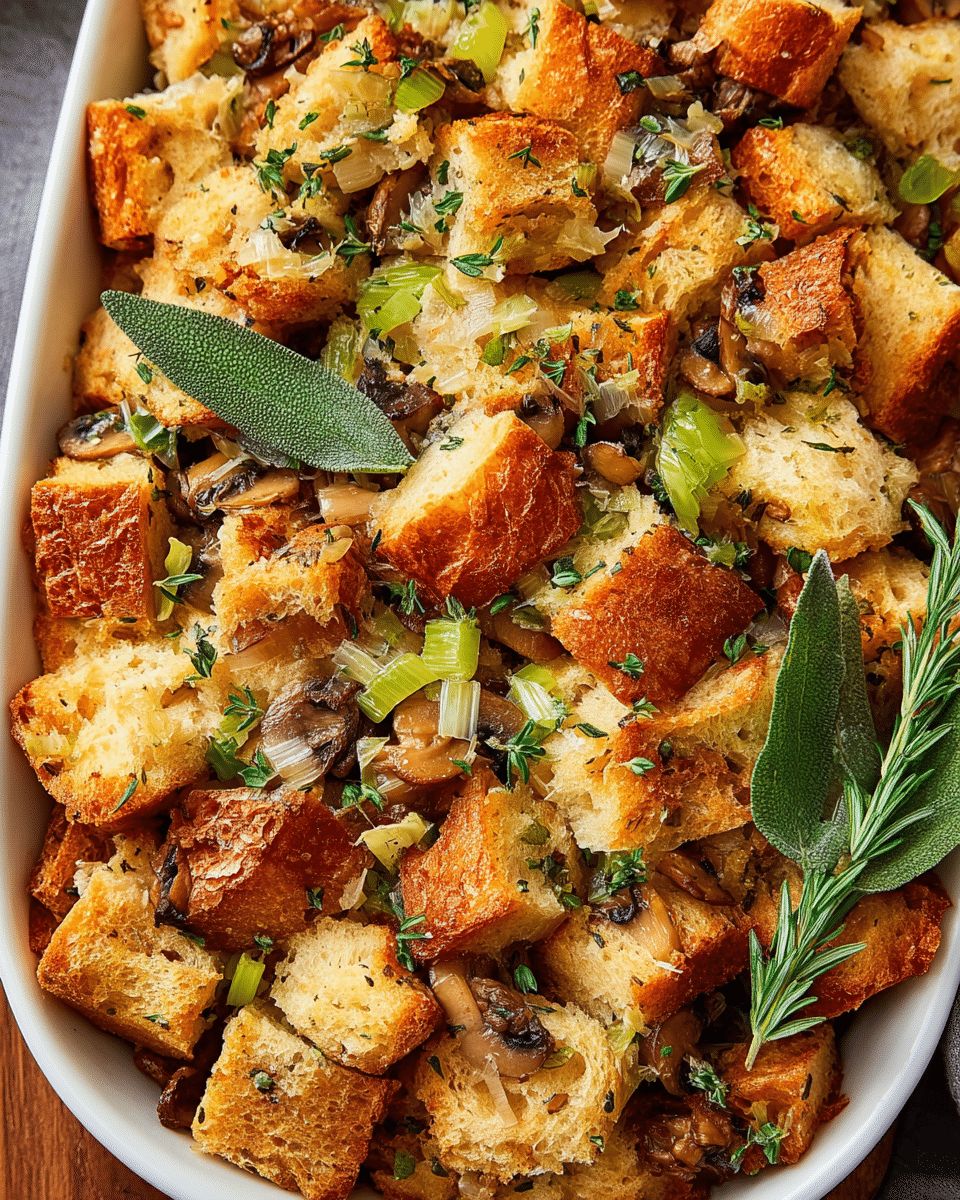
If you enjoyed this Herbed Mushroom Bread Stuffing, you might find more inspiration in our other guides: Comfort Food Favorites, Savory Mushroom Recipes, Creative Sourdough Ideas, and Festive Holiday Side Dishes.
To learn more about the culinary history and regional varieties of this classic dish, visit: Wikipedia: Stuffing
Frequently Asked Questions
Can I make this stuffing completely vegetarian?
Absolutely! This recipe is easily adaptable. Simply ensure you use a low-sodium vegetable broth instead of chicken broth. The butter and eggs already provide a rich, savory profile that pairs perfectly with the earthiness of the mushrooms, making it a satisfying vegetarian main or side.
What is the best way to fix stuffing that is too dry?
If your stuffing looks a bit parched after the initial bake, don’t worry. Drizzle an additional 1/4 to 1/2 cup of warm broth evenly over the top. Cover it back up with foil and let it sit for 5 minutes to absorb the moisture before serving. Adding a small amount of melted butter can also help revive the texture and flavor.
Can I use a different type of bread if I don’t have sourdough?
While sourdough is recommended for its sturdy structure and tangy flavor, you can substitute it with French bread, Italian loaves, or even a dense brioche. The key is to ensure whatever bread you choose is completely dried out so it can hold up against the broth and sautéed vegetables without turning into a mash.
Final Thoughts
Mastering the Herbed Mushroom Bread Stuffing is a surefire way to elevate your cooking repertoire. By focusing on quality ingredients like fresh herbs and artisanal sourdough, you transform a standard side dish into the star of the show. Whether it’s for a major holiday or a quiet Sunday dinner, this recipe provides the warmth and comfort that only a homemade classic can offer.
We hope this guide helps you create a dish that becomes a tradition in your own home. Remember, the best recipes are the ones shared with friends and family, so don’t be afraid to experiment with your own favorite flavor add-ins to make this stuffing uniquely yours.