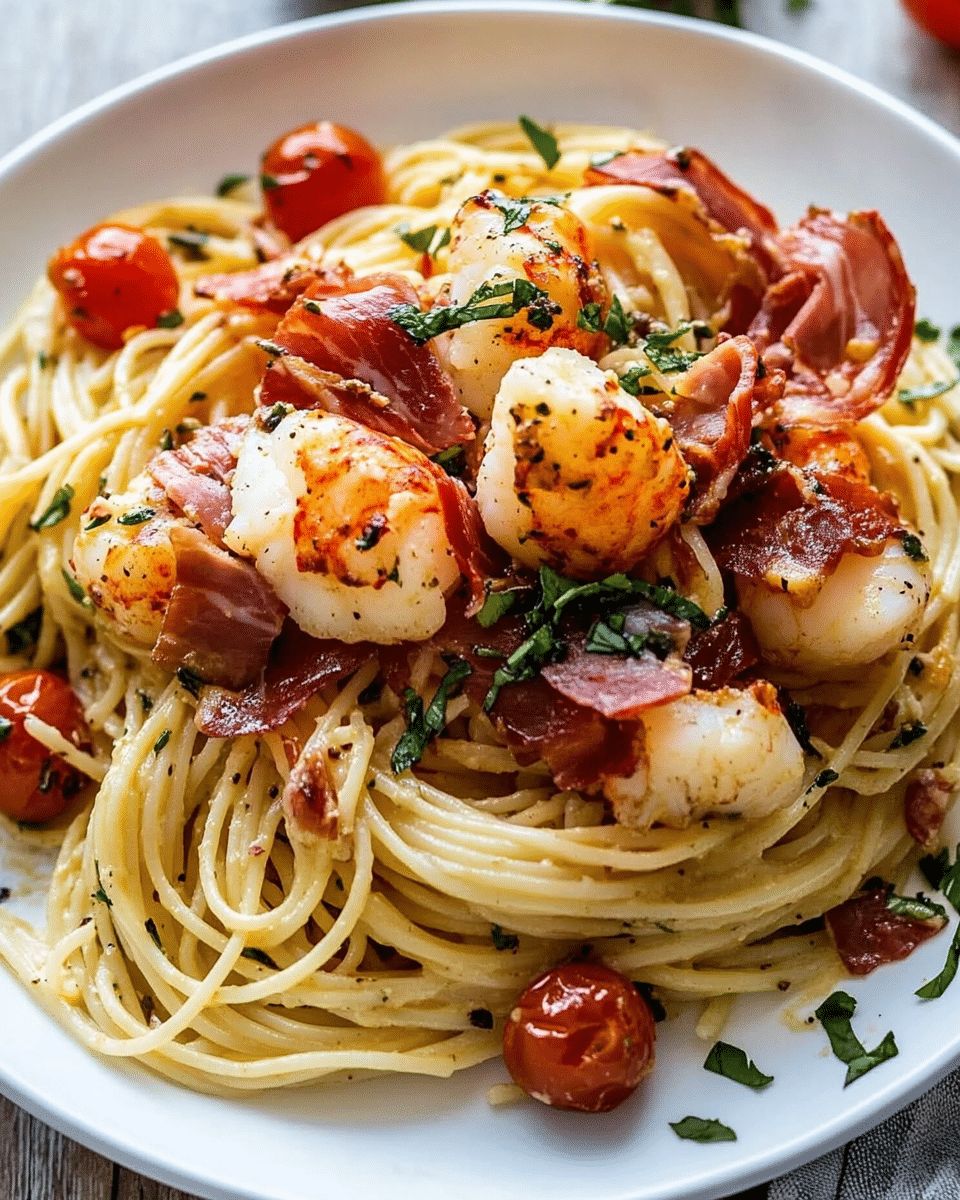
There are meals you eat simply to stay fueled, and then there are meals that feed something deeper—dishes that touch your soul and spark a sense of culinary wonder. That’s exactly what this Lobster and Prosciutto Pasta with Tomato Basil Sauce brings to your table. It is a masterful balance of coastal elegance and rustic Italian warmth.
The moment you take that first bite, you’re transported to a Mediterranean bistro where the sweetness of succulent lobster meets the salty crunch of artisan prosciutto. Whether you are planning an intimate romantic dinner, a small celebratory gathering, or simply want to treat yourself to a well-deserved indulgence, this recipe delivers a world-class dining experience without the technical complexity of a professional kitchen.

Quick Answer: This luxurious feast combines tender lobster tails and crispy prosciutto with a bright tomato basil sauce and melted Fontina cheese. It is a sophisticated, restaurant-quality meal that can be prepared at home in under 45 minutes using simple, high-quality ingredients.
Why You’ll Love This Lobster and Prosciutto Pasta Recipe
Choosing this recipe means you’re looking for more than just a bowl of pasta; you’re chasing a true sensory experience. By combining premium proteins with fresh aromatics, this dish achieves a “wow factor” that is hard to beat. Here is why this recipe deserves a spot in your permanent rotation:
The Perfect Flavor Marriage
- Lobster: Naturally sweet and tender with a delicate hint of the sea.
- Prosciutto: Adds a crispy texture and a savory, salty umami depth.
- Tomatoes and Basil: Provides the necessary acidity and garden-fresh brightness to cut through the richness.
- Fontina Cheese: A superior melting cheese that creates a silky, creamy coating for every strand of pasta.
Mastering the Ingredients: What You’ll Need
The secret to a world-class Lobster and Prosciutto Pasta lies in the quality of your components. Because this is a dish with relatively few ingredients, each one must be fresh and flavorful. Below is a comprehensive list of everything you need to gather before you heat your skillet.
The Essential Pantry and Fresh List
| Ingredient | Quantity | Role in the Dish |
|---|---|---|
| Extra virgin olive oil | ¼ cup + 3 tablespoons | Base fat and finishing silkiness |
| Salted butter | 3 tablespoons | Richness and browning agent |
| Lobster tails | 4 tails (chopped) | The star protein; sweet and tender |
| Prosciutto | 3 oz (chopped) | The salty, crispy counterpoint |
| Garlic cloves | 3 cloves (chopped) | Aromatic foundation |
| Cherry tomatoes | 1 ½ cups | Acidity and “burst” texture |
| Dry white wine | ⅓ cup | Deglazing and bright notes |
| Fontina cheese | ½ cup (cubed) | Creamy, nutty binding element |
| Fresh herbs | Basil, Thyme, Chives | Aromatic finish and color |
When selecting your lobster, look for cold-water tails if possible, as they tend to have a firmer, sweeter meat. For the wine, a Pinot Grigio or Sauvignon Blanc works best because they offer a crisp acidity that cuts through the buttery sauce without adding unwanted sweetness.
Step-by-Step Cooking Guide: From Prep to Plate
Bringing this dish to life is a rewarding process that takes about 45 minutes. Follow these structured steps to ensure your lobster stays tender and your prosciutto stays perfectly crisp.
Step 1: Preparing and Searing the Lobster
Start by removing the lobster meat from the shells and chopping it into bite-sized pieces. In a large skillet, melt 1 tablespoon of butter with 1 tablespoon of olive oil over medium heat. Add the lobster along with a pinch of smoked paprika, red pepper flakes, and one clove of garlic.
- Cook for 3 to 4 minutes only.
- Wait for the meat to turn from translucent to a vibrant, opaque white and pink.
- Immediately transfer to a plate; overcooking will make the lobster rubbery.
Step 2: Rendering the Prosciutto
Using the same skillet to capture the lobster-infused fats, add your torn or chopped prosciutto. Cook this over medium heat for about 3 to 5 minutes. You are looking for a deep golden color and a texture that shatters when bitten. Once achieved, move the prosciutto to a paper towel-lined plate to drain.
Step 3: Crafting the Tomato Basil Sauce
Add 2 more tablespoons of olive oil to the skillet. Toss in the cherry tomatoes, the remaining garlic, and fresh thyme. Season with a touch of salt and pepper.
- Sauté until the tomato skins begin to burst (approx. 5 minutes).
- Add the final 2 tablespoons of butter, allowing it to foam and brown slightly.
- Deglaze the pan with the white wine, scraping up any flavorful brown bits (fond) from the bottom.
- Whisk in the lemon juice and zest, then simmer for 2 minutes.
- Return the lobster to the pan to coat it in the sauce and remove from heat.

Step 4: The Pasta and The “Big Toss”
While your sauce simmers, boil your angel hair or linguine in heavily salted water. Cook until it is al dente—meaning it still has a slight “bite” to it. Before draining, reserve a small cup of the pasta water.
Drain the pasta and return it to the pot. Add the ¼ cup of olive oil, the cubed Fontina, fresh basil, and chives. Toss vigorously. The heat from the pasta will melt the Fontina into a light, creamy glaze. If it seems too thick, add a tablespoon of your reserved pasta water.
Expert Tips for Success and Substitutions
Even though this is a straightforward recipe, a few professional touches can elevate it from a great home meal to a restaurant-quality feast.
Pro Tip: Never rinse your pasta! The starch on the surface of the noodles is what helps the olive oil and Fontina cheese cling to the pasta, creating that luxurious mouthfeel.
Smart Substitutions
- Protein: If lobster is unavailable, large sea scallops or jumbo shrimp make excellent substitutes.
- Cheese: If you can’t find Fontina, Gruyère or a high-quality Mozzarella will provide a similar meltability.
- Spice: If you prefer a milder dish, omit the red pepper flakes and use regular paprika instead of smoked.
Storage and Reheating
Seafood pasta is notoriously difficult to reheat, but it can be done. Store the pasta and sauce in an airtight container for up to 2 days. To reheat, use a skillet over low heat and add a splash of water or chicken broth to loosen the sauce. Avoid the microwave, as it will likely overcook the lobster meat.
Perfect Wine and Side Dish Pairings
To complete the experience, you’ll want a beverage and a side that complements the richness of the lobster and the saltiness of the prosciutto.
The Best Wine Selections
| Wine Type | Specific Variety | Why it Works |
|---|---|---|
| White | Sauvignon Blanc | Zesty notes match the lemon and tomato. |
| White | Chardonnay (Unoaked) | Buttery finish complements the lobster. |
| Sparkling | Prosecco | Bubbles cleanse the palate between rich bites. |
Suggested Sides
- Garlic Bread: Essential for soaking up the leftover tomato and wine sauce.
- Arugula Salad: A simple bed of greens with a lemon vinaigrette provides a peppery crunch that balances the dish.
- Grilled Asparagus: A light, charred vegetable side that adds earthiness to the meal.

Whether you are celebrating an anniversary or simply enjoying a luxurious Sunday evening, this Lobster and Prosciutto Pasta stands as a testament to the fact that high-end dining is entirely achievable in your own kitchen. The combination of textures—from the snap of the prosciutto to the silkiness of the Fontina—creates a harmony of flavors that your guests won’t soon forget.
You May Also Like
Explore more gourmet inspirations and seafood favorites:
Luxury Seafood Pasta,
Romantic Italian Dinners,
Easy Lobster Recipes, and
45-Minute Gourmet Meals.
To learn more about the history and sustainable sourcing of these premium crustaceans, visit the Wikipedia Lobster Resource.

Frequently Asked Questions
Can I use frozen lobster tails for this recipe?
Yes, frozen lobster tails work perfectly. For the best texture, thaw them in the refrigerator overnight or place them in a sealed bag under cold running water for 30 minutes. Be sure to pat the meat dry before cooking to ensure it sears properly rather than steaming.
What can I use as a substitute for Fontina cheese?
If you cannot find Fontina, look for other high-quality melting cheeses such as Gruyère, Gouda, or even a mild Provolone. These will provide the necessary creaminess and slight nutty flavor required to bind the sauce to the pasta.
Is it possible to make this dish dairy-free?
Absolutely. You can substitute the butter with a high-quality vegan butter or simply increase the amount of extra virgin olive oil. While you would skip the Fontina, the combination of white wine, lemon, and fresh basil still creates a vibrant and sophisticated flavor profile.
Final Thoughts
Creating a Lobster and Prosciutto Pasta with Tomato Basil Sauce is more than just a cooking task; it is about bringing the atmosphere of a high-end coastal bistro into the comfort of your own home. The contrast between the sweet lobster and salty prosciutto creates a balanced profile that feels indulgent yet remains incredibly approachable for home cooks of any skill level.
Whether you are celebrating a milestone or simply want to elevate your weeknight routine, this dish serves as a reminder that great food doesn’t always require hours of labor. With fresh ingredients and a few simple techniques, you can turn a standard dinner into a truly luxurious home-cooked feast. Enjoy the process, and most importantly, enjoy every bite.