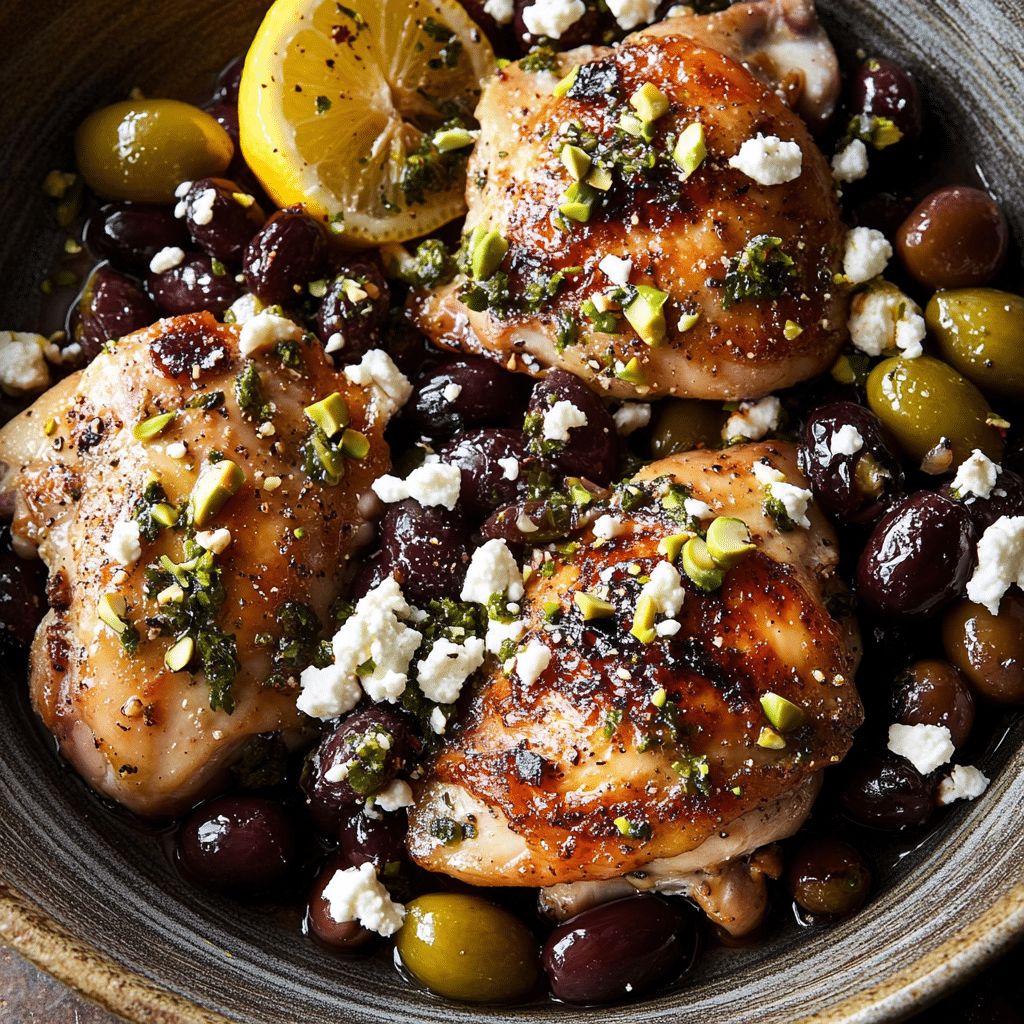
Are you looking for a new, exciting way to prepare chicken that will wow your guests or your family? If so, you’re in for a treat! Pan-Seared Chicken Thighs with Grapes, Olives, and Feta offers a perfect blend of savory, sweet, tangy, and creamy flavors, making it a versatile dish that works for both a quick weeknight dinner and a special occasion.

With crispy chicken thighs, sweet and blistered grapes, briny olives, creamy feta, and the crunch of toasted pistachios, this dish delivers layers of textures and flavors that will satisfy your cravings and elevate your meal. In this article, we’ll guide you through everything you need to know to prepare this mouthwatering dish, from choosing the right ingredients to perfecting each cooking step.
Quick Answer: This recipe features bone-in, skin-on chicken thighs seared to golden perfection in a cast-iron skillet, then finished with a Mediterranean-inspired pan sauce of caramelized grapes, Castelvetrano olives, honey, and lemon. Topped with crumbled feta and pistachios, it is a sophisticated 30-minute meal that balances sweet and savory notes beautifully.
Why Pan-Seared Chicken Thighs are the Perfect Choice
When it comes to home cooking, few cuts of meat offer the reliability and deep flavor of bone-in, skin-on chicken thighs. While chicken breasts often receive the spotlight for being lean, they can easily become dry and rubbery if overcooked by even a minute. Thighs, however, are far more forgiving thanks to their higher fat content and connective tissue.
The process of pan-searing is essential for this recipe because it allows you to render the fat from the skin slowly, resulting in a glass-like crunch that contrasts beautifully with the succulent meat underneath. This technique also creates a “fond”—those delicious browned bits at the bottom of the skillet—which serves as the flavor foundation for our grape and olive pan sauce.
The Benefits of Bone-In, Skin-On Thighs
- Unmatched Flavor: The bone acts as a thermal conductor, helping the meat cook more evenly from the inside out while imparting a richer taste.
- Superior Texture: The skin protects the meat during the high-heat searing process, ensuring the interior remains juicy.
- Culinary Versatility: This cut stands up well to bold ingredients like feta and briny olives without being overshadowed.
Essential Ingredients for Success
A world-class dish is only as good as its components. For this recipe, we balance the Mediterranean profiles of salt, acid, and fat with the natural sweetness of fruit. Choosing high-quality ingredients will significantly impact the final presentation and palate experience.
Ingredients Breakdown
| Ingredient | Recommended Type/Note | Quantity |
|---|---|---|
| Chicken Thighs | Bone-in, skin-on for maximum juice | 6 pieces (approx. 1.5 lbs) |
| Grapes | Black seedless (provides better color) | 1/2 lb |
| Olives | Castelvetrano (buttery and mild) | 1/4 cup |
| Feta Cheese | High-quality block in brine | 1/2 cup |
| Pistachios | Toasted and lightly salted | 1/4 cup |
| Honey | Wildflower or Clover | 2 tablespoons |
| Aromatics | Large shallot and fresh lemon | 1 each |
Ingredient Highlights
Castelvetrano Olives: Unlike the intense saltiness of Kalamata olives, Castelvetrano olives are known for their vibrant green color and mild, buttery flavor. They bridge the gap between the savory chicken and the sweet grapes perfectly.
Black Seedless Grapes: When cooked, these grapes don’t just soften; they blister and release a concentrated syrup that deglazes the pan. The skins provide a beautiful purple hue to the sauce, making the dish look like it came from a professional kitchen.

Step-by-Step Culinary Instructions
Precision is key to achieving that restaurant-quality finish. Follow these steps carefully, paying close attention to the heat levels of your skillet.
1. Preparation and Seasoning
Never cook chicken straight from the refrigerator. Cold meat hits a hot pan and causes the muscle fibers to tighten, resulting in a tougher texture. Let your chicken rest at room temperature for at least 15 minutes. During this time, use a paper towel to pat the skin extremely dry. Any moisture left on the skin will create steam, preventing that coveted golden-brown crunch.
- Pat the chicken thighs dry on all sides.
- Season generously with Kosher salt and freshly cracked black pepper.
- Slice your shallots thinly and halve your lemon.
2. Mastering the Sear
Place your cast-iron skillet over medium-low heat. We use a lower heat than usual for searing because we want to “render” the fat. This allows the skin to become thin and crispy rather than just burning the surface.
- Add a thin coat of olive oil to the skillet.
- Place thighs skin-side down. Do not crowd the pan; work in batches if necessary.
- The Golden Rule: Do not touch or move the chicken for at least 15 minutes. The skin will naturally release from the pan once it is perfectly seared.
- Flip and cook the meat side for 6–8 minutes until the internal temperature reaches 165°F.
3. Creating the Mediterranean Pan Sauce
Once the chicken is removed and resting, the pan is full of liquid gold. We will use this to caramelize our lemons and fruit. Caramelizing the lemon slices reduces their sharp acidity and turns them into an edible, sweet-tart garnish.
- Sauté lemon slices for 1 minute per side, then remove.
- Add shallots to the rendered fat and cook until translucent.
- Toss in the grapes and olives, cooking until the grapes begin to “pop” and soften.
- Stir in the honey and lemon juice to create a glossy, thick glaze.
4. Final Assembly
Return the chicken to the pan briefly to coat the bottom in the sauce, but keep the skin side up to preserve its crispness. Move the mixture to a large platter for a family-style presentation.
Pro Tips for Gourmet Results
To truly elevate this dish from a standard dinner to an elegant feast, keep these expert tips in mind:
- Toast Your Nuts: Always toast your pistachios in a dry pan for 2–3 minutes before chopping. This releases essential oils that provide a much deeper nutty aroma.
- Fresh Feta Matters: Avoid pre-crumbled feta. Buy a block stored in brine and crumble it yourself. The texture is significantly creamier and less “chalky.”
- Rest the Meat: Let the chicken rest for 5 minutes before serving. This allows the juices to redistribute, ensuring every bite is moist.
Nutritional Overview
This meal is a fantastic example of the Mediterranean diet, focusing on lean protein, healthy fats from olives and nuts, and antioxidant-rich fruits.
| Metric | Value per Serving |
|---|---|
| Calories | 485 kcal |
| Protein | 32g |
| Healthy Fats | 28g |
| Carbohydrates | 18g |
| Vitamin C | 25% DV |
You May Also Like
Explore more delicious inspirations: Mediterranean dinner recipes, one-pan chicken meals, cast iron skillet techniques, and healthy poultry dishes.
For more information on the nutritional profile of poultry, visit the U.S. Department of Agriculture (USDA).
Frequently Asked Questions
Can I use boneless, skinless chicken thighs instead of bone-in?
Yes, you can substitute boneless, skinless chicken thighs for a faster cooking time. However, be aware that they will cook much quicker (usually 5-7 minutes per side) and you will miss out on the specific texture provided by the crispy skin. Keep a close eye on the internal temperature to ensure they remain juicy.
What are the best substitutes for Castelvetrano olives?
If you cannot find Castelvetrano olives, the best substitute is Cerignola olives due to their similar mild and buttery profile. If you prefer a more traditional salty punch, Kalamata olives work well, though they will shift the flavor profile to be more intensely briny rather than buttery.
Can I make this dish ahead of time for a dinner party?
While this dish is best served fresh to maintain the crispy skin of the chicken, you can prepare the components in advance. Slice the shallots, toast the pistachios, and measure out your honey and lemon juice. You can also sear the chicken partially and finish it in the oven just before guests arrive to save stovetop space.
Final Thoughts
The beauty of Pan-Seared Chicken Thighs with Grapes, Olives, and Feta lies in its sophisticated balance. It manages to feel like a gourmet restaurant meal while requiring only one primary skillet and about 45 minutes of your time. The combination of sweet blistered grapes and salty feta creates a “sweet-savory” harmony that is sure to impress anyone at your table.
Whether you are looking to spice up your weeknight routine or hosting an elegant weekend gathering, this recipe is a reliable showstopper. Don’t forget to garnish generously with those toasted pistachios for the perfect final crunch. Happy cooking!