
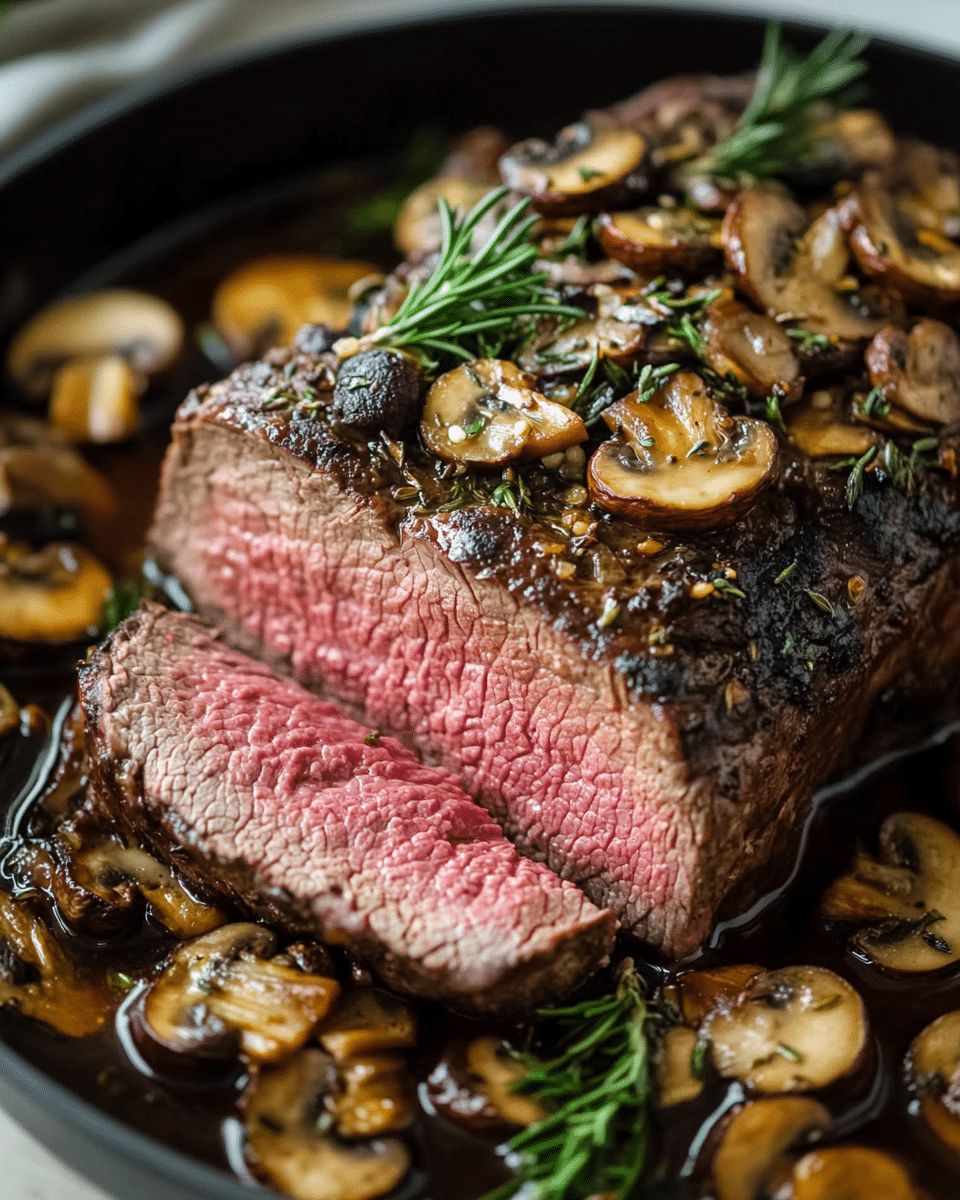
Imagine walking into your kitchen, the aroma of garlic, rosemary, and sizzling butter filling the air. You’re about to create something extraordinary—a perfectly seared Rib Eye roast paired with a rich, silky mushroom sauce that will impress anyone lucky enough to join you for dinner. Whether it’s a celebratory feast or a cozy family meal, this dish is destined to become a standout in your culinary repertoire.
The beauty of this recipe lies in its balance of simplicity and elegance. By mastering a few key techniques—like achieving a high-heat sear in a cast iron skillet and allowing the meat to rest to preserve its juices—you can recreate the luxury of a high-end steakhouse right in your own dining room. Let’s dive into the details of how you can master this show-stopping centerpiece.
Quick Answer: To achieve the perfect Rib Eye roast, sear the meat in a hot skillet for 5-8 minutes per side, apply a garlic-rosemary herb paste, and roast at 350°F (175°C) until the internal temperature hits 135°F for medium-rare. Finish the dish with a savory mushroom sauce made by reducing beef stock with pan drippings and butter.
Understanding the Cut: Why Rib Eye Roast is the Ultimate Showstopper
When it comes to selecting a centerpiece for a high-stakes dinner or a festive holiday gathering, the Rib Eye Roast (also known as Prime Rib when it is bone-in) stands in a league of its own. This specific cut is sourced from the rib primal of the cow, a region known for its incredible fat marbling and deep, beefy flavor. Unlike leaner cuts like the tenderloin, which relies on a sauce for its richness, the Rib Eye is self-basting. As it roasts, the intramuscular fat melts, saturating the meat with moisture and flavor.
For this recipe, we are utilizing a boneless Rib Eye roast. This choice allows for more even seasoning and easier slicing once the meat has finished resting. By pairing this luxurious cut with an earthy, pungent garlic and rosemary paste, we bridge the gap between simple home cooking and gourmet restaurant standards. The addition of a garlic rosemary mushroom sauce provides a silky, savory contrast that highlights the natural sweetness of the beef.

Ingredients Checklist for Your Gourmet Roast
To achieve the best results, quality is paramount. Seek out a roast with a thick fat cap and visible white flecks of marbling throughout the meat. Below is a comprehensive breakdown of what you will need to prepare this masterpiece.
The Rib Eye Roast and Herb Paste
- 3 pounds Boneless Rib Eye Roast: Ensure it is at room temperature before cooking.
- 1/4 cup Fresh Rosemary: Chopped finely; fresh is much better than dried here.
- 1/4 cup Garlic: Approximately 20 cloves, finely minced to create a pungent paste.
- 2 tablespoons Olive Oil: To bind the herbs and garlic together.
- 2 tablespoons Vegetable Oil: For the high-heat searing process.
- Kosher Salt & Freshly Ground Black Pepper: Be generous; this is a large piece of meat.
The Decadent Mushroom Sauce
- 4 cups Sliced Mushrooms: Cremini or Button mushrooms work best for consistent cooking.
- 4 tablespoons Unsalted Butter: Divided into two portions for sautéing and finishing.
- 1 cup Beef or Chicken Stock: Used to deglaze the skillet and build the base.
- Fresh Rosemary Garnish: To add a pop of color and aroma to the final platter.
| Ingredient Component | Primary Function | Best Substitute |
|---|---|---|
| Fresh Rosemary | Aromatic infusion | Fresh Thyme or Sage |
| Garlic Cloves | Bold savory base | Garlic Confit or Shallots |
| Vegetable Oil | High-smoke point sear | Grapeseed or Avocado Oil |
| Beef Stock | Sauce volume/Depth | Red Wine (Cabernet) |
Essential Equipment for a Perfect Sear
While you can make a roast in a standard roasting pan, using a cast iron skillet is the secret weapon of professional chefs. Cast iron retains heat more efficiently than stainless steel or aluminum, ensuring that when the cold meat hits the pan, the temperature doesn’t drop significantly. This is crucial for the Maillard reaction—the chemical reaction between amino acids and reducing sugars that gives browned food its distinctive flavor.
- 12-inch Cast Iron Skillet: Large enough to hold the roast comfortably.
- Digital Meat Thermometer: Essential for precision; never rely on timing alone.
- Wooden Spoon: For scraping up the fond (browned bits) during the sauce-making phase.
- Separate Sauté Pan: Used to cook the mushrooms simultaneously while the meat rests.

The Preparation: Building the Flavor Foundation
The first step to a successful roast happens long before the oven is turned on. You must pat the roast dry with paper towels. Any moisture on the surface of the meat will create steam when it hits the hot oil, preventing that crusty, golden-brown exterior we are looking for. Once dried, season it aggressively. Because the roast is thick, the interior remains unseasoned, so the exterior “crust” needs enough salt and pepper to season every bite.
The garlic rosemary paste is your primary flavor driver. By mixing the minced garlic and chopped rosemary with olive oil, you create a protective, flavorful coating. However, do not apply this paste before searing. Garlic and rosemary have low burn points; if you sear the roast with the paste on it, the garlic will turn bitter and the herbs will scorch. We apply the paste after the sear but before it enters the oven.
Step-by-Step Prep Summary
- Preheat your oven to 350°F (175°C).
- Dry the meat and season with salt and pepper on all sides.
- Whisk the rosemary, garlic, and olive oil into a thick slurry.
Mastering the Sear: Locking in Juices
Heat your vegetable oil in the cast iron skillet over medium-high heat. You are looking for the oil to be just smoking. Place the roast in the skillet—it should sizzle loudly. Sear each side for 5 to 8 minutes. Do not rush this process. You aren’t just looking for a bit of color; you want a deep, mahogany-colored crust. This “bark” provides the texture that makes a roast truly memorable.
Once seared, remove the skillet from the burner. This prevents the bottom of the roast from overcooking while you apply the herb paste. Carefully spread your garlic-rosemary mixture over the top and sides of the roast. The heat from the meat will immediately start to bloom the aromatics in the garlic and rosemary, creating an incredible scent in your kitchen.

The Roasting Phase and Temperature Management
Place the entire skillet into the oven. The roasting time typically ranges from 1 to 1.5 hours for a 3-pound roast, but variables like oven calibration and the shape of the meat can change this. This is where your meat thermometer becomes non-negotiable. Insert the probe into the thickest part of the roast, ensuring it isn’t touching the bottom of the pan.
| Desired Doneness | Pull Temp (From Oven) | Final Temp (After Resting) |
|---|---|---|
| Rare | 120°F (49°C) | 130°F (54°C) |
| Medium-Rare | 130°F – 135°F (57°C) | 140°F – 145°F (63°C) |
| Medium | 140°F – 145°F (63°C) | 150°F – 155°F (68°C) |
Pro Tip: Always pull your meat 5 to 10 degrees below your target final temperature. Carry-over cooking occurs as the residual heat on the surface continues to cook the center while the meat rests.
Crafting the Silky Mushroom Sauce
While the roast sits on a cutting board, it is time to build the sauce. The skillet now contains rendered beef fat and browned bits of garlic and herb—this is liquid gold. Set the skillet on the stovetop and pour in the stock. Use your wooden spoon to scrape the bottom of the pan; this process is called deglazing.
In your separate sauté pan, the mushrooms should be cooked in butter until they are deeply browned. Mushrooms are like sponges; they will first release their water and then re-absorb the butter and seasonings. Once they are browned, add them to the reducing stock in the cast iron skillet. The final touch is mounting with butter. Adding cold butter to the simmering sauce and whisking it in creates an emulsion, giving the sauce a professional, glossy finish and a velvety mouthfeel.
Resting and Presentation
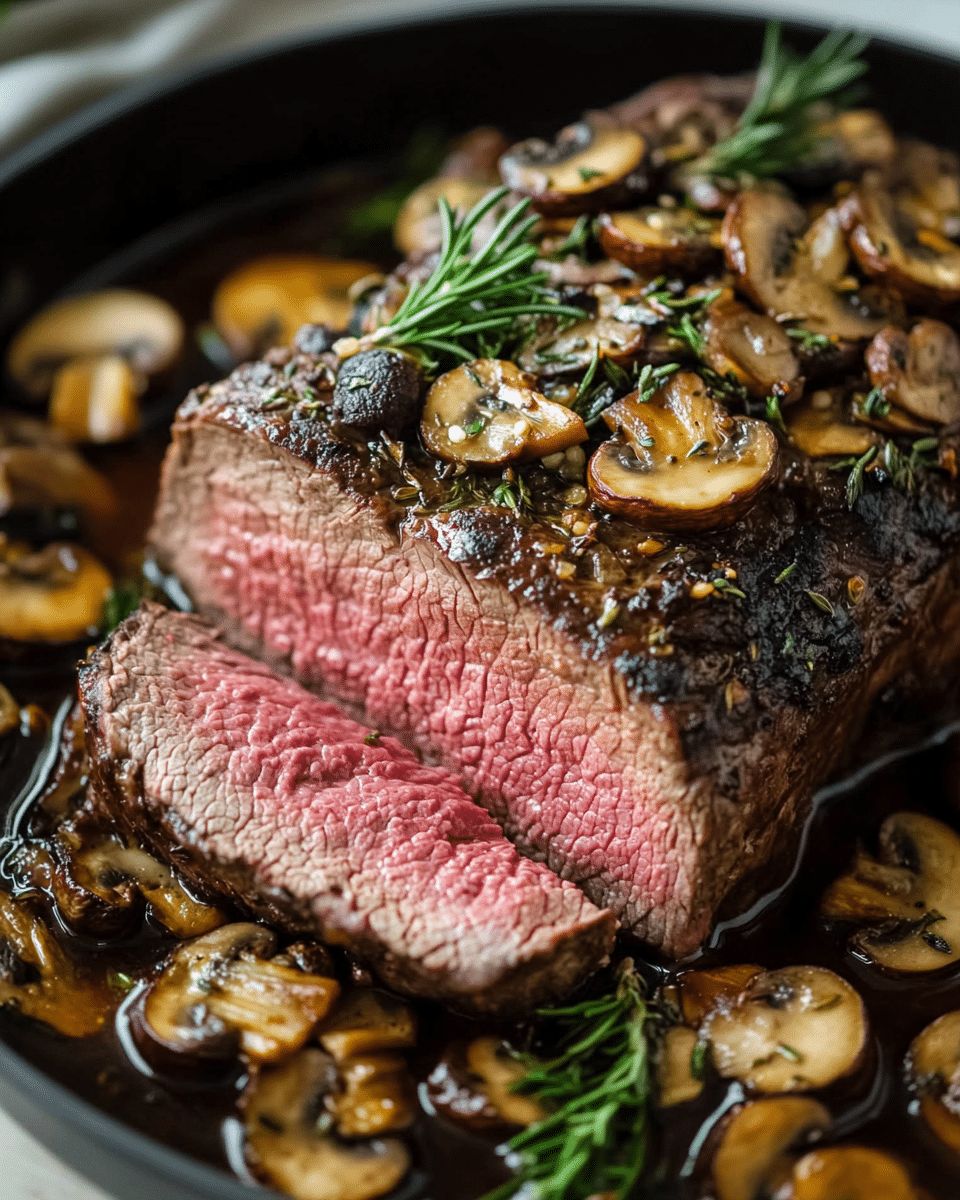
Resting the meat for at least 10 to 15 minutes is the difference between a juicy steak and a dry one. If you cut into the roast immediately, the high-pressure juices will pour out onto the board. During the rest, the muscle fibers relax and re-absorb those juices. Slice the roast into thick, 3/4-inch slabs and arrange them on a platter. Pour the mushroom sauce directly over the center of the meat, allowing it to pool slightly at the base.
Final Serving Suggestions
- Garnish: Use sprigs of fresh rosemary to emphasize the flavor profile.
- Sides: Serve with garlic mashed potatoes or honey-glazed carrots to soak up the extra sauce.
- Wine Pairing: A bold Cabernet Sauvignon or an earthy Pinot Noir will cut through the richness of the fat and mushrooms perfectly.
You May Also Like
Explore more delicious recipes and kitchen tips on our blog: Cajun Shrimp Pasta, Cheesy Chicken Casseroles, Classic Meatloaf, and Perfect Steak Tips.
Source: To learn more about the different grades of beef and primal cuts, visit the Wikipedia page on Standing Rib Roast.
Frequently Asked Questions
What is the best way to ensure the Rib Eye roast stays juicy?
The most critical step is resting the meat for at least 10 to 15 minutes after it comes out of the oven. This allows the muscle fibers to relax and reabsorb the internal juices. If you slice it too early, those flavorful juices will run out onto your cutting board, leaving the meat dry.
Can I use a bone-in Rib Eye instead of a boneless one?
Yes, you can certainly use a bone-in roast (often called a Prime Rib). The bone acts as an insulator, which can result in even juicier meat, but it may require an additional 15–20 minutes of roasting time. Ensure your meat thermometer is inserted into the thickest part of the meat without touching the bone for an accurate reading.
What should I do if my garlic rosemary mushroom sauce is too thin?
If the sauce hasn’t reached your desired consistency after simmering, continue to reduce it over medium heat for a few more minutes. Alternatively, you can whisk in an extra tablespoon of cold butter at the very end or use a small cornstarch slurry (one teaspoon of cornstarch mixed with one teaspoon of water) to thicken it instantly.
Final Thoughts
Mastering a Perfectly Seared Rib Eye Roast is a rewarding experience that brings the sophistication of a high-end steakhouse into your own kitchen. By focusing on quality ingredients—like fresh rosemary, pungent garlic, and a well-marbled cut of beef—and respecting the technical stages of searing and resting, you can create a meal that is both comforting and deeply impressive.
Whether you are serving this for a holiday gathering or a special Sunday dinner, the addition of the silky mushroom sauce ensures every bite is rich and savory. We hope this guide helps you feel confident at the stovetop and the oven. Happy cooking, and enjoy your feast!


