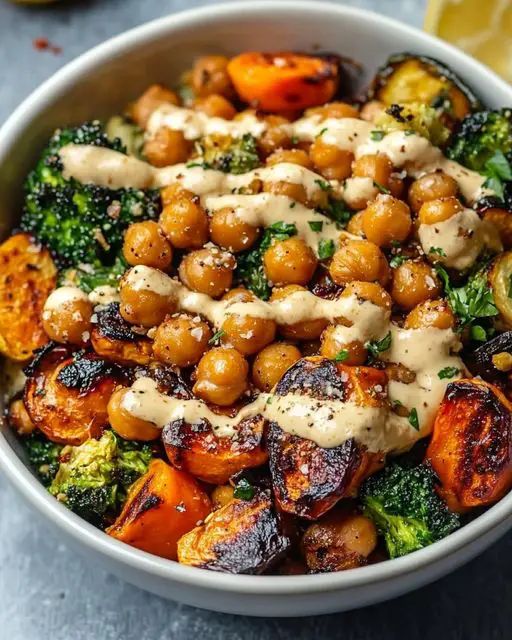
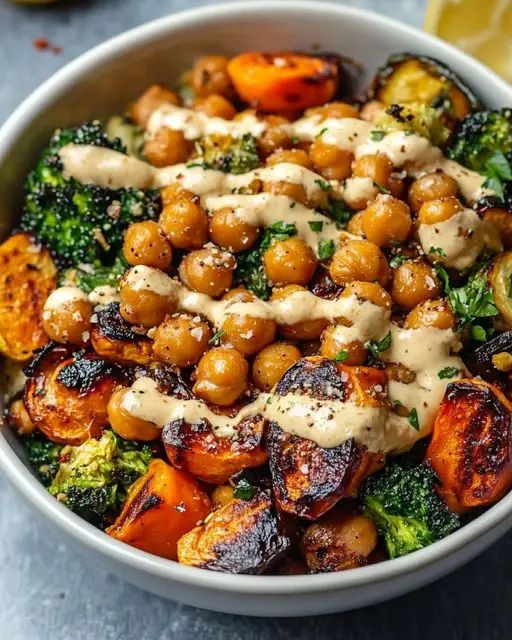
Looking for a wholesome and hearty meal that’s as nutritious as it is delicious? This Roasted Vegetable and Chickpea Bowl with Maple Dijon Tahini Dressing combines the earthy goodness of autumn vegetables with the rich, creamy tang of a unique homemade dressing. It is the ultimate comfort food for those who want to feel energized rather than weighed down after dinner.
Whether you are looking for a vibrant, plant-based centerpiece for your mid-week meals or a reliable make-ahead lunch, this recipe delivers on every front. The natural sugars of the sweet potatoes and Brussels sprouts caramelize beautifully in the oven, creating a savory-sweet foundation that pairs perfectly with the protein-packed crunch of roasted chickpeas.
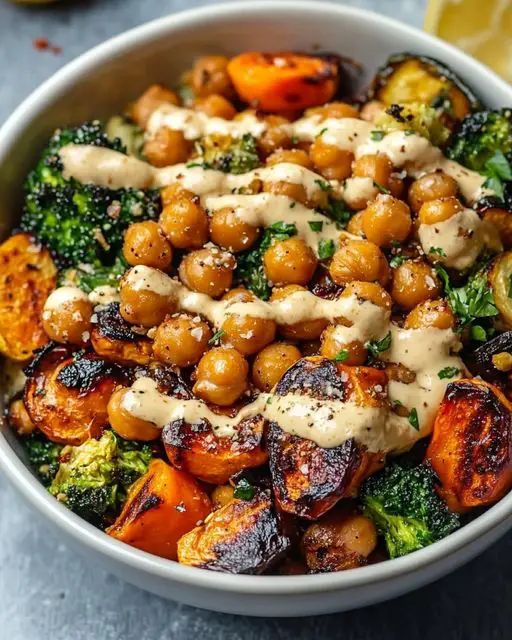
Quick Answer: This Roasted Vegetable and Chickpea Bowl is a nutrient-dense, plant-based meal featuring caramelized sweet potatoes, broccoli, and Brussels sprouts. It is topped with crispy chickpeas and a signature Maple Dijon Tahini Dressing, making it an ideal choice for healthy meal prepping and vegan-friendly dinners.
Why This Roasted Vegetable Bowl Works
As a World-Class SEO Expert and Content Stylist, I’ve seen countless “healthy bowls,” but this one stands out due to its balance of macronutrients and sophisticated flavor profile. By combining high-fiber vegetables with healthy fats from the tahini and plant-based protein from the chickpeas, you create a meal that stabilizes blood sugar and keeps you full for hours.
Ideal for Whom?
This recipe is perfect for anyone looking to incorporate more plant-based dishes into their diet without sacrificing flavor. It’s also a dream for meal preppers seeking easy, reheatable options that maintain their texture and taste in the fridge. Whether you’re a busy professional, a health-conscious eater, or simply a lover of bold, roasted flavors, this bowl is designed for you.
Essential Ingredients and Equipment for Your Veggie Bowl
To create a truly World-Class vegetable bowl, the quality of your ingredients is paramount. This recipe focuses on high-nutrient density and flavor synergy. We have categorized the components to help you organize your kitchen prep efficiently.
The Produce Foundations
The core of this bowl relies on hardy vegetables that can withstand high-heat roasting without losing their structural integrity. These vegetables provide the essential fiber and complex carbohydrates needed for a sustaining meal.
- Broccoli Florets (2 cups): Rich in Vitamin C and K, these become delightfully nutty when the edges are charred.
- Brussels Sprouts (2 cups): Halved to maximize surface area for caramelization.
- Sweet Potato (1 medium-large): Cut into 1-inch pieces to ensure they cook at the same rate as the greens.
- Canned Chickpeas (15 oz): The primary plant-based protein source, drained and rinsed thoroughly.
The Liquid Gold: Maple Dijon Tahini Dressing
The dressing is what elevates this dish from a simple side to a gourmet main course. It balances the “four pillars” of flavor: fat (tahini), acid (lemon and vinegar), salt, and sweet (maple syrup).
- Tahini (1/2 cup): Provides a creamy, sesame-based fat profile.
- Dijon Mustard (1/2 cup): Adds a sharp, vinegary punch and acts as an emulsifier.
- Lemon Juice (2 tbsp): Brightens the heavy fats with citrus acidity.
- Maple Syrup (2 tbsp): Counteracts the bitterness of the tahini and the sulfurous notes of the sprouts.
- Apple Cider Vinegar (1/4 cup): Adds a fermented tang that aids digestion.
Required Kitchen Tools
Before you begin, ensure you have the following equipment ready to streamline the cooking process:
| Tool Name | Primary Purpose |
|---|---|
| Large Baking Sheet | To roast vegetables without overcrowding (which causes steaming). |
| Second Baking Sheet | Exclusively for chickpeas to ensure maximum crispiness. |
| Whisk | Essential for emulsifying the thick tahini into a smooth dressing. |
| Mixing Bowls | One medium for dressing and one large for tossing vegetables. |
Step-by-Step Preparation Guide
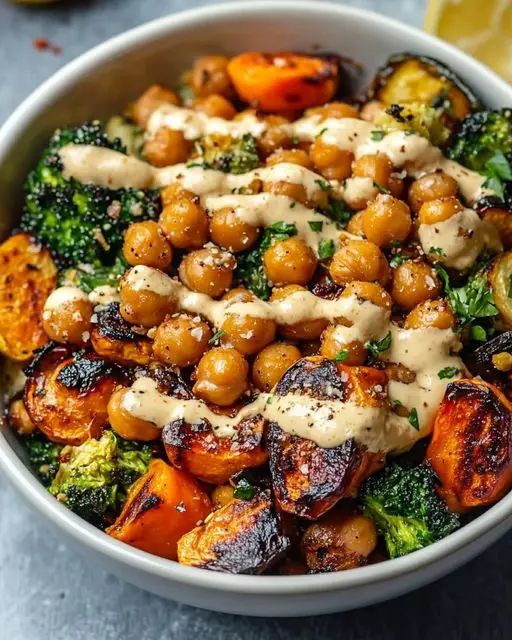
Timing is everything when roasting. To ensure your Roasted Vegetable and Chickpea Bowl comes together perfectly, follow this chronological sequence of events. This ensures that the components are hot and ready at the same time.
Step 1: Preparing the Vegetable Base
Preheat your oven to 400°F (200°C). This high temperature is non-negotiable for achieving the Maillard reaction—the chemical process that gives roasted vegetables their sweet, savory crust.
- Arrange the broccoli, Brussels sprouts, and sweet potato pieces on the large baking sheet.
- Drizzle generously with high-smoke-point olive oil.
- Season with garlic powder, salt, and freshly ground black pepper.
- Toss with your hands to ensure every nook and cranny of the broccoli florets is coated.
Step 2: The Secret to Crispy Chickpeas
Many home cooks struggle with soggy chickpeas. The secret is removing as much moisture as possible before they hit the oven.
Expert Tip: After rinsing your chickpeas, pat them dry with a clean kitchen towel. If a few skins come off, discard them—this actually helps the heat penetrate the bean faster for a better crunch!
- Place dried chickpeas on a separate baking sheet.
- Season with olive oil and a dash of garlic powder.
- Roast alongside the vegetables for approximately 15 minutes.
Step 3: Whisking the Signature Dressing
While the oven does the heavy lifting, you can prepare the Maple Dijon Tahini Dressing. Tahini can vary in thickness by brand, so you must be prepared to adjust on the fly.
- Combine tahini, Dijon, lemon juice, maple syrup, and apple cider vinegar in a bowl.
- Whisk vigorously. The mixture may “seize” and become thick at first—this is normal.
- Slowly add 1/2 cup of water (one tablespoon at a time) until the dressing reaches a pourable, ribbon-like consistency.
- Season with salt and pepper to taste.
Nutritional Breakdown and Comparison
Understanding what you are putting into your body is a key part of the “Cook with Feast” philosophy. This bowl is designed to be a complete meal, offering a balance of fiber, healthy fats, and protein.
Why These Veggies?
The combination of cruciferous vegetables (broccoli/sprouts) and root vegetables (sweet potato) provides a diverse array of phytonutrients. Below is a comparison of why we chose these specific ingredients over common alternatives:
| Ingredient | Primary Benefit | Why not a substitute? |
|---|---|---|
| Sweet Potato | Beta-carotene & Fiber | Higher nutrient density than white potatoes. |
| Brussels Sprouts | Glucosinolates (Antioxidants) | Roasts better and stays firmer than cabbage. |
| Chickpeas | Plant Protein & Iron | Holds its shape better during roasting than lentils. |
| Tahini | Healthy Monounsaturated Fats | Creamier texture than almond or peanut butter. |
Optimizing Flavor: Tips for Success
Even a simple bowl can be ruined by small mistakes. Here is how to ensure your dish is Style-Expert approved every time you make it.
Size Matters in Roasting
If your sweet potato chunks are too large and your broccoli florets are too small, you will end up with raw potatoes and burnt broccoli. Aim for 1-inch cubes for the potatoes and bite-sized florets for the broccoli. This uniformity ensures that everything reaches peak tenderness at the 20-25 minute mark.
Managing the “Crowding” Effect
If the vegetables are touching each other too closely on the pan, they will release steam and become mushy rather than crispy. If you are doubling this recipe, use two separate large pans for the vegetables rather than trying to squeeze them onto one.
Serving and Assembly
Don’t just dump the dressing on top! For a professional presentation, follow these steps:
- Layering: Start with a base of the roasted sweet potatoes to provide a sturdy foundation.
- The “Green” Layer: Add the broccoli and Brussels sprouts on top.
- The Crunch: Sprinkle the chickpeas last so they stay crispy.
- The Drizzle: Use a spoon to create a zig-zag pattern with the dressing for a “restaurant-style” aesthetic.
Pro Insight: If you have leftovers, keep the dressing in a separate jar. Drizzling it on just before eating prevents the roasted vegetables from getting soggy during storage.
Frequently Asked Questions (FAQ)
Can I substitute the Tahini?
If you have a sesame allergy, you can use sunflower seed butter for a similar earthy flavor. Alternatively, a cashew butter thinned with a bit of extra lemon juice works well, though it will be slightly sweeter than the original version.
Is this recipe Gluten-Free and Vegan?
Yes! As written, this recipe is naturally 100% Vegan and Gluten-Free. Just ensure your Dijon mustard is certified gluten-free, as some brands use thickeners that contain wheat.
How long does it last in the fridge?
This bowl is a meal-prepper’s dream. It stays fresh in an airtight container for up to 4 days. We recommend reheating the vegetables and chickpeas in an air fryer or oven for 5 minutes at 350°F to restore the roasted texture, rather than using a microwave which can make them soft.
You May Also Like
If you enjoyed this vibrant meal, explore more of our high-protein, plant-based favorites: Hearty Vegan Bowls, Efficiency-Focused Meal Prep Ideas, and Creamy Tahini Sauce Variations.
To learn more about the nutritional density of legumes and the history of this versatile crop, check out the entry on Chickpeas via Wikipedia.
Frequently Asked Questions
Can I customize the vegetable selection based on the season?
Absolutely! This Roasted Vegetable and Chickpea Bowl is highly adaptable. In the summer, you can swap sweet potatoes for zucchini or bell peppers. In the winter, hearty root vegetables like parsnips, carrots, and red onions work beautifully with the Maple Dijon Tahini Dressing.
What is the best way to reheat this bowl without it getting soggy?
To maintain the best texture, we recommend reheating the roasted vegetables and chickpeas in an air fryer or oven at 350°F (175°C) for about 5-8 minutes. While the microwave is faster, it tends to steam the vegetables, causing them to lose their characteristic roasted crunch.
Is there a way to add even more protein to this dish?
While chickpeas provide a solid base of plant-based protein, you can further boost the amino acid profile by serving this bowl over a bed of quinoa or farro. For those who aren’t strictly vegan, adding a soft-boiled egg or some crumbled feta cheese provides an extra savory kick and additional protein.
Final Thoughts
The Roasted Vegetable and Chickpea Bowl with Maple Dijon Tahini Dressing is more than just a healthy lunch; it is a masterclass in balancing textures and complex flavors. By utilizing high-heat roasting and a punchy, emulsified dressing, you turn humble pantry staples like canned chickpeas and root vegetables into a gourmet dining experience right in your own kitchen.
Whether you are strictly plant-based or simply looking to add more color to your weekly rotation, this bowl offers the perfect combination of satisfaction and nutrition. Don’t forget to drizzle that dressing generously—it’s the secret ingredient that ties every roasted bite together. Happy cooking!