When you are searching for a meal that feels like a warm embrace on a chilly evening, few combinations rival the rustic charm of Skillet Bratwurst with Sauerkraut, Apples, and Onions. This classic German-inspired comfort dish has found a permanent home in American kitchens, particularly during the crisp days of autumn. It is a masterful study in balance: the deep, savory richness of the seared sausages is cut by the sharp tang of fermented cabbage, while the sweetness of softened apples and caramelized onions rounds out every bite.
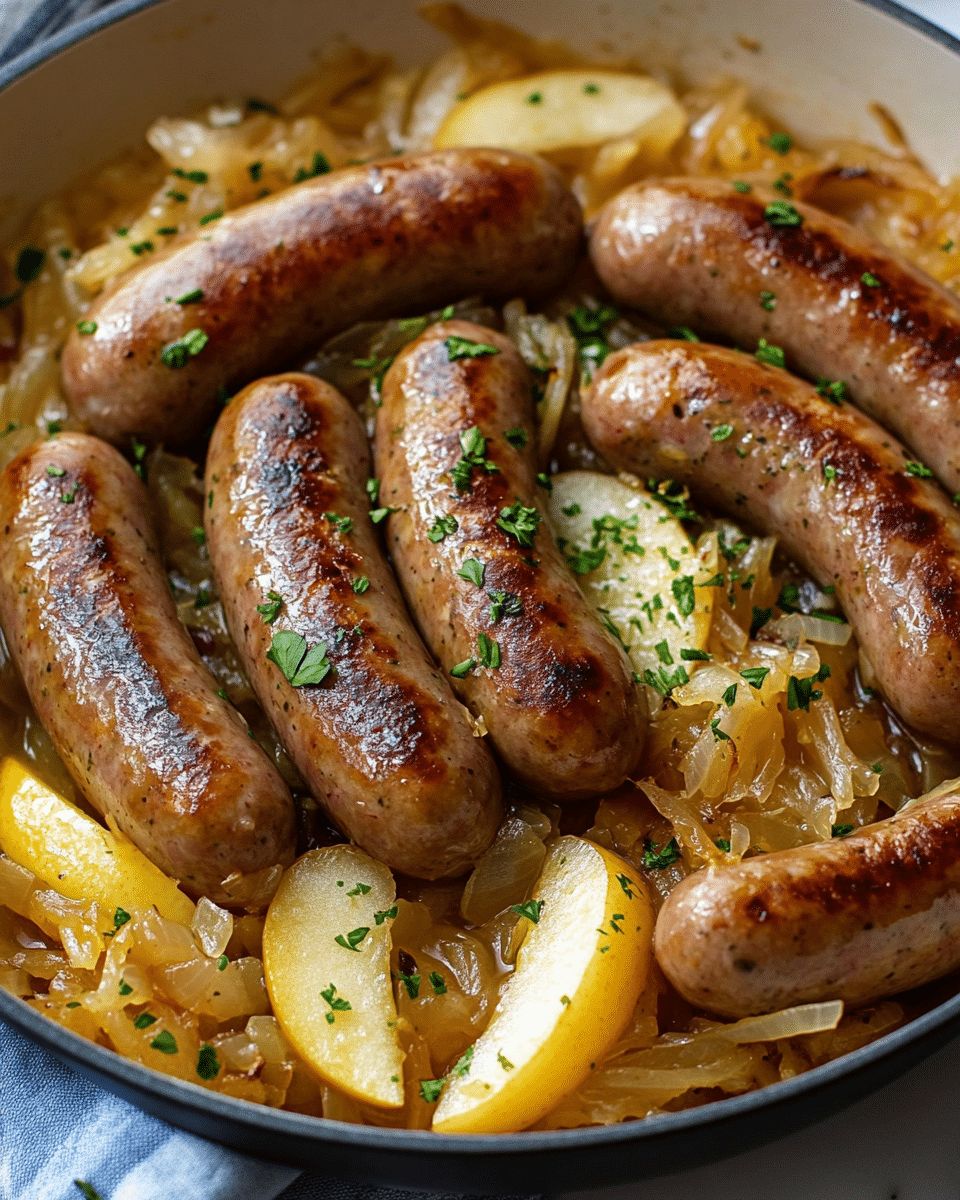
At cookwithfeast.com, we love this recipe because it proves that world-class flavor does not require a complex list of ingredients. By using just one skillet, you can transform simple pantry staples into a tavern-style feast that is as impressive as it is effortless. Whether you are celebrating Oktoberfest or just need a satisfying Tuesday night dinner, this dish brings a sense of tradition and heart to the table that everyone will crave again and again.
Quick Answer: To make the best Bratwurst with Sauerkraut, apples, and onions, brown the sausages first in a heavy skillet, then sauté sliced onions and tart apples until softened. Stir in drained sauerkraut and a pinch of sugar, nestle the brats back into the mixture, and simmer covered for 15–20 minutes until the sausages are juicy and the flavors have perfectly melded.
The Harmony of One-Skillet Cooking: Why This Recipe Works
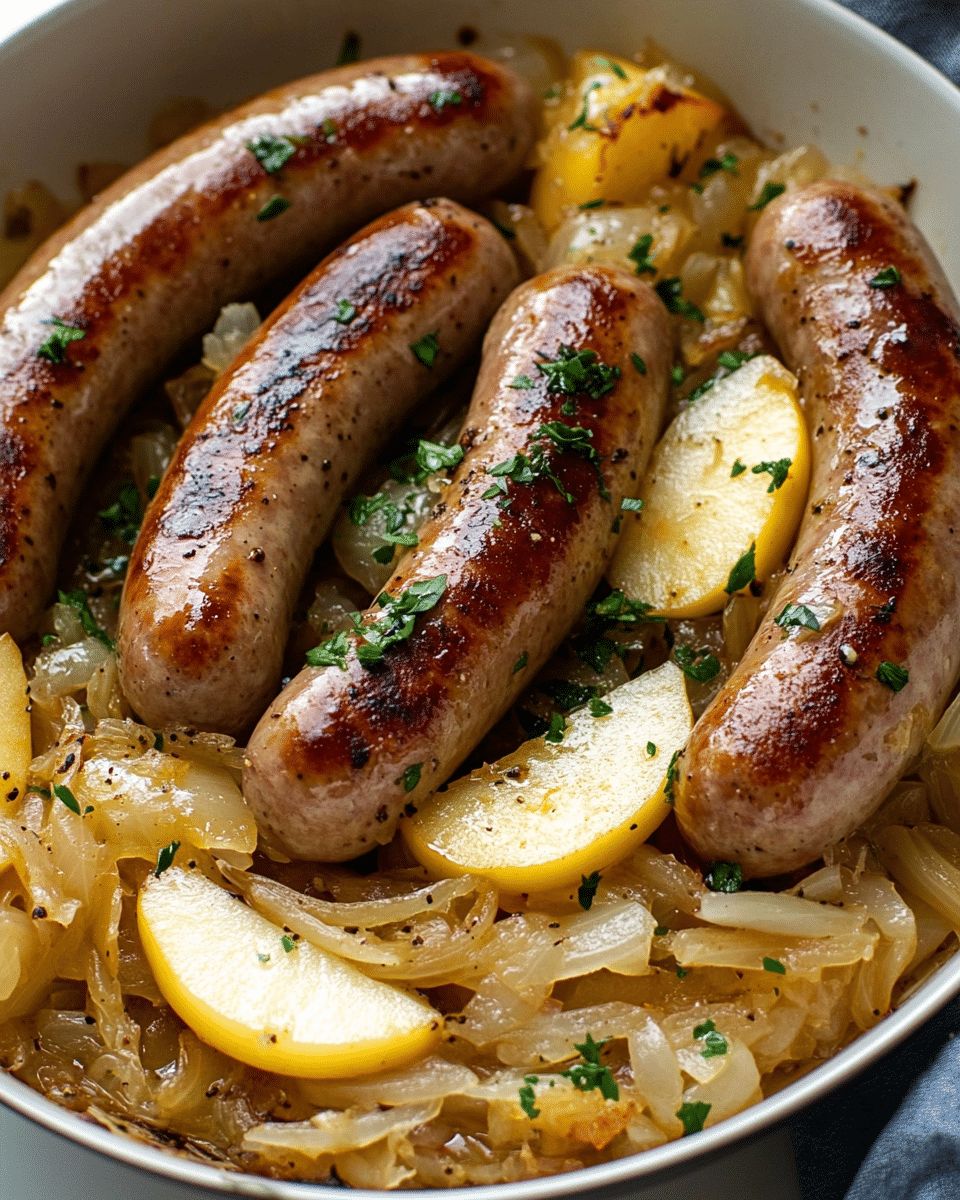
There is a specific kind of culinary magic that occurs when a single heavy skillet is used to bridge the gap between sweet and savory. In this Bratwurst with Sauerkraut, Apples, and Onions recipe, the skillet acts as a theater where different flavor profiles perform in unison. The fat rendered from the sausages becomes the cooking medium for the onions and apples, ensuring that every fiber of the dish is infused with a smoky, meaty essence. This isn’t just about convenience; it’s about flavor continuity.
Americans often associate “comfort food” with heavy creams or deep-fried textures, but this German-inspired classic offers comfort through complexity and balance. The sharp, lactic acidity of the sauerkraut cuts through the rich protein of the pork, while the apples provide a refreshing burst of moisture. When you cook everything in one pan, the juices co-mingle, creating a rustic sauce that coats the ingredients without the need for heavy thickening agents.
Choosing Your Components Like a Pro
As a professional food creator for CookWithFeast, I cannot stress enough that the quality of your ingredients will dictate the final outcome of this dish. Because the ingredient list is relatively short, each item has a significant role to play. Let’s break down the three pillars of this skillet meal.
The Best Apples for Braising
Not all apples are created equal when it comes to heat. You want an apple that maintains its structural integrity while releasing enough sugar to caramelize alongside the onions. If you use an apple that is too soft, it will turn into applesauce before the sausages are done.
| Apple Variety | Flavor Profile | Texture After Cooking |
|---|---|---|
| Granny Smith | Very Tart | Firm and Crunchy |
| Honeycrisp | Perfectly Balanced | Juicy and Holds Shape |
| Braeburn | Sweet-Tart | Rich and Mellow |
| Gala | Mildly Sweet | Softens Quickly |
Selecting the Right Bratwurst
In the United States, you will typically find two types of bratwurst at the butcher counter: fresh (raw) and pre-cooked (smoked). While both are delicious, they require different handling. Fresh brats offer a superior, juicy texture but require a longer simmer to reach a safe internal temperature of 160°F. Smoked or pre-cooked brats are fantastic for a quick weeknight version of this meal, as you are essentially just reheating them and adding a sear.
Chef’s Tip: For the most authentic experience, look for “Sheboygan-style” or “Old World” brats. These often have a higher concentration of nutmeg, ginger, and caraway, which pair exquisitely with fermented cabbage.
The Science of Searing: The Maillard Reaction
The first step of our instructions—browning the bratwurst—is the most critical for deep flavor. This is known as the Maillard reaction. It is a chemical reaction between amino acids and reducing sugars that gives browned food its distinctive, savory flavor. When you sear the sausages in a hot skillet, you aren’t just changing the color; you are creating hundreds of new flavor compounds that will eventually season the sauerkraut and apples.
When you remove the sausages, you will notice brown bits stuck to the bottom of the pan. Chefs call this the fond. This is concentrated flavor gold. When you add your butter, onions, and apples in the next step, they will release moisture that “deglazes” the pan, lifting those savory bits and incorporating them into the vegetable mixture. Never wash your pan between searing the meat and sautéing the vegetables!
Deep Dive into Sauerkraut: The Tangy Heart of the Dish
Sauerkraut is more than just a garnish; it is a fermented superfood that brings acidity and probiotics (though the probiotics are lost during the heating process, the flavor remains). In this dish, the sauerkraut acts as a palate cleanser. Without its sharp tang, the sausages and caramelized onions might feel overly heavy.
- Draining is Key: If you use canned sauerkraut, make sure to drain it well. Too much canning liquid will turn your braise into a soup.
- Rinsing: If you find sauerkraut too “sour,” give it a quick rinse under cold water. This mellows the brine while keeping the cabbage texture.
- The Sugar Balance: Adding a tablespoon of brown sugar isn’t about making the dish a dessert. It is about mellowing the lactic acid of the kraut to create a smoother transition between the sour cabbage and the sweet apples.
Mastering the Step-by-Step Technique
Following the logic of the skillet, we move from the most “protein-dense” items to the “aromatic” items. This layering technique ensures that nothing is overcooked or mushy by the time the dinner bell rings.
Step 1: Achieving the Perfect Crust
Heat your skillet until it is just starting to shimmer. Place the brats in and do not move them for at least 3 minutes. This allows the crust to form. Once they release easily from the pan, flip them. We are looking for a deep mahogany color, not just a light tan.
Step 2: Caramelizing the Aromatics
After removing the brats, add the butter and oil. The onions should be sliced thinly so they can “melt” into the sauce. Caramelization takes time—about 5 to 7 minutes on medium heat. You want the onions and apples to look translucent and golden, smelling fragrant and sweet.
Step 3: The Marriage of Flavors
When you stir in the garlic, it only needs about 30 seconds. Garlic burns easily, and burnt garlic will ruin the delicate sweetness of the apples. Once the kraut and sugar are in, use your spoon to scrape the bottom of the pan one last time to ensure all the fond is integrated.
Step 4: The Gentle Simmer
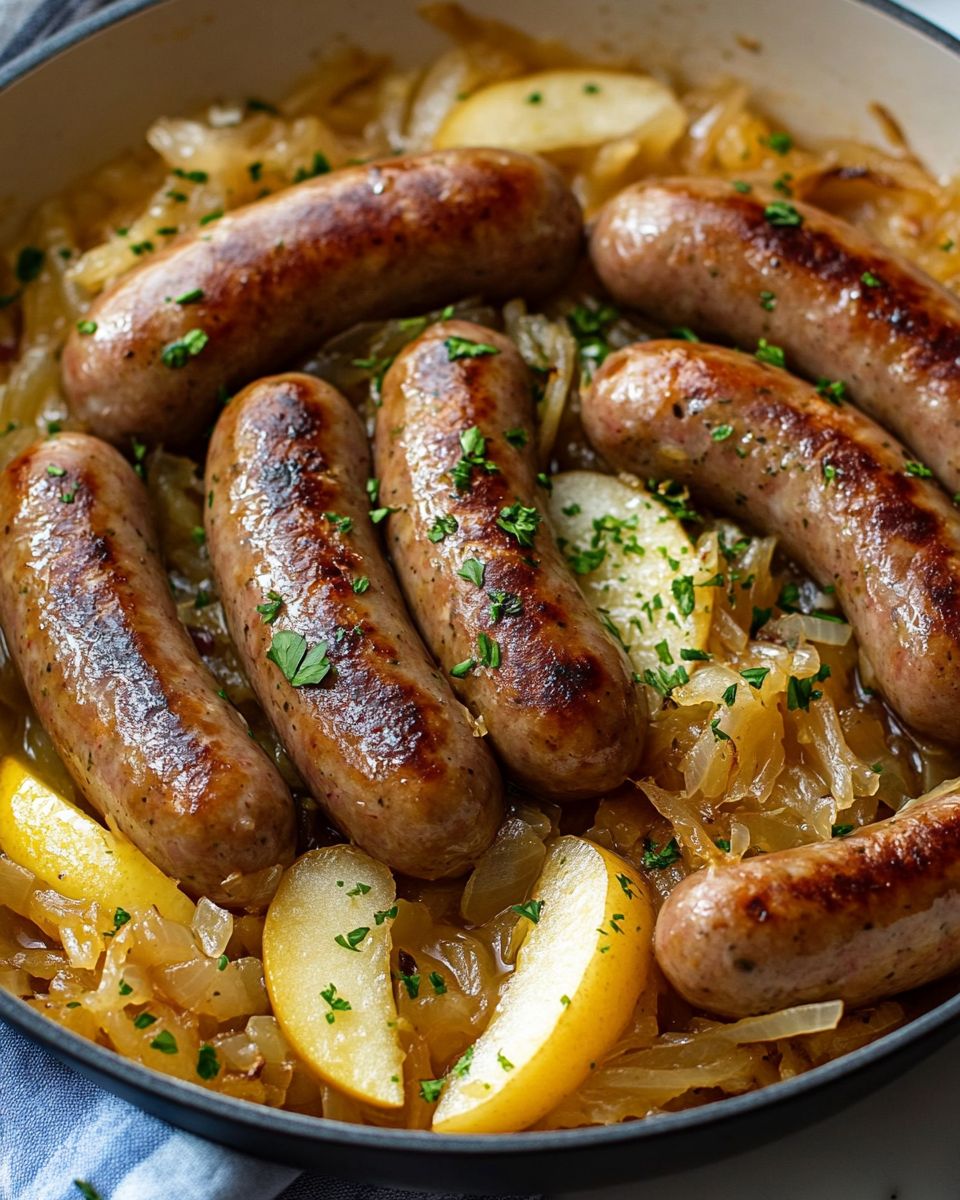
Nestle the sausages back into the bed of kraut. Covering the pan is essential here; it creates a steam chamber that finishes cooking the interior of the sausages while the kraut absorbs the juices dripping from the meat. This 15-20 minute window is when the ” German Tavern” aroma will fill your house.
Troubleshooting Common Issues
Even a simple skillet meal can have its pitfalls. Here is how to navigate them like a world-class chef:
- Issue: The dish is too dry. If your sauerkraut was exceptionally dry, add a 1/4 cup of apple cider, beer (like a pilsner), or chicken broth during the simmering stage.
- Issue: The apples turned to mush. You likely used a “mealy” apple like a Red Delicious. Next time, opt for a Honeycrisp or Granny Smith, and ensure you aren’t over-sautéing them before adding the liquid components.
- Issue: The sausages split. This happens if the heat is too high during the simmering phase. Keep the heat on low once the lid goes on to allow the pressure to equalize inside the sausage casing.
Insight: If you want to take this to an “Oktoberfest” level of luxury, substitute the 1 tablespoon of sugar with 2 tablespoons of apple butter. It adds a thick, spiced richness that makes the sauerkraut feel incredibly gourmet.
Versatility and Leftovers
One of the best things about Bratwurst with Sauerkraut, Apples, and Onions is that it actually tastes better the next day. As the dish sits in the refrigerator, the cabbage continues to absorb the spices from the sausage. This is an excellent meal-prep option for those with busy schedules.
For a variation, you can serve the leftovers inside a toasted hoagie roll with a swipe of spicy brown mustard. Or, chop up the leftover sausages and mix the entire skillet with some boiled egg noodles for a quick “Kraut und Nudeln” style lunch. The possibilities are as endless as your appetite.
You May Also Like
Explore more: Oktoberfest Favorites, Easy One-Pan Meals, Hearty Sausage Recipes, Classic Comfort Food.
Source: The History of Bratwurst (Wikipedia)
Frequently Asked Questions
Can I use beer to braise the bratwurst?
Absolutely! Substituting the water with a half cup of German lager or pilsner adds a wonderful malty depth to the sauerkraut and sausages. This “beer-braised” variation is a legendary staple in the American Midwest and pairs perfectly with the sweet apples.
What is the best way to reheat leftovers?
To keep the sausages juicy and the apples tender, reheat the mixture in a skillet over medium-low heat with a splash of water or apple juice. Cover the pan to create steam, which helps prevent the sauerkraut from drying out or becoming too salty.
Is this recipe gluten-free?
Most bratwurst and sauerkraut are naturally gluten-free, but you must always check the sausage labels for hidden fillers, binders, or wheat-based flavorings. If you are serving this for a GF diet, ensure your mustard and side dishes are also certified gluten-free.
Final Thoughts
Bringing the rustic, time-honored flavors of a German tavern into your modern kitchen is a rewarding experience for any home chef. This Skillet Bratwurst with Sauerkraut, Apples, and Onions is a testament to the power of simple, wholesome ingredients. It is a meal that perfectly captures the balance of smoky, tangy, and sweet—making it the ultimate choice for a crisp autumn night at CookWithFeast.
We invite you to gather your friends, crack open a cold beverage, and enjoy the comforting aroma as this dish simmers to perfection. Whether it is your first time cooking with sauerkraut or you are a seasoned pro, this one-pan wonder is guaranteed to delight. Savor every bite!