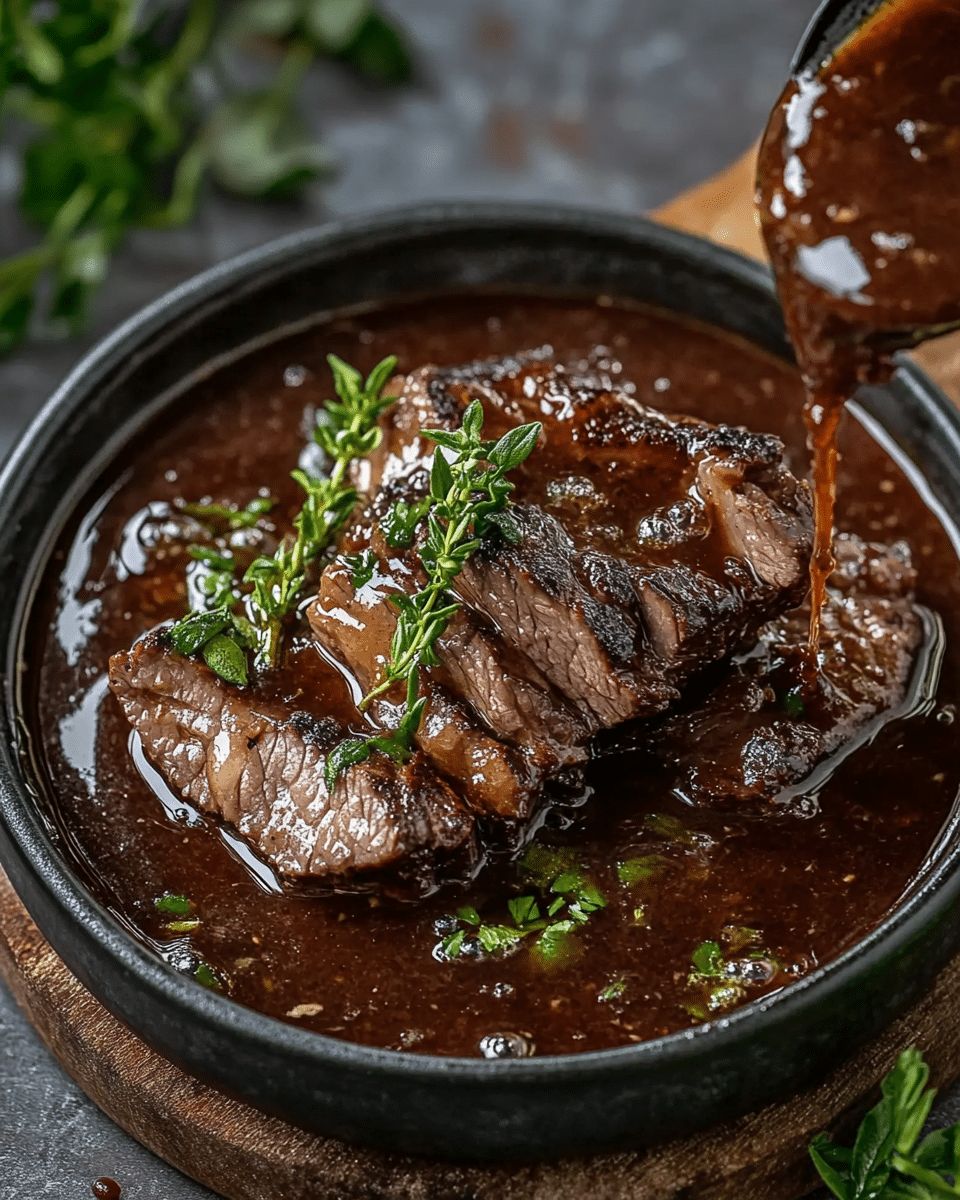
Creating a rich and flavorful beef jus is a culinary art that brings out the very best in your meats, transforming everyday cooking into restaurant-quality dishes. Known for its incredible depth of flavor and velvety texture, a well-crafted jus is the secret weapon of professional chefs, serving as the essential finishing touch for premium roasts and steaks.
In this comprehensive guide, we will explore how to craft the perfect beef jus using simple, high-quality ingredients. By mastering the balance of savory aromatics like shallots and garlic with deep meat reductions, you can replicate this fine-dining masterpiece in your own kitchen with ease and confidence.
Quick Answer: Beef jus is a concentrated, savory sauce made by reducing beef broth with aromatics and fresh herbs. Unlike traditional gravy, it is lighter, more intense in flavor, and relies on reduction rather than heavy starch thickeners to achieve its signature silky consistency.
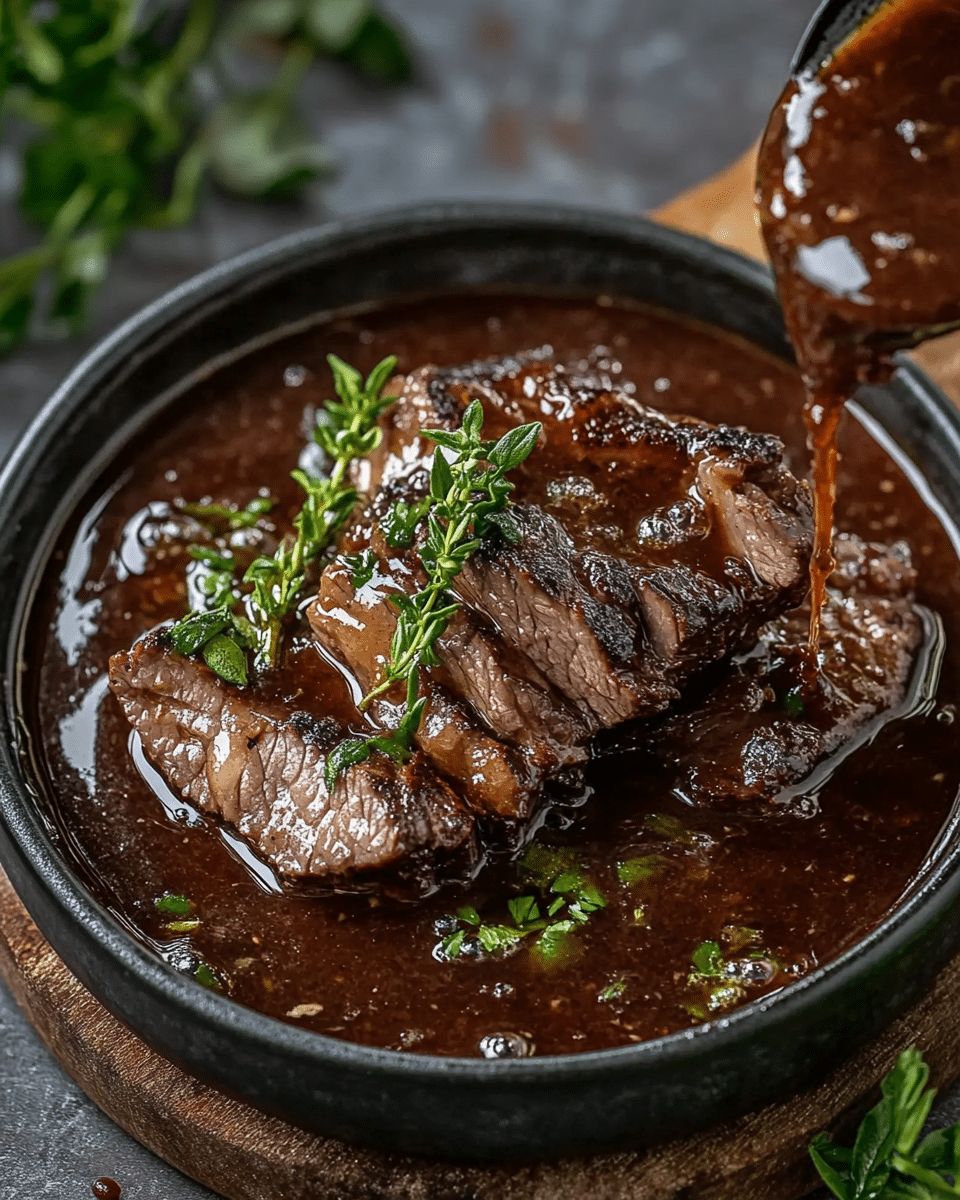
Mastering the Ingredients for an Authentic Beef Jus
To create a restaurant-quality beef jus, the secret lies in the quality and preparation of your base components. While the ingredient list is relatively short, each element is chosen specifically to contribute to a complex, multi-layered flavor profile. Unlike heavy gravies that rely on flour, a jus is all about the natural essence of the beef, enhanced by aromatics and a careful reduction process.
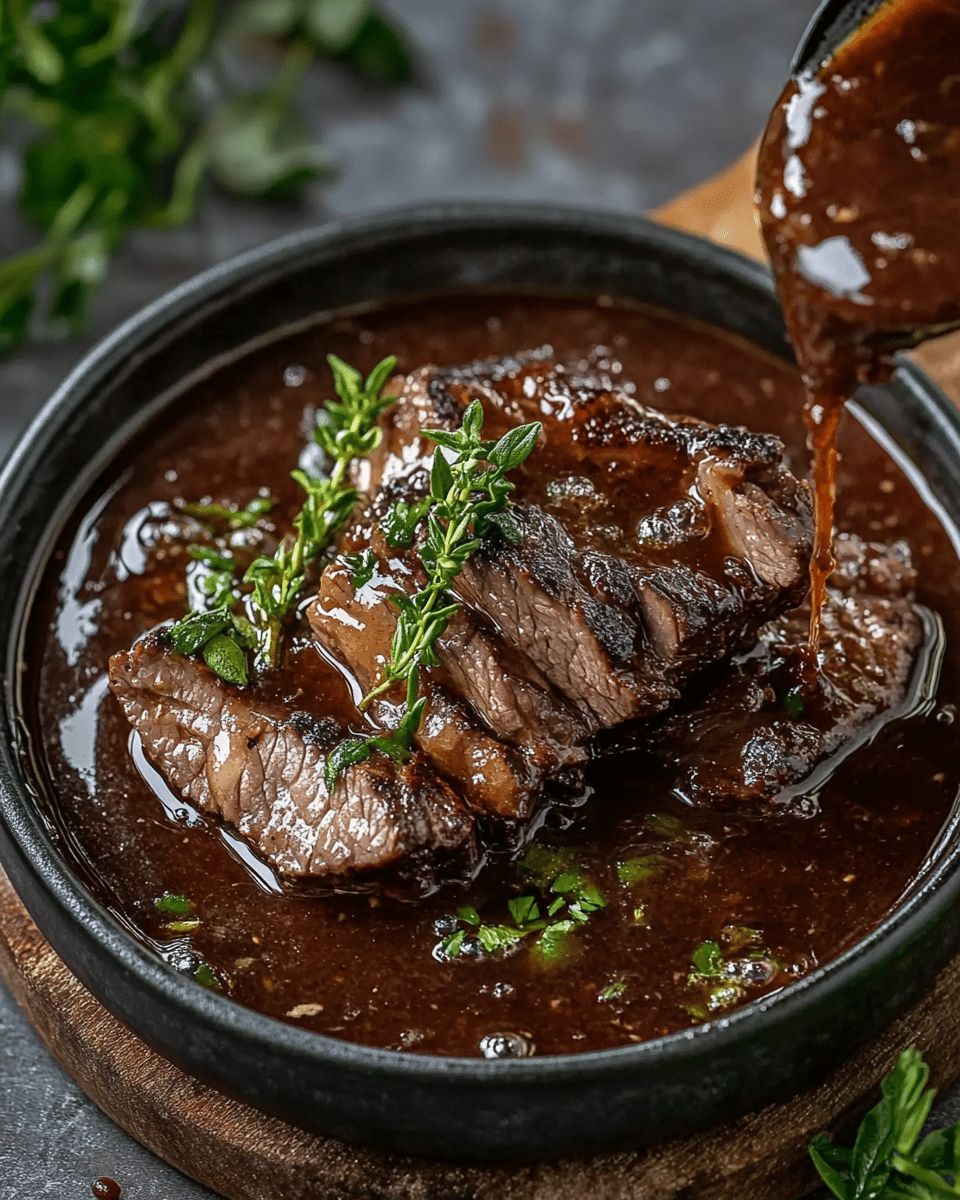
The Aromatic Foundation: Shallots and Garlic
In this recipe, we utilize shallots instead of traditional yellow onions. Shallots offer a more delicate, sweet flavor with a hint of garlic-like pungency that doesn’t overwhelm the beef. When finely chopped and sautéed in butter, they soften into a jam-like consistency that provides the underlying sweetness necessary to balance the salty stock. Garlic acts as the secondary aromatic, adding a savory punch that rounds out the profile.
Acidity and Balance: Red Wine Vinegar
Since this recipe is designed to be alcohol-free, red wine vinegar plays a critical role. In a traditional French jus, red wine provides the necessary acidity to cut through the richness of the meat fats. By using a touch of red wine vinegar alongside a concentrated beef broth, you replicate that bright “zing” without the need for a wine reduction. This makes the sauce lighter on the palate while maintaining a professional depth of flavor.
The Liquid Gold: Broth vs. Stock
We use a combination of beef broth and a beef stock cube (or pot). This dual-layer approach ensures that the sauce has both immediate flavor and long-lasting body. The broth provides the volume, while the stock cube offers a concentrated hit of umami and salt. When these liquids reduce together, they create a glossy, mouth-coating texture that is the hallmark of a great sauce.
- Butter: Use unsalted butter if possible to better control the final sodium levels.
- Herbs: Fresh thyme and rosemary are non-negotiable for an earthy, woodsy aroma.
- Water: Always use hot water when dissolving your stock cube to prevent clumping and ensure a smooth integration.
Beef Jus vs. Traditional Gravy: Knowing the Difference
It is a common mistake to use the terms “jus” and “gravy” interchangeably. However, in the world of professional cooking, they are distinct preparations with different textures and uses. Understanding these differences will help you decide which sauce best complements your meal.
| Feature | Beef Jus (Au Jus) | Traditional Beef Gravy |
|---|---|---|
| Thickening Agent | Natural reduction (Optional cornflour) | Roux (Flour and fat mixture) |
| Texture | Thin, silky, and translucent | Thick, opaque, and creamy |
| Flavor Profile | Intense, meat-forward, savory | Rich, buttery, slightly bready |
| Common Pairing | Prime Rib, French Dip, Steak | Roast Turkey, Mashed Potatoes |
Detailed Step-by-Step Preparation Guide
Creating this sauce is a lesson in patience and temperature control. If you rush the sautéing of the aromatics or boil the reduction too vigorously, you risk a bitter or overly salty result. Follow these expanded steps to ensure a flawless execution every time.
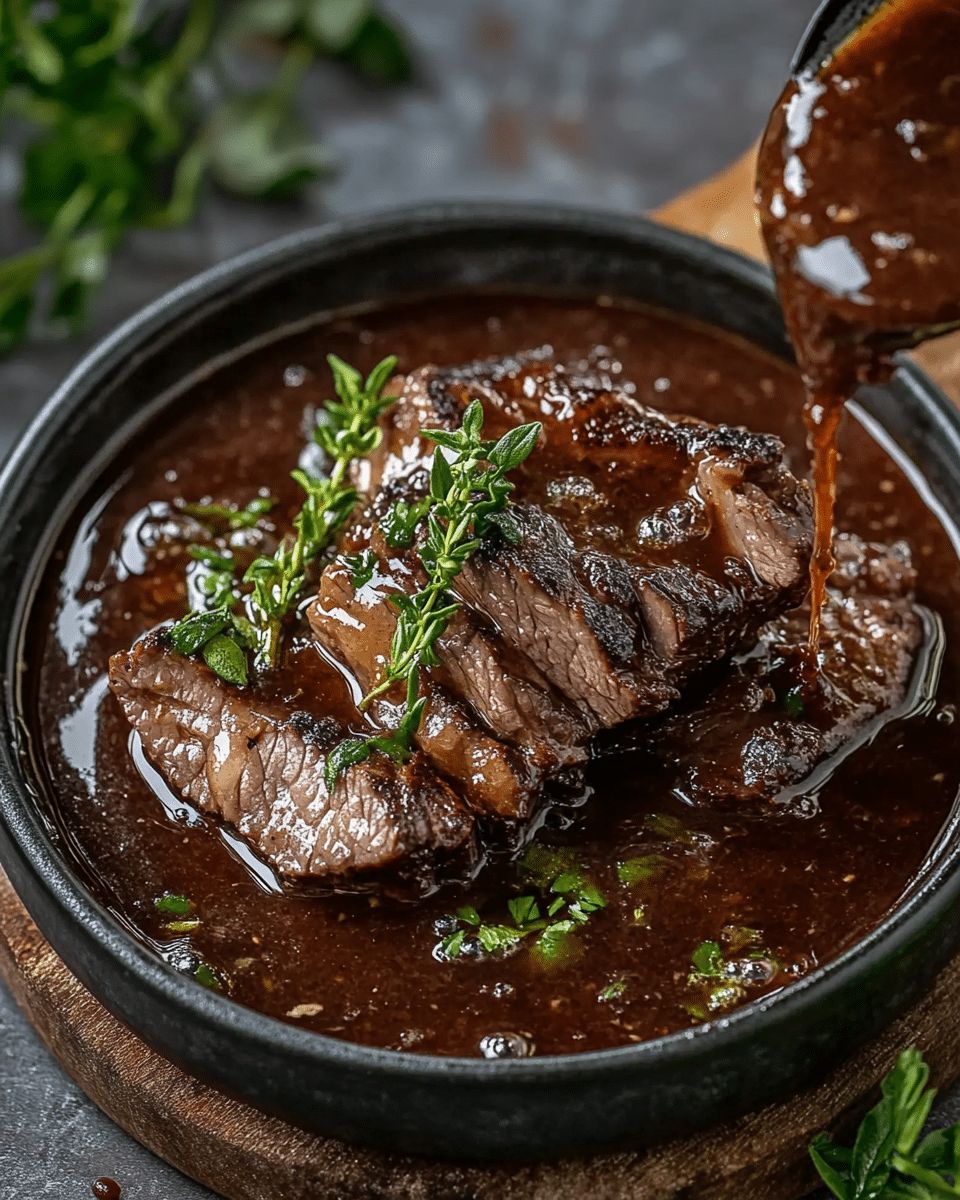
Step 1: Sautéing the Aromatics
Start by heating your butter over low heat. It is vital not to brown the butter at this stage; you want it melted and foaming. Add your finely chopped shallots and cook them slowly. This process, often called sweating, allows the shallots to release their moisture and sugars without developing the bitter notes associated with high-heat searing. After about 2 minutes, when the shallots are translucent and soft, add the garlic. Garlic burns quickly, so only give it about 60 seconds until you can smell its fragrance wafting from the pan.
Step 2: Deglazing with Vinegar and Broth
Deglazing is the process of adding liquid to a hot pan to loosen the fond—those browned bits of flavor stuck to the bottom. Pour in the red wine vinegar and use a wooden spoon to scrape the pan. Once the vinegar has almost evaporated, pour in the 200ml of beef broth. Add your sprig of thyme or rosemary now. As the broth heats up, the herbs will release their essential oils, infusing the liquid with an earthy sophistication.
Step 3: The Reduction Phase
The reduction is where the magic happens. By simmering the mixture, you are evaporating the water and concentrating the solutes, which intensifies the flavor. While your broth simmers, dissolve your stock cube in the hot water and add it to the pan. Bring it to a boil briefly, then immediately drop the heat back to a gentle simmer. You should see small bubbles around the edges of the pan, but the center should remain relatively calm. This slow simmer prevents the proteins in the stock from breaking down and becoming cloudy.
- Simmer for 5-10 minutes: Watch as the color deepens into a rich, dark mahogany.
- Taste test: Always taste your sauce before adding salt. The stock cube is often salty enough on its own.
- Season: Add freshly cracked black pepper at the very end to preserve its spicy bite.
Advanced Techniques for a Gourmet Finish
If you want to take your Beef Jus from “great” to “world-class,” consider these professional finishing techniques used in high-end steakhouses. These optional steps allow you to customize the texture and sheen of the sauce to match your specific dish.
The “Monte au Beurre” Technique
To achieve a professional glossy sheen, use a technique called Monte au Beurre (lifting with butter). Once the sauce is finished and the heat is turned off, whisk in a tablespoon of cold butter. The cold butter emulsifies into the hot sauce rather than melting into an oil, creating a luxurious, velvety texture and a mirror-like shine that looks stunning on the plate.
Straining for Elegance
While some prefer a “rustic” jus with bits of shallot and garlic, a true French-style jus is perfectly smooth. Pour your finished sauce through a fine-mesh sieve or a chinois. Use the back of a spoon to press down on the solids to extract every drop of concentrated flavor before discarding the aromatics. The result is a clean, sophisticated liquid that coats the back of a spoon beautifully.
Utilizing Pan Drippings
If you are serving this jus with a roast or steak you just cooked, do not let those pan juices go to waste! After removing your meat to rest, pour the prepared beef jus directly into the roasting pan. Place the pan over medium heat and scrape up all the caramelized meat juices. This integrates the specific flavor of your protein directly into the sauce, creating a seamless bridge between the meat and the accompaniment.
Pro Tip: If your jus becomes too salty during the reduction process, add a splash of water or a tiny pinch of sugar. The sugar doesn’t make the sauce sweet; rather, it suppresses the tongue’s perception of saltiness.
Nutritional Data and Storage
Beef jus is naturally lower in calories than cream-based sauces or flour-heavy gravies, making it an excellent choice for those looking for high-impact flavor without excessive heaviness.
| Nutrient | Amount per Serving (approx. 50ml) |
|---|---|
| Calories | 45 kcal |
| Total Fat | 3.5g |
| Saturated Fat | 2.1g |
| Sodium | 480mg |
| Carbohydrates | 2g |
| Protein | 1g |
For storage, allow the jus to cool completely before transferring it to an airtight container. It will keep in the refrigerator for up to 3 days. If you have leftovers, consider freezing them in an ice cube tray. These “jus cubes” are perfect for dropping into future stews or stir-frys to add an instant boost of umami. To reheat, place the sauce in a small saucepan over low heat and whisk occasionally until warmed through; avoid the microwave as it can cause the butter to separate from the sauce.
You May Also Like
If you enjoyed mastering this homemade beef jus, you might also be interested in exploring these related guides and recipes to further enhance your culinary repertoire:
Explore more: Perfect Steak Recipes, Traditional Roast Beef Guide, Gourmet Dinner Party Ideas, Homemade Sauce Collections.
Authority Source: The Culinary History of Au Jus – Wikipedia
Frequently Asked Questions
Can I make beef jus without red wine?
Absolutely! This recipe is specifically designed to be alcohol-free by utilizing a combination of high-quality beef broth and a teaspoon of red wine vinegar. This pairing provides the necessary acidity and depth of flavor required for a classic jus without the need for wine.
How do I fix a beef jus that is too salty?
Because jus relies on reduction, the flavors—including salt—become concentrated. If your sauce is too salty, you can dilute it with a splash of unsalted beef broth or water. Additionally, adding a small pinch of sugar can help neutralize the perception of saltiness on the palate.
Is beef jus the same as gravy?
No, they are distinct. Beef jus is a thin, clear, and highly concentrated sauce made by reducing meat juices or broth. Gravy is typically thickened with a roux (flour and fat), resulting in a much thicker, more opaque consistency. Jus is generally considered more sophisticated and lighter than traditional gravy.
Final Thoughts
Crafting a delicious beef jus at home is one of the most rewarding skills a home cook can acquire. This simple reduction technique transforms a handful of pantry staples into a velvety, restaurant-quality finish that elevates any protein it touches. By focusing on quality aromatics and the patience required for a proper reduction, you ensure every meal feels like a special occasion.
Whether you are hosting a formal dinner or simply looking to upgrade your Sunday roast, this beef jus recipe provides the perfect balance of savory umami and silky texture. Now that you have mastered the basics, feel free to customize your sauce with different herb infusions to make it uniquely yours. Happy cooking!