
The Ginger Sesame Soba Bowl is a masterclass in culinary balance, offering a vibrant mix of earthy buckwheat noodles, a rich umami broth, and perfectly seared proteins. This dish is designed for those who crave a meal that feels both indulgent and restorative. By combining the deep, nutty notes of toasted sesame with the bright, aromatic zing of fresh ginger, this bowl transforms simple pantry staples into a restaurant-quality experience right in your own kitchen.
What makes this recipe truly stand out is its versatility and the intentional layering of textures. From the initial sauté of aromatic garlic and mushrooms to the final sprinkle of toasted sesame seeds, every step serves a purpose. Whether you are looking for a quick weeknight dinner or a mindful cooking project, this guide will show you how to achieve the ideal sesame-miso foundation and maintain the delicate integrity of the soba noodles for a polished, satisfying result.
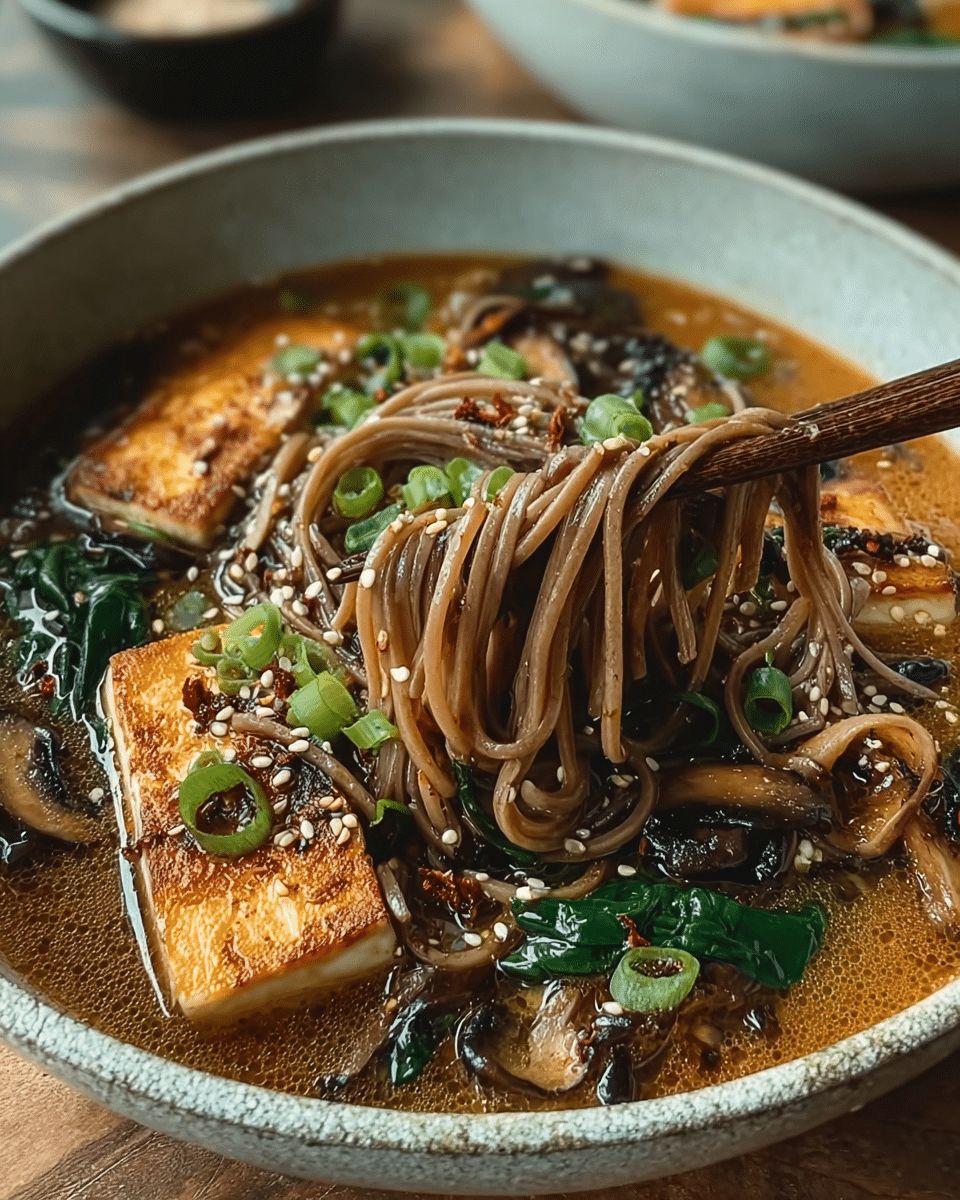
Quick Answer: A Ginger Sesame Soba Bowl is a nourishing Japanese-inspired dish featuring buckwheat noodles served in a warm broth made from miso, sesame paste, ginger, and garlic. It is traditionally topped with crispy tofu or protein, sautéed vegetables like spinach and mushrooms, and finished with chili crisp for a perfect balance of savory, nutty, and spicy flavors.

Understanding the Bowl’s Flavor Foundation
How the broth creates depth
The heart of this dish is its sesame-miso broth. When green onions, garlic, mushrooms, ginger, and chili crisp meet gentle heat, they release aromatic oils that form a savory base. The miso then enriches the broth with creamy, salty depth, while sesame paste provides body and a nutty edge. This combination gives the bowl a warming quality that supports the noodles instead of overwhelming them.
Essential Ingredients for Your Soba Bowl
Creating a restaurant-quality Ginger Sesame Soba Bowl at home starts with selecting the right components. Each ingredient plays a specific role in balancing the five basic tastes: sweet, sour, salty, bitter, and umami. By understanding the function of these items, you can ensure a harmonious result every time you cook.
The Pantry Staples
- Soba Noodles: Made from buckwheat flour, these provide a nutty flavor and gluten-free options (check labels for 100% buckwheat if needed).
- Miso Paste: Use white (shiro) miso for a milder, sweeter profile, or red (aka) miso for a deeper, more fermented punch.
- Sesame Paste (Nerigoma): This is the secret to a creamy broth. It is toasted and richer than Mediterranean tahini.
- Chili Crisp: Adds texture, heat, and a savory infusion of garlic and onions.
Fresh Aromatics and Produce
- Fresh Ginger: Grated finely to release its citrusy heat throughout the broth.
- Garlic: Minced and sautéed to provide a foundational savory note.
- Mushrooms: Sliced thin to absorb the broth and provide a meaty texture.
- Baby Spinach: Added at the very end to wilt perfectly into the hot liquid.

The Step-by-Step Preparation Guide
Precision in the kitchen leads to perfection on the plate. This recipe is divided into three main phases: building the broth, preparing the protein, and assembling the final bowl. Follow these steps for the best results.
Step 1: Building the Aromatic Broth Base
- Warm 1 teaspoon of oil in a medium saucepan over medium heat. Add the finely sliced green onion whites and sauté until fragrant.
- Add the sliced mushrooms and a pinch of salt. Cook until the mushrooms are lightly browned and have released their moisture.
- Stir in the chili crisp oil, minced garlic, and grated ginger. Cook for 1–2 minutes, being careful not to burn the garlic.
- Pour in 3 cups of water. Bring to a gentle simmer and let the flavors meld for 5–10 minutes.
Step 2: Preparing the Creamy Miso Mix
Miso and sesame paste should never be boiled vigorously, as high heat can break down the delicate flavors and beneficial probiotics in the miso. Instead, follow this “tempering” method:
- In a small bowl, combine the sesame paste and miso.
- Add 1/4 cup of hot water (taken from the simmering pot).
- Whisk until the mixture is completely smooth and free of lumps.
Step 3: Searing the Crispy Tofu
To achieve a golden-brown exterior without deep-frying, use firm or extra-firm tofu that has been well-pressed to remove excess water.
- Slice the tofu into triangles or cubes.
- Marinate in 1 tablespoon of soy sauce for 5–10 minutes.
- Heat oil in a skillet and sear the tofu over medium-high heat until each side is golden and crisp.
Step 4: Noodle Preparation and Assembly
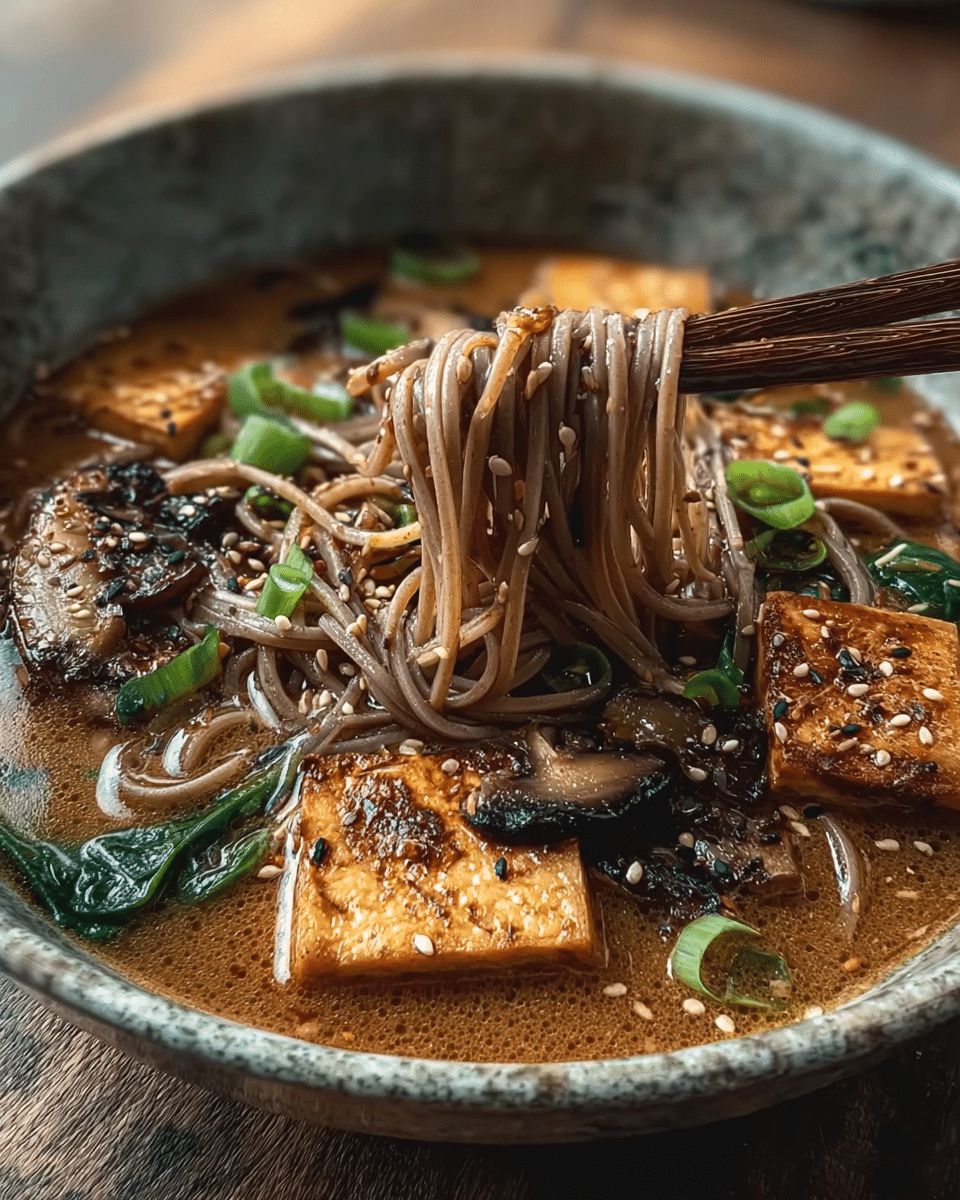
Cook the soba noodles in a separate pot of boiling water according to the package instructions (usually 4–6 minutes). Drain and rinse briefly under warm water to remove excess starch. Divide the noodles into two large serving bowls.
Customization and Nutritional Data
One of the best features of this Ginger Sesame Soba Bowl is how easily it adapts to different dietary needs and preferences. Whether you want more protein or a lower-carb profile, use the table below to guide your choices.
Protein and Vegetable Variations
| Category | Variation Option | Benefit/Flavor Impact |
|---|---|---|
| Protein | Soft-boiled Egg | Adds a rich, jammy creaminess to the broth. |
| Protein | Tempeh | Provides a firmer, nuttier bite than tofu. |
| Vegetable | Bok Choy | Adds a refreshing crunch and vitamin C. |
| Topping | Nori Flakes | Introduces a subtle oceanic saltiness. |
Nutritional Highlights
SEO Insight: Soba noodles are a fantastic source of manganese and fiber. When paired with fermented miso and protein-rich tofu, this meal becomes a powerhouse of sustained energy and gut-healthy nutrients.
Expert Tips for Success
To elevate your dish from “good” to “world-class,” consider these professional styling and cooking tips:
Achieving the Perfect Noodle Texture
Soba noodles are notorious for becoming mushy if overcooked by even thirty seconds. Always set a timer and test a noodle for a slight “al dente” bite before draining. If you aren’t serving them immediately, toss them in a teaspoon of sesame oil to prevent sticking.
The Secret to Silky Broth
If you find your sesame paste is too thick, use a small hand frother or immersion blender to incorporate it with the miso and hot water. This ensures a velvety mouthfeel that coats every strand of noodle perfectly.

Storage and Make-Ahead Advice
- Separate Components: Never store the noodles inside the broth; they will absorb all the liquid and turn into a paste.
- Broth Prep: You can make the broth base (steps 1–4) up to 3 days in advance. Add the miso-sesame mixture only when you are ready to reheat and serve.
- Tofu Reheating: Reheat the tofu in an air fryer or toaster oven at 375°F for 3–5 minutes to restore its crispness.
Frequently Asked Questions
What is the difference between this and a soba noodle salad?
A soba noodle salad is typically served chilled with a soy-based dressing, crisp raw vegetables, and a lighter texture. This bowl is warm, broth-based, and centered on layered depth rather than sharp brightness.
How do I make a great soba noodles sauce?
A balanced soba noodles sauce combines soy sauce, rice vinegar, a touch of sweetness (like maple syrup or mirin), and aromatics. While our recipe uses a broth, you can use these same flavor profiles to create a concentrated dressing for a dry version of the dish.
Can I make this dish gluten-free?
Yes. Simply ensure you are using 100% buckwheat soba (many brands mix in wheat flour) and substitute the soy sauce for tamari or coconut aminos.

Final Thoughts for the Home Chef
Mastering the Ginger Sesame Soba Bowl is a gateway to understanding Japanese-inspired flavor profiles. It teaches you the importance of “umami” and how simple aromatics like ginger and garlic can transform water into a luxurious soup base. Don’t be afraid to experiment with the garnishes—sometimes a simple squeeze of lime or a handful of fresh cilantro can provide the perfect finishing touch to this comforting meal.
You May Also Like
If you enjoyed this nourishing noodle bowl, you may want to explore these other recipes on our blog: Cajun Shrimp Pasta, American Comfort Food Classics, Savory Mushroom Dishes, and Healthy Dinner Ideas.
For more technical details on the heritage and production of buckwheat noodles, you can visit Wikipedia’s guide to Soba.
Frequently Asked Questions
Is this Ginger Sesame Soba Bowl gluten-free?
This recipe can be 100% gluten-free if you use pure buckwheat soba noodles. Many commercial soba brands contain a mix of wheat and buckwheat, so it is essential to check the ingredient label. Additionally, ensure your soy sauce is replaced with tamari or coconut aminos.
Can I make this recipe ahead of time for meal prep?
Yes, you can prepare the sesame-miso broth and the seared tofu up to three days in advance. However, for the best texture, we recommend boiling the soba noodles fresh just before serving, as they tend to lose their springy bite and stick together when stored in liquid.
What can I use as a substitute for sesame paste?
If you cannot find Japanese nerigoma (sesame paste), the best substitute is smooth tahini. While tahini is slightly more bitter because the seeds are often unroasted, you can balance the flavor by adding a teaspoon of toasted sesame oil to the mixture.
Final Thoughts
This Ginger Sesame Soba Bowl is more than just a quick dinner; it is a balanced, mindful meal that brings together the best of umami flavors and nourishing ingredients. By mastering the creamy miso-sesame base and the art of the perfect tofu sear, you can create a restaurant-quality bowl that satisfies cravings for something warm, savory, and healthy.
Whether you are cooking for a busy weeknight or a slow weekend, the versatility of the soba noodle makes it a perfect canvas for your favorite seasonal vegetables. We hope this guide inspires you to get creative in the kitchen and enjoy the soothing process of building flavor from the ground up.


