
There are moments when nothing hits the spot like a warm, hearty dish that fills both your stomach and your soul. You know that craving for something savory, slightly spicy, and incredibly comforting? That’s exactly what this Oven-Baked Ramen and Dumpling Delight promises. Imagine tender ramen noodles, juicy dumplings, earthy mushrooms, and fresh spinach, all swimming in a rich, flavorful sauce, baked to perfection in one dish.
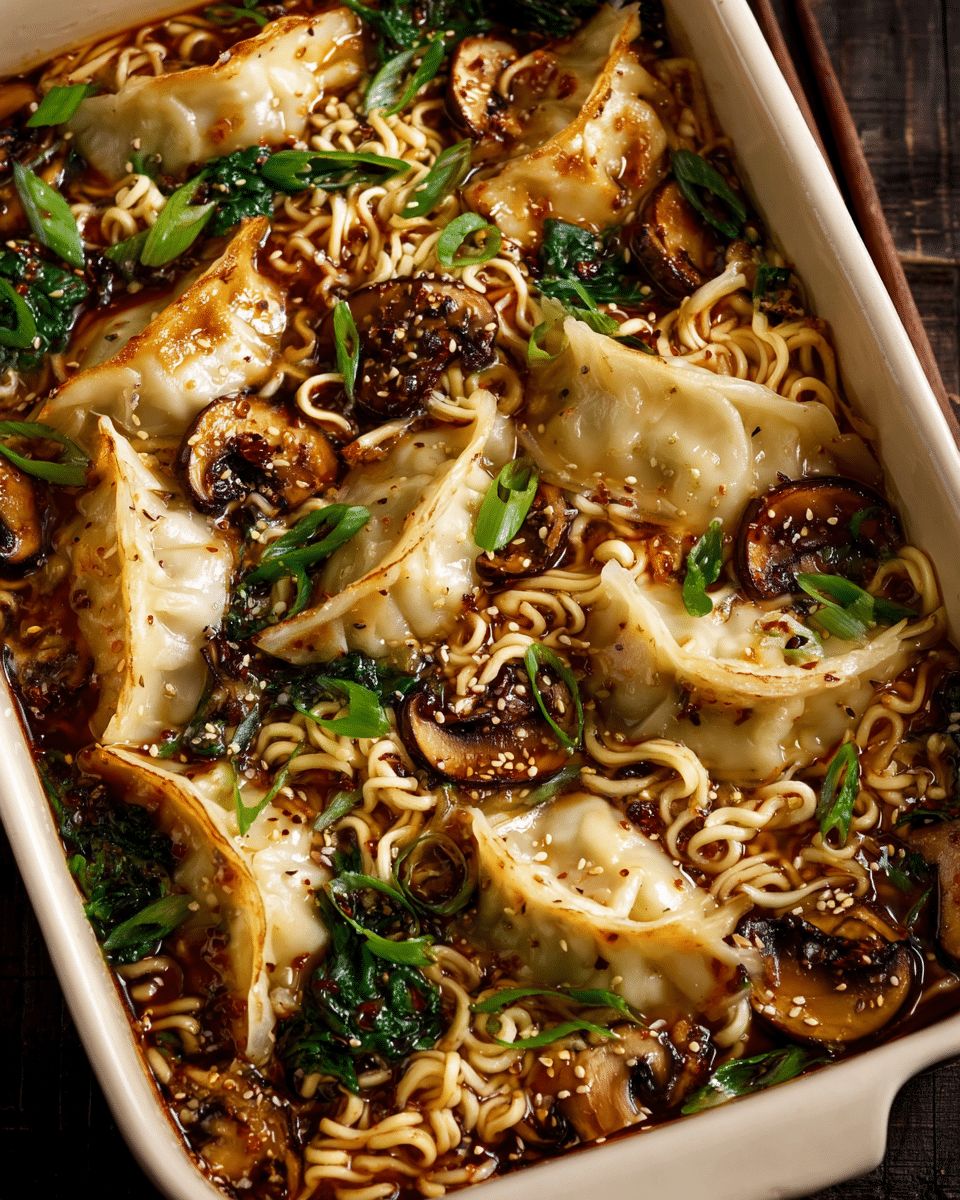
Whether it’s a busy weeknight, a cozy weekend dinner, or a casual gathering with friends, this recipe is your ticket to a hassle-free, delicious meal. By the time you finish reading this guide, you’ll not only know how to make this dish but also why it’s destined to become your go-to comfort food for any occasion.
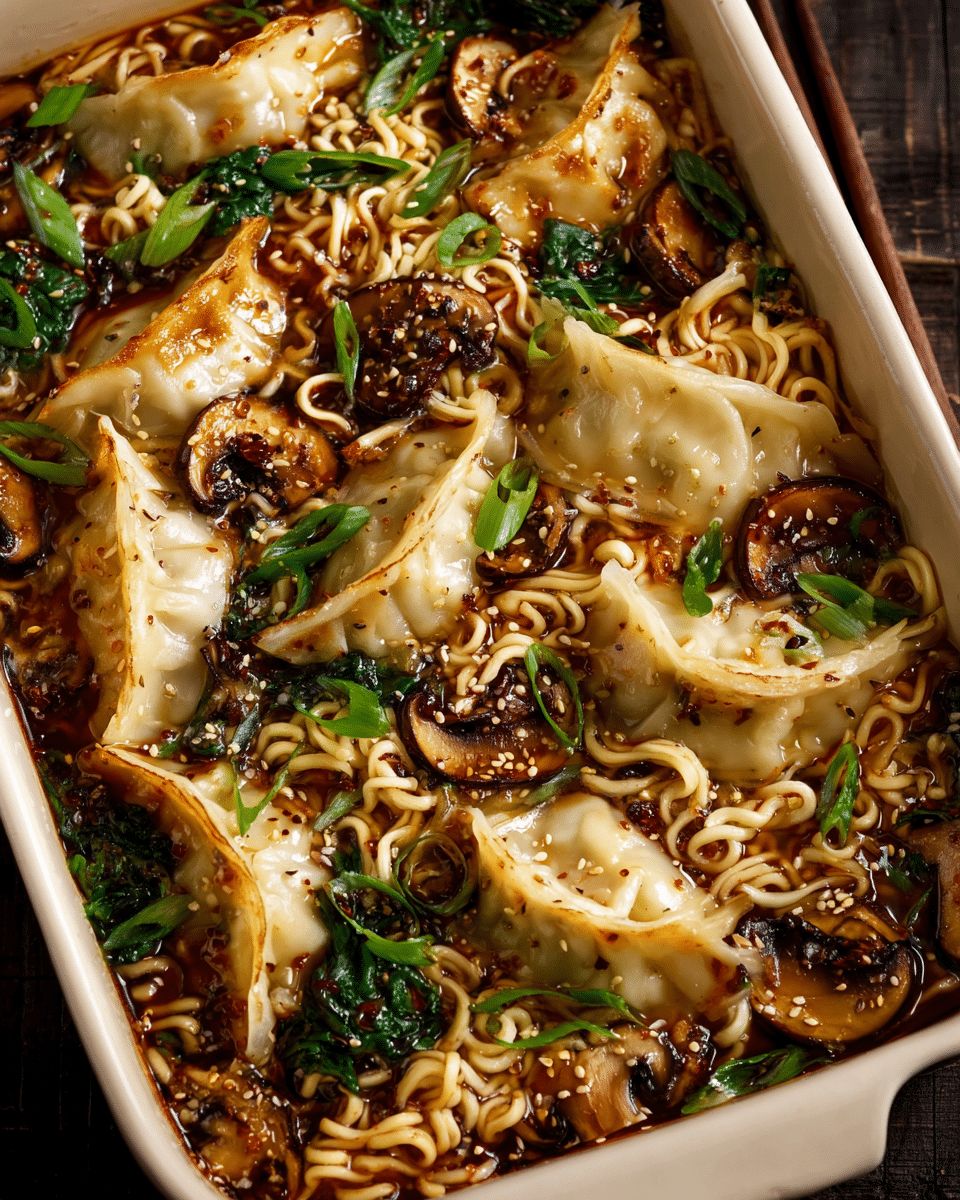
Quick Answer: Oven-Baked Ramen and Dumplings is a versatile, one-pan “set it and forget it” meal. By baking ramen cakes and frozen dumplings in a savory broth of soy sauce, gochujang, garlic, and sesame oil, you create a deeply flavorful, restaurant-quality comfort dish with less than 15 minutes of active prep time.
Why Oven-Baked Ramen and Dumplings Are the Ultimate Comfort Meal
In the world of home cooking, “comfort food” often implies hours of simmering on the stove or complicated techniques. However, this Oven-Baked Ramen and Dumpling Delight flips the script by offering a deep, complex flavor profile with almost zero manual labor. By utilizing the oven’s consistent ambient heat, the ramen noodles don’t just boil; they braise in a savory liquid, absorbing every ounce of umami from the sauce.
This dish is specifically designed for those who crave the bold flavors of Asian fusion but lack the time to monitor multiple pans. Here is why this specific method has become a viral favorite among busy professionals and families alike:
- Effortless Cleanup: Because the sauce is whisked and the entire meal is cooked in one 9×13 inch dish, you won’t be left with a sink full of pots.
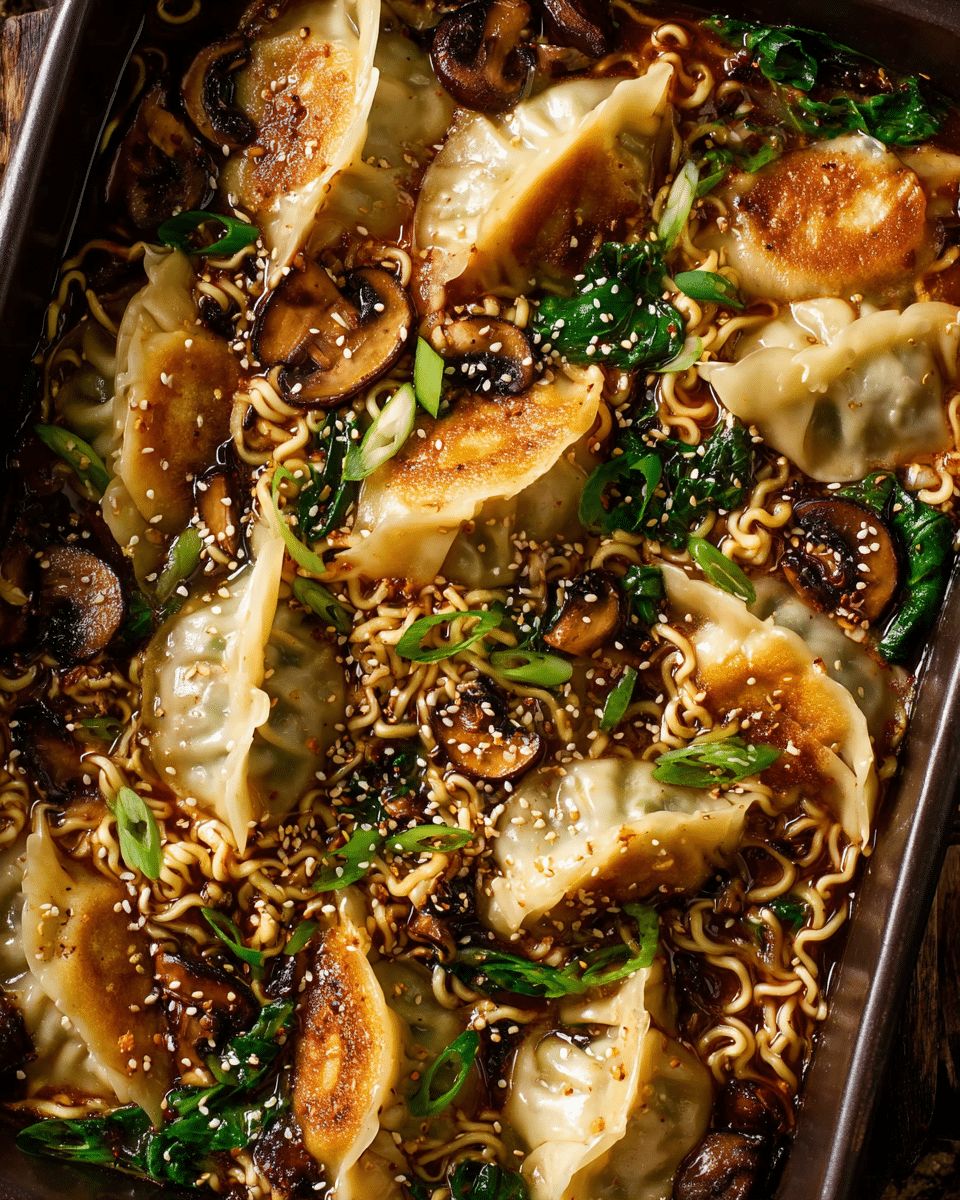
- Texture Variety: Unlike traditional soup ramen, the oven-baked version offers a range of textures—from the silky, sauce-coated noodles at the bottom to the slightly crispy, toasted edges on top.
- Foolproof Timing: Frozen dumplings are notoriously tricky to pan-fry without sticking; here, they steam perfectly while nestled amongst the noodles.
Essential Ingredients and Nutritional Breakdown
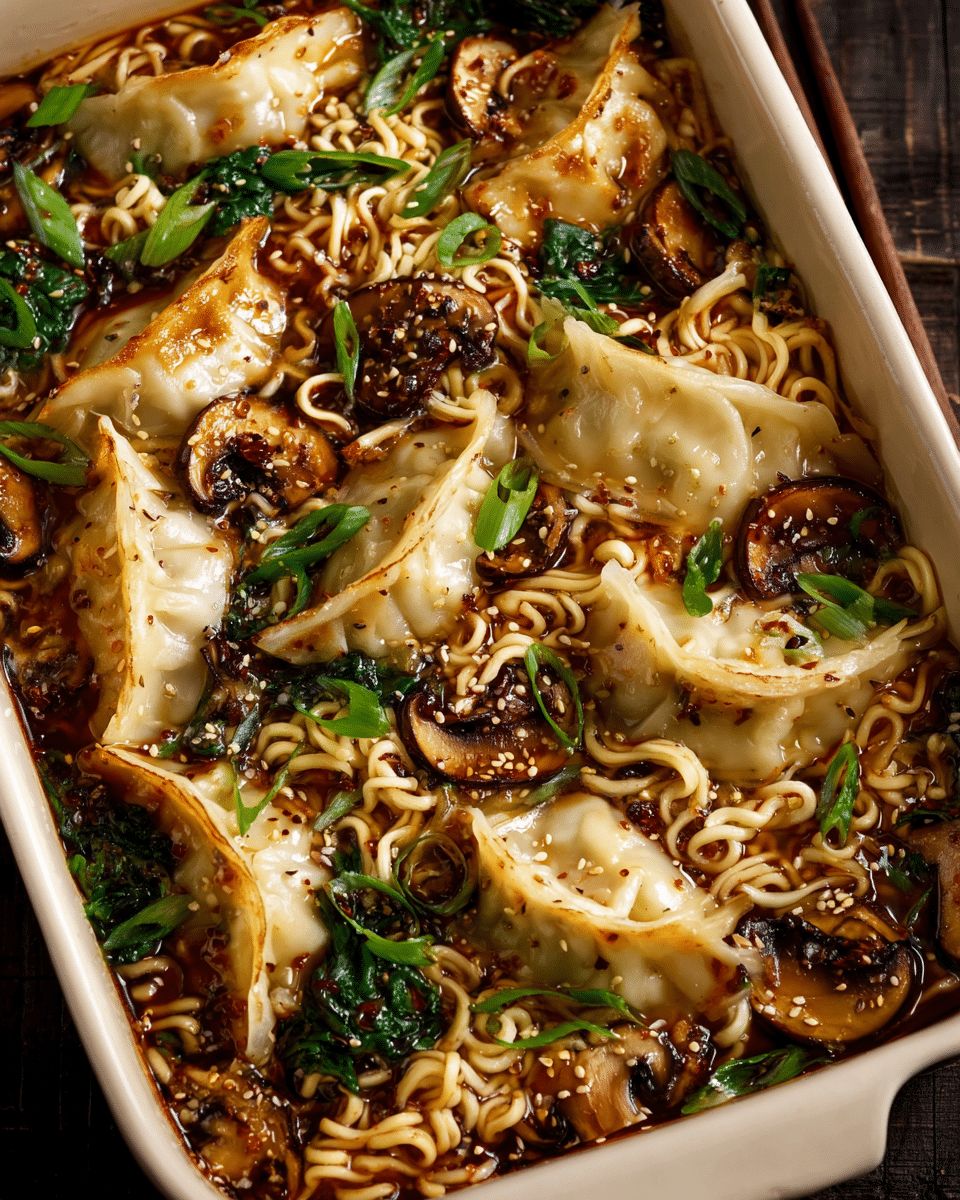
The beauty of this recipe lies in its pantry-friendly nature. Most of these ingredients have a long shelf life, meaning you can whip this up even when your fridge is looking a bit bare. Below is a detailed look at what you will need and the estimated nutritional impact of a standard serving.
Ingredients Checklist
- Ramen Cakes: 3 units (approx. 7.5 oz). Look for high-quality air-dried noodles if possible.
- Frozen Dumplings: 16–20 pieces. Any filling (pork, shrimp, or vegetable) works beautifully.
- The Vegetable Base: 2 cups sliced mushrooms (Cremini or Shiitake) and 2 cups fresh baby spinach.
- The Aromatics: 6 cloves of garlic (minced) and a bunch of green onions for the finish.
- The Liquid Gold (Sauce): 5 cups of broth, ½ cup soy sauce, 2 tbsp Gochujang, 1 tbsp sesame oil, and 1 tbsp sugar.
Nutritional Comparison: Oven-Baked vs. Traditional Instant Ramen
While instant ramen is often criticized for being “empty calories,” this baked version incorporates significant protein and fiber, making it a more balanced dietary choice.
| Nutrient | Baked Ramen & Dumplings (Per Serving) | Standard Instant Cup Noodle |
|---|---|---|
| Calories | 380 kcal | 290 kcal |
| Protein | 15g | 5g |
| Fiber | 4g | 1g |
| Sodium | 800mg | 1100mg+ |
| Vitamins | High (Vitamin A/C from spinach) | Negligible |
Step-by-Step Culinary Guide
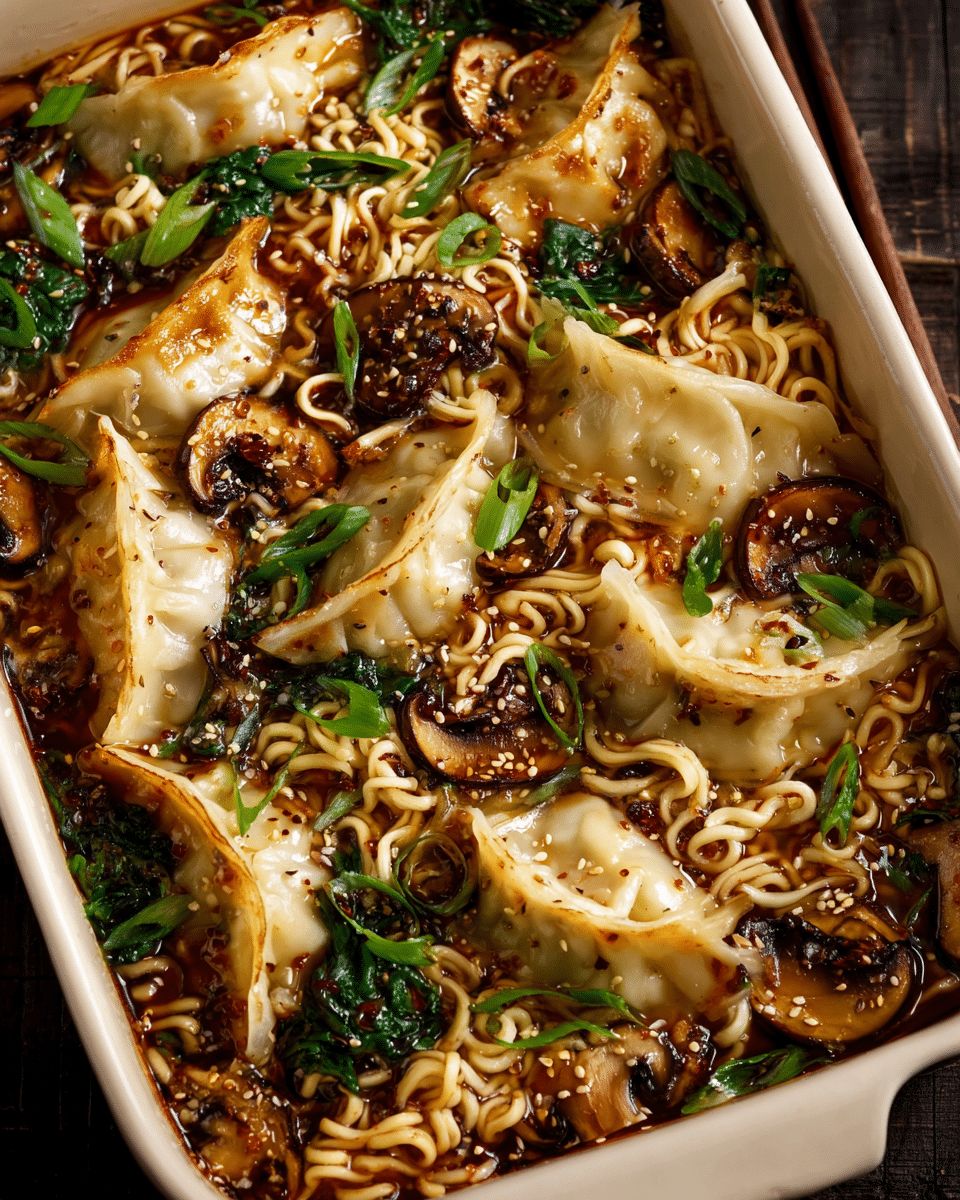
To achieve the perfect Oven-Baked Ramen and Dumpling Delight, follow these steps meticulously. The order of operations ensures that the noodles hydrate without becoming mushy.
Step 1: The Flavor Foundation
Preheat your oven to 350°F (175°C). In your 9×13 ovenproof dish, combine the minced garlic, Gochujang (or Sriracha), sugar, sesame oil, and soy sauce. Whisk these together into a thick paste before adding your broth. This ensures the spice is distributed evenly and you don’t end up with “hot spots” of chili paste.
Step 2: Integrating the Greens and Earthy Tones
Stir in your sliced mushrooms and fresh spinach. The mushrooms act like sponges, soaking up the salt and spice of the sauce. Don’t worry if the spinach looks like a lot; it will wilt down to a fraction of its size during the first 20 minutes of baking.
Step 3: The Layering Process
Place your ramen cakes directly into the liquid. They should be mostly submerged. Arrange your frozen dumplings around the edges and in the gaps. By placing the dumplings on top of the noodles, they are essentially steamed by the rising heat of the broth.
Step 4: The Two-Phase Bake
- Phase 1 (The Steam): Cover tightly with aluminum foil. This traps moisture, which is essential for rehydrating the dry ramen and cooking the frozen dumpling centers. Bake for 20 minutes.
- Phase 2 (The Reduction): Remove the foil. Flip the ramen cakes to ensure even hydration. Bake uncovered for another 15 minutes. This allows the sauce to thicken into a glaze and the tops of the dumplings to firm up.
Expert Tips for the Perfect Batch
Even a world-class recipe can be improved with a few professional secrets. If you want to take your comfort meal to the next level, consider these styling and cooking tips:
Expert Tip: For an extra layer of texture, turn your oven to the Broil setting for the last 3 minutes of cooking. This creates “crispy noodle nests” on the surface that contrast beautifully with the tender dumplings.
Customization Ideas
- The Protein Boost: Add a cracked egg directly onto the noodles during the last 5 minutes of baking for a jammy, rich addition.
- Heat Management: If you prefer a milder dish, swap Gochujang for a tablespoon of Miso paste. You’ll keep the umami depth without the burn.
- Gluten-Free Version: Use gluten-free tamari and brown rice ramen cakes. Most frozen dumplings contain wheat, so look for rice-paper alternatives or swap them for firm tofu cubes.
Frequently Asked Questions
How do I prevent the noodles from getting mushy?
The key is the ratio of liquid to noodles. Ensure you are using exactly 5 cups of liquid for 3 ramen cakes. If you use more, the noodles will over-hydrate. Additionally, removing the foil for the final 15 minutes allows excess steam to escape, firming up the noodle structure.
Can I use different vegetables?
Absolutely. Harder vegetables like broccoli or carrots should be sliced very thin to ensure they cook through. Bok choy is an excellent alternative to spinach and adds a delightful crunch to the stems.
Can I store and reheat leftovers?
Yes, though the noodles will continue to absorb sauce as they sit. When reheating in the microwave, add a splash of water or broth to loosen the sauce back up to its original silky consistency.
Final Serving and Presentation
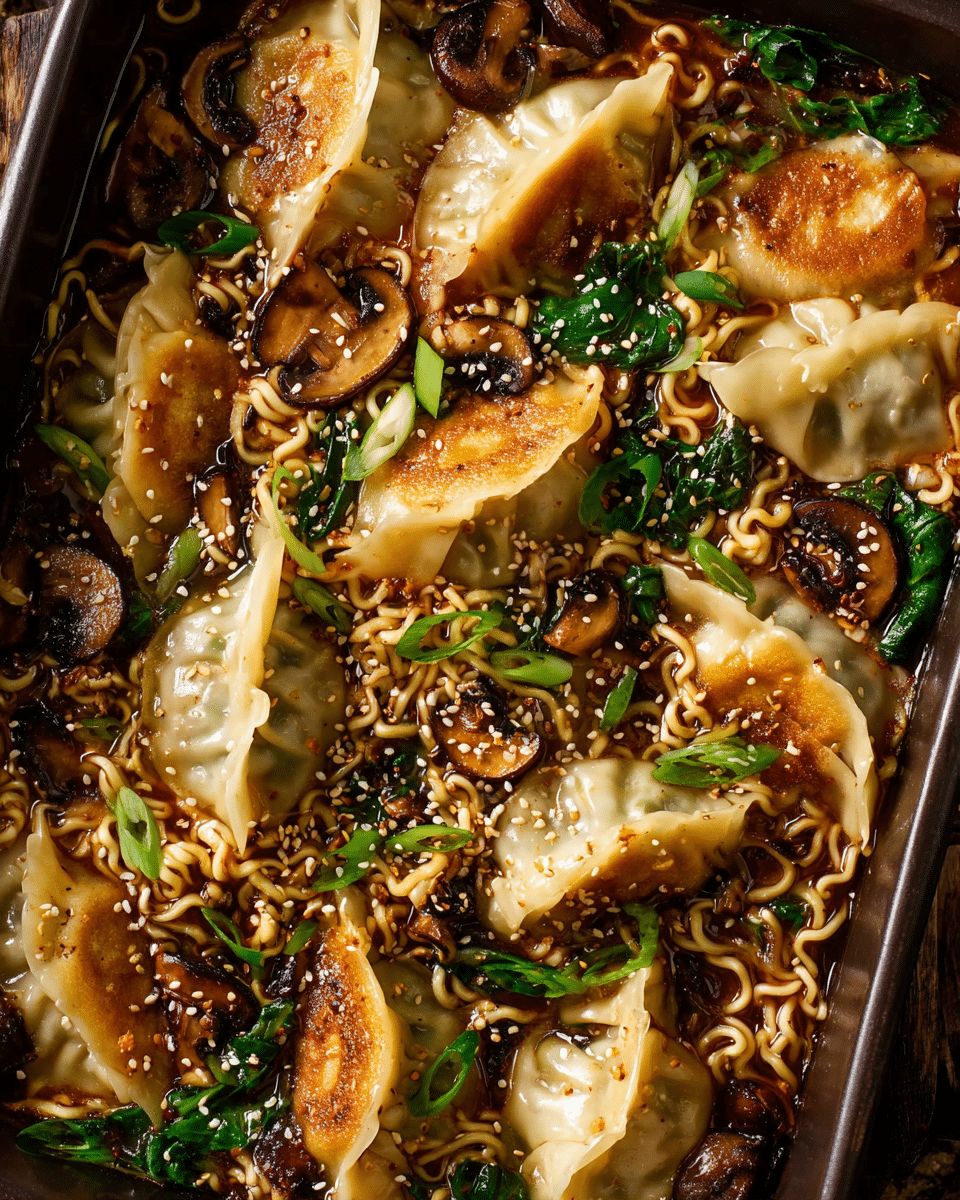
Presentation is the final step in the comfort food experience. Once the dish comes out of the oven, it will be bubbling and aromatic. Do not skip the garnishes, as they provide the necessary acidity and crunch to balance the heavy, savory notes of the bake.
- Freshness: Generously top with sliced green onions (the green parts only for a milder flavor).
- Texture: Sprinkle toasted sesame seeds across the top.
- Acidity: A squeeze of fresh lime juice can brighten the entire dish.
- Aromatics: A final drizzle of high-quality chili oil or toasted sesame oil adds a professional “finish” scent.
You May Also Like
If you enjoyed this effortless one-pan meal, explore more of our favorite recipes: Quick Weeknight Dinners, Easy Asian Fusion Recipes, Vegetarian Comfort Food, and Sheet Pan Masterpieces.
Learn more about the history and cultural significance of Ramen on Wikipedia.
Frequently Asked Questions
Can I use fresh ramen instead of dried cakes for this bake?
Yes, you can use fresh ramen, but you must reduce the baking time significantly. Fresh noodles contain more moisture and cook faster than dried cakes. Check the dish after 10–12 minutes during the first phase to ensure the texture remains “al dente” and doesn’t become overly soft.
Is it possible to make this dish vegetarian or vegan?
Absolutely. To make this Oven-Baked Ramen and Dumpling Delight plant-based, simply use vegetable broth instead of chicken broth and select high-quality vegetable dumplings. Ensure your ramen cakes are egg-free, and use Tamari if you require a gluten-free alternative to standard soy sauce.
How do I store and reheat leftovers?
Leftovers should be stored in an airtight container in the refrigerator for up to 3 days. When reheating, the noodles may have absorbed most of the sauce. To restore the original silkiness, add a splash of water or broth before heating in the microwave or oven until piping hot.
Final Thoughts
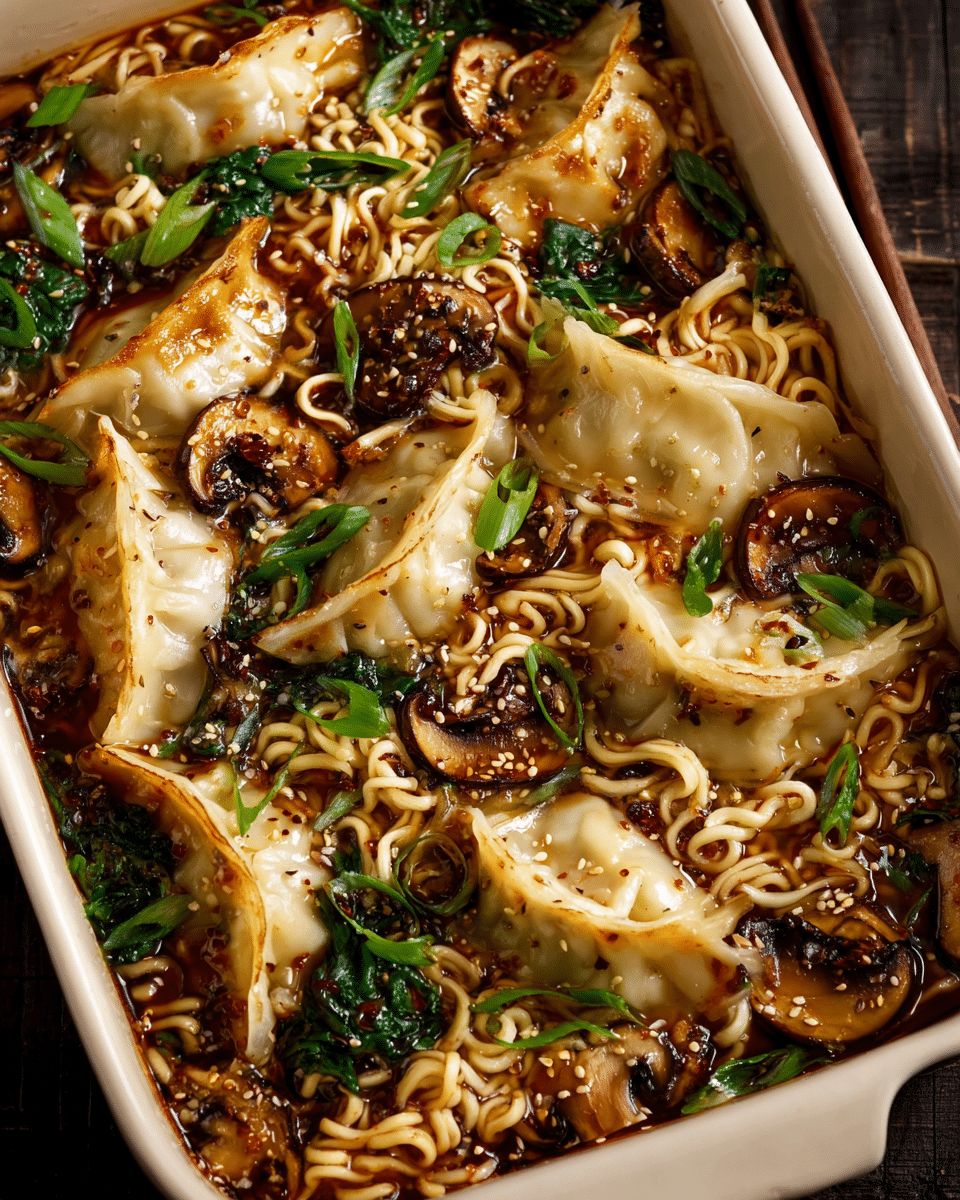
The Oven-Baked Ramen and Dumpling Delight is more than just a meal; it is a testament to the idea that gourmet flavors don’t require hours of kitchen labor. By combining simple pantry staples like ramen cakes and frozen dumplings with a punchy, aromatic sauce, you create a dish that is consistently satisfying and impressively easy to clean up.
Whether you are looking to impress friends at a casual gathering or simply need a warm hug in a bowl after a long day, this recipe is guaranteed to deliver. Don’t be afraid to experiment with your own vegetable add-ins or spice levels to make this comfort classic uniquely yours. Enjoy the savory, steaming results of your new favorite weeknight tradition!
