
You’re about to unlock a culinary experience that combines bold flavors and elegant simplicity. Classic Steak au Poivre, with its signature peppercorn crust and luscious cream sauce, paired with golden Truffled Frites, is more than just a meal—it’s a celebration of technique, taste, and tradition. Whether you’re cooking for a special romantic evening or simply want to treat yourself to high-end fare, this guide will walk you through every step with professional clarity.
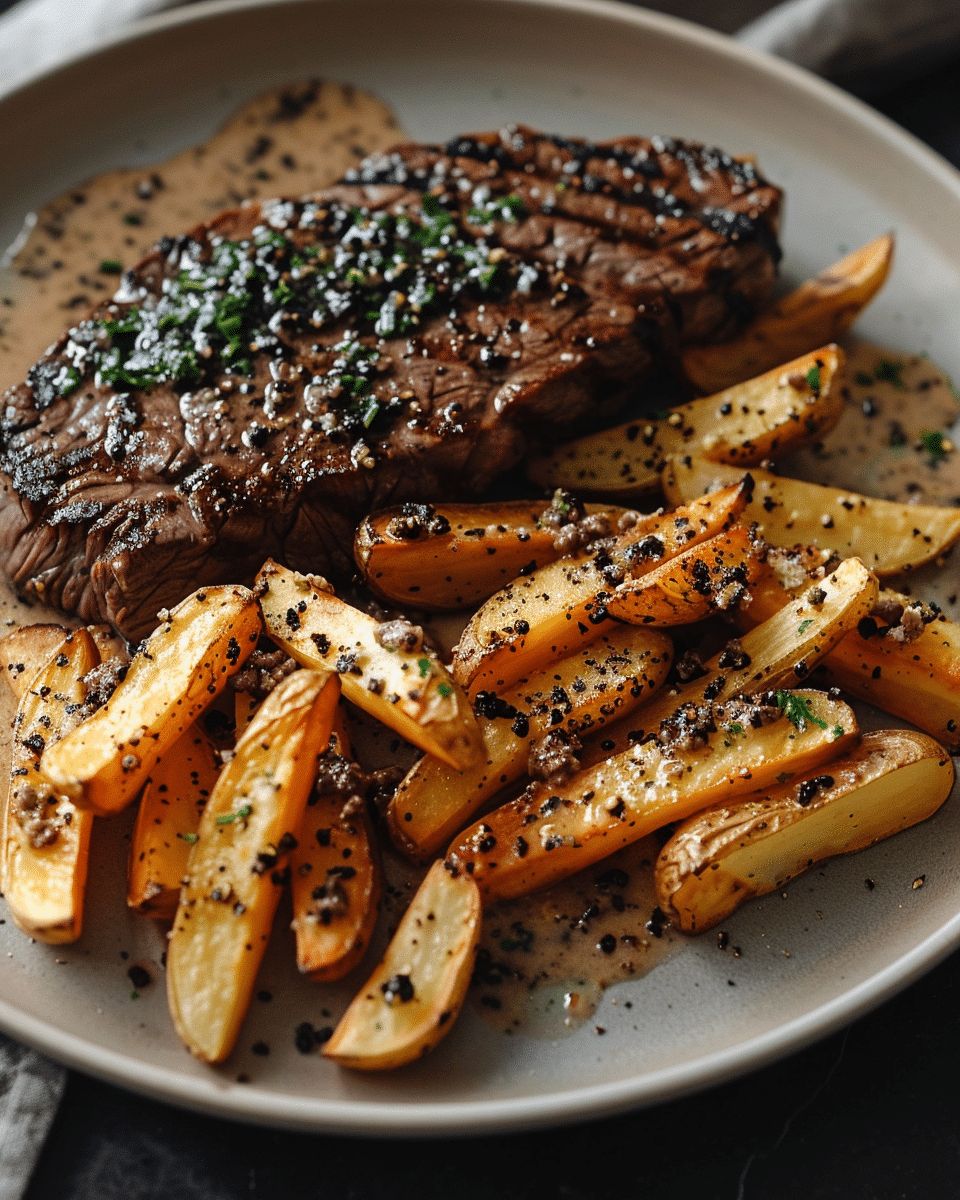
The beauty of this dish lies in the contrast between the fiery, textured crunch of the peppercorns and the velvety, cognac-infused sauce that follows. When served alongside fries tossed in earthy truffle zest, you create a symphony of flavors that rivals any high-end Parisian bistro. Let’s dive into the art of mastering these French classics so you can impress yourself and anyone lucky enough to share your table.
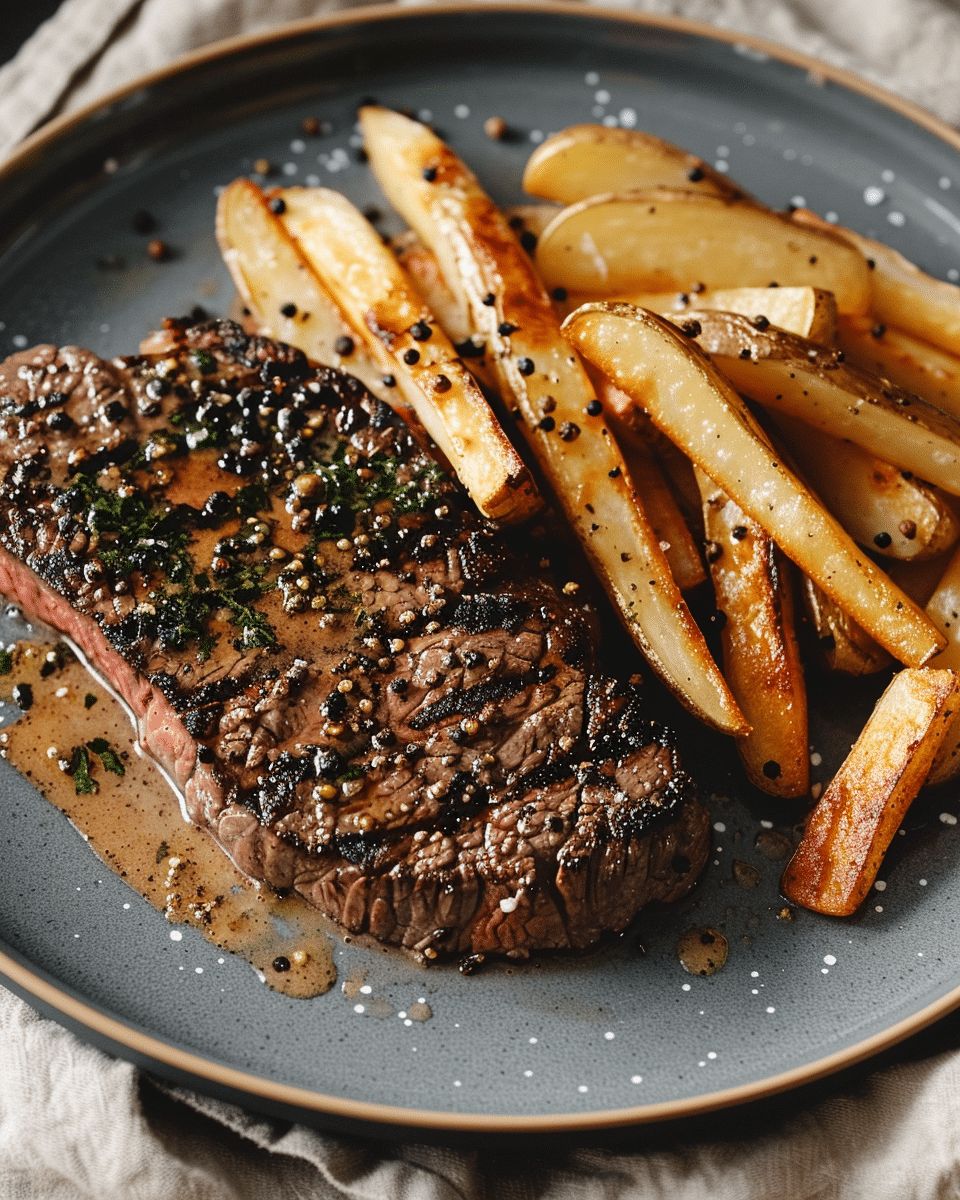
Quick Answer: Steak au Poivre is a traditional French dish consisting of a steak (typically filet mignon) encrusted with cracked peppercorns, seared to perfection, and finished with a rich cognac and cream pan sauce. Paired with Truffled Frites—crispy fries seasoned with sea salt and truffle powder—it represents the pinnacle of French comfort food.
What Is Steak au Poivre? Discovering the Essence of French Cuisine
Steak au poivre, literally translating to “pepper steak,” is a pillar of traditional French gastronomy. Originating in the bustling bistros of 19th-century France, this dish was designed to highlight the high-quality beef available to chefs by pairing it with the intense, aromatic heat of black peppercorns. The classic preparation involves encrusting a tender cut of beef—most often filet mignon—with a thick layer of coarsely cracked peppercorns before searing it in a hot skillet.
The magic of this dish happens after the steak leaves the pan. By deglazing the skillet with cognac or brandy and whisking in heavy cream, chefs create a sauce that is simultaneously spicy, silky, and deeply savory. It is a masterclass in balancing textures: the crunchy, piquant crust of the meat versus the smooth, indulgent richness of the sauce. Today, it remains a symbol of elegant simplicity, proving that a few high-quality ingredients can create a world-class dining experience.
Why You Should Try Steak au Poivre
If you are looking to elevate your home cooking repertoire, there are several reasons why this recipe should be your next project:
- Bold Flavor Profile: The toasted peppercorn crust provides a spicy crunch that awakens the palate in a way regular seasoning cannot.
- Luxurious Pan Sauce: Mastering the au poivre sauce gives you a fundamental technique (deglazing) that can be applied to many other meat dishes.
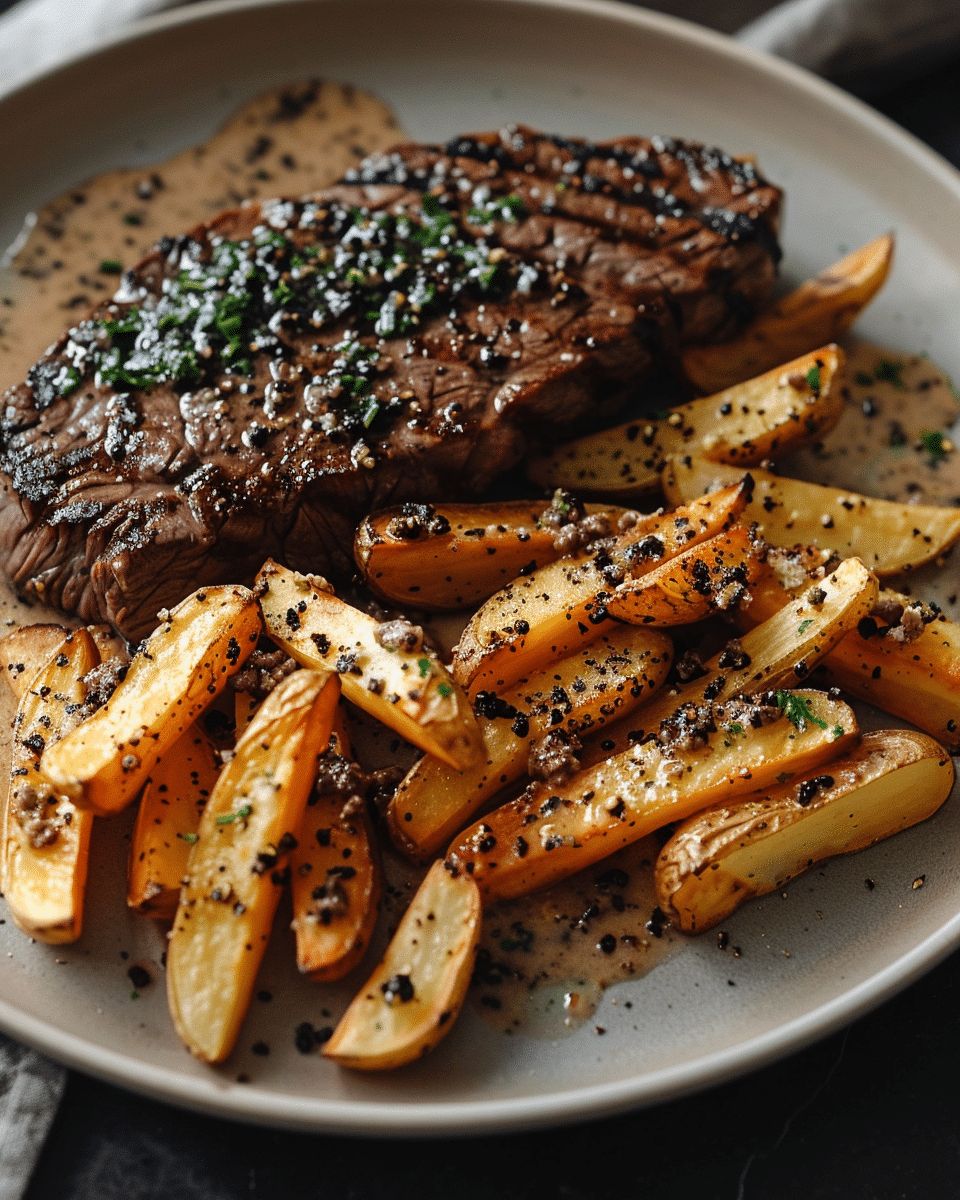
- Restaurant-Quality Presentation: When plated with golden fries, this dish looks as if it came straight from a Michelin-starred kitchen.
- Accessible Ingredients: Despite its gourmet reputation, the ingredients are common pantry staples or easily found at your local butcher.
The Backbone of Your Feast: Essential Ingredients
To achieve the perfect French feast, ingredient quality is paramount. Because the recipe relies on a short list of items, each one must perform at its best. Below are the specific components you will need to gather for each part of the meal.
Steak and Searing Essentials
The steak is the star of the show. While many cuts can be used, lean and tender portions are traditional because they allow the pepper crust to shine without competing with heavy fat marbling.
| Ingredient | Recommended Amount | Expert Tip |
|---|---|---|
| Lean Steaks | 2 x 8–12 oz cuts (Filet Mignon or Hanger) | Ensure the steaks are at least 1.5 inches thick for a better sear. |
| Black Peppercorns | ½ cup (Extra Coarsely Cracked) | Use Tellicherry peppercorns for a fruitier, more nuanced heat. |
| Neutral Oil | 1 tbsp (Grapeseed or Avocado) | Use an oil with a high smoke point to prevent burning during the sear. |
| Unsalted Butter | 1 tbsp | Adds a nutty depth and glossy finish during the basting phase. |
| Salt | Kosher and Flake salt | Kosher for prep; Flake salt for the final crunch at the table. |
The Au Poivre Sauce: Liquid Gold
This sauce is the soul of the dish. It utilizes the “fond”—the browned bits left in the pan after searing the meat—to create a complex flavor profile.
- Shallot: One small shallot, finely minced, provides a subtle sweetness that balances the pepper.
- Cognac or Brandy: 1/4 cup is essential for that signature smoky, oaky depth.
- Beef Broth: 1/4 cup (preferably a high-quality concentrate like Better Than Bouillon).
- Heavy Cream: 1/2 cup to transform the liquid into a velvety coating.
- Dijon Mustard: 1 tsp to provide a hidden layer of tang and emulsification.
Truffled Frites: The Ultimate Sidekick
Traditional “Steak Frites” is incomplete without the fries. We are taking them a step further by adding an earthy, aromatic truffle finish.
- Potatoes: 1 ¼ lbs of Yukon Gold potatoes. They offer a creamy interior that contrasts perfectly with a crisp shell.
- Frying Oil: 4 cups of Canola or Safflower oil.
- Truffle Element: Truffle powder or high-quality truffle zest for a gourmet aroma.
The Masterclass: A Step-by-Step Cooking Guide
Preparation is key. Before you turn on the stove, ensure all your ingredients are measured and your tools—especially a reliable meat thermometer and a heavy cast-iron skillet—are ready.
Step 1: Preparing the Peppercorn Crust
The most common mistake home cooks make is using pre-ground pepper. For Steak au Poivre, the texture of the pepper is just as important as the heat. You want large, cracked chunks rather than a fine powder. You can achieve this by placing whole peppercorns in a zip-top bag and crushing them with a heavy mallet or the bottom of a heavy skillet.
Season your steaks generously with kosher salt first. Let them rest for at least 40 minutes. This process, known as dry-brining, ensures the salt penetrates the meat. Once rested, press the cracked peppercorns firmly onto both sides of the steak, creating a literal “armor” of pepper. This crust will protect the meat and create a savory bark during searing.
Step 2: Searing to Perfection
Heat your cast-iron skillet over medium-high heat until the oil is shimmering and just beginning to smoke. Carefully lay the steaks in the pan—always lay them away from you to avoid oil splatters. Sear for approximately 3 minutes per side without moving them. This patience allows the peppercorns to toast and the meat to develop a dark, rich crust.
During the last minute of searing, add a tablespoon of butter to the pan. Use a large spoon to baste the melted butter over the steaks. This “Arrosé” technique adds moisture and a professional sheen. Check the internal temperature:
- Rare: 120°F (49°C)
- Medium-Rare: 125°F-130°F (52°C-54°C)
If the crust is perfect but the interior is still too cold, transfer the entire skillet into a preheated 350°F oven for 2–5 minutes. Crucially: Let the steaks rest on a warm plate for 10 minutes before serving. This allows the fibers to relax and the juices to redistribute.
Step 3: Crafting the Cream Sauce
While the meat rests, use the same skillet to make the sauce. Do not wash the pan! The browned bits (fond) contain immense flavor. Melt a bit of butter and sauté the minced shallots until translucent. Add the remaining cracked peppercorns to the butter to toast them slightly.
Safety Tip: When adding the cognac, turn off the flame or move the pan away from the heat source. Cognac is highly flammable. Once added, return to the heat and use a wooden spoon to scrape the bottom of the pan. This is called deglazing.
Stir in the beef broth and Dijon mustard, letting it reduce by half. Finally, pour in the heavy cream. Simmer the sauce until it is thick enough to coat the back of a spoon. Taste and adjust with a pinch of salt if necessary.
Step 4: The Secret to Crispy Truffled Frites
For the best frites, use the Double Fry Method. First, fry your potato matchsticks at a lower temperature (300°F) for about 5 minutes to cook the inside until tender but not browned. Remove them and let them drain. Increase the oil heat to 375°F and fry them again for 2-3 minutes until they turn a deep, golden brown and become incredibly crispy.
Immediately after they come out of the second fry, toss them in a large bowl with sea salt and your truffle powder. The heat from the oil will help the truffle aroma bloom and stick to the fries.
Pro-Tips for Culinary Excellence
To truly master this dish, keep these professional insights in mind during your next kitchen session:
- Room Temperature Meat: Never cook a steak straight from the fridge. Letting it come to room temperature ensures the center reaches the target temperature at the same time the exterior finishes searing.
- Deglazing Depth: Don’t rush the deglazing. Let the cognac reduce until it’s almost syrupy before adding the cream; this intensifies the flavor.
- Oil Management: If your oil starts to smoke excessively, your pan is too hot. Lower the heat slightly to avoid burning the peppercorns, which can turn bitter if scorched.
- Truffle Quality: A little goes a long way. If using truffle oil instead of powder, use only a few drops to avoid an artificial, overwhelming chemical taste.
You May Also Like
Explore more gourmet inspirations: Classic French Cuisine, Mastering the Perfect Steak, Cooking with Truffles, and Easy Pan Sauce Techniques.
Authority Source: The History of Steak au Poivre – Wikipedia
Frequently Asked Questions
What is the best cut of beef for Steak au Poivre?
While Filet Mignon is the traditional choice due to its extreme tenderness, Hanger Steak or New York Strip are excellent alternatives. These cuts provide a robust beefy flavor that stands up well to the intense heat of the peppercorn crust.
Can I make this recipe without using alcohol?
Yes. If you prefer to avoid cognac or brandy, you can substitute it with extra beef broth and a teaspoon of apple cider vinegar or lemon juice. This provides the necessary acidity to deglaze the pan and balance the richness of the heavy cream.
How do I prevent the peppercorns from falling off the steak?
The secret is to ensure the steak is patted dry with paper towels before seasoning. Once dry, press the coarsely cracked peppercorns firmly into the meat with the palm of your hand or the bottom of a heavy skillet to “embed” them into the surface before searing.
Final Thoughts
Mastering Classic Steak au Poivre with Truffled Frites is a rite of passage for any home chef looking to bring the elegance of a French bistro into their own kitchen. By focusing on high-quality ingredients—like fresh Tellicherry peppercorns and well-marbled beef—and practicing proper pan-searing techniques, you can create a meal that is truly unforgettable.
Whether you are celebrating a special milestone or simply indulging in a weekend culinary project, the combination of a spicy, crunchy crust and a silky, cognac-infused sauce is a timeless winner. Pair it with your perfectly seasoned truffled fries, pour a glass of bold red wine, and enjoy the rewards of your kitchen expertise. Bon appétit!
