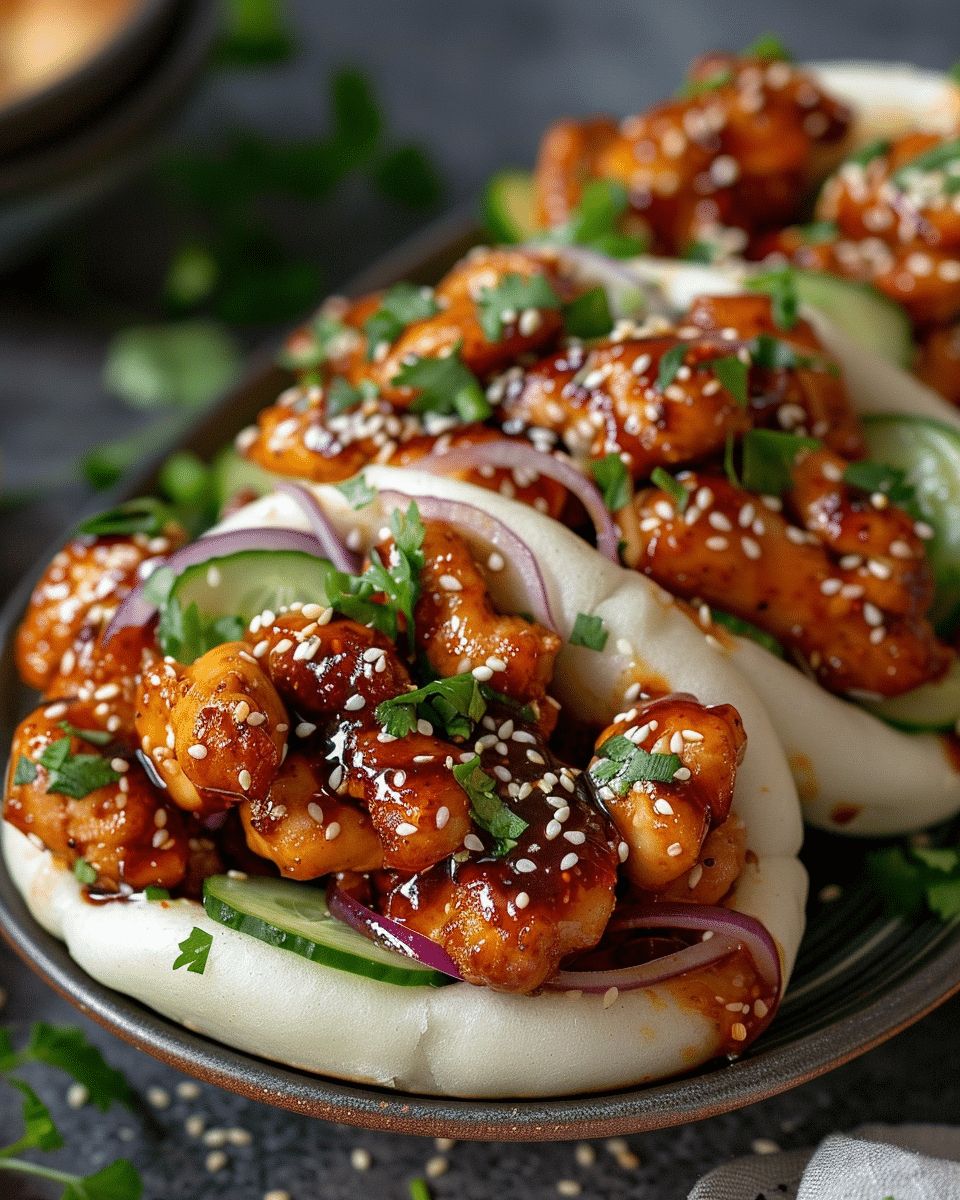
Craving a dish that hits the perfect equilibrium of sweet, spicy, savory, and crispy? You are in for a serious treat. Korean Chicken Bao is the kind of culinary experience that takes your taste buds on a cross-cultural journey—featuring steamed buns so airy they nearly melt in your mouth, wrapped around golden fried chicken smothered in a sticky, vibrant gochujang glaze. This isn’t just a meal; it’s a masterclass in texture and bold flavor harmony.
If you have ever been intimidated by the idea of making yeast-leavened buns or authentic Korean sauces at home, don’t be. Whether you are looking to recreate your favorite food truck memory or want to impress at your next dinner party, this guide breaks down the process into simple, achievable steps. By the time you’re finished, you’ll be turning your own kitchen into a gourmet bao haven with results that rival any high-end eatery.
Quick Answer: Korean Chicken Bao is a fusion street food dish consisting of soft, steamed lotus leaf buns filled with double-fried chicken tossed in a spicy-sweet gochujang sauce, typically topped with pickled vegetables, fresh cilantro, and sesame seeds for a balanced, punchy bite.
Mastering the Components of the Perfect Korean Chicken Bao
Creating world-class Korean Chicken Bao at home requires a balance of three distinct culinary elements: the soft, pillowy texture of the steamed bun, the crunch of perfectly fried chicken, and the complex umami of the gochujang glaze. When these components come together, they create a sensory experience that is far greater than the sum of its parts. This recipe is designed to help you master each phase with precision.
The Secret to Fluffy, Cloud-Like Bao Buns
The hallmark of a great bao is its texture. Unlike Western breads, which often have a crusty exterior, bao should be uniform, white, and incredibly soft. This is achieved through steaming rather than baking. The inclusion of milk and butter in the dough provides a subtle richness, while the sugar feeds the yeast to ensure a rapid, airy rise.
Why Korean Fried Chicken is Superior
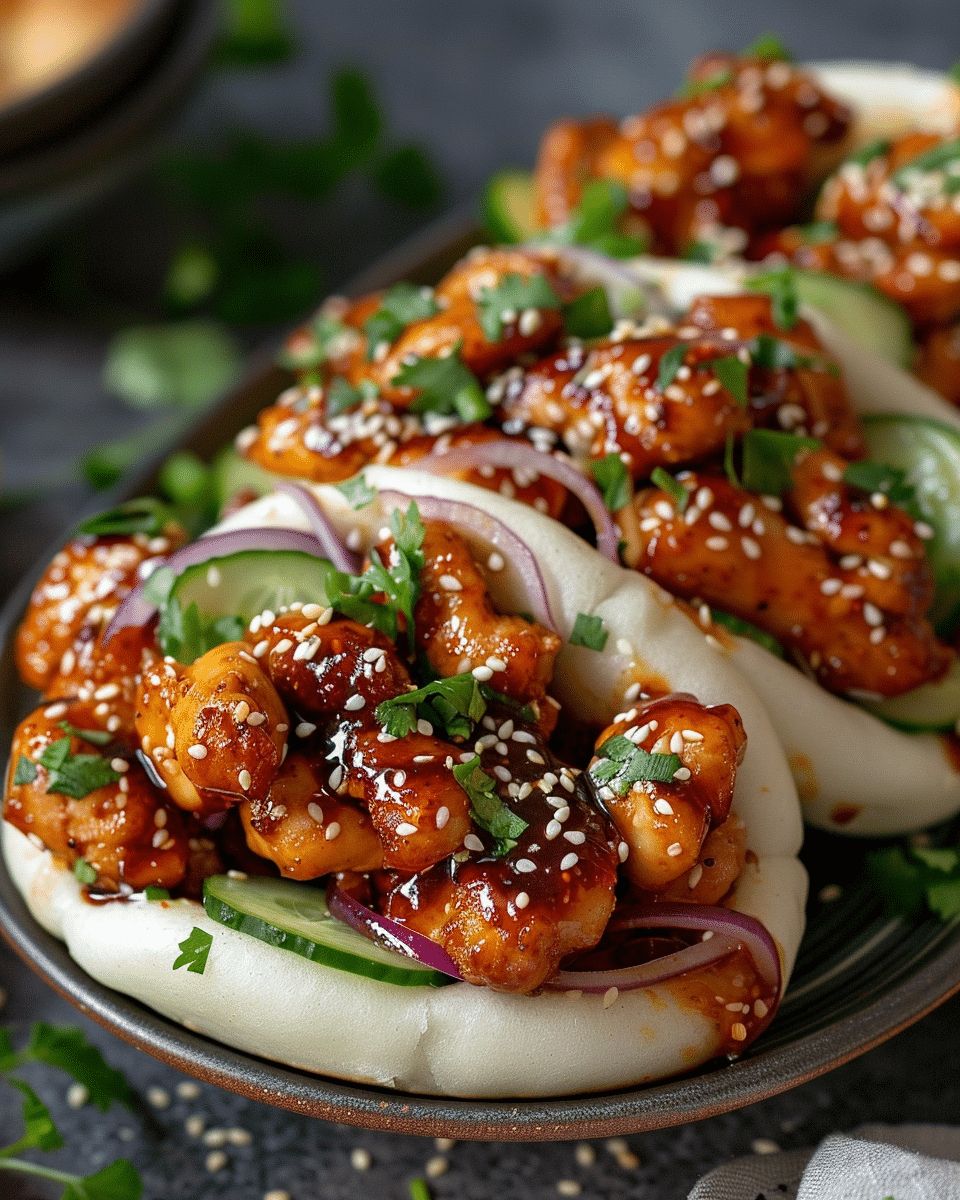
What sets the chicken in this recipe apart is the buttermilk marinade and the spiced dredge. The buttermilk serves a dual purpose: the lactic acid tenderizes the chicken fibers while the thickness helps the flour coating adhere. By adding baking powder to the coating, we create tiny air bubbles during the frying process, resulting in a shatteringly crisp exterior that stands up even after being tossed in a sticky sauce.
Essential Ingredients and Prep Breakdown
Before you begin the cooking process, ensure your workspace is organized. This recipe involves multiple stages (dough rising, marinating, and frying), so timing is everything. Below is the detailed breakdown of what you will need for each component.
Bao Bun Dough Specifications
The dough is the foundation of the dish. It requires high-quality all-purpose flour and fresh yeast to achieve the desired “spring-back” texture after steaming.
| Ingredient | Measurement | Role in Recipe |
|---|---|---|
| All-purpose Flour | 450g (3 3/4 cups) | Structure and base |
| Warm Water & Milk | 210ml / 3 tbsp | Hydration and softness |
| Instant Dried Yeast | 7g (1 packet) | Leavening agent |
| Unsalted Butter | 3 tbsp (softened) | Fat for silkiness |
The Buttermilk Chicken Marinade
Do not skip the marination time. At least one hour is required, but if you have the time, four hours will yield even better results.
- 4 Large Chicken Breasts: Sliced into uniform, bite-sized chunks.
- 240ml Buttermilk: The secret to juicy, tender chicken.
- Seasoning Trio: Salt, white pepper, and garlic salt to flavor the meat from within.
The Crispy Dredge and Coating
This dry mix provides the “crunch” factor. The combination of celery salt and dried thyme adds a savory depth that complements the spicy sauce perfectly.
- Dry Base: 180g all-purpose flour and 1 tsp baking powder.
- The Spice Rack: Paprika, chili flakes, and black pepper for a heat baseline.
- Herbal Notes: Dried thyme and celery salt for that signature “fried chicken” aroma.
Step-by-Step Execution: From Dough to Delicious
Success in making bao is all about patience and temperature control. Follow these steps meticulously to ensure your buns don’t collapse and your chicken remains juicy.
Step 1: The First Rise (Bulk Fermentation)
Mix your dry ingredients and slowly incorporate the wet mixture. If you are using a stand mixer, use the dough hook attachment on medium-low speed for about 10 minutes. The dough should be tacky but not stick to your fingers. Place it in a lightly oiled bowl and cover it with a damp cloth. It must double in size, which usually takes 90 to 120 minutes depending on your kitchen’s temperature.
Step 2: Shaping and the Second Proof
Once the dough has doubled, punch it down to release the gas. Divide it into 20 equal portions. Roll each piece into an oval, brush the top with olive oil, and fold it over a chopstick. This oil barrier is critical; it prevents the bun from steaming into a solid mass, allowing you to open it up later for the filling.
Step 3: Frying the Chicken to Golden Perfection
Heat your oil to exactly 350°F (175°C). Use a thermometer if possible. If the oil is too cold, the chicken will be greasy; if it’s too hot, the outside will burn before the inside is cooked. Dredge each piece of marinated chicken thoroughly in the flour mix, pressing down to create “nooks and crannies” for the sauce to cling to. Fry in small batches to maintain the oil temperature.
The Signature Korean Gochujang Glaze
The sauce is the soul of this dish. It balances the four pillars of Asian flavor: Sweet, Spicy, Salty, and Sour. Using a Gochujang paste (Korean fermented chili paste) provides an earthy depth that standard hot sauces simply cannot match.
Sauce Composition
| Flavor Profile | Ingredient Source |
|---|---|
| Spicy/Umami | Gochujang Paste |
| Sweet | Honey & Brown Sugar |
| Salty | Soy Sauce |
| Aromatic | Minced Ginger & Garlic |
Simmer the ingredients in a small saucepan for about 5 minutes. You are looking for a consistency that coats the back of a spoon. When you toss the hot, crispy chicken into this warm glaze, the coating will absorb just enough sauce to be flavorful while retaining its crunch.
Final Assembly and Presentation
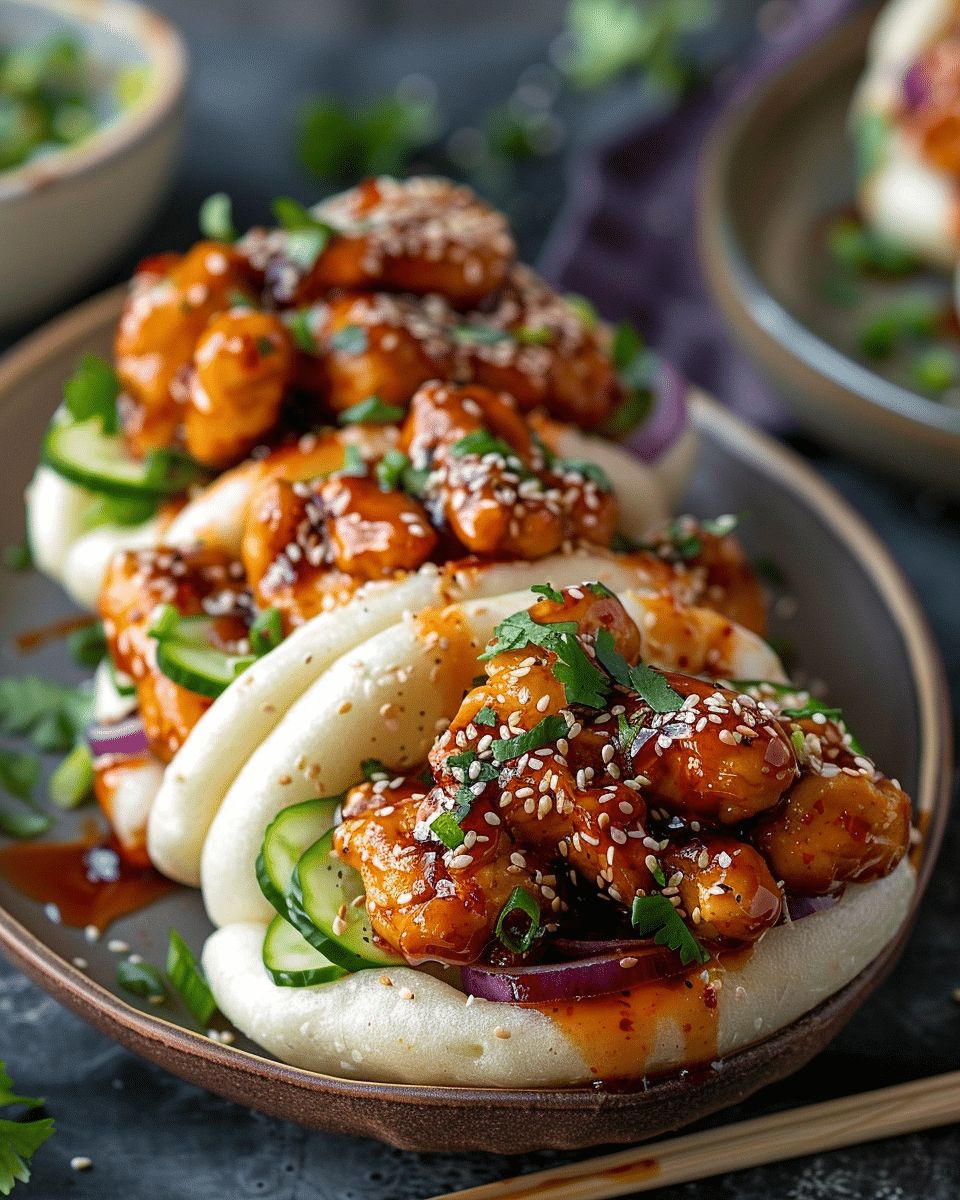
Once your buns are steamed (they should feel like marshmallows) and your chicken is glazed, it is time to assemble. Open each bun gently and place two to three pieces of chicken inside. The toppings are not just for show; they provide essential freshness and crunch.
Pro Topping Recommendations
- Red Onion: Sliced paper-thin for a sharp bite.
- Cucumber: Small dice or batons for a cooling effect against the spice.
- Fresh Cilantro: Roughly chopped to add a citrusy, herbal finish.
- Sesame Seeds: A mix of black and white seeds for a professional, toasted look.
Chef’s Insight: To prevent your bao buns from getting soggy, assemble them immediately before serving. If you are hosting a party, set up a “Bao Bar” where guests can build their own with fresh toppings!
Storage and Reheating Tips
While best enjoyed fresh, you can save leftovers if handled correctly. The components should be stored separately to maintain their integrity.
- The Buns: Store in an airtight container at room temperature for 2 days. To reheat, re-steam for 2 minutes to restore their fluffiness. Avoid the microwave as it can make the dough rubbery.
- The Chicken: Keep in the fridge for up to 3 days. Reheat in an air fryer or oven at 375°F to bring back the crispiness before adding more sauce.
You May Also Like
If you enjoyed mastering this Asian-inspired street food, explore more bold flavors and comforting recipes on our blog: Cajun Shrimp Pasta, Cheesy Chicken Casseroles, Classic Meatloaf, and Mixed Grill Platters.
Learn more about the history and variations of this traditional steamed bread: Baozi – Wikipedia
Frequently Asked Questions
Is there a substitute for Gochujang?
While Gochujang has a unique fermented depth, you can mimic the flavor profile by mixing Sriracha or chili paste with a small amount of miso paste and a touch of honey or maple syrup to achieve that signature sweet-savory balance.
Can I make the bao buns ahead of time?
Yes! You can steam the buns in advance and store them in the refrigerator for up to 3 days or freeze them for up to a month. To serve, simply re-steam them for 2-3 minutes until they are soft and pillowy again. Avoid microwaving them for long periods as they can become tough.
How do I ensure the chicken stays crispy under the sauce?
The key to long-lasting crunch is double-frying the chicken or using a high-heat air fryer setting. Additionally, ensure the sauce is thickened properly before tossing. Coating the chicken just seconds before serving the bao prevents the breading from absorbing too much moisture and becoming soggy.
Final Thoughts
Bringing the vibrant flavors of Korean Chicken Bao into your home kitchen is a rewarding experience that bridges the gap between gourmet dining and cozy comfort food. While the process of making yeast-leavened dough and frying chicken takes a bit of patience, the contrast of the cloud-like bun against the spicy, crunch-filled interior is a culinary victory that is sure to impress anyone at your table.
Whether you are preparing these for a weekend project or as a standout appetizer for your next gathering, remember that the best bao are made with a bit of heart and plenty of toppings. Don’t be afraid to experiment with different garnishes or spice levels to make this recipe truly your own. Happy steaming!