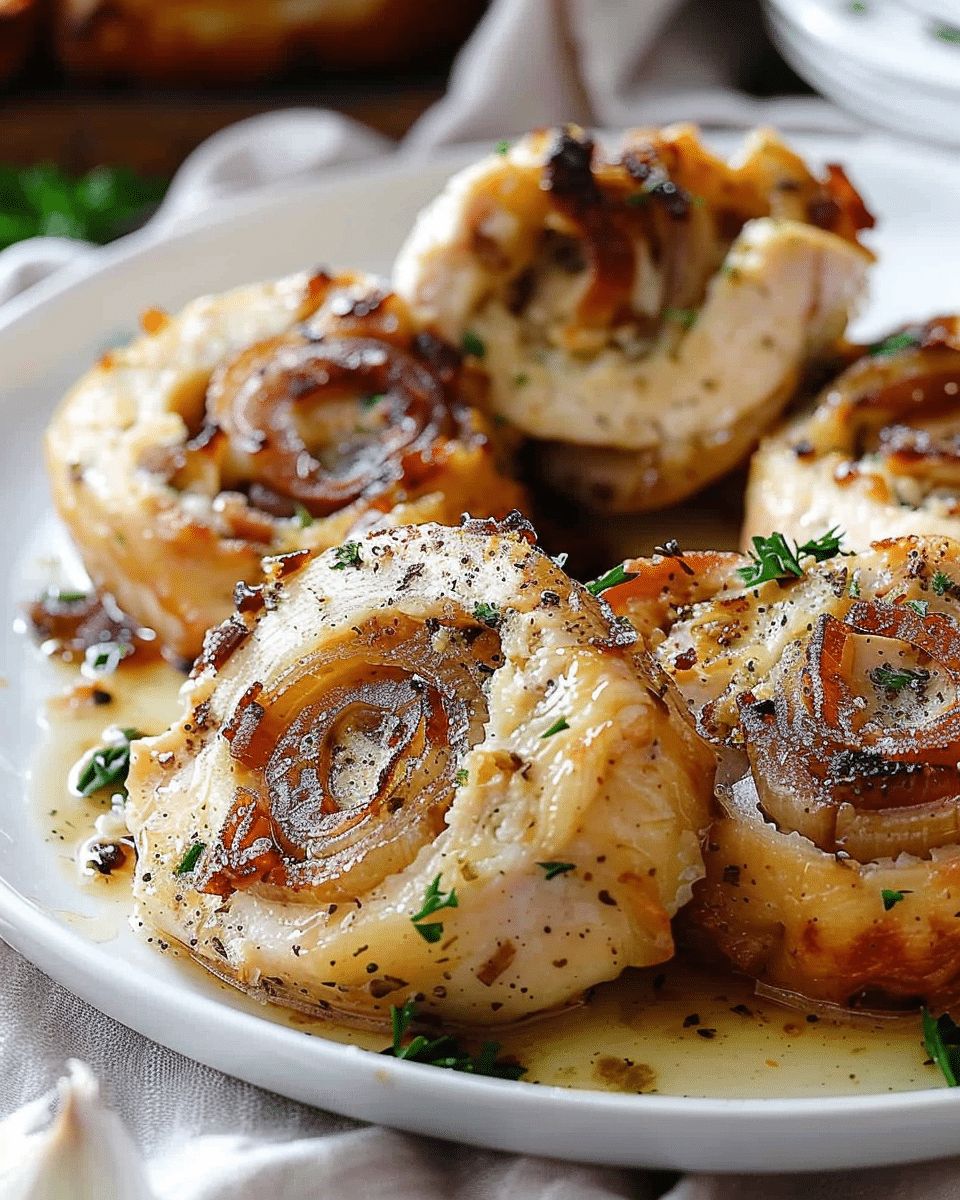
Imagine the rich, savory-sweet depth of a classic French onion soup transformed into a hearty, protein-packed masterpiece. That is exactly what this French Onion Chicken brings to your table. By combining tender, juicy chicken breasts with the unmistakable richness of slow-caramelized onions and nutty, melted Gruyere cheese, we’ve created a dish that feels like a gourmet indulgence made simple for the home cook.
Whether you are planning a cozy Sunday dinner for the family or looking to impress guests at your next gathering, this recipe strikes the perfect balance between elegant presentation and rustic comfort. The aroma alone—onions browning in butter and Italian herbs—is enough to bring everyone to the kitchen before the oven even preheats. This isn’t just a meal; it’s a savory experience that reimagines a timeless classic.
In the following guide, we will break down the secrets to achieving that perfect golden sear and the art of stuffing chicken to lock in maximum moisture. Get ready to elevate your weeknight rotation with a dish that is guaranteed to become a new household favorite.
Quick Answer: French Onion Chicken is a savory main course featuring butterflied chicken breasts stuffed and topped with caramelized onions and melted Gruyere cheese. The dish is seared in a skillet and finished in the oven to create a juicy, cheesy, and flavor-packed meal that mimics the profile of traditional French onion soup.
The Essential Ingredients for Gourmet French Onion Chicken
To create a truly world-class French Onion Chicken, the quality of your ingredients is paramount. This dish relies on a harmony of sweet, savory, and nutty flavors, which means each component must be selected with care. Unlike a standard pan-seared chicken, this recipe uses the chicken as a vessel for the rich, complex flavors usually reserved for a bowl of soup.
At the heart of the dish are the yellow onions. While you might be tempted to use white or red onions, yellow onions have a higher sugar content, which is vital for the caramelization process. When slow-cooked, they transform from pungent and crunchy to soft, jammy, and incredibly sweet.
| Component | Ingredient | Quantity |
|---|---|---|
| The Base | Yellow Onions (thinly sliced) | 2 Large |
| The Protein | Boneless Skinless Chicken Breasts | 4 (approx. 3 lbs) |
| The Fat | Unsalted Butter & Extra Virgin Olive Oil | 3 tbsp / 2 tbsp |
| The Cheese | Shredded Gruyere Cheese | 2 Cups |
| The Liquid | Chicken Broth (low sodium preferred) | ½ Cup |
| The Seasoning | Italian Seasoning, Salt, Black Pepper | 1 tsp / 1 tsp / ¼ tsp |
Why We Use Gruyere Cheese
While many home cooks might reach for Swiss or Provolone, Gruyere is the gold standard for any French onion-inspired dish. It is a Swiss-type cheese that is sweet but slightly salty, with a flavor that varies widely with age. Most importantly, Gruyere has excellent melting properties due to its high water-to-oil ratio, ensuring that every bite of your chicken is draped in a gooey, golden blanket of cheese.

The Art of Perfect Onion Caramelization
Caramelization is not just cooking; it is a chemical reaction known as the Maillard reaction. This is where the magic happens. By cooking the onions slowly in butter and a splash of chicken broth, you break down the natural sugars, creating a deep brown color and a rich, umami-packed flavor profile that cannot be replicated with high-heat sautéing.
- Melt the Butter: Use a large, heavy-bottomed oven-safe skillet. This ensures even heat distribution and prevents the onions from scorching.
- Add the Onions and Broth: The chicken broth acts as a deglazing agent throughout the process, picking up the “fond” (the brown bits) from the bottom of the pan and reincorporating it into the onions.
- The 20-Minute Rule: Be patient. Stir occasionally, but let the onions sit long enough to develop color. If they start to look dry, add a tiny splash of water or broth.
- Tent and Rest: Once the onions are deep gold and tender, move them to a bowl and cover them. This keeps them moist while you prepare the chicken.
Pro Tip: If you find your onions are browning too quickly without softening, lower the heat and add a teaspoon of water. The steam helps break down the cellular structure of the onion, leading to a “jammier” consistency.
Mastering the Butterfly and Pounding Technique
Preparing the chicken is arguably the most technical part of this recipe. Because we are stuffing the breasts, we need to increase their surface area while maintaining a uniform thickness. This ensures that the chicken cooks evenly and the stuffing stays securely inside.
How to Butterfly Chicken Like a Pro
Place your hand flat on top of the chicken breast. Using a sharp chef’s knife or a utility knife, slice into the thickest part of the breast horizontally. Crucially, do not cut all the way through. Stop about an inch from the edge so the breast opens up like a book. This creates a large, flat surface that is perfect for layering your caramelized onions and cheese.
The Importance of Pounding
After butterflying, place the chicken between two sheets of plastic wrap. Using the flat side of a meat mallet, gently pound the meat from the center outward until it is roughly ⅓ inch thick. This serves two purposes: it tenderizes the muscle fibers and ensures that the roll isn’t too thick to cook through during the searing and baking phases.

Assembling and Searing for Maximum Flavor
Now comes the assembly. Season both sides of your flattened chicken with the olive oil and herb mixture. Place a generous spoonful of the reserved onions and a handful of Gruyere in the center. Roll the chicken tightly, starting from the thinner end, to ensure the filling is completely enclosed.
- Secure with Twine: Use 100% cotton cooking twine to tie the rolls. This prevents them from unfurling in the pan.
- The Sear: Heat your skillet back up with a touch of oil. We want a hard sear—about 5 minutes per side. This creates a crust that seals in the juices.
- Don’t Overcrowd: If your skillet is small, sear in batches. Overcrowding the pan lowers the temperature and causes the chicken to steam rather than sear.
Skillet Recommendations
For this recipe, a cast-iron skillet or a stainless steel oven-ready pan is best. You need a pan that can go from the high heat of the stovetop directly into a 450°F oven without the handle melting or the pan warping.
Baking, Basting, and the Final Broil
Once seared, the skillet goes into the oven. This is where the chicken finishes cooking to a safe internal temperature. At 450°F (230°C), the high heat continues to crisp the exterior while the cheese inside turns into a molten core.
Halfway through the baking time, use a spoon to baste the chicken with the juices collected at the bottom of the pan. These juices are a concentrated mix of butter, onion essence, and chicken fat—liquid gold for keeping the meat moist.
| Oven Stage | Temperature | Time | Goal |
|---|---|---|---|
| Initial Bake | 450°F (230°C) | 25–30 Minutes | Reach 165°F internal temp |
| Final Broil | Broil Setting | 5 Minutes | Bubble and brown the cheese |
For the finale, pile the remaining onions and cheese on top of each roll. Switch your oven to the broil setting. Watch closely! In just a few minutes, the cheese will go from melted to perfectly charred and bubbly. This mimics the iconic “crouton and cheese” lid of a traditional French onion soup.

Success Tips and Serving Suggestions
To round out this French Onion Chicken recipe, consider what you serve alongside it. Because the dish is so rich and savory, it pairs best with sides that can soak up the extra pan sauce or provide a crisp, fresh contrast.
- Creamy Mashed Potatoes: The ultimate vessel for the onion-infused pan juices.
- Roasted Asparagus or Broccolini: Adds a necessary crunch and a bit of green to the plate.
- A Simple Arugula Salad: The peppery bite of arugula with a lemon vinaigrette cuts through the richness of the Gruyere cheese perfectly.
Expert Tip: Always use a meat thermometer. Chicken breast can dry out quickly once it passes 165°F. Pulling the chicken at 160°F and letting it rest for 5 minutes will allow carry-over cooking to bring it to the perfect 165°F while remaining incredibly juicy.
By following these detailed steps, you aren’t just making dinner—you’re mastering the techniques of braising, searing, and flavor layering that define world-class cuisine. Enjoy your masterpiece!
You May Also Like
If you enjoyed this comforting dish, explore more of our favorite recipes: Cajun Shrimp Pasta, Cheesy Chicken Casserole, Classic Meatloaf, and Hearty Dinner Ideas.
Source: The History of French Onion Soup (Wikipedia)
Frequently Asked Questions
Can I substitute the Gruyere cheese with something else?
Absolutely! While Gruyere is favored for its nutty flavor and superior melting capabilities, you can easily substitute it with Swiss cheese, Provolone, or a mild white cheddar. The goal is to use a cheese that melts well and complements the sweetness of the caramelized onions.
How do I prevent the chicken from becoming dry?
The key to juicy chicken is two-fold: butterflying and internal temperature. Pounding the chicken to an even thickness ensures it cooks at a uniform rate. Additionally, always use a meat thermometer to pull the chicken once it reaches 165°F (74°C). Allowing the meat to rest for 5 minutes after cooking also helps the juices redistribute.
Can I make the caramelized onions ahead of time?
Yes, this is a great time-saving tip! You can caramelize the onions up to 3 days in advance. Simply store them in an airtight container in the refrigerator and bring them to room temperature or warm them slightly before stuffing them into the chicken breasts.
Final Thoughts
This French Onion Chicken recipe is more than just a meal; it is a sophisticated take on a beloved classic that brings the warmth of a French bistro right into your home. By mastering the simple techniques of caramelization and butterflying, you can create a restaurant-quality dinner that is sure to impress your family and friends. The combination of savory pan juices, sweet onions, and molten cheese makes every bite an absolute delight.
We invite you to roll up your sleeves and give this recipe a try tonight. It is the ultimate comfort food for those who appreciate deep, layered flavors and a touch of gourmet flair in their everyday cooking. Bon appétit!