When you think of a meal that can truly wow your guests and elevate any occasion, roasted beef tenderloin is likely one of the first dishes that comes to mind. Its rich, succulent flavor and melt-in-your-mouth tenderness make it a perennial favorite for holiday dinners, milestone family gatherings, or an intimate, high-end night at home. This isn’t just a meal; it’s a centerpiece that signals a truly special event.
While the beef is undoubtedly the star, the supporting cast is what makes this specific recipe extraordinary. By pairing the savory roast with deeply caramelized French onions and a tangy, chilled horseradish sauce, you create a sophisticated balance of sweetness, heat, and umami. Whether you are a seasoned home chef or preparing your first formal roast, this guide will provide the techniques needed to achieve steakhouse-quality results in your own kitchen.
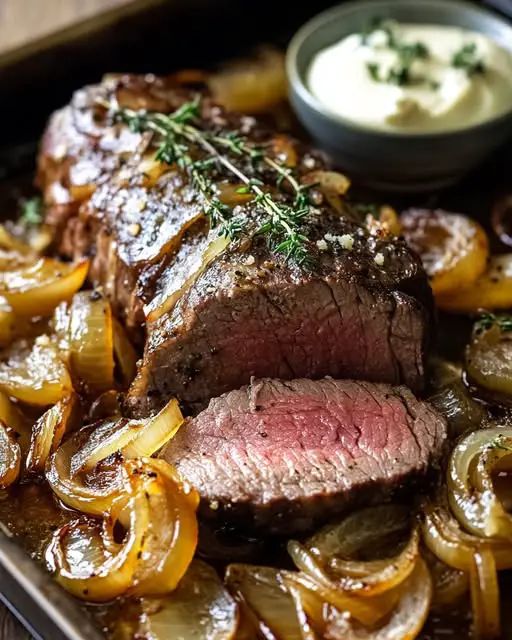
Quick Answer: To make the ultimate Roasted Beef Tenderloin, sear or roast the meat at 450°F until it reaches an internal temperature of 135°F for medium-rare. Serve it with slow-caramelized onions deglazed with Sherry wine and a creamy sauce made from horseradish, sour cream, and lemon for the perfect flavor profile.
The Secret to a Perfect Celebration Roast
Success with beef tenderloin lies in the details: high-quality ingredients, patience during the onion caramelization process, and precision with internal temperatures. In the following sections, we will break down the essential components and the step-by-step method to ensure your beef is juicy, your onions are jammy, and your sauce has just the right amount of kick.
Ingredients for Success
Before diving into the cooking process, let’s gather the three components that make this dish shine. Each element brings a unique layer of flavor that, when combined, creates a harmonious and mouthwatering experience.
| Ingredient | Amount |
|---|---|
| Trimmed Whole Beef Tenderloin | 3 lbs |
| Thinly Sliced Onions | 2 ½ lbs |
| Prepared Horseradish | 3 oz |
| Sherry Wine | ¼ cup |
| Butter & Olive Oil | As needed |
| Fresh Herbs (Thyme, Rosemary, Bay Leaf) | 2 sprigs each / 1 leaf |
| Mayonnaise & Sour Cream | 6 oz each |
| Granulated Garlic & Lemon | 1 tbsp / 1 unit |
Mastering the Ingredients: A Trio of Flavor
Creating a world-class Roasted Beef Tenderloin requires more than just high-quality meat. It is about the interplay between the centerpiece and its accompaniments. To ensure your kitchen is fully prepared, let’s look at the specific requirements for each component of this gourmet dish.
The Beef: Choosing the Right Cut
For this recipe, we utilize a 3 lb trimmed whole beef tenderloin. This cut, also known as the pismo, is prized for its lean texture and buttery tenderness. Because it has very little connective tissue, it stays soft even when roasted at high heat.
The Aromatics and Enhancers
To elevate the natural savoriness of the beef, we use a curated list of herbs and pantry staples:
- Fats: High-quality olive oil and unsalted butter for rich caramelization.
- Fresh Herbs: Large sprigs of thyme and rosemary, plus a bay leaf for the onions.
- Deglazing Agent: Sherry wine provides a complex, nutty acidity that balances the sweetness of the onions.
- Seasoning: Kosher salt, freshly cracked black pepper, and granulated garlic for a crusty exterior.
Step 1: The Art of the Caramelized French Onion
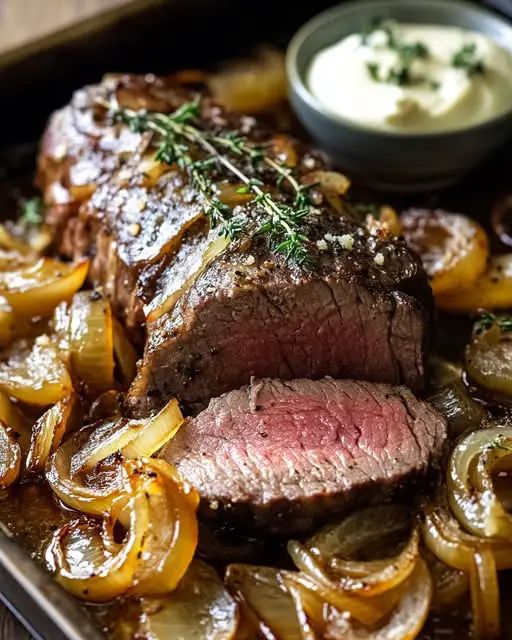
The onions in this dish serve as a “jammy” bed for the beef. Unlike a quick sauté, true French onions require patience to coax out their natural sugars. This process transforms sharp, pungent raw onions into a deep, mahogany-colored delicacy.
The Sauté Phase
- Heat a large, heavy-bottomed pot over medium-high heat. Heavy-bottomed cookware is essential to prevent hot spots and burning.
- Add enough olive oil to coat the bottom, then melt the 3 tablespoons of butter.
- Add 2 ½ lbs of thinly sliced onions. Season immediately with kosher salt and pepper to draw out moisture.
- Stir frequently for 10 minutes until the onions soften and turn translucent.
The Caramelization Phase
Lower the heat to medium-low. This is the most critical step. Add your thyme, rosemary, and bay leaf. Allow the onions to cook for approximately 45 minutes. You aren’t looking for a “fry” here; you want a slow melt. If the onions begin to stick too much, add a teaspoon of water to scrape up the brown bits (fond).
The Finishing Touch
Once the onions are a rich golden brown, pour in the ¼ cup of Sherry wine. Let this simmer for 15 minutes. The alcohol will cook off, leaving behind a sophisticated sweetness. Remove the woody herb stems and the bay leaf before serving. Keep these warm on the back of the stove.
Step 2: Crafting the Zesty Horseradish Sauce
A rich beef dish needs an “acidic cut”—a flavor that cleanses the palate between bites. This Horseradish Sauce provides exactly that, combining creamy textures with a sharp, peppery finish.
Mixing and Ratios
The balance of this sauce depends on the ratio of fats to heat. Follow these measurements for a consistent result:
| Component | Purpose | Amount |
|---|---|---|
| Mayonnaise | Creamy Base/Body | 6 oz |
| Sour Cream | Tangy Balance | 6 oz |
| Prepared Horseradish | Piquant Heat | 3 oz |
| Lemon Zest & Juice | Brightness/Acid | 1/2 Lemon |
The Chilling Process
Whisk the ingredients in a small bowl until smooth. Season with salt and pepper to taste. Pro Tip: Make this sauce at least two hours in advance. Refrigeration allows the volatile oils in the horseradish to permeate the cream, resulting in a more unified flavor profile.
Step 3: Preparing and Roasting the Tenderloin
The beef tenderloin is a delicate muscle. Because it is so lean, it can overcook quickly. Precision is the difference between a legendary meal and a dry one.
Pre-Roast Preparation
Take the beef out of the refrigerator 20 minutes before cooking. This takes the chill off the center and ensures more even roasting. Pat the surface completely dry with paper towels; moisture is the enemy of a good crust.
- Preheat your oven to 450°F (230°C). The high heat is necessary to sear the outside while keeping the inside tender.
- Prepare a sheet pan with a wire rack. Lifting the beef allows hot air to circulate underneath, preventing a soggy bottom.
- Rub with olive oil and generously apply the seasoning mix (salt, garlic, and pepper).
The Roasting Timeline
Place the tenderloin in the center of the oven. Use the following table as a guide, but always rely on a meat thermometer for the most accurate results:
| Desired Doneness | Pull Temperature | Estimated Time |
|---|---|---|
| Rare | 125°F | 22-25 mins |
| Medium-Rare | 135°F | 28-32 mins |
| Medium | 140°F | 35 mins |
Crucial Tip: Always pull the meat 5 degrees before your target doneness. The “carryover cooking” during the resting phase will bring it up to the perfect final temperature.
Step 4: The Importance of the Rest and Slicing
Once you remove the beef from the oven, do not slice it immediately. If you cut into the meat right away, the high-pressure juices will pour out onto the cutting board, leaving the beef dry.
The 15-Minute Rule
Tent the beef loosely with aluminum foil. This keeps the heat in without steaming the crust. Let it rest for 15 minutes. During this time, the muscle fibers relax and reabsorb the internal juices.
Precision Slicing
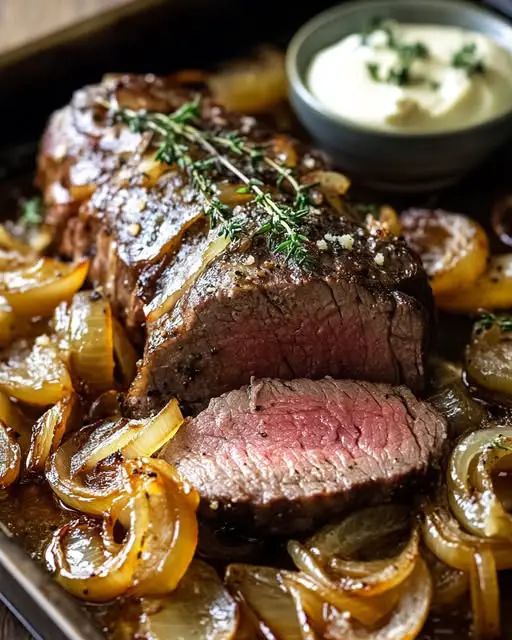
Using a long, sharp carving knife, cut the tenderloin into ¼-inch thick slices. A sharp blade is vital to ensure you aren’t “tearing” the meat, which can ruin the elegant presentation. Each slice should show a uniform pink center from edge to edge.
Final Presentation: Serving for Impact
For a special celebration, the plating should reflect the effort put into the cooking. Follow these steps for a professional look:
- Lay a generous base of the warm French onions on a large platter.
- Fan the beef slices over the onions, slightly overlapping them.
- Place a small bowl of the Horseradish Sauce on the platter or dollop it alongside each slice.
- Garnish with fresh thyme leaves or a sprig of rosemary for a pop of color.
This combination of temperatures—the hot beef, warm onions, and cold sauce—creates a sensory experience that is unmatched for holiday hosting or milestone celebrations.
You May Also Like
Explore more gourmet recipes and hosting tips: Perfect Prime Rib, Elegant Holiday Side Dishes, Red Wine Reduction Sauce, and Pro Tips for Searing Steak.
Learn more about this premium cut: Beef Tenderloin – Wikipedia
Frequently Asked Questions
Can I prepare the components of this dish in advance?
Absolutely. Both the French onions and the horseradish sauce can be made 24 to 48 hours ahead of time. Store the onions in an airtight container and reheat gently on the stovetop before serving. Keep the horseradish sauce refrigerated to allow the flavors to deepen and meld.
How do I ensure the beef tenderloin is cooked perfectly even?
The most important step is to let the beef sit at room temperature for at least 20 minutes before roasting. Additionally, using a wire rack on your sheet pan allows the hot air of the oven to circulate around the entire roast, preventing the bottom from steaming and ensuring a uniform cook.
What should I do if I don’t have Sherry wine for the onions?
If you don’t have Sherry, you can substitute it with a dry white wine, Brandy, or even a splash of balsamic vinegar mixed with beef broth. The goal is to provide a touch of acidity and complexity to balance the natural sweetness of the caramelized onions.
Nutritional Overview
Below is the estimated nutritional data per serving for this celebratory meal.
| Nutrient | Amount Per Serving |
|---|---|
| Calories | 480 kcal |
| Protein | 34g |
| Total Fat | 32g |
| Carbohydrates | 12g |
| Sodium | 650mg |
Final Thoughts
The Roasted Beef Tenderloin with French Onions and Horseradish Sauce is more than just a recipe; it is a reliable showstopper that balances elegance with hearty, comforting flavors. By focusing on the slow caramelization of the onions and the precision of the beef’s internal temperature, you create a restaurant-quality experience right in your dining room. It is a dish designed for making memories and celebrating life’s biggest milestones.
Whether you are hosting a festive holiday gathering or an intimate anniversary dinner, this combination of tender beef and zesty sauce is sure to leave a lasting impression on your guests. Don’t be afraid to take your time with the process—great food is always worth the wait. Happy cooking!